REVIEW · NAGOYA
Grandma’s Traditional Japanese Cooking Class in Nagoya
Book on Viator →Operated by おばあちゃんの名古屋めし · Bookable on Viator
Some meals you eat. This one teaches you how to make them. In Nagoya, you’ll join Grandma Junko and Chikako for a hands-on traditional home-cooking class focused on ichiju-sansai, plus a calm matcha ceremony at the end. I like that it feels personal, not staged. I also like how the lesson connects everyday Japanese flavors to real technique.
What I love most is the mix of practical cooking and gentle hospitality. You’re guided through dishes like red miso chicken or grilled salmon with salted rice malt, and you get tasting time for the food you helped create. A possible drawback: since it’s only 2 hours 30 minutes and capped at four people, you’ll want to come ready to work and ask questions early rather than expecting a slow, open-ended chat.
In This Review
- Key highlights at a glance
- Why Grandma’s Nagoya home cooking feels personal
- Ichiju-sansai: the meal pattern you’ll build one bowl at a time
- Your cooking class flow, from welcome tea to matcha
- Chicken or salmon: how Menu 1 and Menu 2 shape your meal
- Menu 1: chicken comfort (Nagoya home-style set)
- Menu 2: salmon with a fermented edge
- Dashi, kelp, bonito, and the fermentation flavor logic
- The tea and the quiet pacing
- Matcha ceremony: what you actually do and why it’s worth it
- Price and value: what $84.70 gets you in Nagoya
- Meeting point and timing: start at Sakurayama Station
- Who this class is best for
- Should you book Grandma’s traditional Japanese cooking class in Nagoya?
- FAQ
- How long is the Grandma’s traditional Japanese cooking class in Nagoya?
- What menu options are available?
- Will I get to make matcha, or is it served to me?
- Is transportation included?
- What’s included in the price?
- Can the class accommodate allergies or ingredients to avoid?
Key highlights at a glance
- Limited to four people for a genuinely small-class feel with Grandma Junko and Chikako
- Pick Menu 1 or Menu 2 (chicken or salmon) and learn a full ichiju-sansai set
- You’ll learn dashi using kelp and bonito flakes as the base for soup
- Hands-on matcha making, served with seasonal Japanese sweets
- English or Japanese guidance with recipes included to take home
- Near public transport with a clear meeting point at Sakurayama Station
Why Grandma’s Nagoya home cooking feels personal
There’s a certain comfort to Japanese home meals. This class leans into that idea hard. Instead of treating cooking like a performance, Grandma Junko and Chikako teach it like something you practice at home: explain, guide, taste, adjust.
What makes the experience interesting is the focus on ichiju-sansai, a simple meal pattern that most Japanese families recognize: rice plus a soup, with three dishes total (one main dish and two sides). You’ll learn how that structure shapes flavor choices, how the soup works as a backbone, and how miso, soy sauce, and fermentation traditions show up in daily cooking.
I also like that the tone stays friendly and practical. The class is small, you get time to ask questions, and you’re not rushed through weird “demo-only” steps. You’re doing real cooking, then eating what you made.
If you’re the type who likes understanding why something tastes the way it does, you’ll feel at home here. If you mainly want sightseeing or a fast food stop, this won’t replace that. It’s a kitchen experience, and the best moments come when you participate.
Ichiju-sansai: the meal pattern you’ll build one bowl at a time
Before you cook, you’ll get the core concept of ichiju-sansai. In plain terms, it’s a bowl of rice, soup, and three dishes that balance each other.
Here’s how the lesson frames it:
- Ichiju = soup (so the soup is a key part, not an afterthought)
- Sansai = three dishes total, typically one main and two sides
What this means for you is that you’re not just learning random recipes. You’re learning a framework you can reuse at home. Once you understand how the soup and sides support the main dish, you’ll have an easier time planning Japanese-style meals later.
You’ll also get exposed to the idea that everyday dishes can be deeply “technique-driven.” Dashi isn’t just flavor. It’s timing, ingredient handling, and knowing what to look for in the final result—like when kelp and bonito flakes have done their job.
Your cooking class flow, from welcome tea to matcha
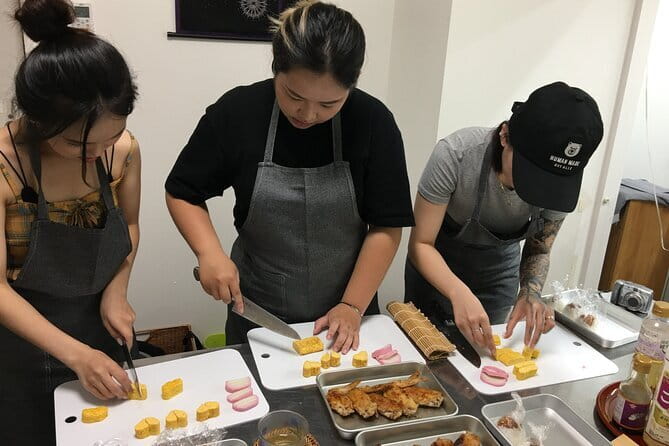
The session runs about 2 hours 30 minutes, starting at 10:30 am at Sakurayama Station in Nagoya. You’ll start with welcome tea and then settle into cooking steps with a guide who offers support in English or Japanese.
Even if you’ve cooked a lot, Japanese home cooking can feel different because of the balance of sauces and the way broth and seasoning build depth. This class is designed to keep that approachable. You cook your portion, you taste, and you learn what to tweak.
The lesson culminates in a matcha ceremony style finish. You make your own matcha, then enjoy it with seasonal Japanese sweets. This ending matters. Cooking workshops sometimes stop at eating your dishes. Here, you get a calmer cultural moment that ties the day’s flavors together.
Chicken or salmon: how Menu 1 and Menu 2 shape your meal
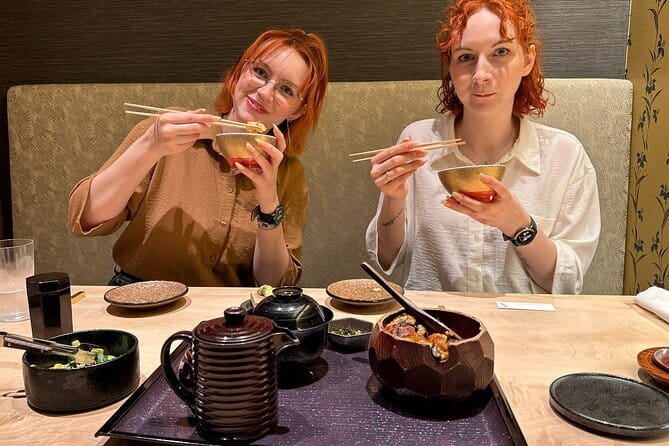
When you book, you choose between two menu options. If you don’t specify, you’ll be assigned Menu 1.
Menu 1: chicken comfort (Nagoya home-style set)
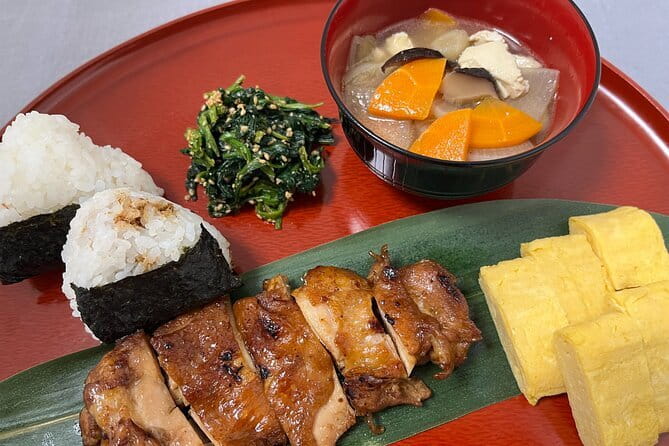
Menu 1 centers on red miso flavored chicken, paired with a tofu and vegetable soup seasoned with soy sauce. You’ll also make:
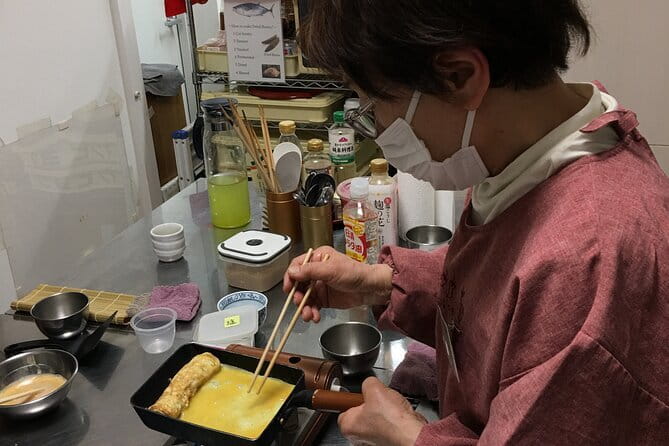
- Japanese omelet
- Spinach salad
- Rice balls
Menu 2: salmon with a fermented edge
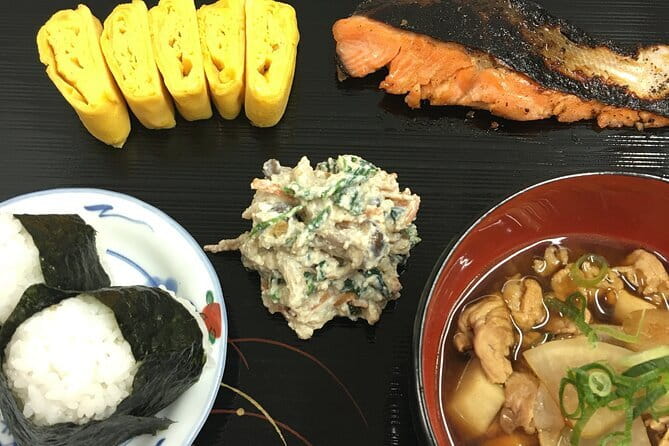
Menu 2 is built around grilled salmon with salted rice malt. You’ll also make:
- Mashed tofu salad
- Japanese omelet
- Tofu and vegetable miso soup
- Rice balls
Two practical notes I’d plan around:
- You’ll likely do best if you’re comfortable tasting as you go. Some steps in Japanese cooking are subtle, and the flavor comes alive after a small adjustment.
- You choose one menu for your group. If you’re traveling with someone who wants the other menu, you may need to coordinate your booking plans.
Either menu gives you a complete ichiju-sansai structure, so you won’t leave feeling like you made only one dish and watched the rest. You’ll do a full set: main + sides + soup + rice balls, then close with matcha.
Dashi, kelp, bonito, and the fermentation flavor logic
One of the most valuable parts of the class is the way it explains the soup stock—what it is and why it matters. You’ll learn to make soup stock using kelp and bonito flakes, which forms the kind of foundation most people associate with classic Japanese broth.
Then you’ll connect that broth to the supporting roles of:
- miso (including red miso in the chicken menu)
- soy sauce
- salted rice malt (used in the salmon menu)
This matters for you because it’s easy to treat Japanese cooking as “buy sauces and hope.” Here, you get taught that these ingredients don’t just season. They carry fermentation-driven depth. That helps you understand why the same base (soup) can taste different depending on which miso or sauce you pair with it.
If you’re planning to recreate dishes later, this is the kind of lesson that pays off. Recipes are included, yes. But the real advantage is knowing the flavor logic behind them. When you understand the logic, you can improvise within the style.
The tea and the quiet pacing

You’ll have welcome tea and tea during lunch. It sounds simple, but it sets the rhythm for the whole class. You’re not just cooking and running. You pause, sip, and reset your focus.
Also, matcha at the end isn’t thrown in as a random add-on. The class structure gives you a smooth transition: savory cooking first, then the cleaner, calmer taste of matcha with sweets.
From what I’ve seen in similar intimate classes, the pacing is what separates a good experience from a great one. This one leans toward “calm but attentive,” which makes the food taste better too.
Matcha ceremony: what you actually do and why it’s worth it
In this experience, you don’t just get matcha served to you. You make your own matcha, then enjoy it with seasonal sweets.
For many people, this is the cultural moment they remember most clearly. It also acts like a palate cleanser after savory dishes. Matcha has a distinct profile—slightly grassy, sometimes a little bitter—so it changes how you experience the sweets right after.
If you like food rituals that are short and practical (not long lectures), you’ll probably appreciate the format. It’s hands-on, it feels respectful, and it doesn’t require prior knowledge.
And if you’re taking notes or snapping photos, you’ll still be able to enjoy it. This class is designed around doing, not just watching.
Price and value: what $84.70 gets you in Nagoya
At $84.70 per person, this class isn’t a bargain meal. But it’s also not priced like a big show. You’re paying for:
- a small group size (limited to four people)
- hands-on instruction
- recipes you can take home
- a complete ichiju-sansai meal set
- matcha making plus seasonal sweets
- guidance in English or Japanese
- tea service
In other words, you’re not just buying ingredients. You’re buying time, teaching, and the chance to eat a full meal built from a daily home pattern.
A helpful detail for planning: the average booking happens about 36 days in advance. If you want a specific menu and time slot, earlier booking gives you more control.
Meeting point and timing: start at Sakurayama Station
The class meets at Sakurayama Station in Mizuho Ward, Nagoya, and starts at 10:30 am. The experience ends back at the meeting point.
Because private transportation isn’t included, you’ll want to plan your route using public transit. The meeting point is described as near public transportation, so getting there shouldn’t be a stress point.
How I’d plan your morning:
- Arrive a bit early so you can settle and start with the welcome tea without rushing.
- Keep the rest of your day flexible. After cooking, tasting, and matcha, you’ll likely feel fully “fed,” and you may want downtime after.
Who this class is best for
You’ll enjoy this most if you:
- want a hands-on food experience rather than a tasting tour only
- like learning a repeatable system (ichiju-sansai)
- want to understand how miso, soy sauce, and fermentation flavors work together
- prefer small-group cultural activities in a real home-style setting
It’s also a good fit if you cook already. Even experienced cooks often learn something new from a different sauce logic or broth method. Here, the lesson focuses on technique you can reuse.
If you’re traveling with someone who hates kitchen work, this might be harder to sell as an activity. This isn’t a quick “watch and snack” class. It’s meant for participation.
Should you book Grandma’s traditional Japanese cooking class in Nagoya?
If you want an experience that’s both practical and genuinely personal, I think this is a strong booking. You get a complete meal you can understand and recreate: rice, soup stock from kelp and bonito, a main dish, two sides, rice balls, then matcha you make yourself with seasonal sweets.
I’d especially recommend it if you’re the type who likes structure and learning. The ichiju-sansai framework makes the class feel bigger than the dishes. You’re not just cooking one menu. You’re learning how a daily Japanese meal is built.
If you’re short on time or you only want sightseeing, you might feel limited by the focused kitchen format. But if you’re in Nagoya and you want something you’ll remember later when you cook at home, this is the kind of activity that sticks.
FAQ
How long is the Grandma’s traditional Japanese cooking class in Nagoya?
It lasts about 2 hours 30 minutes (approx.).
What menu options are available?
You can choose either Menu 1 (chicken) or Menu 2 (salmon). If you don’t request a menu when reserving, Menu 1 is used. Your group can only select one menu.
Will I get to make matcha, or is it served to me?
You’ll make your own matcha after tasting the dishes, and then enjoy it with seasonal Japanese sweets.
Is transportation included?
No. Private transportation is not included. The meeting point is near public transportation.
What’s included in the price?
Included items are welcome tea and tea during lunch, recipes, and a guide who offers English and Japanese.
Can the class accommodate allergies or ingredients to avoid?
Yes. The instructions ask you to let them know in advance if you have allergies or ingredients you wish to avoid.