REVIEW · OIA
Oia: Greek Cooking Class and Lunch with a Local Grandmother
Book on GetYourGuide →Operated by Grandma Cooking Class · Bookable on GetYourGuide
Oia gets personal with yiayia Areti. In a private kitchen in the middle of Oia, Areti guides you through a 4-course Greek and Santorinian lunch, with wine and hands-on cooking roles that feel like an invitation, not a show.
Two things I love here are the hands-on coaching and the recipe cheat sheets you take home so you can actually recreate the dishes. You also get to tailor the menu for vegan, vegetarian, or gluten-free needs, which matters because Greek food is often built around classic ingredients you’ll want to swap thoughtfully.
The main drawback to consider: this is a small, participatory class with a hands-on rhythm. If you want a relaxed, sit-back meal with zero involvement, you may find it a bit too active for your style.
In This Review
- Key highlights worth your attention
- Oia Starts Outside Karma Restaurant, Then Moves Into a Real Home Kitchen
- Areti’s Story: A Santorini Lifelong Cook With Restaurant Years Behind Her
- The 4-Course Flow: Appetizers, Salad, Main, Dessert (And What Each Part Teaches)
- Appetizers: Where seasoning starts to make sense
- Salad: Freshness isn’t a garnish, it’s the recipe
- Main course: The island comfort-food lesson
- Dessert: Sweet finish with Greek cooking logic
- Vegan, Vegetarian, and Gluten-Free Without Turning Greek Into Something Else
- What You Learn Beyond Recipes: Technique, Timing, and Flavor Checks
- Lunch With Wine, Then a Take-Home Bonus That Extends the Fun
- Price and Value: $153 for 3 Hours, 4 Courses, Wine, and Hands-On Teaching
- Who Should Book This Oia Greek Cooking Class With Areti
- Should You Book Grandma Cooking Class in Oia?
- FAQ
- How long is the cooking class and lunch?
- What’s included in the price?
- Can the menu be adjusted for vegan, vegetarian, or gluten-free diets?
- Where is the meeting point?
- What’s the group size limit?
- Is there flexibility to cancel or pay later?
Key highlights worth your attention
- Meet yiayia Areti in the heart of Oia for a small-group cooking session limited to 6 participants
- 4-course lunch (appetizers, salad, main, dessert) made with fresh, organic ingredients
- Everyone cooks since the format uses active roles instead of watching from the sidelines
- Diet swaps are real, with vegan, vegetarian, and gluten-free options handled by adjusting menus
- You leave with more than recipes, including take-home leftovers and a written recipe sheet format
- Wine during lunch keeps the mood easy and social while you sit down to eat what you made
Oia Starts Outside Karma Restaurant, Then Moves Into a Real Home Kitchen
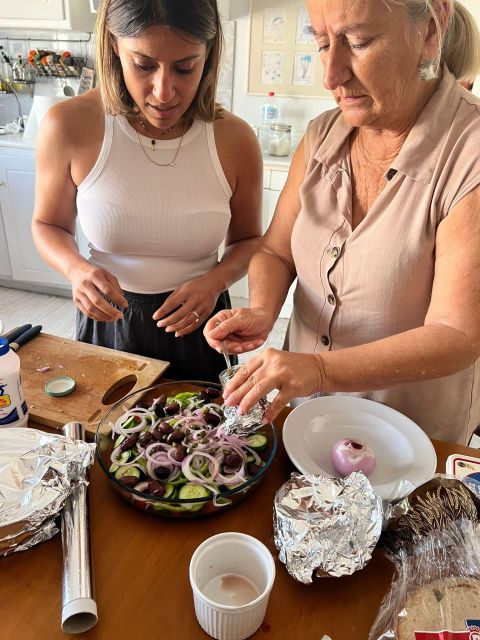
The experience begins at a clear, easy meeting spot: outside Karma Restaurant in Oia. From there, you’re headed into a private kitchen setup in the heart of the town, which is a big part of why this feels authentic. Instead of a studio classroom vibe, you get that lived-in, everyday feel where cooking is part of normal life.
Time-wise, it’s built for a full morning-to-lunch stretch: 3 hours. That’s enough time to learn technique, cook several dishes, and sit down to enjoy the meal you helped make, without rushing.
This is also the kind of activity where the small group size actually matters. With a limit of 6 participants, you’re more likely to get a specific job and direct feedback instead of standing around.
Areti’s Story: A Santorini Lifelong Cook With Restaurant Years Behind Her
Your host is Areti, a 68-year-old yiayia who has nearly her whole life tied to Santorini. The standout detail is her 27 years as a restaurant owner in Oia, which turns the class from a casual cooking demo into something closer to practiced, professional kitchen thinking.
In a lot of hands-on classes, you get recipes and instructions. Here, you also get the personal layer: stories about island life and food, plus the kind of teaching that comes from doing it for years. Many people describe her as warm and welcoming, and the format clearly supports that family-feeling tone.
Another practical bonus: the class is flexible enough to work for different cooking levels. People show up as beginners and still leave able to repeat the dishes, because Areti’s method focuses on what to look for while cooking, not just what to do.
One more detail that helps the experience feel real: there’s mention of Areti’s granddaughter being present during some sessions. It adds to the home-kitchen atmosphere and reinforces that you’re joining a real moment, not staging a performance.
The 4-Course Flow: Appetizers, Salad, Main, Dessert (And What Each Part Teaches)
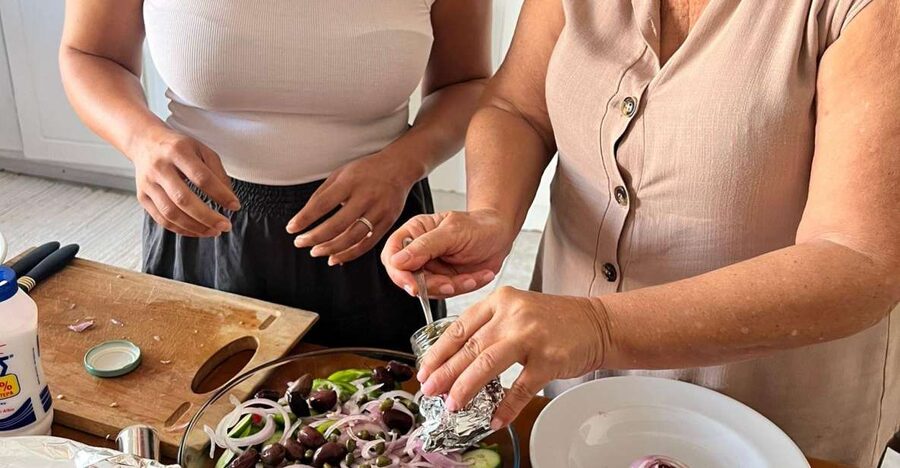
The meal structure is simple, but it teaches you how Greek flavors build in layers. You cook an appetizer, then a salad, then the main, and finally a dessert, all as a group using fresh ingredients. Even if you’re not a confident cook at home, this step-by-step pacing helps you connect technique with taste.
Appetizers: Where seasoning starts to make sense
You typically begin with one or more starter-style dishes. From the kinds of dishes people report making, expect recipes rooted in olive oil, herbs, and tomato-forward sauces, plus classic Santorini ingredient ideas like eggplant and pulses. The point of starting here is that you learn how seasoning shows up early, not only in the main course.
This part is also where you get technique shortcuts: how to prep ingredients so they cook evenly, and how to adjust flavor while you’re still in the kitchen rather than hoping it works at the table.
Salad: Freshness isn’t a garnish, it’s the recipe
Then comes salad, and this is where a lot of Greek cooking lessons “click” fast. Greek salad isn’t just chopped vegetables; it’s a balance problem: acid, salt, herbs, and olive oil have to work together. When the ingredients are fresh and handled well, the salad becomes a skill you can repeat anywhere.
You’ll likely get guidance on how to build flavor and texture instead of treating the salad as something you assemble at the last minute.
Main course: The island comfort-food lesson
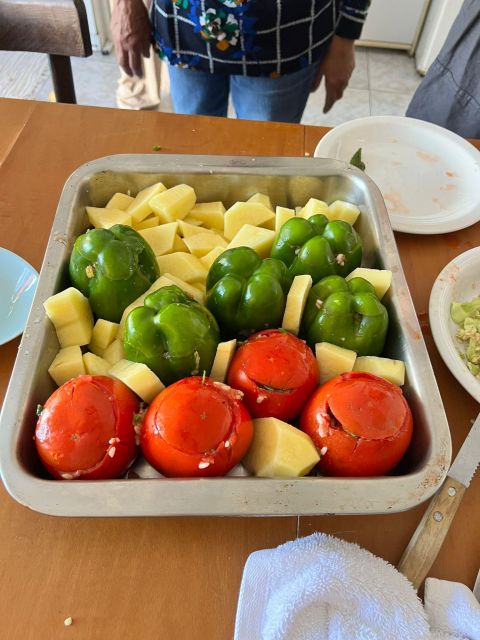
The main is where you get the heart of the meal. People describe dishes like meatballs in tomato sauce, fava bean-based preparations, eggplant salads, stuffed eggplants, and tzatziki-style sauces. That mix is useful because it teaches you different flavor paths: rich and savory, creamy and cool, and sometimes smoky or earthy depending on how eggplant is handled.
This is also where the hands-on portion tends to feel most rewarding. You’re doing real cooking steps, not just mixing. Areti distributes roles so everyone stays involved, which is a big reason participants say they felt like active chefs by the time lunch was served.
Dessert: Sweet finish with Greek cooking logic
Finally, dessert rounds out the 4-course structure. While the exact dessert isn’t spelled out in the basic details, the format is consistent: you learn the final step and how to finish a meal in a way that tastes like you know what you’re doing.
Even if dessert isn’t your usual focus, the value here is learning how Areti sequences timing. Getting dessert right after a full meal says a lot about how she thinks about kitchens.
Vegan, Vegetarian, and Gluten-Free Without Turning Greek Into Something Else
A lot of cooking classes claim they can handle dietary restrictions. This one actually calls out menu customization for vegan, vegetarian, and gluten-free diets. That matters because Greek cuisine often relies on ingredients like dairy, meat stock, or wheat-based components unless you plan swaps.
The most practical approach is to treat customization as ingredient replacement, not a last-minute workaround. The menu is adjusted around the dish structure, so you’re still learning classic Greek flavor patterns while staying within your needs.
If you’re traveling with someone who eats a specific way, this is one of the few cooking experiences in Oia where you can feel confident the lunch will be coherent for everyone at the table.
What You Learn Beyond Recipes: Technique, Timing, and Flavor Checks
The class is “cook with me” rather than “watch this.” People repeatedly highlight that Areti involves each participant in different steps, so you’re not just learning from verbal tips. You’re learning by doing—chopping, prepping, mixing, assembling, tasting, and adjusting as the meal comes together.
One thing that comes up often in the feedback: you’re encouraged to take notes. Areti provides notepads and pens, and the teaching includes little trade-off ideas that make your home cooking better later. Even if you don’t cook every day, you’ll leave with practical observations like how to judge seasoning, how to recognize when something is ready, and how sauces should feel when they’re balanced.
Also, the ingredient approach matters. The class emphasizes fresh, organic ingredients, and you can taste the difference when you’re using produce that’s meant for flavor, not just bulk.
Lunch With Wine, Then a Take-Home Bonus That Extends the Fun
You eat what you made—plus it’s paired with a glass of wine. That might not sound like much, but it changes the mood. You’re not leaving the kitchen to watch someone else eat; you’re sitting down as part of the same meal-making process, which turns the whole thing into a social lunch rather than a timed lesson.
Another strong value point: you’re not sent away with only paper. Many people mention receiving leftovers in take-home boxes. That’s especially helpful in Santorini, where food options can get repetitive and expensive once you’ve been out all day.
Then there are the recipe cheat sheets you depart with. This is the part that helps you avoid the classic problem with cooking classes: you love the meal, then forget what to do at home. With written notes in a recipe format, you have a starting point for repeating the dishes.
Price and Value: $153 for 3 Hours, 4 Courses, Wine, and Hands-On Teaching
At $153 per person, this isn’t a budget activity. But you are getting a full 4-course meal, a glass of wine, and a structured cooking lesson in a private kitchen setting with a small group.
The value equation looks better when you consider what you’d otherwise pay for: you’d need ingredients, time, and skilled instruction to make a meal that’s both authentic and properly sequenced. Here, the cost covers coaching, ingredient prep, the learning experience, and the meal itself.
It also helps that the class is limited to 6. In larger group formats, you can feel like your role is vague and your attention is split. Here, the format pushes you into doing steps, which makes the price feel more justified.
Who Should Book This Oia Greek Cooking Class With Areti
This works especially well for:
- Couples who want a memorable morning activity in Oia that isn’t just sightseeing
- Solo travelers who value a warm, social atmosphere with assigned roles
- People with dietary needs who want customization for vegan, vegetarian, or gluten-free diets
- Families, including kids, since the experience is described as inclusive and hands-on rather than lecture-heavy
- Food lovers who care about technique, not only taste
If you’re the type who likes to learn while cooking, you’ll probably feel right at home. If you’re looking for a quick food stop, this isn’t that. It’s a full experience built around teaching, cooking, eating, and taking notes.
Should You Book Grandma Cooking Class in Oia?
I’d book this if you want an Oia experience that feels personal, practical, and repeatable. Areti’s background—lifelong Santorini living and 27 years in Oia restaurants—shows in how the class is organized and how people describe her patience and teaching style. Add the 4-course lunch, the small group, and the take-home recipes, and you get a strong mix of fun plus real value.
I would hesitate only if you dislike active participation. This class makes you part of the cooking. If you want a passive meal with minimal involvement, you might prefer a standard restaurant day instead.
FAQ
How long is the cooking class and lunch?
The experience lasts 3 hours.
What’s included in the price?
You get the cooking class, a 4-course meal, a glass of wine, and recipe sheets.
Can the menu be adjusted for vegan, vegetarian, or gluten-free diets?
Yes. The menu and recipes can be customized for vegan, vegetarian, and gluten-free needs.
Where is the meeting point?
You meet outside Karma Restaurant.
What’s the group size limit?
It’s a small group limited to 6 participants.
Is there flexibility to cancel or pay later?
Yes. You can reserve now and pay later, and you can cancel up to 24 hours in advance for a full refund.