REVIEW · OLBIA
Olbia: cooking class on real pasta carbonara
Book on GetYourGuide →Operated by Escursì · Bookable on GetYourGuide
Carbonara feels simple. It is not.
In this Olbia cooking class, I like how the chef keeps the focus on real carbonara technique, from choosing the right guanciale to getting the sauce silky with timing.
You’ll also like the hands-on kitchen time and the fact you eat what you made right after, with lunch and selected wine. It’s a relaxed, friendly setup with a small group, so you’re not just watching.
One thing to consider: this is about learning carbonara, not making homemade pasta dough from scratch. If you’re expecting every step to be DIY, you may find it shorter and more focused than you hoped.
In This Review
- Key takeaways before you book
- Real Pasta Carbonara in Olbia: what you’ll learn in 1.5 hours
- Finding the place: Piazza Mercato and the Rosinita meeting point
- Cooking carbonara the Italian way: guanciale to mantecatura
- Getting the ingredients and starting points right
- Timing the cooking so the sauce turns silky
- Expect a guided hands-on session
- Tasting your carbonara, then moving straight into lunch
- Small group size and languages: why it feels personal (and not rushed)
- Price and value: is $77 worth it?
- Who should book this Olbia carbonara class (and who should skip)
- Practical flow: what your morning will feel like
- Should you book this Olbia carbonara cooking class?
- FAQ
- How long is the cooking class?
- What is included in the price?
- Where do we meet in Olbia?
- Is this a small group?
- Are pets allowed?
- What languages are available during the experience?
- Is it suitable for children?
- Is it suitable for people with food allergies?
- Can I cancel for a refund?
Key takeaways before you book
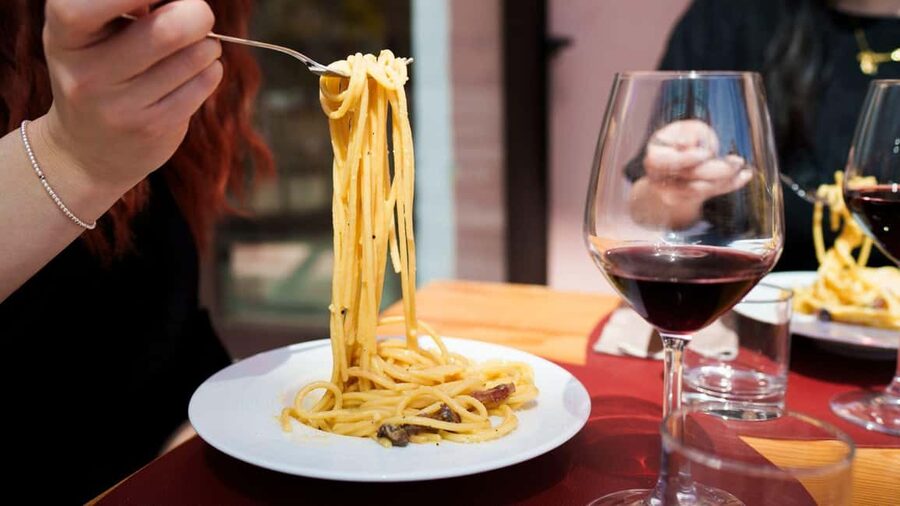
- Real carbonara technique: guanciale choice and the mantecatura moment are the stars
- Small group (max 6): more attention when questions come up
- Cook, then eat: your carbonara becomes your lunch, not a sample-sized bite
- Selected wine with lunch: nice extra pairing with the meal
- Multilingual chef support: Italian, English, and Spanish are available
- Not for everyone: no pets, and it’s not suitable for people with food allergies
Real Pasta Carbonara in Olbia: what you’ll learn in 1.5 hours
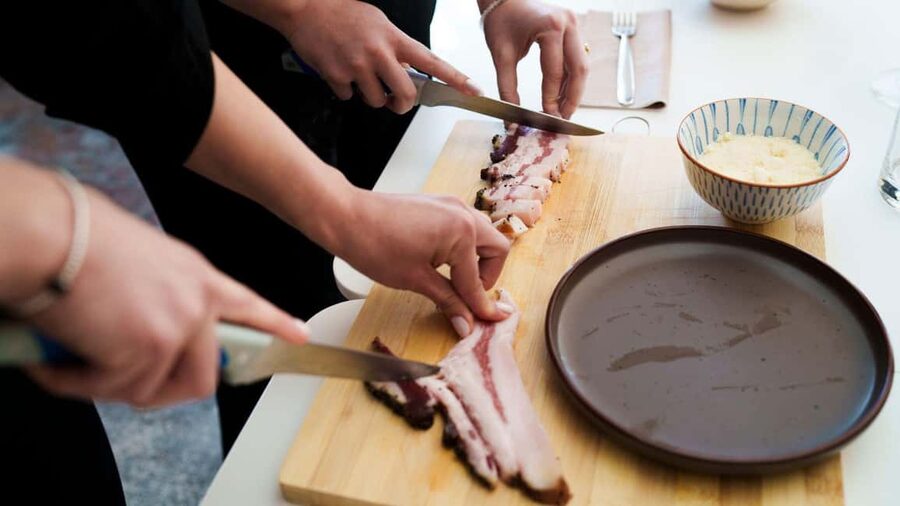
This class is built around one goal: teach you how Italian carbonara is meant to be made. Not the usual tourist version with cream or shortcuts. Instead, you’ll work through the steps that create that glossy, thick-but-not-heavy texture.
The timing matters here. At about 1.5 hours, you’ll move at a practical pace: meet the chef, prep and cook, then taste and enjoy. That’s a good fit if you want a cultural activity that doesn’t swallow your whole day, especially on Sardinia where your time outdoors can be tempting.
And yes, you’ll actually cook. The class is designed for participation, not just a show. Still, keep expectations realistic: the lesson is carbonara technique, so you won’t be spending hours rolling dough and making pasta shapes.
Finding the place: Piazza Mercato and the Rosinita meeting point
Your day starts in central Olbia at Piazza Mercato, meeting at the Rosinita restaurant, number 6. The square is easy to spot because of its imposing glass roof, and the restaurant has a pink-painted façade.
Why this matters: if you’re arriving by foot from the center, having a clear landmark makes the start calmer. Cooking classes lose points fast when people are late. Here, the meeting point is meant to be straightforward, so you can get settled and start on time.
Also note the provider: the experience runs with Escursì, which helps explain the structured flow of cooking, tasting, and lunch.
Cooking carbonara the Italian way: guanciale to mantecatura
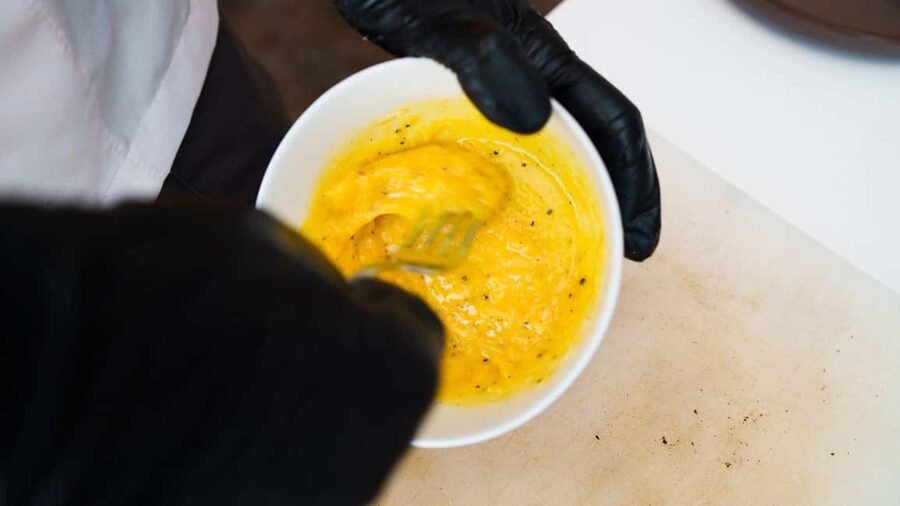
This is the core of the experience, and it’s where the chef earns their pay.
Getting the ingredients and starting points right
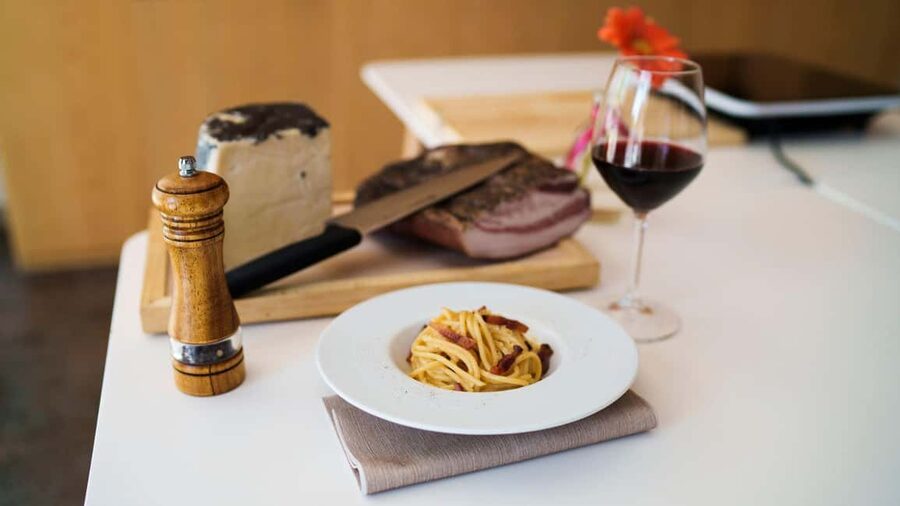
Carbonara starts before the heat. The class highlights choosing the perfect guanciale, which is the key difference between “good pasta” and authentic carbonara. You’re not just learning a recipe. You’re learning why one ingredient drives the flavor profile.
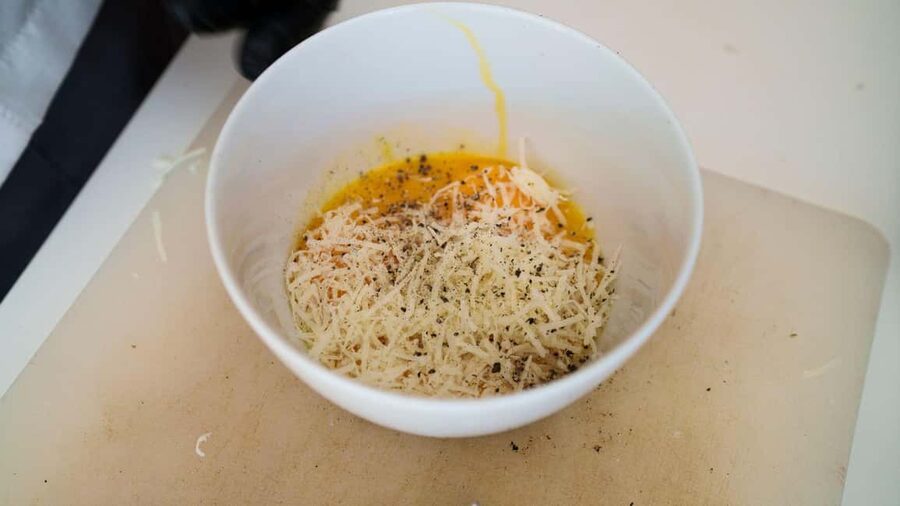
You’ll also learn how the sauce comes together. Carbonara is often misunderstood as a sauce you pour on. The real magic is more about technique: eggs and fat emulsify with the pasta and heat management. That’s why the class pays attention to steps in sequence, not random mixing.
Timing the cooking so the sauce turns silky
The most important part you’ll want to remember is the mantecatura—the mixing step where you create the creamy texture without adding cream. Carbonara can go from perfect to scrambled if you get the timing wrong, so expect the chef to emphasize when to combine things and how to stir.
If your goal is to recreate this at home, focus on two lessons:
- how the chef controls heat while combining egg and pasta
- how the mixture thickens and turns glossy as you toss
That’s the kind of “small” knowledge that makes a huge difference later.
Expect a guided hands-on session
The format is interactive: you cook with your own hands, then you taste your result. That’s also where you learn pacing, not just ingredients. A chef can tell you what to do, but cooking it yourself makes it stick.
If you’re used to cooking classes that feel like a full culinary workshop, this may feel more like a focused skill session. One negative note in the feedback is that some people felt they did not make pasta themselves. Use that as a clue: you’re learning carbonara technique, not producing every component from scratch.
Tasting your carbonara, then moving straight into lunch
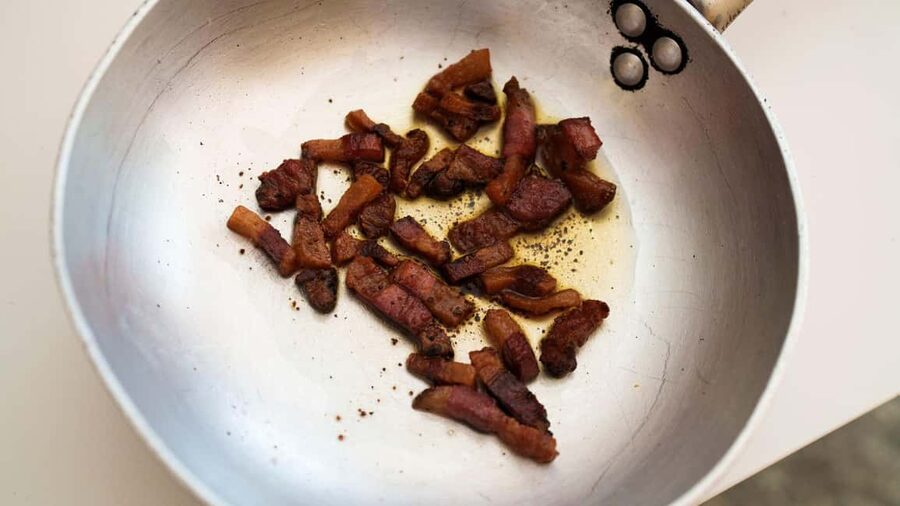
After cooking, you taste the carbonara you prepared. This is an underrated part of the experience. You don’t have to wonder if your sauce is right. You get immediate feedback in the same flow of the class.
Then lunch lands naturally. Instead of a separate meal later, the lunch is the fruits of your labor—your finished pasta, served as part of the experience. That makes the session feel complete, not like a “brief demo followed by something else.”
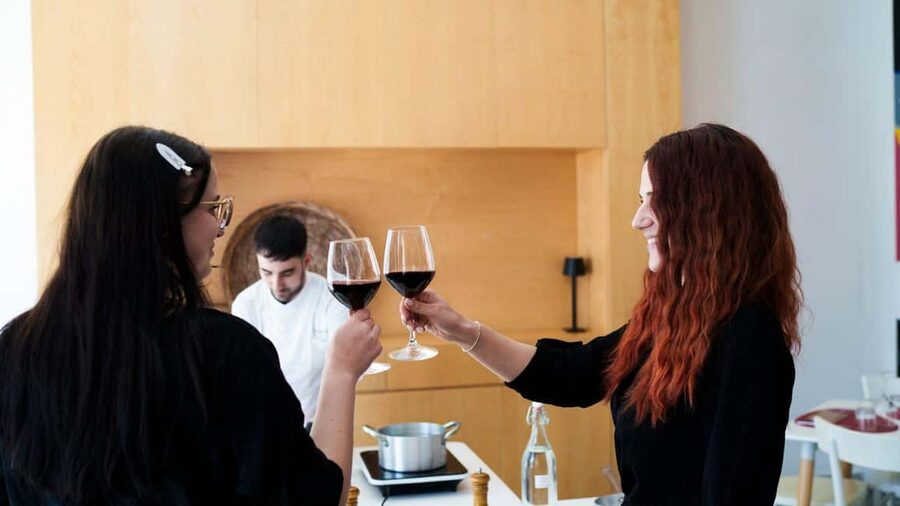
Wine is included with lunch, described as selected wine. The data doesn’t say the exact type or brand, so don’t count on a specific grape. But pairing wine with carbonara is a classic move: you’re balancing the richness of guanciale and egg with something refreshing enough to keep you comfortable through the meal.
Also, the vibe matters. The class is described as congenial and authentic, and the small-group size supports that. You’ll have a chance to talk with others in your language group, not just shuffle past.
Small group size and languages: why it feels personal (and not rushed)
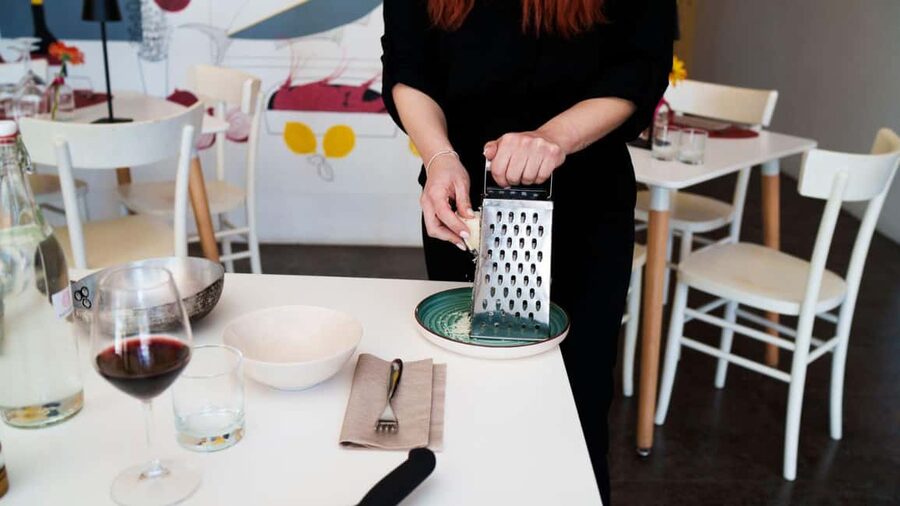
This is a small group limited to 6 participants, which changes the whole experience.
With smaller numbers:
- the chef can correct your steps while you’re still doing them
- you can ask questions without waiting your turn
- you can learn the “why” behind the technique, not just the what
The class guide availability includes Italian, English, and Spanish. That’s a big deal for a recipe like carbonara where the technique hinges on heat and timing. If language support matches yours, you’ll understand instructions clearly, and you’ll be less likely to guess during the mantecatura step.
There’s also evidence of a friendly, helpful teaching style. One guest specifically praised a chef named Francesco for being lovely, helpful, and clear enough that they felt confident remaking carbonara afterward. That kind of teaching is exactly what you want in a focused 1.5-hour class.
Price and value: is $77 worth it?
At $77 per person for 1.5 hours, this is not a throwaway food stop. You’re paying for a chef, ingredients, guided technique, and lunch included.
Here’s the value equation that helps you decide:
- If you want a hands-on lesson where you can take home a repeatable skill, the price starts to make sense. Carbonara isn’t hard, but doing it correctly is a technique game.
- If you mainly want a quick taste and don’t care about learning the method, it can feel high for the time on the clock.
Some feedback points to exactly this tension: at least one person felt it was too expensive, while another liked the experience but judged it based on expectations. That makes the key question simple for you: do you want the cooking knowledge, or do you just want a meal?
If your priority is learning the authentic steps—guanciale choice, correct sauce texture, and mantecatura—you’re paying for something you can use later.
Who should book this Olbia carbonara class (and who should skip)
This class is a strong match for:
- people who enjoy cooking and want a technique-focused lesson
- food lovers who want authentic Italian method, not just a standard pasta plate
- couples or small groups that want a short activity with a meal included
It’s also a good fit if you’re traveling with kids around the right age. Children of all ages are allowed, but active participation is possible from age 8 and up. That means younger kids might watch more, while older kids can likely join the hands-on part.
Skip it if:
- you have food allergies (it’s not suitable)
- you want to bring a pet (pets are not allowed)
- you expect to make every pasta component from scratch, since this is carbonara technique rather than a pasta-dough workshop
Practical flow: what your morning will feel like
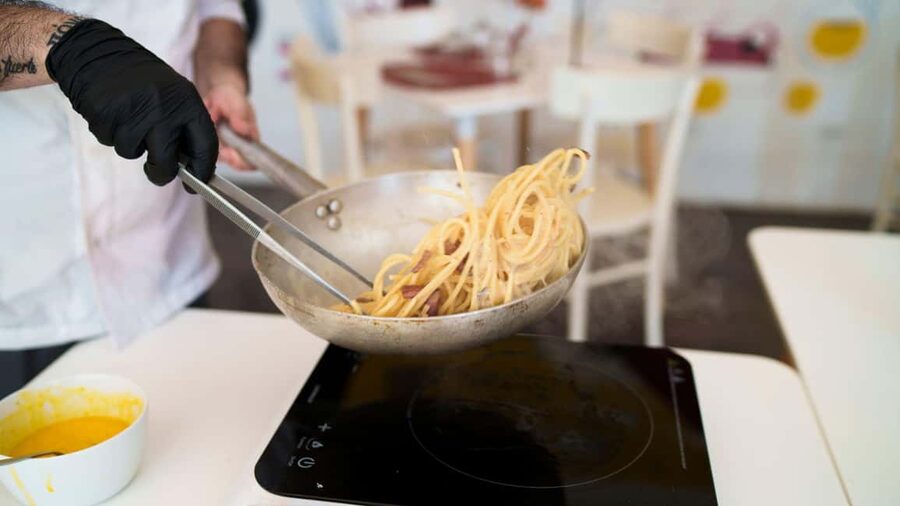
You can think of the class as a three-part arc:
- Meet the chef at Rosinita in Piazza Mercato
- Prepare and cook carbonara with guidance and participation
- Taste and enjoy lunch with selected wine
The short duration helps you keep momentum. You won’t feel stuck in a long schedule, and you’ll have a full meal afterward. That makes it easier to plan the rest of your day in Olbia and beyond—especially if you’re trying to balance cooking with beaches, viewpoints, and wandering.
Should you book this Olbia carbonara cooking class?
I’d book it if you want an authentic, skills-first food experience in Olbia. The strengths are clear: small group attention, real carbonara technique, and the satisfying bonus that your lunch is what you cooked.
Skip it if your expectations are broader—like you want a full pasta-making marathon—or if you’re allergy-sensitive, since the class is not suitable for food allergies.
If you’re on the fence, use this rule: carbonara technique plus lunch included at $77 is worth it when you care about learning how to make it correctly. If you just want a simple meal, you might find better value elsewhere.
FAQ
How long is the cooking class?
The duration is 1.5 hours.
What is included in the price?
The experience includes the cooking class on pasta carbonara, a chef, and lunch.
Where do we meet in Olbia?
You meet at the Rosinita restaurant at Piazza Mercato, number 6. The square has an imposing glass roof, and the restaurant has a pink-painted façade.
Is this a small group?
Yes. The group is limited to 6 participants.
Are pets allowed?
No, pets are not allowed.
What languages are available during the experience?
The chef/guide languages include Italian, English, and Spanish.
Is it suitable for children?
Children of all ages are allowed, but active participation is possible from age 8 and up.
Is it suitable for people with food allergies?
No, it is not suitable for people with food allergies.
Can I cancel for a refund?
You can cancel up to 24 hours in advance for a full refund.