Crisp tempura starts long before the frying pan. In Chef Yuki’s Osaka kitchen, I love the hands-on technique—especially shaving bonito flakes from a block for miso soup—and I also like the small group size (up to 6), which makes the coaching feel personal. The only real caution: if you’re an advanced cook hunting for very technical theory and deep sauce breakdowns, this class may feel more like strong fundamentals than heavy culinary homework.
You also get the full Japan-at-home vibe: you cook, you taste, and then you slow down with tea in a calm space with mountain views. I liked that the class includes recipe handouts so what you learn doesn’t vanish the second you land back home. Still, you should plan for the fact that transportation to the venue isn’t included in the standard package.
In This Review
- Key Things I’d Book This For
- Chef Yuki’s Osaka Kitchen: Small Group Cooking That Feels Real
- Getting There From Namba: The 30-Minute Rail + 5-Minute Walk Plan
- What You’ll Cook: Tempura, Miso Soup, and Japanese Side Dishes
- Bonito Shaving for Miso Soup: The Step That Changes Everything
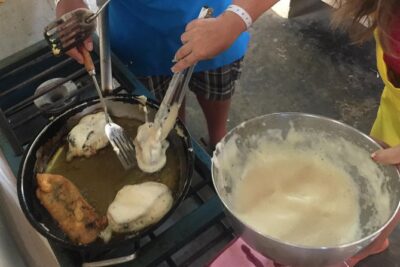
- Tempura Fundamentals: From Batter to Kakiage Crunch
- Soft-Boiled Egg Tempura: Timing Is the Real Ingredient
- The Izakaya Coleslaw and the Meal You Actually Eat
- Price and Value: Is $96 for 150 Minutes Fair?
- Who This Osaka Class Fits Best (and Who Might Prefer Something Else)
- The Take-Home Skill: What You’ll Be Able to Do After
- Should You Book Chef Yuki’s Osaka Tempura & Miso Soup Class?
- FAQ
- How long is the cooking class?
- What dishes will I learn?
- Is the class taught in English?
- How many people are in the group?
- Where is the meeting point in Osaka?
- Is pickup or transportation included?
- Are drinks and recipes included?
Key Things I’d Book This For
- Hand-shaving bonito flakes from a block for fresher miso soup flavor
- A maximum of 6 participants, so Chef Yuki can correct your tempura and timing
- Kakiage tempura and soft-boiled egg tempura, not just basic frying
- English-speaking instruction with a clear, step-by-step teaching style
- Ingredient and tool support, so you’re cooking for real instead of improvising
- Meal tasting plus beverages, so you actually eat what you make
Chef Yuki’s Osaka Kitchen: Small Group Cooking That Feels Real
This isn’t a quick demo where you stand back and watch. It’s a proper, hands-on class run by Chef Yuki, with an English-speaking instructor guiding you through tempura and miso soup from start to finish. The small group matters. With just up to six people, you don’t feel like you’re on a conveyor belt.
What I like most is the blend of precision and warmth. You’ll be doing things that are normally done with practiced hands—especially the miso soup part where bonito flakes start as a block. That’s the kind of skill that makes the whole experience click, because you can feel how small choices affect flavor.
Also, the atmosphere is part of the value. Several people mention Chef Yuki’s serene home setup, and after cooking you don’t get hustled out. You eat your food, then enjoy teas in a relaxing space with mountain views. That pacing is rare in tour-land.
Getting There From Namba: The 30-Minute Rail + 5-Minute Walk Plan
The meeting point is at 4-19 Nukata-cho, Osaka, near Nukata Station. The good news: it’s only about a 5-minute walk from the station, and the address is easy to follow for a white building.
From Namba, the simplest route is:
- Take the Kintetsu Nara Line from Osaka Namba Station
- Ride about 30 minutes to Nukata Station (about ¥430)
- Walk roughly 5 minutes to the classroom at the address
Important practical note: the class listing says transportation to the venue isn’t included, so you’ll want to handle the trip yourself unless you’ve arranged the optional concierge pickup (described as an add-on). In some experiences, Chef Yuki has picked people up and helped them get home afterward, but don’t assume that’s automatically included.
What You’ll Cook: Tempura, Miso Soup, and Japanese Side Dishes
This class centers on two Japanese signature dishes: tempura and miso soup. But the experience feels more complete than just frying and stirring.
From the details provided, expect to work on:
- Miso soup with hand-shaved bonito flakes (bonito shaving from a block is a highlight)
- Tempura, including kakiage (a mixed-ingredient tempura)
- Soft-boiled egg tempura
- Tempura donburi (crispy tempura over rice is referenced as part of what you practice)
- A Japanese izakaya-style coleslaw recipe
- Ingredients and techniques that support the cooking flow (people also mention learning dashi from scratch)
Why this matters for you: tempura isn’t just about the fryer. It’s about prepping the batter and ingredients, plus controlling timing so the crust stays crisp. Miso soup isn’t just mixing miso paste—your flavor depends on your soup base and how you handle bonito. This class pushes you toward that “technique first” mindset.
Bonito Shaving for Miso Soup: The Step That Changes Everything
Here’s the moment that people remember: you learn how to shave bonito flakes by hand, starting from a block. That single action is a fast track to understanding why Japanese dashi tastes different from the quick versions you might find at home.
When you shave bonito yourself, you control texture and freshness in a way pre-packaged flakes can’t. You also slow down and learn what the cook is listening for—how the process looks and how the soup base responds. Several participants specifically call this out as special, and it’s easy to see why. It turns a basic sounding task into an actual craft.
Chef Yuki’s teaching style comes through here. People mention she explains preparation details clearly and lets you try on your own. So you’re not just watching. You’re building confidence with the steps that create the foundation for miso soup.
Tempura Fundamentals: From Batter to Kakiage Crunch
Tempura has a reputation for being tricky, and for good reason: it’s easy to end up with greasy coating or a crust that loses its crunch too fast. This class focuses on getting you there by practicing the process, not just copying a recipe.
You’ll work on tempura techniques that include:
- Crispy tempura donburi practice (tempura over rice)
- Kakiage tempura, where mixed ingredients are fried together in a textured fritter style
Why kakiage is valuable: it’s forgiving in one sense (you can learn how ingredients behave together), but it’s unforgiving in another (heat control and batter handling still matter). That’s a great learning dish because it trains your timing.
From the reviews-style details you provided, Chef Yuki is patient and gives lots of tips on technique and ingredients. That’s exactly what you want in a hands-on setting: quick corrections and practical guidance, right when you need it.
Soft-Boiled Egg Tempura: Timing Is the Real Ingredient
Soft-boiled egg tempura sounds simple until you try it. The egg has to be cooked just right so the texture lands where you want it, and the coating needs to crisp without overcooking what’s inside.
This is one of the class highlights: soft-boiled egg tempura. That tells me the course isn’t staying at “starter frying only.” You’ll be doing the kind of step where timing is everything, and Chef Yuki’s coaching becomes more than helpful—it becomes the difference between a good attempt and a great one.
If you love the science side of cooking, you’ll appreciate what this forces you to notice: doneness, heat consistency, and how long you can keep things moving before quality drops.
The Izakaya Coleslaw and the Meal You Actually Eat
A cooking class is only half useful if you can’t recreate the flavors at home. That’s why I like that this experience includes more than tempura and miso soup. The izakaya coleslaw recipe adds contrast—cool, crunchy, and a great match for fried food.
After cooking, you eat what you made. People mention the meal is delicious and that tea accompanies it. That matters because you get a real taste reference for the final texture and balance, not just a separate tasting at the end.
You’ll also receive recipe handouts, so you can recreate the dishes later. In practice, that’s one of the best forms of value: you buy a skill, then you keep the map.
Price and Value: Is $96 for 150 Minutes Fair?
At $96 per person for 150 minutes, you’re paying for more than ingredients. You’re paying for:
- An English-speaking instructor
- Chef Yuki’s hands-on coaching
- Fresh ingredients and all necessary cooking tools
- A limited group size (up to 6)
- Meal tasting plus beverages
- Recipe handouts
If you break it down, that’s about $38 per hour. Cooking classes in Japan vary a lot, but the combination here is what makes it feel fair: small group attention, real technique (bonito shaving and tempura processes), and you leave with written recipes.
The most important value question for you: how much do you want to learn hands-on technique? If you want the basics, you might find cheaper options. If you want real guidance on steps like hand-shaving bonito and frying skills you can’t easily guess, this price starts to make sense quickly.
Who This Osaka Class Fits Best (and Who Might Prefer Something Else)
This is a great match if you want:
- A practical Japanese cooking lesson, not a lecture
- A chance to learn technique you’d struggle to copy without guidance
- Small group attention and clear step-by-step help
- Dishes like kakiage and soft-boiled egg tempura that give you variety
It may not be the best fit if you’re already cooking at a high level and crave deeper technical theory, advanced sauce work, or very detailed ingredient chemistry. One comment you shared suggests the class stays closer to fundamentals. If that’s your need, you might look for a more advanced workshop.
Also note: the activity says it’s not suitable for people with altitude sickness, and alcohol and drugs aren’t allowed.
The Take-Home Skill: What You’ll Be Able to Do After
The best part of a technique-focused class is not memorizing steps. It’s changing how you cook.
After this experience, you should be able to:
- Explain and practice bonito shaving and why it affects your dashi base
- Fry tempura with better attention to batter behavior and timing
- Handle kakiage as its own frying style
- Execute soft-boiled egg tempura with a focus on doneness and heat control
- Build a meal around tempura and miso soup plus a complementary side like izakaya coleslaw
And since you’ll have recipe handouts, you can convert the memory into a repeatable home-cooking plan.
Should You Book Chef Yuki’s Osaka Tempura & Miso Soup Class?
If you want an authentic Osaka food experience with real coaching, I’d book it. Chef Yuki’s class checks the boxes that matter: small group attention, hands-on technique, and dishes that aren’t just tourist-safe fried shrimp.
I’d especially recommend it if you:
- Like learning the why behind flavor
- Want to bring home skills you can repeat
- Prefer cooking in a real kitchen setting with a calm pace
Skip it if you want a fast group activity, or if you’re hunting for advanced, sauce-deep, theory-heavy instruction. But if you want crisp tempura you can trust and miso soup built from real bonito shaving, this class looks like a strong bet.
FAQ
How long is the cooking class?
The class duration is 150 minutes.
What dishes will I learn?
You’ll make tempura and miso soup, including kakiage tempura and soft-boiled egg tempura. You’ll also work with bonito flakes for the miso soup and prepare an izakaya-style coleslaw.
Is the class taught in English?
Yes. The class is taught with an English-speaking instructor.
How many people are in the group?
The class is limited to small groups of up to 6 participants.
Where is the meeting point in Osaka?
The meeting point is at 4-19 Nukata-cho, Osaka, near Nukata Station, a walk of about 5 minutes from the station. A white building is mentioned as the landmark.
Is pickup or transportation included?
Transportation to the venue is not included as a standard item. A concierge pick-up service is described as an add-on.
Are drinks and recipes included?
Yes. Beverages are included, and you also receive recipe handouts to recreate the dishes at home.