REVIEW · CHEFCHAOUEN
Chefchaouen Cooking Class
Book on Viator →Operated by Moroccan Food Tour · Bookable on Viator
One of the fastest ways to understand a place is through food. This Chefchaouen cooking class pairs a local market visit with a hands-on Moroccan kitchen session, so you’re not just eating you’re learning how the ingredients and flavors come together. With a small group (10 or fewer), you get room to ask questions and actually see how Moroccan home cooking works, course by course.
I especially like the combination of shopping for ingredients first, then cooking with a chef’s help right afterward. And because the meal is a full three-course lunch, you leave with a real sense of how a Moroccan table is built, not just a quick taste. One possible drawback: the class is about 3 hours, so if you’re hoping for maximum time doing every step yourself, it’s smart to go with the mindset of learning alongside the chef rather than fully running the show.
In This Review
- Key highlights you’ll care about
- Chefchaouen at 11:00: How the 3-Hour Class Really Plays Out
- The Market Walk: Picking Ingredients the Moroccan Way
- Inside the Kitchen: Hands-On Moroccan Cooking With a Small Group
- Three Courses, One Table: What You’ll Actually Eat
- Tasting Time and the Culture Layer You Get Along the Way
- Coffee, Moroccan Mint Tea, and Cookies: The Ending Matters
- Price and Value: Is $68.95 a Good Deal?
- Where You’ll Start and How Easy It Is to Find
- Who Should Book This Chefchaouen Class (and Who Might Skip It)
- Should You Book Chefchaouen Cooking Class?
- FAQ
- What is the duration of the Chefchaouen Cooking Class?
- What time does the experience start?
- Where is the meeting point?
- Where does the tour end?
- How much does it cost?
- How big is the group?
- What’s included in the price?
- Are alcoholic beverages included?
- What do I get to drink at the end?
- Is there free cancellation?
Key highlights you’ll care about
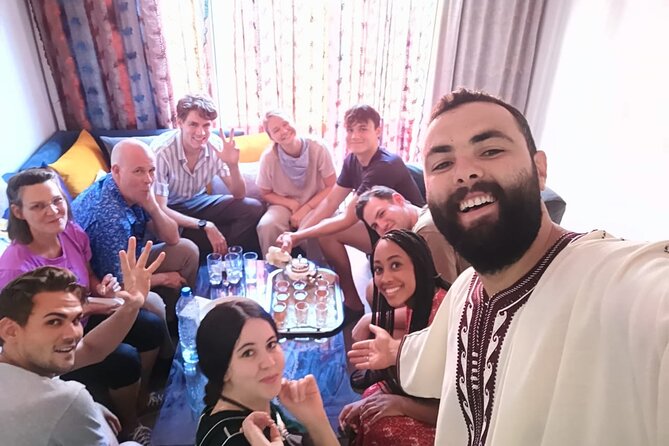
- Market-first shopping with your chef so you start with what’s freshest
- Small group up to 10 for quicker questions and more personal guidance
- 3-course home-style lunch that you’ll sit down to eat together
- Chef’s tools and assistance included so you’re not improvising
- Mint tea or coffee with cookies to end on a Moroccan note
Chefchaouen at 11:00: How the 3-Hour Class Really Plays Out
This experience starts at 11:00 am at Hotel Bab El Ain, at Rue lala horra kayssariya, number 77 (the hotel salon de thé Bab El Ain area). You finish back at the same meeting point, which is convenient when you’re trying to keep your day simple in the medina.
The total time is about 3 hours, and that matters. In a short window, the tour does two jobs well: it gets you through a market ingredient hunt, then moves you into cooking and tasting without dragging. You’ll be walking through the old local market with your chef, then you’ll head to the cooking space and work through the meal you chose ingredients for.
You’ll also notice the pacing is built around one core idea: you shop, you cook, you eat. That sounds obvious, but in many tourism experiences the market is just a photo stop and the cooking is just a demo. Here, the steps are connected, which makes the whole thing feel logical and easier to remember.
You can also read our reviews of more tours and experiences in Chefchaouen.

The Market Walk: Picking Ingredients the Moroccan Way
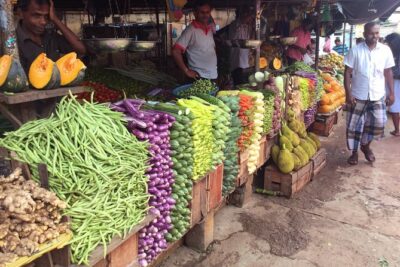
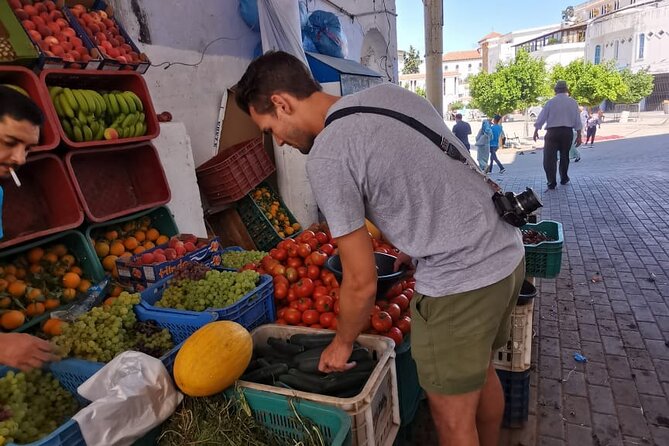
The class begins in the old market, guided by your chef. The point of this part isn’t to admire stalls (though you will see plenty). It’s to watch how local shops handle daily sourcing: what looks fresh, what’s available, and how ingredients fit into Moroccan cooking.
In practical terms, you’ll be choosing what you’ll use in the class, and you’ll take home everything needed for the session. That means the market visit doesn’t vanish once you arrive in the kitchen. You’ll feel the difference between an ingredient you picked yourself and one that simply landed on your plate.
If you love food detail, this is where you’ll pick up the most useful “why” questions. Your chef guide can connect ingredients to flavor and technique in a way that a recipe card can’t. And if you’re the type who’s curious about culture beyond food, Chefchaouen’s local rhythm comes through here—this is the daily supply chain for a lot of home cooking.
A small consideration: markets move fast and sights can be dense. The tour starts at 11:00, so plan for a couple of lively hours in a busy area, especially if you’re easily overwhelmed by crowds or strong smells.
Inside the Kitchen: Hands-On Moroccan Cooking With a Small Group
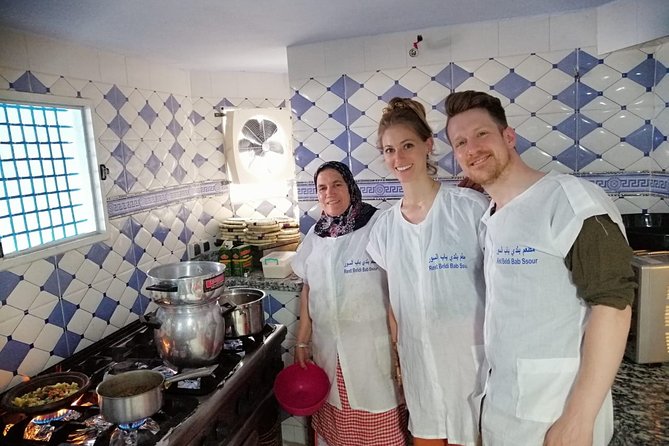
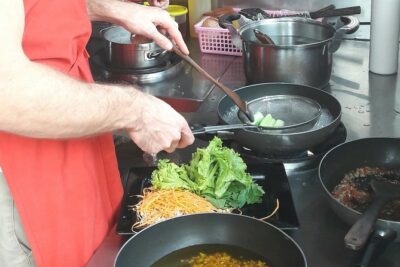
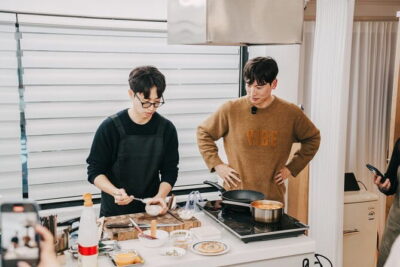
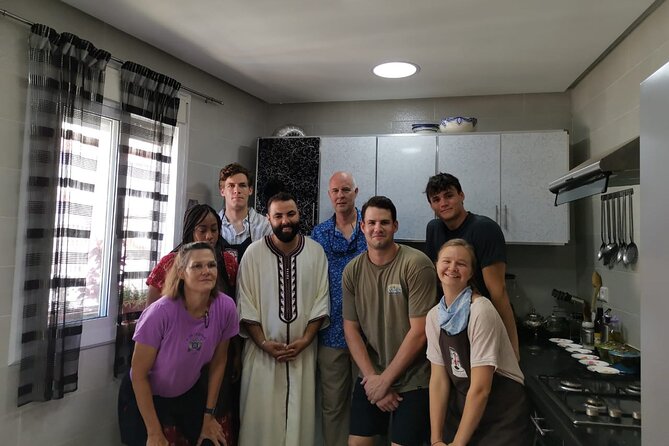
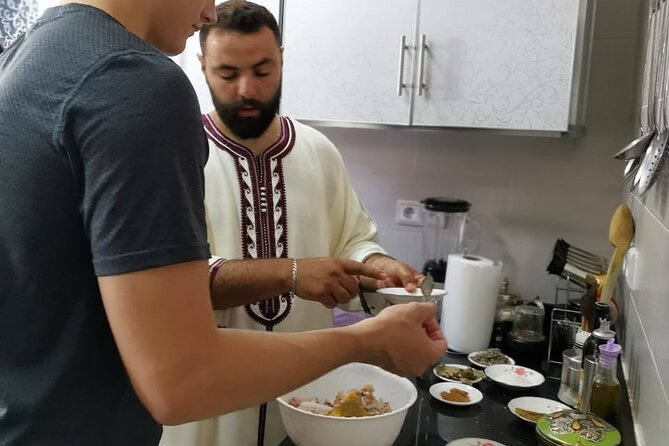
After the market, you’ll cook with the help of your chef and use the provided kitchen tools. The kitchen setting is set up for guests to participate, and the experience is designed for a maximum of 10 travelers—which is a big deal for learning.
With a small group, you get fewer bottlenecks. You’re more likely to get direct answers when you ask about spices, timing, or the basic flow of Moroccan home cooking. It also helps if you’re not sure what you’re doing at first. Cooking classes can sometimes feel like you’re on the outside watching. This one aims to keep you involved.
One chef name has come up strongly in strong feedback: Youssef. People describe him as personable and very comfortable speaking great English, and he also shares history and culture in a way that makes the food feel less like a performance and more like lived experience. If you’re hoping for that kind of guide-led context—where you understand what you’re tasting and why—it’s a good sign.
There’s one drawback to keep in mind, and it’s honest: the class runs about 3 hours and covers a three-course menu. If you’re coming in expecting every person to do every single step with no support, you might find yourself sharing the work rather than owning it. That’s not a deal-breaker—just adjust your expectations so you get what the class is built to do.
Three Courses, One Table: What You’ll Actually Eat
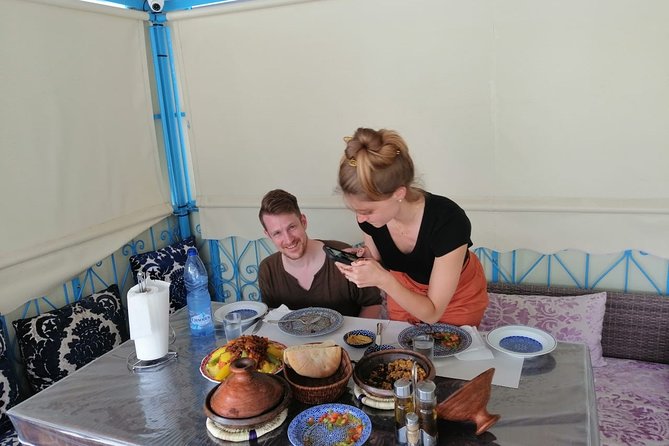
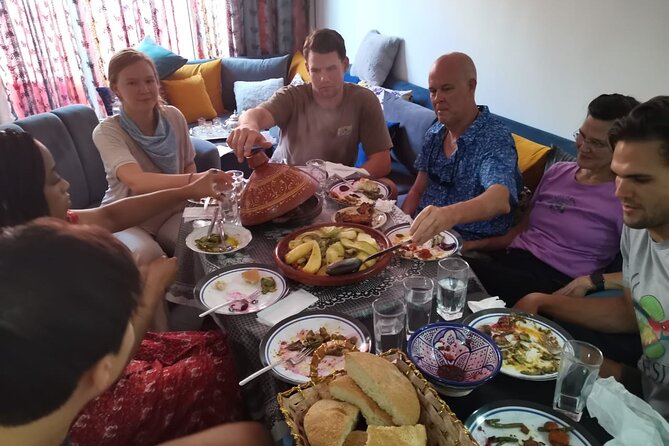
The heart of this experience is the meal you create together: a 3-course home-cooked lunch, included in the price. You won’t just sample bites and leave. You’ll sit down and eat what you made, which is one of the best learning tools in cooking—your brain can compare what you aimed for with what you actually produced.
Even without a specific dish list provided, the structure is clear:
- You’ll cook multiple parts of the menu with chef guidance
- You’ll have a tasting step that comes right after cooking
- You’ll finish with a drink choice and cookies
In Moroccan cooking, the “three-course” format matters because it usually means you experience more than one flavor profile across a meal—things that might taste very different from each other, but that still fit together as a coherent lunch. That’s what you’re really paying for: not just a cooking session, but a full-food education.
If you’re thinking about dietary needs, there’s one caution from the type of feedback you may have seen elsewhere: some people want more hands-on cooking and fewer dishes, especially when they’re focused on vegetarian preparation. The class does not explicitly promise vegetarian-only options in the details you have here, so if your diet is specific, it’s smart to ask ahead through the booking channel.
Tasting Time and the Culture Layer You Get Along the Way
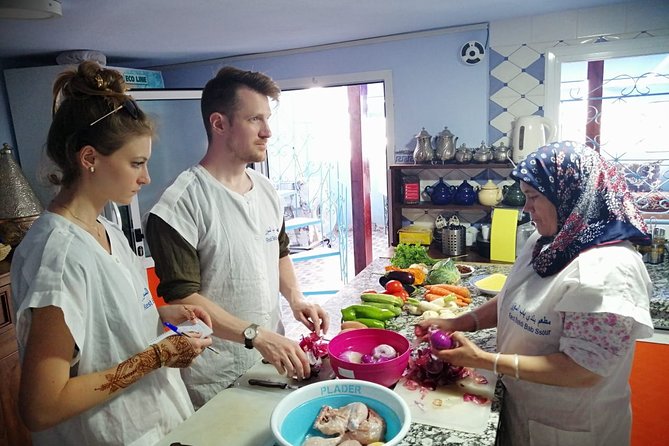
The best moment is when cooking turns into tasting. After the cooking, you’ll enjoy the meal you prepared, and that sit-down part is where your learning locks in.
This is also where a strong guide makes a difference. With Youssef, the positive comments focus not only on food but on storytelling—Chefchaouen’s culinary history and culture, explained in a way that’s easy to follow even if your cooking vocabulary is limited. That kind of cultural connection is practical. It helps you recognize flavors later if you eat Moroccan food again, and it makes the meal feel more meaningful than a one-time class.
Another thing I like about this setup is that it’s not only about technique. You’re learning methods through the process of doing them. That’s how you understand Moroccan home cooking without needing to memorize steps.
Coffee, Moroccan Mint Tea, and Cookies: The Ending Matters
Most cooking classes end with a quick nod and a goodbye. This one finishes with something you can actually enjoy: after your three courses, you get to choose between coffee or Moroccan mint tea, served with cookies.
That might sound like a small detail, but it changes the mood. It keeps the experience from feeling rushed. It also gives you a chance to talk with your chef while everything is winding down—asking a last question, clarifying something you missed, or getting a suggestion for what to try later in Chefchaouen.
This is also a nice cultural touchpoint. Mint tea is a Moroccan staple, and having it directly after the meal you cooked makes it feel like part of the rhythm, not an optional extra.
Price and Value: Is $68.95 a Good Deal?
At $68.95 per person for about 3 hours, you’re paying for three things that often cost separately on trips:
- A guided market visit with ingredient selection
- A hands-on cooking session with chef assistance and tools
- A full 3-course lunch you sit down to eat
When you compare that to booking a market experience alone or just buying a meal in a restaurant, the value becomes clearer. You’re not only paying for food—you’re paying for a guided learning pathway that starts with ingredients and ends with tasting.
Also, the group size helps the value. A class with 10 or fewer people means less waiting and more time with the chef. That personalization is hard to replicate in larger group tours.
Alcohol is the main missing item: alcoholic beverages are not included. If you drink, budget for it separately. Otherwise, the included coffee or mint tea with cookies is a satisfying finish.
One more timing note: the class is commonly booked about 25 days in advance on average. That’s not a long lead time, but it’s still smart to reserve early if your Chefchaouen dates are fixed.
Where You’ll Start and How Easy It Is to Find
The meeting point is specific: Hotel Bab El Ain, Rue lala horra kayssariya, number 77, at the hotel salon de thé Bab El Ain in Chefchaouen (91000). The good news is it’s near public transportation, so you’re not trapped in a long taxi hunt just to begin the experience.
The end is back at the same meeting point, which keeps logistics simple. You don’t need to plan your afternoon around an unfamiliar drop-off zone. In a place like Chefchaouen, that matters because streets can be confusing, and you’ll already be walking around.
You’ll receive confirmation at booking, and you’ll use a mobile ticket, which is usually the easiest format for short city experiences.
Who Should Book This Chefchaouen Class (and Who Might Skip It)
This is a strong choice if you want an authentic, hands-on way to understand Moroccan cuisine. It’s ideal for:
- Food lovers who enjoy learning through cooking, not just eating
- Travelers who like small group experiences
- People who want a market-and-kitchen flow rather than a demo-only class
It may be less ideal if:
- You expect a very long, fully independent workshop where you do every task alone
- You have strict dietary needs and want a guaranteed format (the details here don’t explicitly spell out dietary accommodations)
- You’re sensitive to language barriers; the guide’s English ability is a plus in feedback, but no official language policy is listed in the tour details you have
Still, one useful reality check: even when language is a barrier for some visitors, the cooking process itself is visual. You’ll be doing the work, so you can follow even if every word isn’t perfect.
Should You Book Chefchaouen Cooking Class?
Yes, if you want a practical, memorable food experience that connects market choices to the finished meal. The biggest reasons to book are the combination of market-first shopping, the included three-course lunch, and the small group size that makes questions easier.
If you’re torn, use this quick filter:
- If you love the idea of learning how ingredients become a Moroccan meal, book it.
- If you only want a quick taste, skip—this is designed as a full cooking-and-eating session.
- If you’re vegetarian or have other specific needs, message ahead so you know how your menu will be handled.
Bottom line: for Chefchaouen, this is one of the more focused, value-heavy ways to spend a half day—especially if your goal is to leave with real understanding, not just photos.
FAQ
What is the duration of the Chefchaouen Cooking Class?
The class lasts about 3 hours.
What time does the experience start?
It starts at 11:00 am.
Where is the meeting point?
You’ll meet at Hotel Bab El Ain (Rue lala horra kayssariya, number 77), at the hotel salon de thé Bab El Ain in Chefchaouen.
Where does the tour end?
The activity ends back at the meeting point.
How much does it cost?
The price is $68.95 per person.
How big is the group?
The experience has a maximum of 10 travelers.
What’s included in the price?
The price includes a lunch with a 3-course menu, chef assistance and kitchen tools, and a visit to the market.
Are alcoholic beverages included?
No, alcoholic beverages are not included.
What do I get to drink at the end?
After the 3 courses, you choose between coffee or Moroccan mint tea, and you’ll have cookies.
Is there free cancellation?
Yes. Free cancellation is available up to 24 hours in advance for a full refund.