REVIEW · SEOUL
Korea Cooking Class with 3 stars Michelin Chef & Content creators
Book on Viator →Operated by Nerdso · Bookable on Viator
Cooking class, Seoul style, with real stars.
This setup pairs a 3-star Michelin Chef with content creator Koreanbong, so you get serious technique plus an easy, family-like vibe while you cook. I also like that the class starts with a market stop where you pick ingredients before you touch the pots, and that you leave with recipe papers in case your notes go missing mid-cook. One thing to keep in mind: this is a fixed-format, about-2-hour experience with limited seating, and it’s not tied to private transportation—so you’ll want to plan your own way to the meeting point.
The kitchen is set up for small groups, max 16 people, which matters because it keeps the hands-on time from feeling rushed. You’ll see a clear structure: an intro, a chef demo, then multiple stations where groups cook different menus at the same time. You’ll also get a mobile ticket, and the meeting area is near public transport, which makes arriving less stressful.
Dinner is part of the experience, and so is the fun. Along with the included meal, coffee/tea, and alcoholic beverages, there’s dining time with special games or events as a bonus—great if you’re up for group energy, just skip it if you’d rather keep things quiet.
In This Review
- Key Highlights You’ll Actually Feel During This Class
- Why a 3-Star Chef + Korean Content Creator Works in Seoul
- The 7:00 pm Start and the “Get-Oriented First” Approach
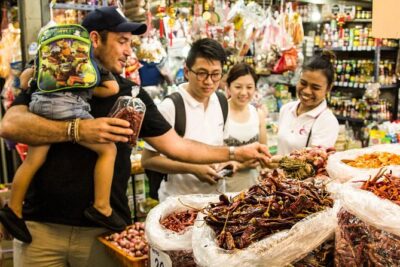
- Market Time: Picking Ingredients Before You Cook
- Four Sessions That Keep You From Feeling Lost
- Session 1: Introduction and Korean Cuisine Context
- Session 2: Chef Demo With Recipe Papers
- Session 3: Hands-On Cooking in Stations
- Session 4: Dining Time With Games or Events
- Inside the Kitchen: Small-Group Setup That Supports Real Learning
- The Lotte World Tower & Mall Stops: Why They’re Included
- What You’ll Eat: Dinner, Drinks, and Coffee/Tea
- Price and Value: What $70.44 Really Buys You
- Who This Seoul Cooking Class Fits Best
- Should You Book This Class?
- FAQ
- How long is the cooking class?
- What’s the group size for this experience?
- What time does the tour start?
- Where is the meeting point?
- What’s included in the price?
- Do I need private transportation?
- Can I get a refund if I cancel?
Key Highlights You’ll Actually Feel During This Class
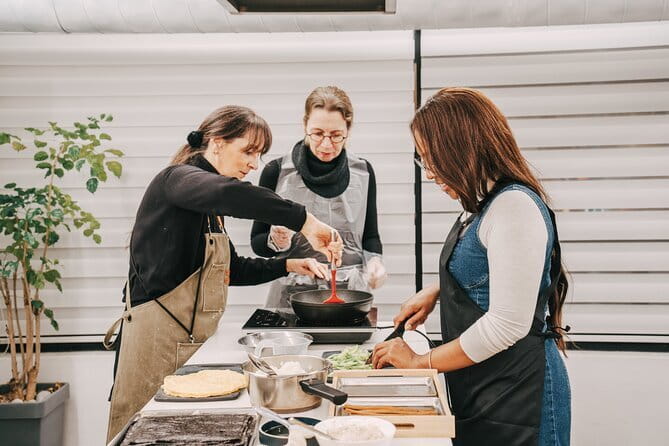
- 3-star Michelin chef technique, explained simply so you can focus on what changes results, not just steps
- Koreanbong’s host style keeps communication smooth and the mood friendly
- Market shopping before cooking so the ingredients feel personal, not random
- Four-session flow: intro, demo, cooking in groups, then dining games
- Recipe papers for each team which rescue you if you forget a step mid-class
- Includes dinner and drinks so you’re not scrambling for food after
Why a 3-Star Chef + Korean Content Creator Works in Seoul
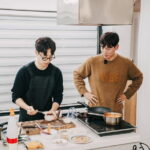
This class is interesting because it mixes two worlds that rarely sit comfortably in the same room. You get a professional chef approach, then you get Koreanbong—someone who knows how to connect with people and keep conversation moving.
That combination changes how the cooking feels. When the host makes things easy to understand, you don’t waste time translating in your head, and you’re more likely to ask questions instead of silently guessing. When the chef is involved, you’re not just following a script; you’re learning the why behind the technique.
I also like the scale. With a maximum of 16 participants, you’re not lost in a crowd, and the kitchen setup supports real group work. That’s a big deal for a hands-on food experience.
You can also read our reviews of more tours and experiences in Seoul.
The 7:00 pm Start and the “Get-Oriented First” Approach
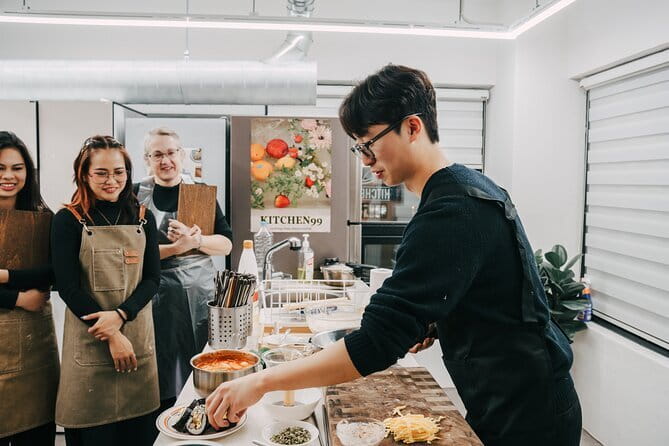
The class begins at 7:00 pm at 175 Ogeum-ro, Songpa District. It ends back at the same meeting point, which is convenient if you don’t want to figure out a separate drop-off after you’ve cooked and eaten.
Before cooking truly starts, you’ll make time for two Seoul stops in the Lotte World area: Lotte World Tower & Mall, then Lotte World. You’re not just watching from the sidelines. You’re using these visits as a way to settle into the evening, see the area in context, and break up the time so you don’t feel like you’re walking straight into a kitchen “cold.”
A practical consideration: because there’s no private transportation included, plan to reach the start point using public transit. Also, if you’re traveling with tight dinner plans elsewhere, remember this is a fixed schedule that rolls into the class dinner.
Market Time: Picking Ingredients Before You Cook
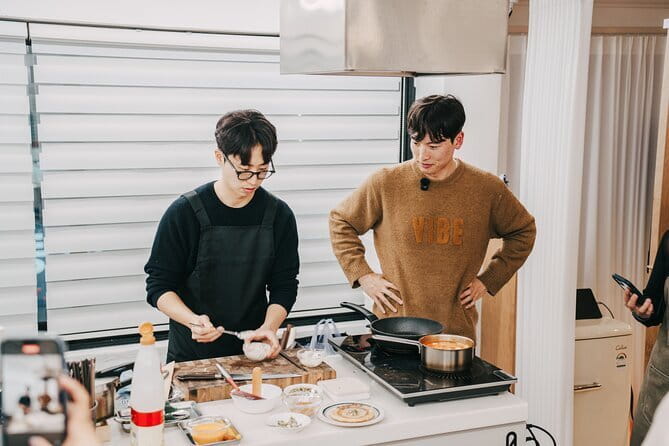
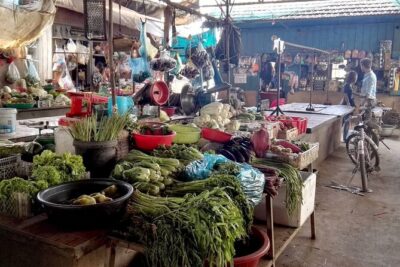
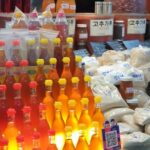
One of the smartest parts here is that you don’t start with an empty mindset. Before the cooking begins, you visit a local market and choose the ingredients you’ll use. That step matters because it turns the food into something you recognize when you sit down later.
Even better, the class is structured so you cook three typical dishes that you’ve already been introduced to in advance. That means you’re not learning everything at once, right from ingredient selection to the first bite.
How to make the most of market time: look closely at textures and sizes, not just names. Cooking changes based on how ingredients behave, and you’ll get more out of the chef’s later guidance if you’ve already seen your ingredients up close.
Four Sessions That Keep You From Feeling Lost
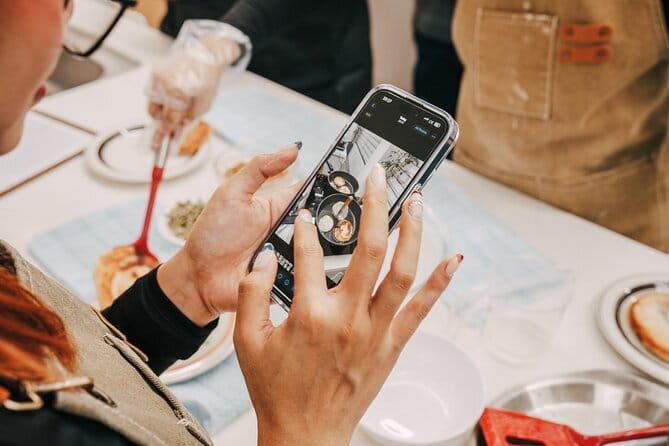
This experience uses a clear four-session structure. The pacing is what makes it work, because it prevents that common cooking-class problem where everything gets thrown at you all at once.
Session 1: Introduction and Korean Cuisine Context
You start with introductions—each person shares who they are. Then you get a 15-minute presentation focused on Korean cuisine history.
This part isn’t meant to overwhelm you. It’s a quick way to set expectations so the dishes and techniques make sense when you see them later in the cooking stage.
Session 2: Chef Demo With Recipe Papers
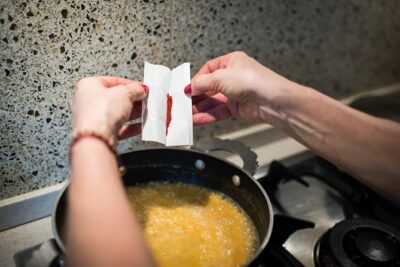
Next comes a 30-minute cooking demo led by the 3-star Michelin chef. This is your chance to watch the technique first, then copy it at your station.
The practical life hack is that you’re given recipe papers per team. If you forget a step (and you will, because cooking is fast and hands get busy), those papers keep you from panicking or falling behind.
Session 3: Hands-On Cooking in Stations
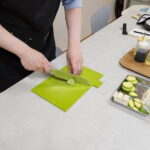
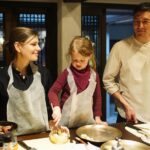
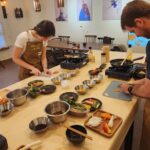
When you start cooking, you’ll work in small groups. There are four large sinks, and each one supports a group with a capacity of 2–4 people. Each group cooks different menus, which helps the class feel active instead of repetitive.
This station format is especially useful in a short, two-hour class. It keeps things moving and makes it possible for the chef to check in without the whole room waiting for one dish.
If you want a smooth experience here, assign roles inside your group as soon as you’re seated. One person can focus on the recipe paper, another on ingredient prep, and another on stirring or timing. Even if you’re not a “team cooker,” small coordination cuts down mistakes.
Session 4: Dining Time With Games or Events
After cooking, you eat. The dining session begins right after you finish, and it includes special games or events as a bonus.
This is a good moment to ask the questions you saved earlier. It’s also when you can compare what your group made versus what another group cooked, even if you can’t switch dishes mid-class.
Inside the Kitchen: Small-Group Setup That Supports Real Learning
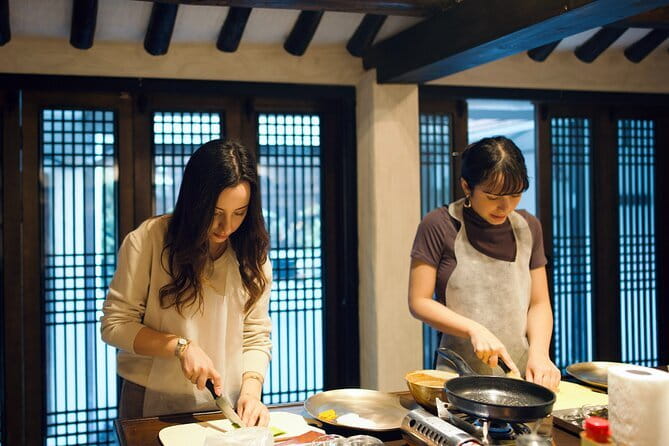
The kitchen is large enough for a maximum of 16 participants, and the sink setup is built for group cooking rather than demo-only observation. That means you’re not stuck watching other people do the hard part while you wait your turn.
What I like most is the balance between structure and flexibility. You get recipe papers, so you aren’t flying blind. You also get enough station space for groups of 2–4, which lets you actually practice rather than just assemble.
Koreanbong’s role matters here too. As a content creator, Koreanbong communicates in a way that keeps the room comfortable. In practical terms, that makes it easier to ask questions like how to adjust seasoning or what to watch for in texture—things that separate bland food from food that tastes “right” in a Korean kitchen style.
The Lotte World Tower & Mall Stops: Why They’re Included
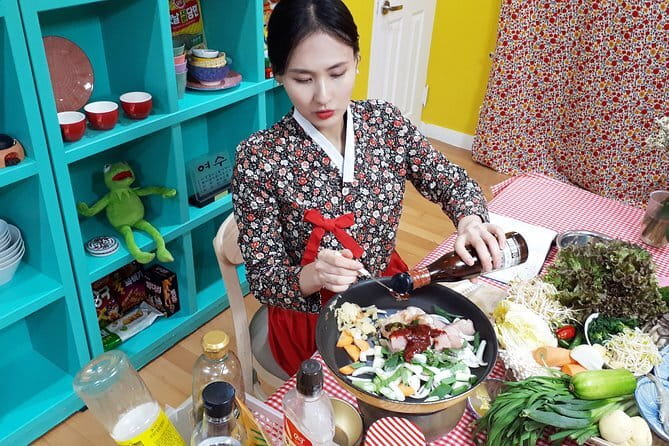
The tour includes two Lotte area stops before class energy takes over: Lotte World Tower & Mall, then Lotte World. You’re not going there to “complete a checklist.” You’re using these stops as part of the overall night plan.
Here’s the value for most people: these are big, easy-to-reference locations, so meeting up and getting your bearings tends to be simpler. They also make the evening feel like more than just a cooking room experience. Even if you only spend limited time at each spot, you get a sense of the neighborhood vibe where the class is happening.
A drawback to consider: if you’re only in Seoul for cooking and nothing else, these stops might feel like extra time before you get to the food. On the other hand, having a bit of pre-cooking structure helps the market and kitchen flow feel less chaotic.
What You’ll Eat: Dinner, Drinks, and Coffee/Tea
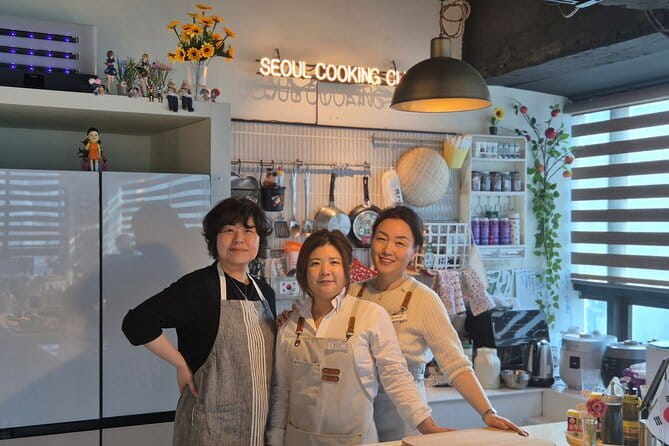
The class includes dinner, coffee and/or tea, alcoholic beverages, and bottled water. That inclusion is part of the value, because you’re not paying separately for drinks to keep the night pleasant after cooking.
The menu is built around three typical dishes. You’ll learn about the dishes in advance, and then you cook them at your station once the chef demo is done. If you’re coming to learn Korean home-style cooking, this structure is a strong way to pick up flavors you can recognize later if you shop or cook on your own.
One more thing to think about: alcohol is included, so if you don’t drink (or you prefer to keep it minimal), go in with that mindset. You can still enjoy the meal and focus on the cooking side—just pace yourself.
Price and Value: What $70.44 Really Buys You
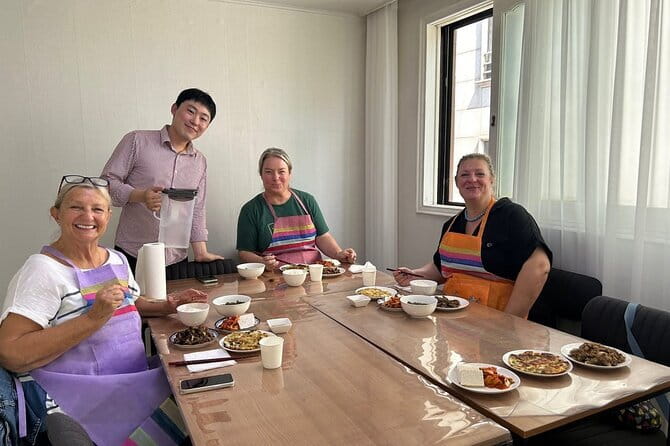
At $70.44 per person, you’re paying for more than instruction. You’re paying for chef-led technique, market shopping, the cooking work with stations, and the meal afterward.
If you break it down:
- The 3-star Michelin chef demo and hands-on cooking time are the core experience cost.
- Market time plus ingredient selection is meaningful prep work that you don’t get in classes that only provide ingredients afterward.
- Dinner and drinks are included, so you’re not budgeting extra food right after the class.
For short stays, this is a practical value play. You get a full evening activity that combines cultural context (the quick cuisine presentation and market shopping) with a tangible result (three dishes you made).
The main “value trade-off” is time. It’s about 2 hours total, so you won’t have the luxury of slow learning or trying extra dishes beyond what the class assigns.
Who This Seoul Cooking Class Fits Best
This class is a good match if you want a small-group cooking experience with professional guidance and a friendly host.
You’ll likely enjoy it if:
- You like hands-on cooking more than watching.
- You want to meet people in a casual setting while you learn.
- You’re excited by the idea of market shopping as part of the lesson.
- You enjoy structured pacing: intro, demo, cook, eat, then a little fun at the table.
It may not fit perfectly if:
- You dislike group dining or games.
- You’re looking for a long, slow course with lots of extra recipes beyond three dishes.
- You want private transportation included in the price (it’s not).
Should You Book This Class?
I’d book it if you want a single, well-paced evening where you leave with more than photos. You’ll leave with skills, ingredient awareness from the market, and a meal you helped cook—plus an atmosphere that sounds genuinely welcoming.
Skip it only if you already have a tight schedule that doesn’t allow for the 7:00 pm start, or if you’d prefer a food lesson without any extra social energy or sightseeing stops.
In a city full of food experiences, this one earns its place by combining a real Michelin chef demo with market prep and a small-group kitchen setup that actually gets you cooking.
FAQ
How long is the cooking class?
It lasts about 2 hours.
What’s the group size for this experience?
The kitchen setup supports a maximum of 16 travelers.
What time does the tour start?
The start time is 7:00 pm.
Where is the meeting point?
The meeting point is 175 Ogeum-ro, Songpa District, Seoul, South Korea, and the activity ends back at the same meeting point.
What’s included in the price?
Dinner, coffee and/or tea, alcoholic beverages, and bottled water are included.
Do I need private transportation?
Private transportation is not included, so you’ll need to arrange your own way to the meeting point.
Can I get a refund if I cancel?
No. This experience is non-refundable and cannot be changed for any reason.