REVIEW · AMALFI COAST
Cooking class Amalfi Coast by Marco and Tano
Book on Viator →Operated by Cooking Class Amalfi Coast da Marco e Tano · Bookable on Viator
Cooking here feels like family.
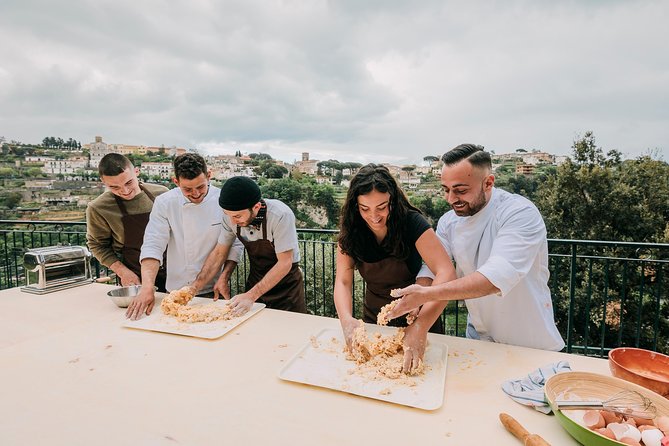
What makes this Amalfi Coast class special is the way garden-to-table starts before you ever roll dough: you begin with a harvest on their property, then head into the kitchen with Marco and Tano to make pizza dough (and more), and finish by tasting everything on the terrace with wine and limoncello.
Two things I really like: the class is truly private (your group has the villa exclusively), and the food feels hands-on from start to finish, not like a demo where you watch. You’ll also leave with practical technique you can use again at home, not just a full belly.
One consideration: since it’s a half-day experience that starts at 11:00am and includes time outdoors on the property, it’s best if you’re comfortable being on your feet and planning the rest of your day around food and lingering at the end.
In This Review
- Key highlights you’ll feel in your day
- A private Amalfi cooking class built around what’s growing
- Location and timing: planning around a 11:00am start in Scala
- The real difference: harvesting ingredients before cooking
- Pizza dough and more: what happens in the kitchen
- The terrace tasting: wine, limoncello, and eating with pride
- The private-villa factor: why exclusivity changes the class
- What you’ll actually get from this experience (beyond food)
- Who this class is best for (and who might want something else)
- Price and value: is $326.53 per person worth it?
- Practical tips to get the most out of your cooking day
- Should you book Marco and Tano on the Amalfi Coast?
- FAQ
- What is the duration of the cooking class?
- What time does the class start?
- Where does the experience meet, and where does it end?
- Is the class private?
- How many people can be in the class?
- Is the class offered in English?
- What do you do during the day besides cooking?
- Is wine or limoncello included?
- Can I cancel for a full refund?
Key highlights you’ll feel in your day
- Private villa access: your group gets the whole space, which makes questions and pacing feel easy
- Harvest first, cook second: you start in the garden before you touch dough
- Hands-on pasta + pizza: you’ll work through dough work, not just assemble plates
- Terrace tasting with drinks: you finish with what you made, plus wine and limoncello
- Small cap: the experience has a maximum of 8 travelers
- English offered: the class runs in English, so you can follow the steps clearly
A private Amalfi cooking class built around what’s growing
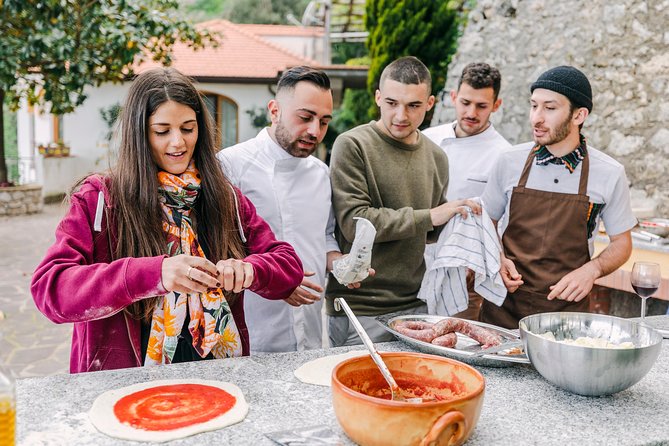
This is the kind of cooking class you book when you want more than a meal. You want the whole arc: seeing the ingredients first, learning how to handle dough, then sitting down to eat what you made with a view and a drink in hand.
In this class, Marco and Tano run the day with real personality. The vibe is warm and personal, like you’re being welcomed into their kitchen. That matters because cooking instruction is easier when you feel relaxed enough to ask questions, mess up a little, and learn without stress.
The day is also structured so it doesn’t feel like random steps. You start with the harvest, move into kitchen work for pizza dough and other dishes, and end with a terrace meal where you taste everything together. It’s a simple formula, but it’s the difference between a cooking activity and a real food experience.
Location and timing: planning around a 11:00am start in Scala
The experience starts at 11:00am in Scala, Italy, with the meeting point at Via Lama di Priso, 84010 Scala SA, Italy. It ends back at the same meeting point.
It’s about 4 hours (approx.). That’s long enough for hands-on cooking and a proper tasting, but short enough that you can still enjoy the rest of your Amalfi Coast day. The key is timing: because you’ll be outdoors first and then cooking, you’ll want the morning beforehand to be calm rather than rushed.
If you’re staying in the Amalfi area and you like your activities to be a centerpiece instead of one more checkbox, this fits well. You’re not commuting forever, and you’re not spending your afternoon in a crowded room. You’re in a working, family-run setting.
The real difference: harvesting ingredients before cooking
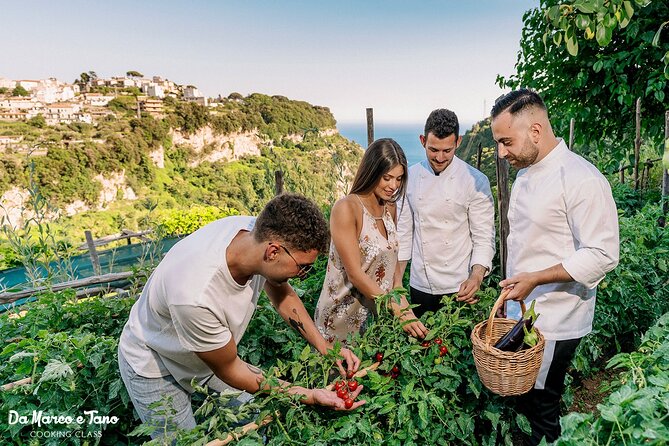
The first stage is the garden harvest. You walk the property, gather seasonal ingredients, and get a sense of what’s ready right now. This is more than a fun add-on. When you pick the ingredients yourself, you cook with more attention. You also understand why certain choices make sense in that moment.
Even if you’re a confident home cook, harvest-first changes your relationship to the meal. It nudges you to think about freshness and ripeness. And if you like learning practical details, this part gives you a story you can actually repeat later.
Comfort-wise, assume you’ll spend time moving around outdoors. Wear whatever makes you steady on uneven ground. You don’t need hiking gear, but don’t show up in delicate sandals.
Pizza dough and more: what happens in the kitchen
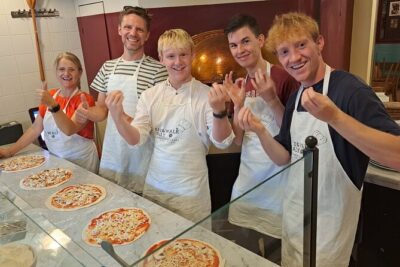
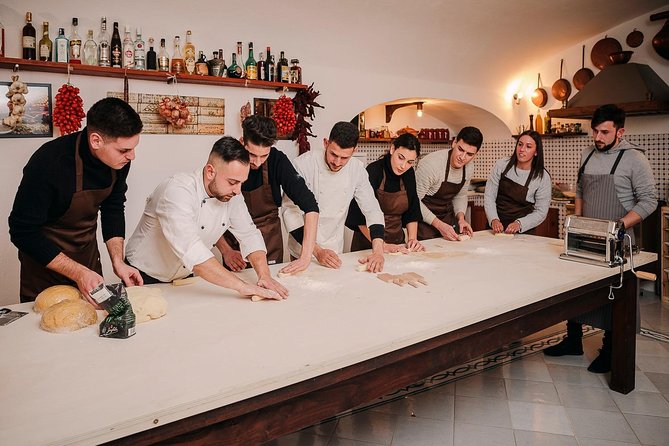
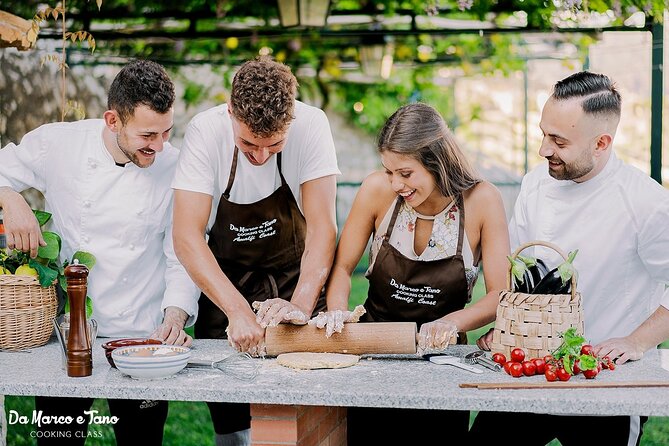
After the harvest, you move into the kitchen with Marco and Tano. This is where the class turns into a workshop.
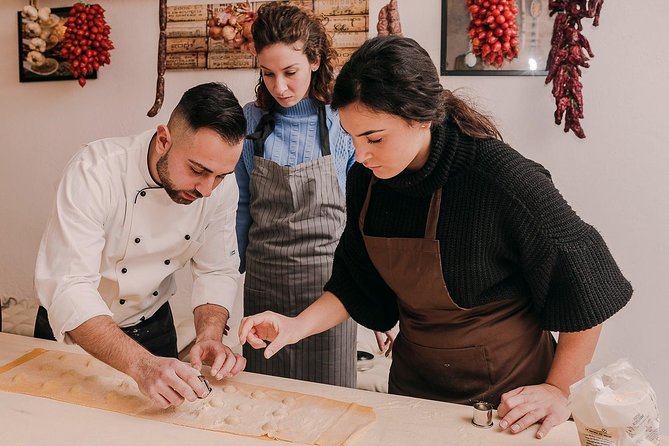
The core cooking focus includes pizza dough and additional dishes. Based on what people have done on-site, you may work on pasta and shape items like ravioli, and you might also make classics such as eggplant Parmesan and a lemon dessert (often described as lemon pie or lemon tart). The sample menu points to pasta and pizza, with dessert rounding out the meal.
Here’s why this portion is so valuable: the class isn’t just about taste at the end. It’s about technique—how dough behaves, how you work it, and how you build flavor. Marco and Tano guide you step-by-step, and because your group is small, you’re less likely to feel lost when you hit a tricky moment.
Also, the private setup helps. When you’re in a large class, instruction can feel generic. Here, the pace and attention feel more personal, which makes learning stick.
The terrace tasting: wine, limoncello, and eating with pride
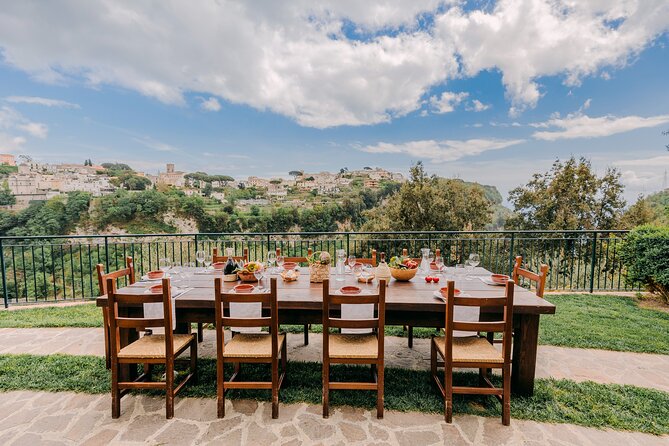
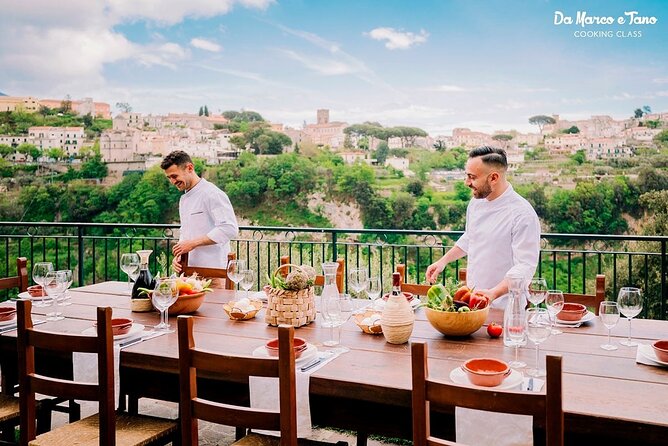
The last part of the experience is the part you remember. You taste what you made on the terrace, and the meal comes with a glass of wine plus limoncello.
This is where the experience clicks. You spend hours shaping dough and building dishes, then you sit down and eat it in the open air with a view of the valley below (as described by past diners). The terrace format makes the whole day feel like a celebration instead of a school assignment.
And because you’re tasting right after cooking, everything stays connected. You notice texture, doneness, and balance in a way that’s harder when your food has been cooked hours earlier somewhere else.
If you’re thinking about value, this ending matters. You’re not just paying for cooking instruction—you’re also paying for the final meal experience, including the drinks.
The private-villa factor: why exclusivity changes the class
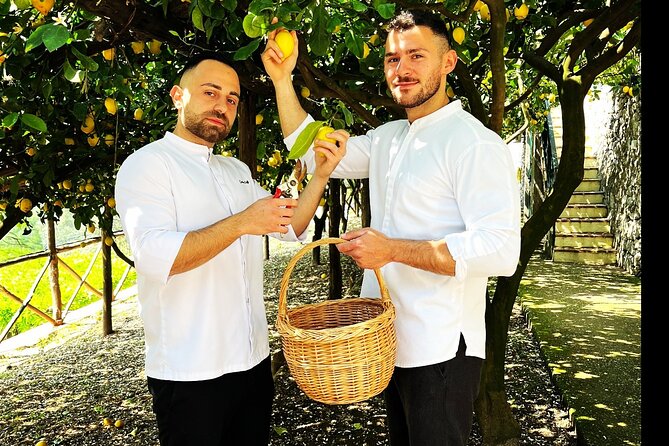
This is one of the strongest selling points. The lessons are private, and your group has the entire villa exclusively. The experience also caps at 8 travelers, which keeps it from turning into a production line.
What that means for you day-to-day:
- You’re more likely to get direct attention while you cook
- You can move at a human pace without feeling crowded
- The atmosphere feels personal, which makes the class more fun than intimidating
A number of people describe the hosts as treating them like extended family. Even if you’re not someone who needs that level of warmth, it still affects the quality of the learning. When you feel comfortable, you follow instruction better and you enjoy the process more.
What you’ll actually get from this experience (beyond food)
Yes, you leave fed. But you also leave with skills and confidence.
A good cooking class gives you two things: technique and judgment. This one does both. You learn how dough comes together and how to work through steps. You also learn how ingredient choices connect to what’s in season on that property.
The harvest part reinforces this. Then the kitchen work turns it practical. Then the terrace meal shows you the result. It’s a complete loop: see ingredients, make food, taste the outcome.
That loop is what makes it feel special, especially for couples celebrating something, food lovers who want a highlight activity, and people who want to do a cultural experience that isn’t just looking at sights.
Who this class is best for (and who might want something else)
This fits best if you’re the type who loves:
- Hands-on cooking (especially pasta and pizza dough work)
- Learning from real people in a real kitchen setting
- Eating the meal you helped create, right away
- A more personal class size (max 8) and a private villa feel
It’s also a good choice for couples celebrating milestones and for families who want a meaningful activity with kids who are curious about food. One of the nicest parts of the story here is that the hosts have a genuine passion for their food and their land, and the instruction style seems to work well with different ages.
If you’re the type who wants a strictly structured class with no outdoor time, then the harvest step might feel like a detour. But if you’re open to a bit of garden time, that step is a big part of what makes the class worth it.
Price and value: is $326.53 per person worth it?
At $326.53 per person for about 4 hours, this isn’t a budget cooking class. But it also isn’t a mass-market experience.
The value equation here looks like this:
- You’re in a private setting with your group having the villa exclusively
- The day includes harvest time, kitchen instruction, and then a terrace meal
- Drinks are part of the tasting, including wine and limoncello
- The class includes a small group cap (max 8) and English instruction
So you’re paying for more than recipes. You’re paying for a day where the setting, the attention, and the meal all connect to each other. If you want a one-of-a-kind highlight day on the Amalfi Coast rather than another quick excursion, this pricing starts to make sense.
Practical tips to get the most out of your cooking day
A few practical things will help you enjoy the class more:
- Be ready for outdoors time. You’ll harvest ingredients on their property before cooking. Plan clothing that works outdoors and in a kitchen.
- Go hungry but don’t overdo it beforehand. You’ll make dishes and then taste everything at the end, with wine and limoncello.
- Bring curiosity. The instruction is part technique and part explanation, and that makes the whole experience more satisfying.
- Ask questions while you’re cooking. In a small private setting, you’ll get more useful answers than you would in a larger group.
If you treat it like a workshop and not a show, you’ll get the most value out of your time.
Should you book Marco and Tano on the Amalfi Coast?
Yes, if you want a cooking experience where the food starts in the garden, the instruction is hands-on, and you end with a meal you helped make—on a terrace with wine and limoncello.
Book it especially if you care about:
- a private villa feel
- pasta and pizza dough work
- learning real technique, not just eating well
- a small group setting that keeps the day relaxed
Skip it only if you’re searching for a cheap, short demo type of class, or if outdoor walking time is a hard no for you.
FAQ
What is the duration of the cooking class?
The experience lasts about 4 hours.
What time does the class start?
The start time is 11:00am.
Where does the experience meet, and where does it end?
You meet at Via Lama di Priso, 84010 Scala SA, Italy, and the experience ends back at the same meeting point.
Is the class private?
Yes. The lessons are private, and your group has the entire villa exclusively.
How many people can be in the class?
There is a maximum of 8 travelers.
Is the class offered in English?
Yes, it is offered in English.
What do you do during the day besides cooking?
You start with a harvest in the garden, then you cook in the kitchen, and finally you taste everything on the terrace.
Is wine or limoncello included?
Yes. The terrace tasting includes a glass of wine and limoncello.
Can I cancel for a full refund?
You can cancel up to 24 hours in advance for a full refund. If you cancel less than 24 hours before the start time, you won’t get a refund.