REVIEW · BIG ISLAND OF HAWAII
Farm to Table Cooking Class at Kulaniapia Falls
Book on Viator →Operated by Kulaniapia Falls · Bookable on Viator
Fresh lunch starts with muddy hands. At Kulaniapia Falls on the Big Island, this 4-hour cooking class turns farm-to-table into a hands-on morning: you stroll the gardens, harvest seasonal produce, and sit down to the lunch you helped create, with Hilo Bay and Mauna Kea views.
Two things I really like: first, the way the class ties the food to the place, using farm-grown veggies for 90%+ of your meal. Second, the setting—some cooking happens in a barn kitchen with wide ocean views—so the experience feels like more than a standard studio class. One drawback to keep in mind: the event is casual, and while you do prep and learn a lot, some of the actual cooking may be handled by staff or volunteers depending on the day.
In This Review
- Quick hits before you go
- Kulaniapia Falls cooking class timing and group size
- Where it starts: the farm grounds and waterfall energy
- Walking the gardens and harvesting your ingredients
- The barn kitchen: cooking with real tools and real views
- Lunch you can actually taste: farm-to-table in a bowl
- What’s included (and how the class helps you save time)
- Price and value: what you’re paying for at $169
- What to wear: shoes matter more than you think
- Best for who: couples, solo foodies, and families
- Turning this into a great Hilo morning
- Should you book the Kulaniapia farm-to-table class?
- FAQ
- FAQ
- Where is the meeting point for the class?
- What time does the experience start?
- How long is the cooking class?
- What does the price include?
- Is the cooking class plant-based?
- How many people are in the group?
- Do I need to bring cooking tools or ingredients?
- Is gratuity included in the $169 price?
- What should I wear for the farm portion?
- What is the cancellation policy?
Quick hits before you go
- Harvest-first approach: You pick the ingredients you’ll eat for your plant-based lunch.
- Small group size (max 8 people): It stays friendly and manageable, not a crowded demo.
- Volcanic soil produce: Your meal centers on seasonal crops grown on-site.
- Ocean and Mauna Kea views: You get scenery during the cooking and around the property.
- Take-home recipes: You leave with plant-based recipes you can use later.
Kulaniapia Falls cooking class timing and group size
The class runs about 4 hours, starting at 9:30 am and ending back where you start. The meeting point is 100 Kulaniapia Dr, Hilo, HI 96720, so you can plan your morning around a straightforward arrival.
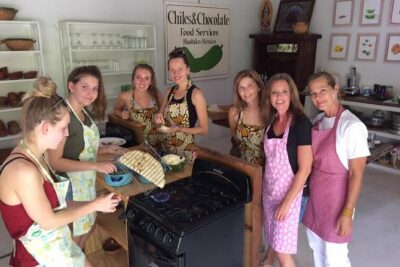
This is limited to a maximum of 8 people, and the reviews repeatedly point out the small-group feel. That matters because you’ll actually move through the garden and kitchen without feeling rushed or lost in the back row.
Also note the practical reality: this sort of experience has good demand. The class is often booked roughly 46 days in advance, so if you want a specific day, I’d prebook early rather than hoping.
Where it starts: the farm grounds and waterfall energy
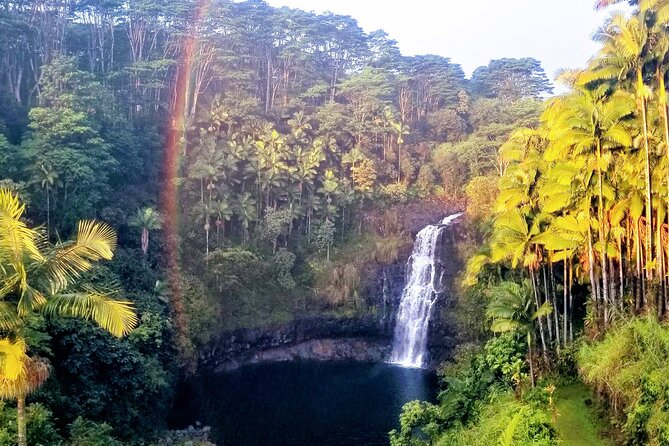
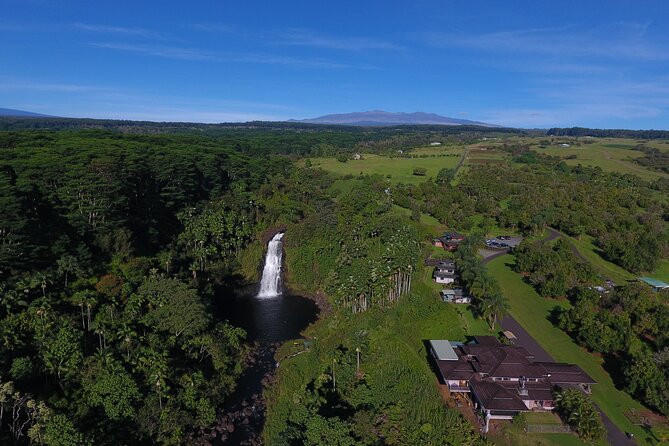
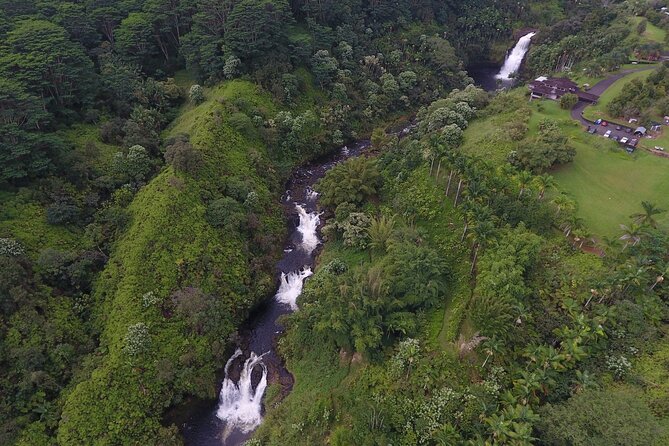
You’ll begin at the Kulaniapia Farms property at Kulaniapia Falls. On this kind of land, timing feels right: morning light, cooler temperatures, and the farm getting going. Reviews mention the waterfall as a big part of the atmosphere, with people seeing it before and after lunch depending on timing.
From the start, expect a welcoming vibe and a lot of time outdoors. One review even mentioned being greeted by a friendly pup, which is exactly the kind of detail that tells you this is a place that feels lived-in, not staged.
Walking the gardens and harvesting your ingredients
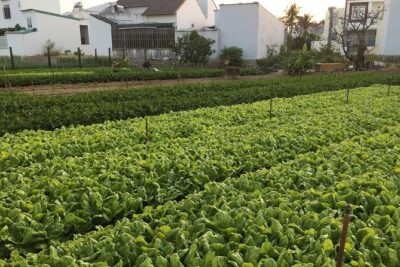
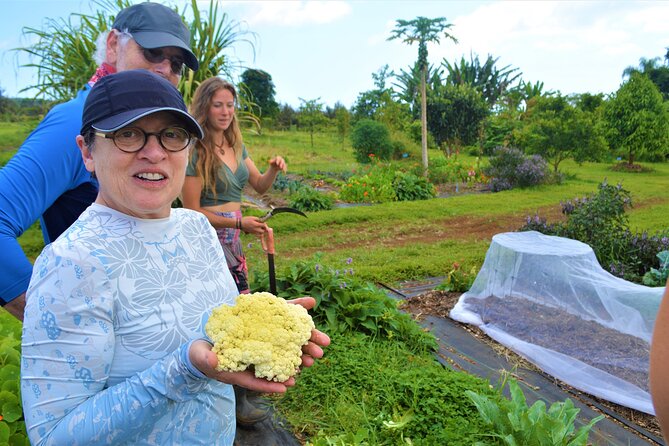
The core of the experience is the farm walk. You’re guided around the gardens by someone from the community who’s passionate about growing healthy food. The goal is simple: learn what farm-to-table really means, not just as a slogan, but as a day-to-day practice.
Here’s what makes the harvest part more meaningful than a quick photo stop: you’re harvesting produce you’ll use for your lunch. The class uses seasonal vegetables grown on the farm, and the meal is built around 90%+ farm fresh produce.
Expect to get hands-on. Reviews highlight dirty hands, weedy patches, and uneven ground—so this is not the kind of activity where you show up, barely touch anything, and go home clean.
Guide names come up in the reviews. People have mentioned learning from Natalie during the farm portion and Ayden as an enthusiastic guide, so the people leading the walk can shape the vibe. Either way, the emphasis stays on how the food grows and how to treat it with respect from soil to plate.
The barn kitchen: cooking with real tools and real views
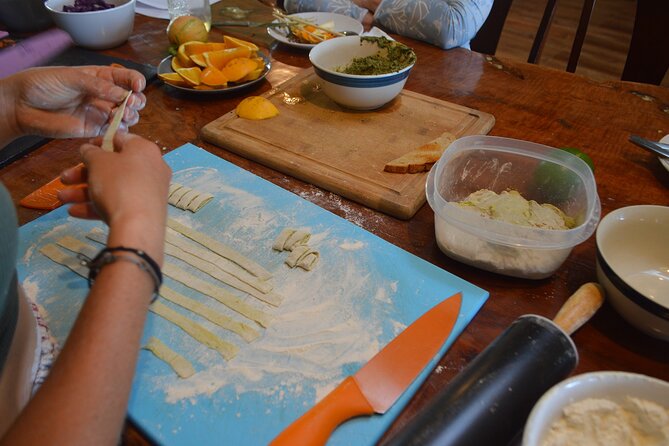
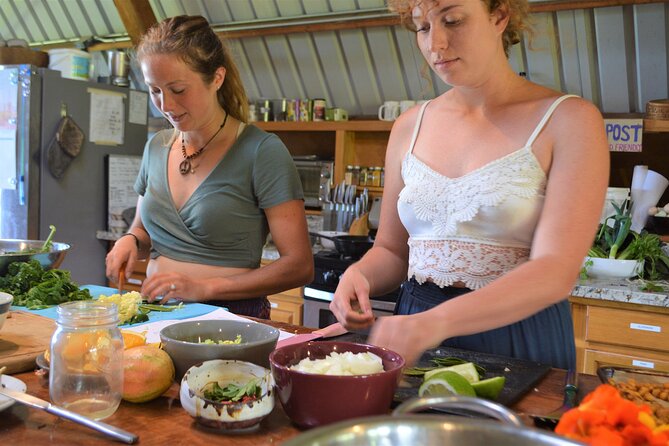
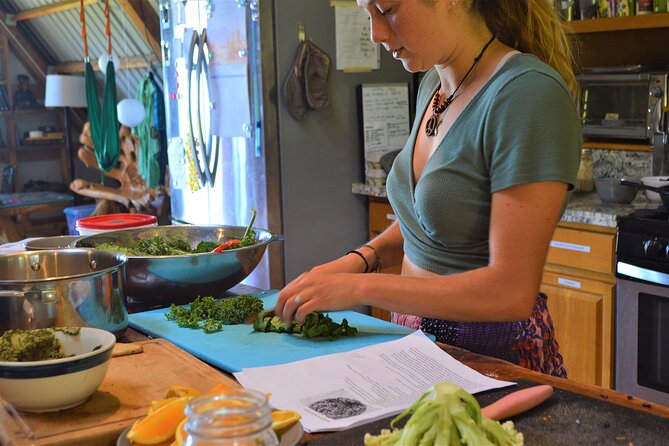
After the harvest, the action shifts to the kitchen. Reviews describe a cooking setup in a refurbished barn, with a serious kitchen space on a second floor and big views out toward the ocean.
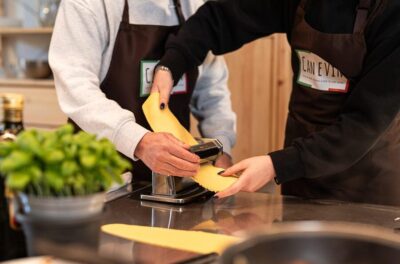
This part is where you learn the practical side of plant-based cooking. You’re not just eating; you’re making. That said, I want to flag a nuance that shows up in the reviews: some guests mention that while they do prep, the actual cooking may be handled by a volunteer or worker, rather than everyone personally cooking every step.
So if your dream is fully hands-on, check your expectations. You will be doing meaningful work—harvesting and prepping are central—but the class also runs on staff support and smooth workflow.
Chef Davey is named in one review as the person bringing knowledge to the cooking portion. Another review mentions Adrian in a role that included activities like collecting eggs (which suggests the farm routines may be woven into the day). Since guides can rotate, your specific cook or host might differ, but the structure stays the same: farm walk, kitchen work, shared lunch.
Lunch you can actually taste: farm-to-table in a bowl
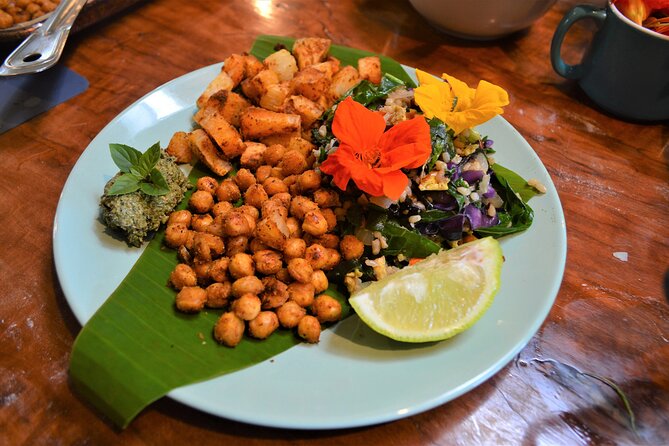
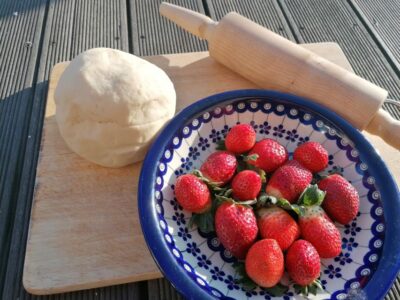
Your lunch is built around farm fresh produce. The sample “main” is farm fresh produce, using seasonal items you harvested yourself, with most of the meal coming directly from the farm.
The takeaway for you is confidence. This isn’t just a one-off meal. The class includes recipes you can take home, meant to help you feel more comfortable cooking plant-based food after you’re back in your regular kitchen.
Also, pay attention to the plant-based angle. The class describes itself as plant-based, and your menu is built around fresh produce. That makes it a solid choice if you want something that feels aligned with your food values, without turning the day into a lecture.
And if you’re worried about portion size, the whole point of picking so much of the ingredients is that you’ll taste the results right away. Reviews repeatedly call the food delicious, with one person noting they picked enough that almost the entire lunch came from what they harvested.
What’s included (and how the class helps you save time)
Included in the price is lunch, made together with farm fresh produce you harvest. You also get what you need to harvest and prepare the meal—so you’re not expected to bring tools, containers, or some fancy kitchen kit.
That value matters more than it sounds. Good cooking classes often charge for instruction only, and then you still pay extra for ingredients. Here, the ingredients are part of the experience and largely come from the farm itself.
If you prefer structured experiences, this helps: you’ll be guided through what to do, when to do it, and how to turn raw produce into an edible lunch without too much guesswork.
Price and value: what you’re paying for at $169
The price is $169 per person for about 4 hours. Is that cheap? No. But it’s also not just paying for a recipe card and a kitchen demo.
You’re paying for:
- A small-group farm visit (max 8 people)
- On-site harvesting of seasonal produce grown in volcanic soil
- Lunch that uses 90%+ farm produce
- Provided supplies for harvesting and meal prep
- Instruction plus take-home recipes
Then there’s gratuity. Gratuity isn’t included, and a typical guideline mentioned is $20 per guest. That’s worth planning for so you don’t feel surprised at the end.
Bottom line: I see this as good value if you like food experiences that connect you to where ingredients come from. If you mainly want a show-and-tell cooking class with minimal outdoor time, the price may feel harder to justify.
What to wear: shoes matter more than you think
Wear tennis shoes or other closed-toe flat shoes. Reviews specifically warn about uneven ground and weedy areas on the farm.
This is one of those times you’ll be glad you didn’t show up in sandals or thin shoes. You’ll likely walk on rough paths and spend time standing while harvesting.
If you run hot, consider breathable layers. The farm morning is outdoors-focused, even though the cooking happens indoors.
Best for who: couples, solo foodies, and families
This class fits a lot of different trip styles because it’s casual, social, and practical.
- Couples: You get an experience with scenery, teamwork, and a shared lunch.
- Solo travelers: The small group makes it easy to talk and keep moving at a comfortable pace.
- Families: Reviews mention family fun, and the structure works well when kids can participate in harvesting and food prep.
What it’s best at: learning plant-based cooking in a hands-on way without feeling like you’re studying for a test.
What it might not be best for: anyone who wants a strict, step-by-step cooking class where every guest personally cooks every element. Reviews suggest there can be staff cooking help, so your hands-on time may be heavier in harvesting and prep than in every cooking step.
Turning this into a great Hilo morning
The 9:30 am start gives you a smooth half-day plan. You’re done by early afternoon, which is perfect for pairing with other Hilo activities later that day.
Since the property includes a waterfall and people also mention a beautiful walk down to the river after lunch (timing can vary), don’t pack your afternoon too tightly. Leave some buffer so you can slow down and enjoy the grounds before or after your meal.
Also, if you care about getting the best experience, book the day you’ll feel least rushed. A farm morning is more fun when you’re not checking the clock every 10 minutes.
Should you book the Kulaniapia farm-to-table class?
I’d book this if you want a Big Island food experience that’s actually hands-on. The blend of harvesting, a shared plant-based lunch, and take-home recipes is a strong combo, especially in a small group.
Choose it for the specific reasons that matter:
- You like food tied to place, not just food labeled farm-to-table
- You’re comfortable walking on uneven ground with proper shoes
- You want a realistic entry into plant-based cooking you can repeat later
Skip it or at least set expectations if you’re expecting a fully hands-on cooking workshop where you personally cook everything. The day sounds like it blends guest participation with staff or volunteer support, so it’s more teamwork than solitary chef mode.
If you’re unsure, treat it like a good “food day” anchor in Hilo. Prebook early, wear closed-toe shoes, and plan for a morning that smells like fresh produce and volcanic soil.
FAQ
FAQ
Where is the meeting point for the class?
The meeting point is 100 Kulaniapia Dr, Hilo, HI 96720, USA.
What time does the experience start?
The class starts at 9:30 am.
How long is the cooking class?
It runs for about 4 hours (approx.).
What does the price include?
Lunch is included, made together with farm fresh produce you harvest. Everything you need to harvest and prepare the meal is also provided.
Is the cooking class plant-based?
Yes. The experience is described as a plant-based food experience.
How many people are in the group?
The group size is capped at a maximum of 8 people.
Do I need to bring cooking tools or ingredients?
No. You’ll be provided everything you need to harvest and prepare the meal.
Is gratuity included in the $169 price?
No. Gratuity is not included, and a typical guideline provided is $20 per guest.
What should I wear for the farm portion?
Wear tennis shoes or other closed-toe flat shoes. The farm includes uneven ground and weedy areas.
What is the cancellation policy?
You can cancel for a full refund if you cancel up to 24 hours in advance of the experience start time. If you cancel less than 24 hours before, the amount paid is not refunded.