REVIEW · PHNOM PENH
Khmer Cooking Class Full Day
Book on Viator →Operated by Banana Cooking Class · Bookable on Viator
Start with a market stroll, then cook your way. This full-day Khmer class in Phnom Penh turns local ingredients into a real, learn-by-doing meal, starting with fruit, vegetables, and spices at the market and ending with a sit-down lunch and more cooking in the afternoon. You get hands-on practice at your own station, plus a chef’s guidance as you build classic dishes like mango salad, curry, and fish amok-style cooking.
Two things I really like: first, the market part is practical, not just sightseeing—your guide shows what you’re buying and why. Second, you leave with recipes to take home, so the class actually sticks beyond the day. One possible drawback: it is a long day (about 8 hours), so if you’re low on energy or short on time in Phnom Penh, a half-day option might fit better.
In This Review
- Why This Phnom Penh Class Feels More Like a Real Lesson
- What You’ll Cook and Why It Matters
- Market Morning: Fruit, Herbs, and Spice Shopping by Tuk-Tuk
- Small reality check for your schedule
- Back at Banana Cooking Class: Cold Towel, Recipe Prep, and Chef Demo
- Hands-On Cooking From 11:00am: Your Own Station, Chef Assistance
- Lunch at 12:00pm: Taste What You Made
- Afternoon Practice: Longer Dishes, More Technique, More Taste
- Price and Value: Does $58 Make Sense?
- Group Style, Timing, and What to Plan for
- A practical way to use this day
- Who This Class Is Best For
- Should You Book Khmer Cooking Class Full Day?
- FAQ
- Is the class in Phnom Penh and what’s the meeting point?
- How long is the full-day Khmer Cooking Class?
- Do I get recipes to take home?
- What happens during the morning part of the full-day course?
- What’s included for lunch?
- Is it a private group experience?
- Do I receive a certificate at the end?
- What’s the cancellation refund rule?
Why This Phnom Penh Class Feels More Like a Real Lesson
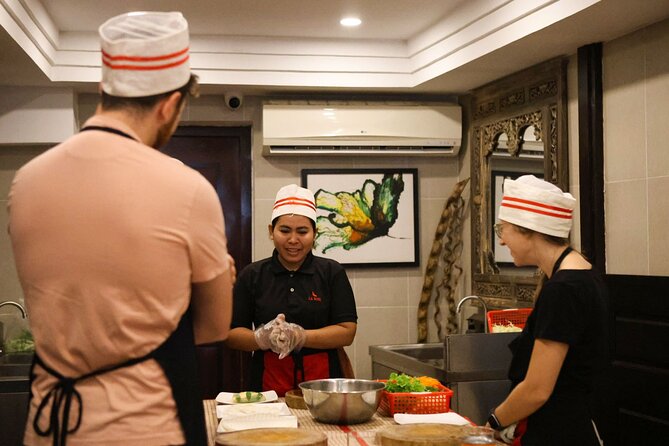
This is the kind of cooking class that makes you slow down and understand the ingredients. You start in the market area with a guide who walks you through the produce and flavorings that define Khmer cooking. Then you’re back at Banana Cooking Class for theory, station setup, chef demos, and repeated practice—so you’re not just watching and snacking.
The chef instruction also comes through as a big deal. Several experiences in the same school describe chefs who explain clearly and help you adjust what you’re making when you want changes. If you’re cooking as a couple, with friends, or as a family, that flexibility matters because it keeps the day from feeling rigid.
What You’ll Cook and Why It Matters
You’ll be working through Khmer favorites that use common Cambodian flavors—fresh herbs, bright fruit, fragrant spices, and techniques that make sauces and steaming-style dishes sing. Based on the class menu examples, you might make dishes such as:
- mango salad (often a tangy, herb-forward starter or side)
- Khmer-style yellow curry
- green mango salad
- spring rolls
- fish amok-style preparation
- banana palm dessert
Even if the exact menu shifts, the value is the method: you’re learning how ingredients work together, not memorizing a single recipe.
You can also read our reviews of more tours and experiences in Phnom Penh.
Market Morning: Fruit, Herbs, and Spice Shopping by Tuk-Tuk
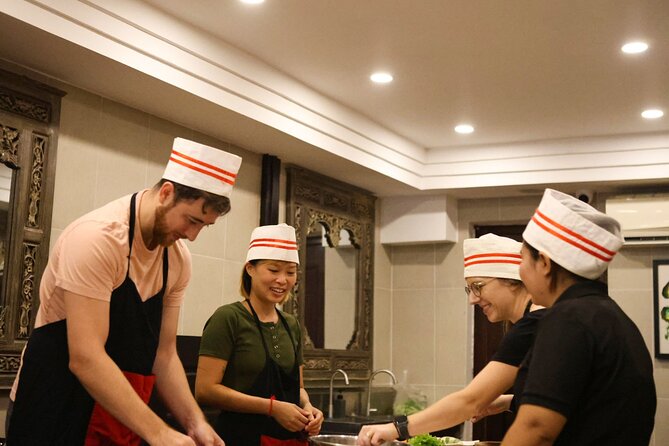
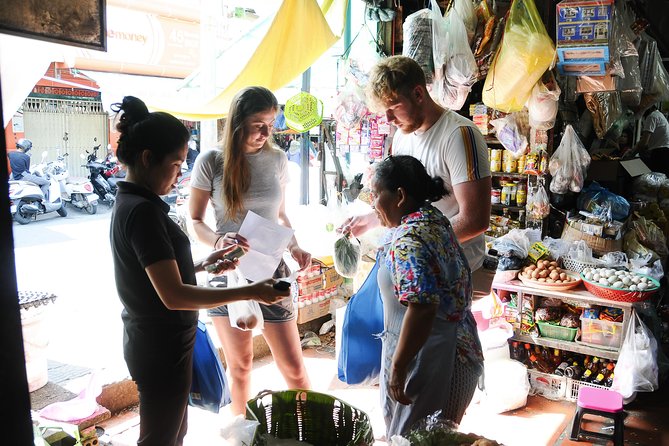
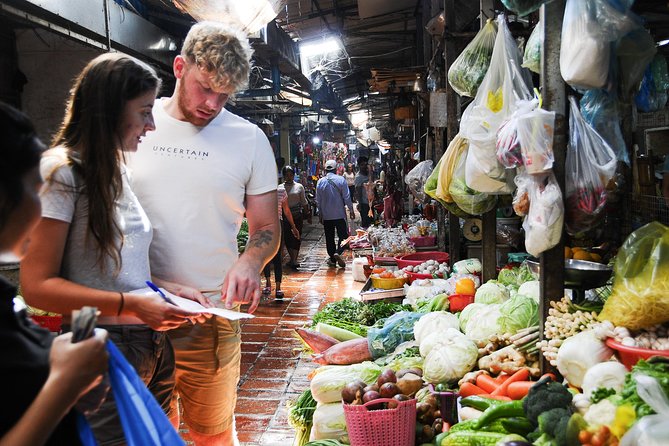
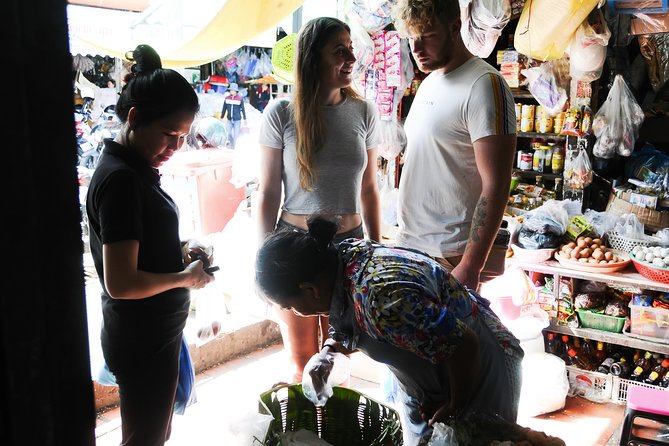
Your day starts at Banana Cooking Class (1, 4b Abdul Carime St. (21), Phnom Penh). At 9:00am, you meet up and then head out by tuk-tuk to the local market. This is where the class earns its keep: you aren’t just buying ingredients you can’t identify. You’re shown what’s local, how it’s used, and how it supports the flavors in Khmer dishes.
Why this matters: markets teach you what to look for later, when you’re back home trying to recreate the food. If you know the difference between a sweet mango and a more tart green one, or you can spot the herbs that add fragrance at the right moment, cooking becomes repeatable instead of guesswork.
Small reality check for your schedule
The market time is followed by a tuk-tuk ride back, so you’re not stuck traveling forever. Still, this is a full-day plan, and the morning pace is active. If you prefer slow mornings, plan for the fact that 9:00am is the start time, not a suggestion.
Back at Banana Cooking Class: Cold Towel, Recipe Prep, and Chef Demo
Around 10:15am, you return to the school for a refreshing drink and a cold towel, then you receive the recipe for what you’ll make. It’s a simple touch, but it helps you reset quickly after market shopping—especially if it’s warm or humid.
Next comes the theory class portion at about 10:30am. A chef presents a cookery demonstration of the dishes you’re going to prepare. This isn’t just a show. It’s the moment to ask how certain steps work—when to add aromatics, how sauce consistency should look, and what “done” looks like in Khmer cooking.
If you get chef LomAng Peark (spelled this way in the class feedback) or chef Lon Ang/Lum Arng (names appear in variations), you’ll likely notice a clear teaching style with hands-on clarity. Several experiences described friendly, knowledgeable instruction with good English, plus help so everyone in the group understands what’s happening.
Hands-On Cooking From 11:00am: Your Own Station, Chef Assistance
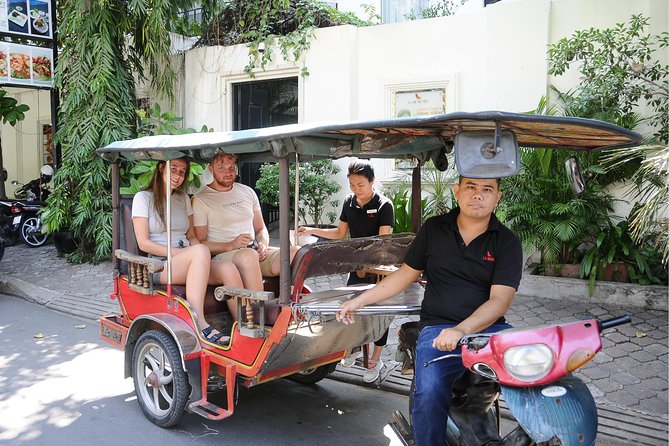
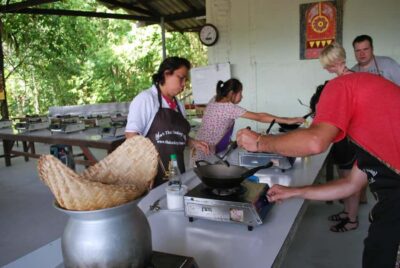
At about 11:00am, the class shifts into true work time. Each student gets their own cooking station and wok. That alone changes the experience. You’re not waiting your turn while someone else cooks for you. You learn faster because you’re doing the steps directly.
You cook with chef assistance, which is crucial when you’re learning Khmer techniques for the first time. If you run into trouble—timing, heat, texture, or seasoning balance—someone is there to help you fix it before your dish goes off track.
Lunch at 12:00pm: Taste What You Made
Lunch is scheduled at about 12:00pm. You get to eat and enjoy your own culinary creations. This is more than a reward; it’s also a feedback loop. You taste what you cooked while the day’s steps are still fresh in your mind, so you understand how adjustments you make later could change the final result.
And yes, it’s satisfying to sit down with food you made from scratch—especially after you’ve handled ingredients since the market.
Afternoon Practice: Longer Dishes, More Technique, More Taste
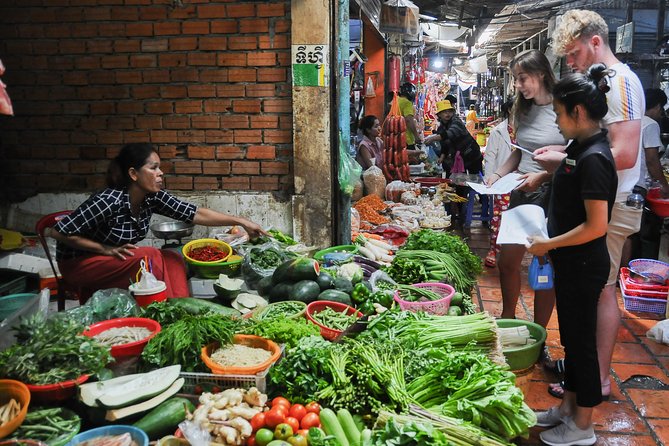
At 3:30pm, you’re back to cooking again. The afternoon lesson focuses on dishes that take a bit more time to prepare. In practice, this often means more technique and more patience—steps where timing and heat control matter more than speed.
At 4:30pm, you taste and enjoy your second round of dishes, plus you get time to relax. By this point, you’ve moved from learning basics to producing dishes that feel more complete, because you’ve done more steps and spent more time with the process.
Then at around 5:00pm, you wrap up with a certificate of completion and a photo session. It’s a fun finish—and a reminder that you didn’t just attend. You learned.
Price and Value: Does $58 Make Sense?
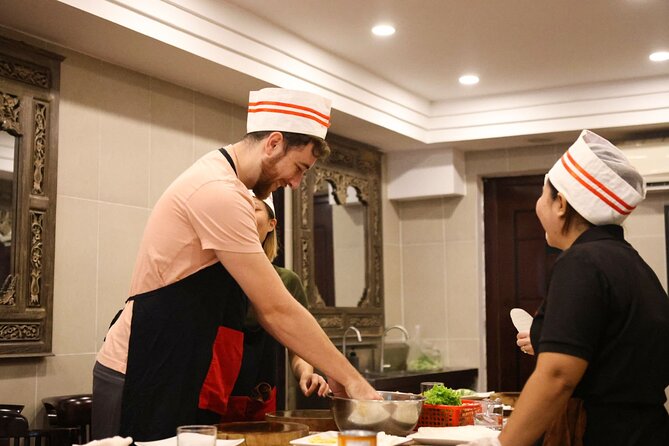
The price is $58.00 per person for a full day of cooking (about 8 hours). On paper, that sounds like “just a class.” In reality, the value is in the package:
- market shopping with guidance on ingredients
- tuk-tuk transport for the market run
- theory + hands-on practice at your own station and wok
- lunch and tastings
- recipes you can take home
- chef help throughout
- a certificate and photo at the end
- a private tour/activity setup where only your group participates
If you’re the type who wants to learn, not just eat, the market-to-kitchen flow is the point. You’re paying for a guided understanding of Khmer flavors and techniques—not only a meal.
One more value note: the school offers half-day or full-day options. If you’re only after a smaller set of dishes or you’d rather keep your Phnom Penh day lighter, the half-day can be a smarter match than forcing the full-day pace.
Group Style, Timing, and What to Plan for
This activity is listed as private—meaning it’s only your group. The timing is structured and predictable: start 9:00am, end back at the meeting point at 5:00pm. The school is also noted as near public transportation, which is helpful if you’re not using tuk-tuk all day.
A practical way to use this day
I’d treat this like a cooking workshop, not a quick activity. If you want to make the recipes later, take a few notes during theory (what to add first, what to taste for, what texture to aim for). And during tasting, pay attention to which flavors hit hardest—sour, sweet, salty, herbal—and ask the chef how they balance that.
Who This Class Is Best For
This fits especially well if you:
- want a hands-on Khmer cooking lesson in Phnom Penh
- enjoy markets and want to learn what to buy
- want classic Cambodian dishes you can reproduce later using the recipes
- prefer guided instruction with chef help and clear explanations
It’s also a good choice for families. Some class experiences mention the chef being engaging with kids, and staff helping when children needed extra attention.
If you’re going solo, you’ll still get your own station time. If you’re traveling with picky eaters or specific preferences, there’s evidence the chef can modify the menu or make alternatives quickly, which is a big stress-reducer.
Should You Book Khmer Cooking Class Full Day?
Book it if you want Khmer cooking as a skill, not a snack tour. The combination of market learning, station-based practice, chef support, and take-home recipes is a strong value for $58, especially because the day is structured around doing the work yourself.
Skip it (or consider the half-day) if you know you can’t handle an 8-hour commitment or you only want casual tasting with minimal effort. Cooking classes like this reward patience, attention, and a willingness to get a little involved.
If you’re serious about learning how Khmer flavors are built—from fruit and herbs to curry and fish-based dishes—this is the kind of day that gives you something you can actually cook later.
FAQ
Is the class in Phnom Penh and what’s the meeting point?
Yes. The full-day class is in Phnom Penh and starts at Banana Cooking Class, 1, 4b Abdul Carime St. (21), Phnom Penh, Cambodia at 9:00am.
How long is the full-day Khmer Cooking Class?
The duration is listed as about 8 hours.
Do I get recipes to take home?
Yes. You keep the recipes from the class.
What happens during the morning part of the full-day course?
You meet at Banana Cooking Class at 9:00am, go by tuk-tuk to a local market to learn about Cambodian fruits, vegetables, and spices, then return. After that you have a refreshing drink and cold towel, get the recipe, and attend a theory class followed by hands-on cooking starting around 11:00am.
What’s included for lunch?
Lunch is included, served at about 12:00pm, and it includes dishes you help prepare.
Is it a private group experience?
Yes. It’s listed as a private tour/activity, and only your group will participate.
Do I receive a certificate at the end?
Yes. A certificate of completion is given at the end of the class, along with a photo session.
What’s the cancellation refund rule?
You can cancel for a full refund if you cancel up to 24 hours in advance of the experience start time. If you cancel less than 24 hours before the start time, the amount you paid won’t be refunded.