REVIEW · PHNOM PENH
Khmer Cooking Class Half Day (AM or PM)
Book on Viator →Operated by Banana Cooking Class · Bookable on Viator
Your morning starts with a spice hunt. This half-day Khmer cooking class in Phnom Penh pairs a tuk-tuk market visit with market shopping and personal instruction so you learn what makes Cambodian flavors taste like themselves, not like a textbook.
I like how the class is built for real attention. You’re not stuck watching from the sidelines; you cook at your own station while a chef keeps correcting the small stuff that makes curry, herbs, and desserts work together. If you’re hoping to level up fast, this format is hard to beat.
One possible drawback: if you’re the only person in your group, you may end up eating your meal more alone than you’d expect, and the portions can feel like a lot. Plan around that, especially if you’re a light eater.
In This Review
- Key highlights worth clocking
- Banana Cooking Class: the easy start point in Phnom Penh
- Tuk-tuk to the local market: learning starts before the stove
- Back to the kitchen: theory, then you cook for real
- The three-dish meal: what Khmer cooking can taste like in a half day
- Learning from chefs like Lom Ang (and Sophen)
- Why you get recipes and a certificate (and why it matters)
- Value check: is $31 actually a deal in Phnom Penh?
- Who this suits best (and who might want a different plan)
- Quick tips to make your session smoother
- Should you book Banana Cooking Class’s Khmer Cooking Class?
- FAQ
- How long is the Khmer Cooking Class half-day?
- Where does the class start?
- Is this a private class?
- Do you visit a market during the class?
- How many dishes do you cook?
- Do you eat the food you cook?
- Do you get recipes to take home?
- What happens at the end of the class?
- What is the cancellation policy?
Key highlights worth clocking
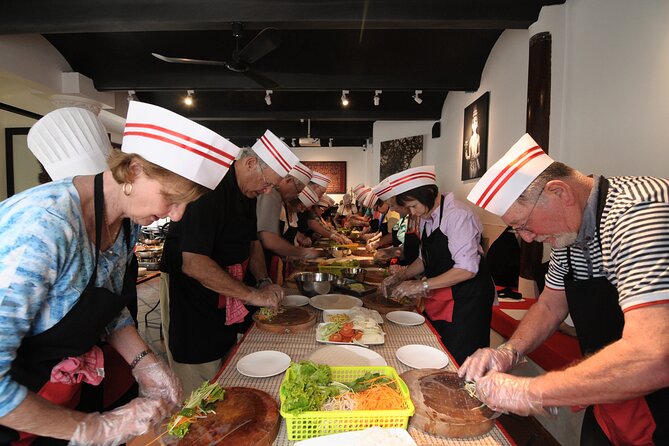
- Market shopping with guidance: You buy produce, fruits, and spices with a chef telling you what to look for.
- Private, hands-on cooking: You get your own station and wok, with step-by-step help.
- Three traditional dishes: You practice techniques and then taste the results as a full meal.
- Take-home recipes: You receive a written list so you can cook again later.
- Certificate and photos: A small but fun finish to mark what you made.
- Tuk-tuk logistics that actually work: Short ride out to the market, then back to cook without wasting time.
Banana Cooking Class: the easy start point in Phnom Penh
The experience meets at Banana Cooking Class on Abdul Carime St. in Phnom Penh (number 1, 4b Abdul Carime St. (21)). It’s the kind of starting point that keeps things simple: you show up, get settled, and the day moves forward without a long preamble.
Half-day sessions run in two time blocks. You’ll either meet in the morning around 9:00am or in the afternoon around 3:00pm, and the whole thing runs about 4 hours. You’ll be back at the meeting point afterward, which matters in a city where “starting late” can turn into “missing dinner plans.”
You’ll also get a refreshing drink and a cold towel after you return from the market. That’s a small detail, but after shopping and handling ingredients, it makes the kitchen time feel easier on you.
Tuk-tuk to the local market: learning starts before the stove
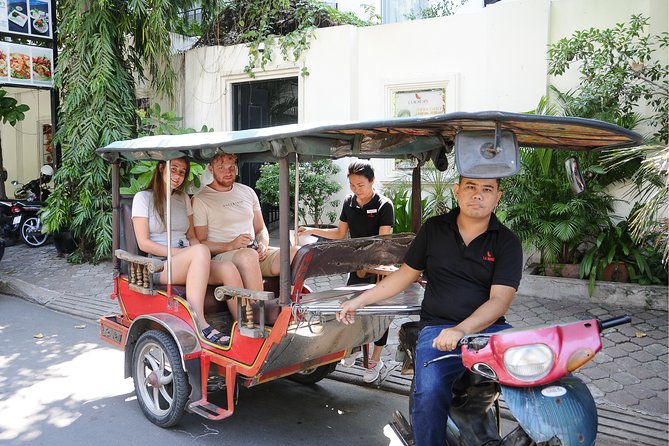
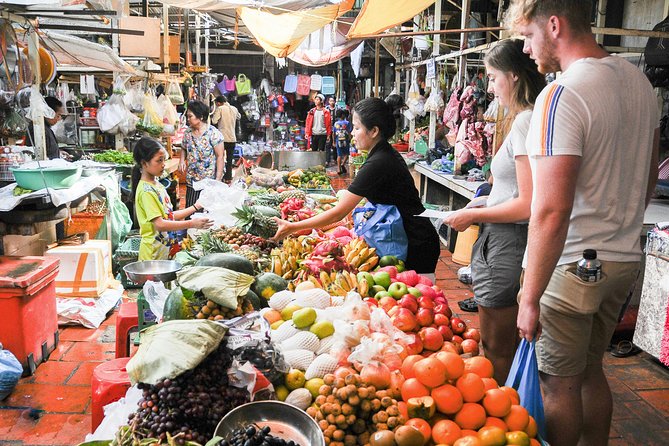
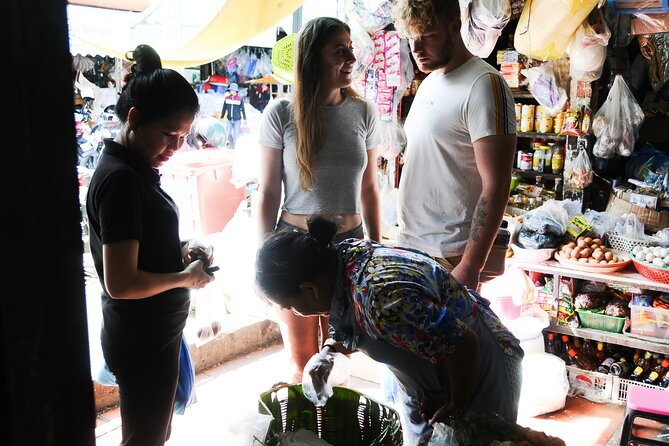
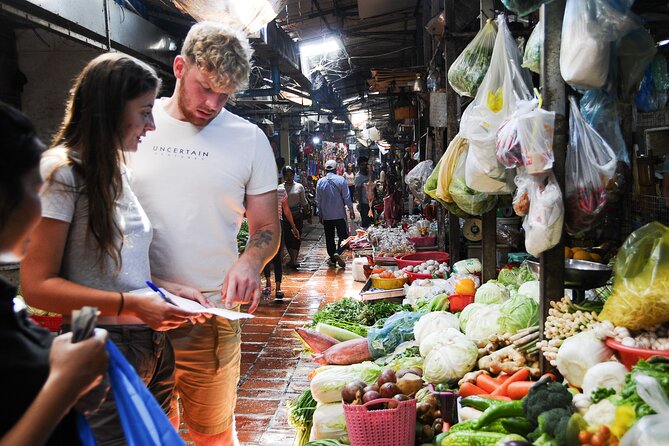
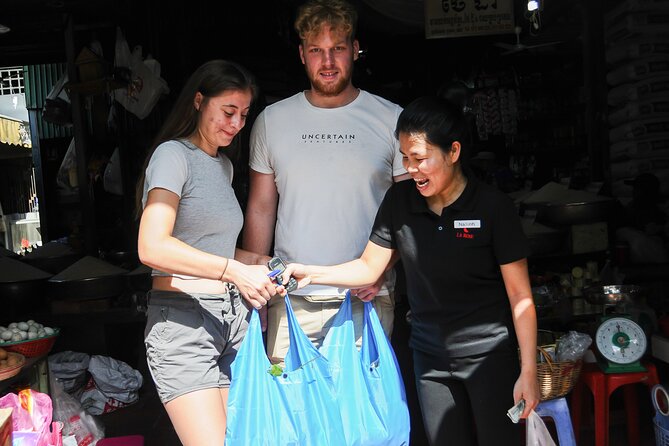
The first real lesson happens before cooking. You hop in a tuk-tuk to a local market where your chef guides you through what you’re buying: fruits, vegetables, and spices used in Khmer food.
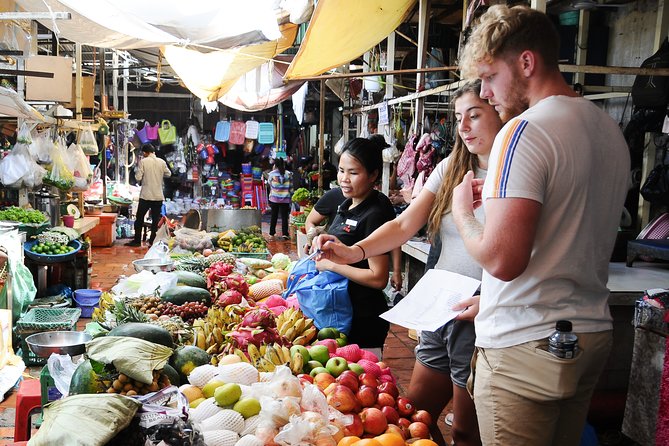
This market leg is where you learn the practical side of Khmer cooking. You’re not just grabbing ingredients; you’re choosing them. The chef shows you what to look for and why, including how fresh herbs and aromatics affect the final flavor.
A lot of the best cooking classes sell you the meal, but this one sells you the process. The market visit helps you understand Cambodian tastes as lived experience: bright herbs, earthy spices, and ingredients chosen for texture as much as flavor.
Back to the kitchen: theory, then you cook for real
When you return to Banana Cooking Class, the flow is clear and paced. You get a recipe and then a theory class where the chef does a cooking demonstration for the dishes you’ll make.
The key here is that the demo isn’t meant to replace your hands-on time. Soon after, you move into the real work: each student has their own cooking station and wok. Assisted by the chef, you follow along and practice the techniques in the kitchen.
I like this structure because it keeps you from getting lost. The demo gives you a map. Then cooking forces you to learn by doing, including timing, chopping, and how Khmer dishes build flavor in stages.
You’ll also be able to ask questions while you cook. In a cooking class, that’s the difference between a fun meal and a lesson you can repeat at home.
The three-dish meal: what Khmer cooking can taste like in a half day
The class is designed around cooking three traditional Cambodian dishes, then eating them as your lunch or dinner. The exact menu can vary by session and ingredient availability, but the dishes shown in past classes include things like:
- Fish amok (a signature Cambodian-style fish dish often cooked with coconut and aromatic spices)
- Curry, including yellow chicken curry
- Rice paper rolls / spring rolls
- Green mango salad (a bright, tangy starter-style dish)
- Banana desserts such as banana palm sugar or banana caramel
What makes this selection smart for a half-day class is variety. You practice a curry technique, you handle fresh and crunchy components, and you finish with something sweet. Even if you’ve cooked before, this mix teaches you how Khmer flavors move between salty, sour, aromatic, and sweet without turning the meal into one long, repetitive sauce.
When you sit down to eat, you’re not dealing with “chef-made food plus a class.” You’re tasting what you made with real ingredients you bought yourself. That’s the whole point, and it’s why the meal feels like part of the learning.
Learning from chefs like Lom Ang (and Sophen)
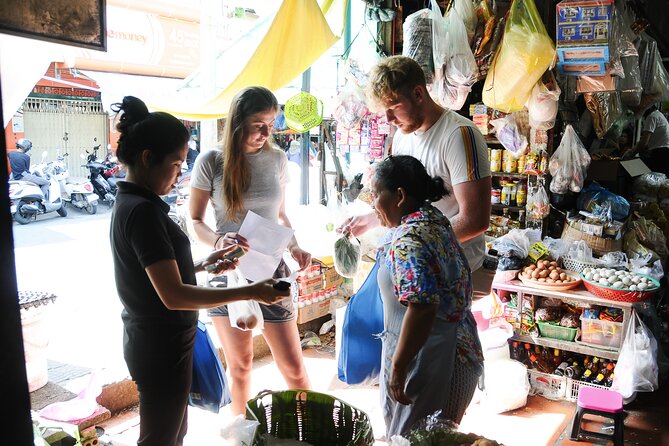
The instruction style is one reason this class earns such strong repeatable praise. Chefs like Lom Ang and Sophen have been credited for being friendly, clear, and genuinely helpful—especially during market shopping and while you’re cooking.
In practical terms, that means you can expect the chef to explain what ingredients should look like and how to work with them. For example, you’re guided in selecting fresh produce and herbs, and you’re also supported while chopping, mixing, and cooking.
One very useful detail from the teaching approach: you can often ask about substitutions. If you can’t find a specific ingredient back home, the chef can tell you what swaps might still work in the flavor profile, so your dish doesn’t collapse into something totally different.
Why you get recipes and a certificate (and why it matters)
You leave with more than the memory of a nice meal. You’ll get a recipe—including an ingredient list—and the class ends with a certificate and photo session.
That matters because Cambodian cooking relies on ingredient choices and technique, not just on following a list. When you take the recipes home, you can recreate the dishes with less guesswork. You can also use the ingredient list to shop smartly and avoid the common mistake of buying the “closest thing” to an herb or spice without understanding what it contributes.
Even better, the recipe handout functions like a cheat sheet for the next time you cook. After you’ve done the class once, your next attempt becomes less intimidating. You’re cooking with context, not just trying to match flavors you tasted once.
Value check: is $31 actually a deal in Phnom Penh?
At $31 for an approximately 4-hour private class, the value comes from what’s included, not just the price tag.
You’re paying for:
- A market visit with tuk-tuk transport
- A private instructor who supports you one-on-one while you cook
- Your own cooking station and wok
- A full meal made from the three dishes you prepare
- Recipes you can take home
- A certificate and photos to wrap it up
If you break it down, the market + transport + instructor time alone would cost more in many places. Then add the meal you’d otherwise pay for, plus the kitchen time that teaches you technique. This is one of those experiences where the price feels fair because the class doesn’t treat you like passive entertainment.
One note: private doesn’t automatically guarantee more attention than you’d get in a larger class, but it does increase the odds you’ll get your questions answered quickly. And the format here is built for individual cooking, which helps you learn faster.
Who this suits best (and who might want a different plan)
This class is a great fit if you:
- Want hands-on Khmer cooking in a short time
- Like market experiences and want to learn how to shop for ingredients
- Prefer structured teaching with a chef’s support instead of trial-and-error
- Want a practical souvenir: recipes you can use later
It’s also a strong option if you’re traveling with someone and want a shared activity that doesn’t rely on language fluency. Even if you’re not a strong cook, the step-by-step approach is designed to keep you moving.
Possible mismatch: if you hate cooking tasks, this may feel like work rather than fun. And as mentioned earlier, if your group ends up being small, you might notice the meal setup is straightforward, which can feel a bit less social than you expect.
Quick tips to make your session smoother
A few practical moves will help you enjoy the whole thing more.
- Wear clothes you don’t mind getting splashed. Kitchens can be clean, but ingredients are sticky and chopping gets messy.
- Arrive hungry enough to taste your food, but not so hungry you feel rushed. This is a cooking class, not a snack sprint.
- Use the market time for questions. Asking early about spices and herbs makes the cooking steps easier later.
- If you have dietary needs, bring them up at booking. The data here doesn’t list customization options, so it’s smart to confirm what can be adjusted.
Also, don’t skip the recipe walk-through before you cook. It’s where you’ll pick up how to recreate the dishes later.
Should you book Banana Cooking Class’s Khmer Cooking Class?
I’d book this if you want a half-day in Phnom Penh that leads to something real: you shop for ingredients, you cook three Cambodian dishes at your own station, and you eat what you made with a written recipe to take home.
It’s especially worth it for anyone who’s tired of tour schedules that end with a photo and a story, instead of a skill. The market-to-kitchen flow is efficient, and the private chef support is the kind of help that makes you feel capable, not overwhelmed.
If you’re on the fence, think about this: at $31, you’re buying instruction plus lunch or dinner, not just entertainment. For many people, that’s the difference between a “nice day” and a trip highlight you’ll repeat at home.
FAQ
How long is the Khmer Cooking Class half-day?
It runs about 4 hours approximately, depending on whether you choose the AM or PM session.
Where does the class start?
The meeting point is Banana Cooking Class, 1, 4b Abdul Carime St. (21), Phnom Penh, Cambodia.
Is this a private class?
Yes. It’s listed as a private tour/activity, and only your group participates.
Do you visit a market during the class?
Yes. You go by tuk-tuk to a local market to learn about and buy Cambodian fruits, vegetables, and spices.
How many dishes do you cook?
You cook three traditional Cambodian dishes.
Do you eat the food you cook?
Yes. The class includes lunch or dinner made up of the dishes you prepared.
Do you get recipes to take home?
Yes. You receive recipes, and many classes also provide an ingredients list so you can recreate the dishes later.
What happens at the end of the class?
You’ll receive a certificate and there is a photo session. The activity ends back at the meeting point.
What is the cancellation policy?
You can cancel for a full refund if you cancel at least 24 hours before the experience starts. If you cancel less than 24 hours before the start time, the amount you paid is not refunded.