REVIEW · BUSAN
Korean cooking class in Haeundae, Busan
Book on Viator →Operated by Bapsang, Korean Cooking Class in Busan · Bookable on Viator
A Joseon cooking apron is the icebreaker. This small-group Korean cooking class in Haeundae, Busan turns you into a palace-style home cook for about 3 hours, with an easy plan and real food to eat.
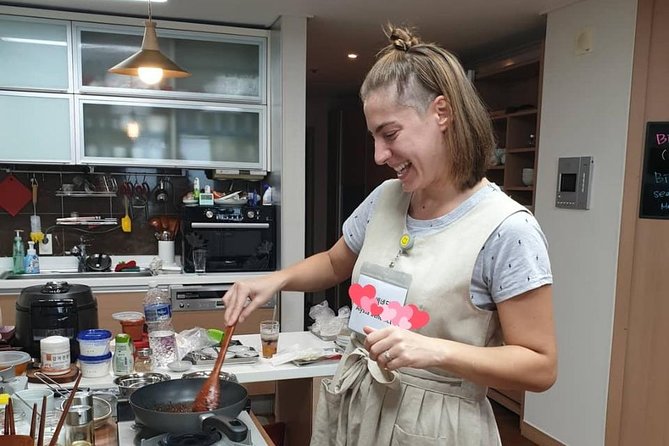
I especially like the hands-on personal cooking station setup, and I love that the class is led by Min, who mixes clear instruction with Korean food and culture context. The one thing to consider: if you’re not comfortable sitting on the floor, you’ll want to plan for the floor dining setup, though chair seating is available.
In This Review
- Key Things You’ll Enjoy in Haeundae Korean Cooking
- Where This Busan Class Fits (And Why Haeundae Is a Smart Base)
- First Moments: Welcome Drink, Apron Story, and Min’s Teaching Style
- What You’ll Cook: Bibimbap, Seaweed Soup, and a Korean Pancake Set
- Bibimbap: the “build it” dish
- Seaweed soup: comfort with a purpose
- Korean pancake: expect something that actually helps you cook
- The Sauce Tasting and Why It Matters
- Bapsang-Style Dining: Eating What You Made, Plus Tea and Dessert
- The Short Coastal Stops: Dongbaekseom, Haeundae Beach, Bay 101, Nurimaru APAC House
- Group Size and the Real Meaning of Small Class
- Practical Notes: Timing, Meeting Point, and What to Plan For
- Dietary Needs: What You Can Expect (From What’s Been Shared)
- Value Check: Is $100 Worth It?
- Who Should Book This Busan Cooking Class
- When to Think Twice
- Should You Book This Korean Cooking Class in Haeundae?
- FAQ
- What dishes will I cook in this Korean cooking class in Haeundae?
- How many people are in the cooking class?
- Do I need any cooking experience?
- Will I get to eat what I cook?
- Is there a participation certificate?
- Is the experience affected by weather?
Key Things You’ll Enjoy in Haeundae Korean Cooking

- Personal station cooking so you’re not just watching
- Joseon-style apron and story-driven lessons tied to what you make
- Small group, up to about 8 people for real one-on-one help
- Bibimbap + seaweed soup + Korean pancake (menu can vary by date)
- Bapsang-style meal on a traditional floor dining table, with chair if needed
- Participation certificate plus a little take-home surprise mood at the end
Where This Busan Class Fits (And Why Haeundae Is a Smart Base)
If you want Korean food that you can actually cook later, this type of class beats the usual kitchen demo. You’ll work at your own station, make a full meal set, and then eat what you made in a traditional way. It’s the kind of experience that feels more like learning a skill than buying souvenirs.
Haeundae is a practical neighborhood for this. It’s where you can line up a cooking class and still have time for a beach stroll, views, and easy transport. And because the day includes area stops like Dongbaekseom and Haeundae Beach, it helps you feel like you’re seeing more than just a classroom.
One more plus: the class starts at 10:00 am and runs about 3 hours, so it’s a tight, doable morning plan. At $100 per person, you’re paying for the small-group format, food ingredients, and instruction time—not just the meal.
You can also read our reviews of more tours and experiences in Busan.
First Moments: Welcome Drink, Apron Story, and Min’s Teaching Style
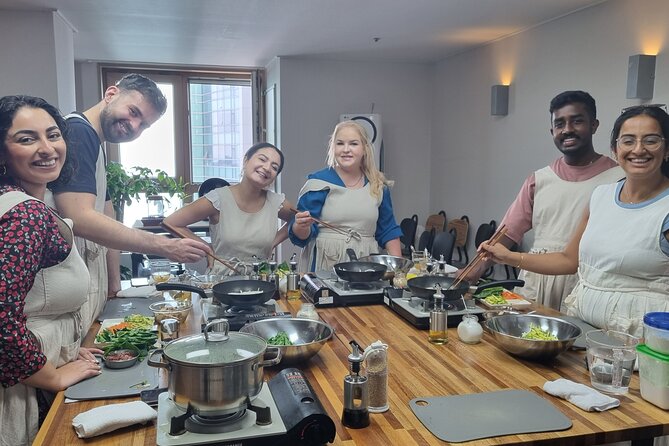
The experience begins with something simple but clever: you put on a Korean traditional apron. The apron is styled like what palace cooks wore historically, and that little costume piece immediately frames the lesson as more than recipe copying.
Right after that, you get a welcome drink. Then Min walks you through what you’ll be making and how the dishes work together. This matters because Korean cooking can look intimidating when you’re staring at an empty bowl. Here, you learn the logic: which sauce drives the flavor, how components come together, and what steps you can’t rush.
Min also does what great teachers do. She keeps instruction clear, and she creates space for questions. In class, that shows up as patient attention at your station and the feeling that you won’t be left behind if you move slower than the group.
What You’ll Cook: Bibimbap, Seaweed Soup, and a Korean Pancake Set
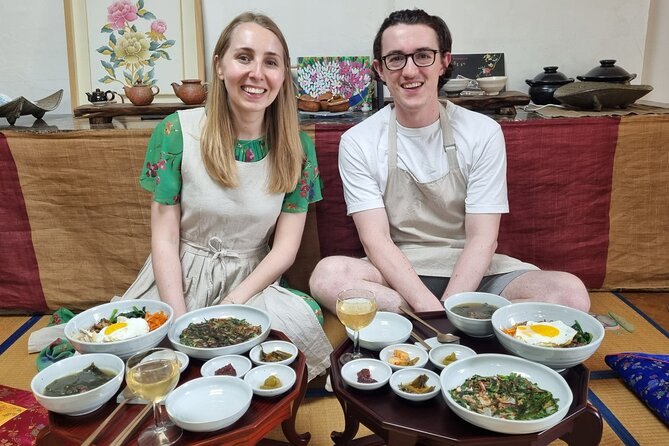
Your menu centers on a Korean meal set. The core dishes listed are bibimbap, seaweed soup, and a Korean pancake. The exact menu can vary by date, but you should expect these categories, and you’ll still leave with techniques you can reuse.
Bibimbap: the “build it” dish
Bibimbap is where you learn the idea of assembly. You’ll work with toppings and sauce, then build a bowl that balances flavors and textures. A key detail is that you also taste the main sauces along the way, so you’re not guessing what each one is doing.
The lesson payoff is big here. Once you understand the sauce logic, bibimbap stops being a mystery takeout bowl. You can recreate the vibe at home with what you can find locally.
Seaweed soup: comfort with a purpose
Seaweed soup can be soothing and simple-looking, but the flavor comes from getting the balance right. You’ll learn how to handle it during the cooking steps, then you’ll sit down and eat it as part of the set. That “cook, then taste at the table” format helps your brain connect action to result.
Korean pancake: expect something that actually helps you cook
Your pancake is typically one of the classic Korean styles, and in practice that often means chive-forward pancakes. You’ll learn the technique for making and cooking it as a Korean pancake, not a generic pan pancake. In other words: you’ll walk away with a method, not just a finished food photo.
The Sauce Tasting and Why It Matters
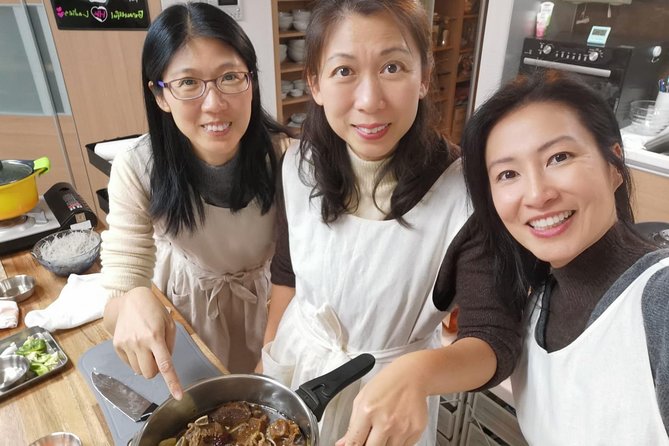
One of the best parts of this class is the moment where you taste the Korean main sauces. It’s easy to treat sauces as background flavor. Here, you learn them as characters in the story.
That tasting step does two things for you:
- You start cooking with your senses, not only measurements.
- You understand what to adjust if something tastes too strong, too mild, or off-balance.
If you’ve ever eaten Korean food and wondered what made it taste so specific, sauces are usually the answer. This class trains you on that directly.
Bapsang-Style Dining: Eating What You Made, Plus Tea and Dessert
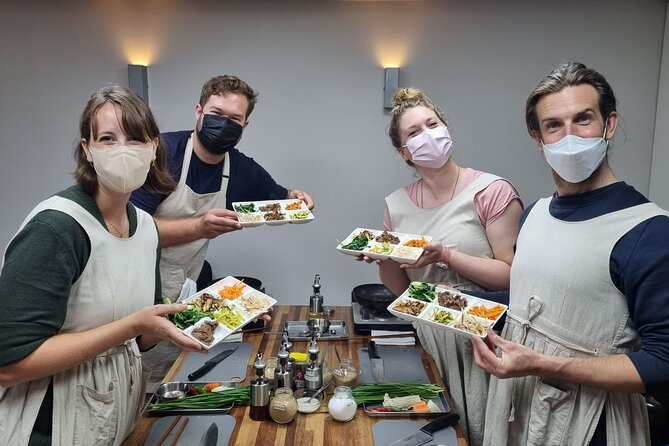
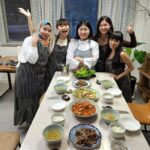
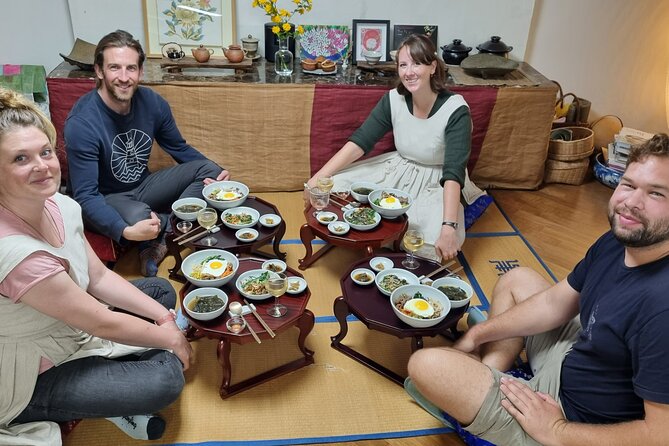
After the cooking, you eat your meal in a traditional Korean dining setup called bapsang—a floor dining table format. The experience is designed so you’ll actually enjoy what you made right away, rather than rushing out to chase the next thing.
If sitting on the floor is hard for you, the class notes chair seating is available. That’s a genuinely important detail. You still get the cultural feel, without turning the meal into a pain challenge.
Then comes a simple tea break with dessert. This part is short, but it adds a nice close. It also gives you a calmer moment to chat with Min and your group while everything “lands” the way it should after you cook and eat.
The Short Coastal Stops: Dongbaekseom, Haeundae Beach, Bay 101, Nurimaru APAC House
This experience isn’t only about the kitchen. Along the way, you’ll make stops in the Haeundae area, including Dongbaekseom, Haeundae Beach, The Bay 101 Yacht Club, and Nurimaru APAC House.
Here’s how to think about these stops. They’re not long sightseeing slogs. They’re short, practical breaks that help you connect the cooking class to real Busan scenery and a sense of place. So you get the flavor lesson in the morning, then you can mentally place it against the coast and city views.
If you’re the type who likes food tours that include orientation and atmosphere, these stops are a good match. If you want a slow, photo-heavy half day, you might find the whole format a bit tight because you’re balanced between cooking and brief area viewing.
Group Size and the Real Meaning of Small Class
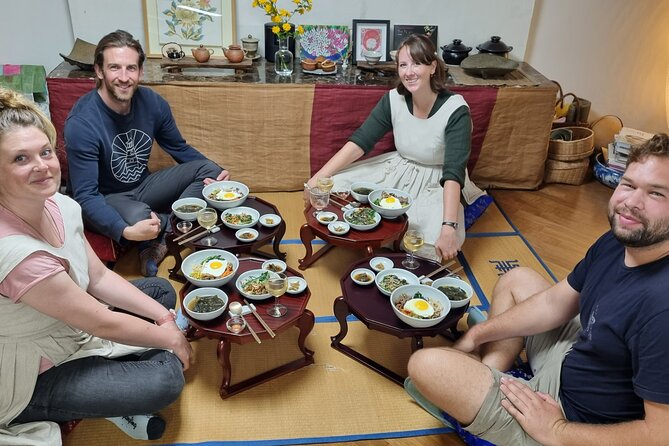
The class is set for a small group—listed as a maximum of seven people for the class size, with the overall cap noted as up to about 8 travelers. In real terms, this is why you can learn without feeling lost.
Small group cooking matters because your questions don’t get swallowed. It also means Min can correct technique while you’re still mid-step. And since you’re at a personal station, you’re actively doing the work, not just holding a bowl and hoping.
This is also a big reason the teaching feels personal in the feedback. When your instructor can actually see your station, you get the kind of adjustment that turns a frustrating moment into a smooth finish.
Practical Notes: Timing, Meeting Point, and What to Plan For
You’ll meet at 37 Marine city 3-ro, Haeundae, and the class starts at 10:00 am. The activity ends back at the meeting point, so plan it as a morning block rather than a flexible daylong wandering plan.
The class uses a mobile ticket, and confirmation happens at booking. It’s also near public transportation, which matters in Busan where transit planning can save you time.
Dress matters in a cooking setting. You’ll be in an apron for much of it, but you should still wear something you can move in comfortably. And if you’re picky about floor seating, go in with the assumption that you might have to switch between floor dining and chair dining depending on how your body feels that day.
Dietary Needs: What You Can Expect (From What’s Been Shared)
You’ll be cooking a set meal with sauces, soup, and pancakes. The good news is that Min is described as able to cater for dietary needs, including gluten-free and vegetarian options in some cases.
That doesn’t mean every ingredient will become every possible dietary style automatically. But it does mean you should message ahead with your needs so the instructor can plan the best version of the menu for your group.
If you’re traveling with kids, this class is also a strong bet. People have done it with young teens, and the structure is hands-on rather than lecture-only. It’s also paced so beginners can keep up.
Value Check: Is $100 Worth It?
At $100 per person for about 3 hours, you’re paying for:
- a small group size (so you get attention),
- hands-on cooking at your own station,
- the full ingredient setup for multiple dishes,
- a traditional meal format at bapsang, plus tea and dessert,
- and an instructor who connects food technique with Korean culture.
Cooking classes can be hit or miss when they’re basically an expensive eating experience. This one leans toward making, not just tasting. And the certificate plus participation moment makes the experience feel official, not casual.
If you like learning recipes you’ll repeat, you’re in the right price range. If you want a cheaper market meal with no instruction, you’ll probably feel this is pricey. But if you want skills, the small-group format helps the cost make sense.
Who Should Book This Busan Cooking Class
This is a great fit if you:
- want to cook bibimbap and understand the sauce logic,
- enjoy structured, hands-on instruction,
- like small group activities where you can actually ask questions,
- and want a food experience tied to Korean traditions like the apron story and bapsang dining.
It’s also a good option for families with older kids who can follow steps and handle the cooking pace. And for travelers who don’t cook much, the clear guidance is built for you.
When to Think Twice
Consider skipping (or choosing a different option) if:
- you don’t like floor dining, and you’d rather have a totally seated, chair-only experience (chair seating is available if needed, but the core dining concept is floor-first),
- you’re expecting a super long sightseeing day rather than a quick coastal-and-kitchen half block,
- or you need the exact same menu every time since the menu can vary by date.
Should You Book This Korean Cooking Class in Haeundae?
Yes, if you want a compact morning in Busan that gives you both food skills and local atmosphere. I’d book it for the small-group attention and the sauce tasting, because those are the parts that turn learning into something you can use after you get home.
If you’re on the fence, compare what you want most: a cheap meal or a repeatable cooking skill. This class is priced and built for the skill route. And with Min leading the session, the whole thing feels like a friendly, organized path from ingredients to a real Korean meal set.
FAQ
What dishes will I cook in this Korean cooking class in Haeundae?
The class centers on a Korean meal set including bibimbap, seaweed soup, and a Korean pancake. The exact menu can vary by date, but these dishes are the main focus.
How many people are in the cooking class?
The class is designed as a small group, with a maximum class size of seven people and a stated maximum of up to about 8 travelers.
Do I need any cooking experience?
No. The class is designed for beginners, and you’ll receive guidance during the hands-on cooking.
Will I get to eat what I cook?
Yes. You’ll enjoy the meal you cook at a traditional Korean dining table (bapsang-style). If sitting on the floor is difficult, you’ll have the meal at a table with a chair.
Is there a participation certificate?
Yes. You receive a certificate of participation after the class.
Is the experience affected by weather?
Yes. The experience requires good weather. If it’s canceled due to poor weather, you’ll be offered a different date or a full refund.