REVIEW · BUSAN
Busan Local Food Cooking Class with Market Tour
Book on Viator →Operated by 부산쿠킹클래스 · Bookable on Viator
Food smells better when you make it yourself.
This Busan class pairs hands-on cooking with a local market stop, so you learn the why behind the flavors, not just the steps. I like that the chef, Heeyoung, teaches in clear English and keeps the pace friendly and unrushed, which matters when you’re juggling chopping, sizzling, and questions at once.
Two big wins here: you make and eat several Korean dishes in the studio, and you finish with a tea ceremony plus a guided walk through an old Busan market. One thing to consider: it’s about 4 hours and fairly compact, so if you prefer very slow, free-form sightseeing, you may find the schedule a little tight.
In This Review
- Key Highlights You’ll Actually Use
- A 4-Hour Plan Built Around Food, Not Theater
- Meet Heeyoung and Learn Korean Cooking Without the Stress
- What you’re actually making (and eating)
- The Korean Tea Ceremony Part: A Food Culture Reset
- Bupyeong Market Walk: Learning Ingredients and Local Habits
- How the market stop helps you eat smarter in Busan
- What’s Included (So You Don’t Budget Twice)
- Price and Value: When $109.58 Feels Right
- Logistics That Matter (And Where They Don’t)
- Who This Busan Class Is Best For
- Should You Book This Busan Cooking Class?
- FAQ
- How long is the Busan local food cooking class with market tour?
- Where does the experience start, and when?
- Is the class taught in English?
- How many people are in the group?
- What’s included in the price?
- Do I eat what I cook?
- Is the market stop part of the tour?
Key Highlights You’ll Actually Use
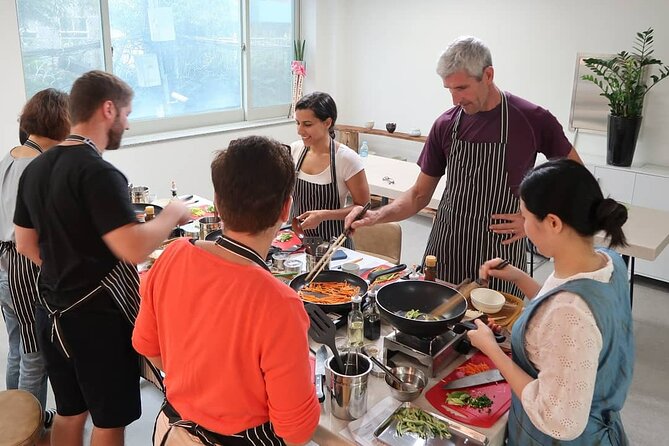
- Small group size (max 10) helps you get personal attention while cooking
- English cooking instruction makes technique and Korean food culture easier to follow
- Market learning, not just shopping: you get ingredient guidance and local food customs
- Tea ceremony included so you see another side of Korean food traditions
- Recipes to take home so you can recreate the dishes later
A 4-Hour Plan Built Around Food, Not Theater
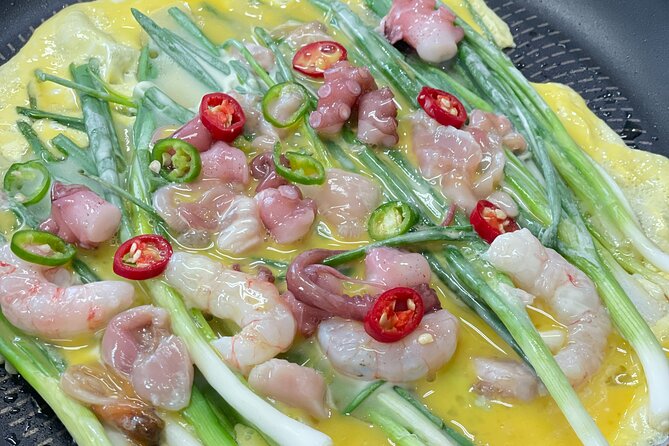
This experience is a mix of three connected parts: cooking class, meal, and market tour. It starts at a cooking class location in Seo-gu around 10:00 am, then you move through the main studio activities and finish back at the meeting point. The whole thing runs about 4 hours, which is a sweet spot for a half-day plan when you want something practical but not exhausting.
The kitchen time is the headline. You’ll work with a professional Korean food chef who speaks fluent English and is passionate about sharing the local food culture. The market time is the payoff: a guide helps you understand what you’re seeing, what ingredients matter, and how locals think about food beyond the dish you just ate.
Price-wise, this isn’t the cheapest “class + tour” option, but it’s also not overpriced for what you get: instruction in English, ingredients and tableware, a guided market walk, and a Korean tea ceremony experience. If you like learning food culture through doing, it tends to land as strong value.
You can also read our reviews of more tours and experiences in Busan.
Meet Heeyoung and Learn Korean Cooking Without the Stress
Your chef guide is Heeyoung, and the consistent theme is how well she explains things and keeps people comfortable. The class format is hands-on, so you’re not just watching someone else cook. That means you’ll be making dishes with step-by-step coaching while still getting time to ask questions.
What I like about that is simple: cooking classes can fail when they’re either too rushed or too vague. Here, the focus is on clear instructions and keeping the group engaged. With a maximum group size of 10 travelers, you’re less likely to get stuck waiting for attention while your pan is getting hot.
You’ll also learn technique, not only recipes. The course is described as teaching Korean cooking techniques and Korean food culture, so the goal is that you can cook again later with more confidence. And you get the recipes to take home, which turns the experience from a one-time meal into something useful for your next grocery run.
What you’re actually making (and eating)
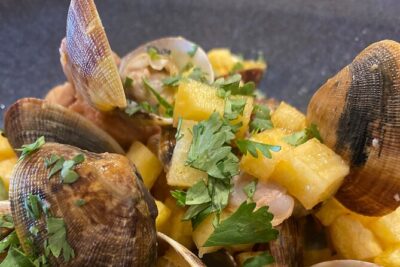
The exact dish list isn’t spelled out in the details you provided, but you can expect to make several typical Korean dishes and eat what you cook. The class description specifically points to fresh seafood, which is a big part of the Busan story. You’ll also have your meal accompanied by local rice wine.
If you enjoy Korean food because it’s balanced—salty, savory, sweet, and spicy in the right places—this class is built to train your palate. You’ll see how sauces, seasonings, and textures work together, not just which ingredient goes where.
The Korean Tea Ceremony Part: A Food Culture Reset
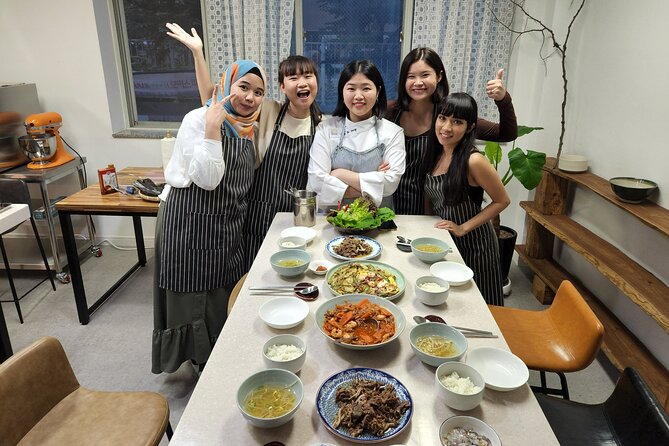
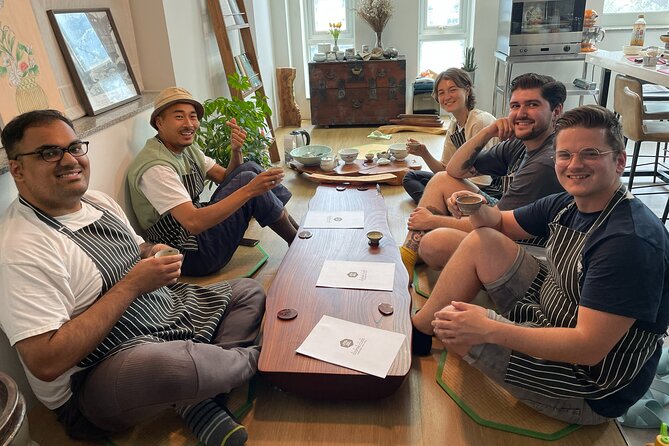
After cooking and eating, the itinerary includes a Korean traditional tea ceremony. This isn’t just a stop on a map. It changes the pace and gives you a cultural frame for what you ate.
Tea ceremonies in general are about attention: the timing, the serving, and the idea that food culture includes how people slow down and appreciate flavors. In this format, you get to experience it after you’ve already been in a cooking rhythm—so it feels like a shift from action (chopping, cooking, tasting) to appreciation (observing, learning, relaxing).
In practical terms, it’s also a nice contrast if you’re visiting Busan for the first time and your itinerary is mostly built around eating outdoors. This offers a more structured cultural moment without turning into something stiff.
Bupyeong Market Walk: Learning Ingredients and Local Habits
The tour includes a stop at Bupyeong Kkangtong Market. The details describe it as an over 100 years old traditional market, which is the kind of setting where you can spot what locals prioritize: fresh ingredients, familiar stalls, and food choices that match the season.
You won’t just wander. Your instructor or guide helps you translate what you’re seeing, points out ingredients, and explains local food customs. That matters because markets are easy to enjoy—but harder to learn from if you can’t connect what you see to how it’s used.
How the market stop helps you eat smarter in Busan
This is the part where the class pays off later in your trip. Once you understand what certain ingredients mean, you can order more confidently when you hit other Korean restaurants and street food spots. You’ll likely start noticing details like:
- what’s used more often in Busan-style seafood dishes
- what ingredients look “fresh” in a practical way (not just pretty)
- how vendors expect you to understand the food, even if you’re new
Also, you come away with a Busan food rec list, so you’re not left guessing what to try next. That kind of list can be hit-or-miss on generic tours, but here it’s paired with market education, so the recommendations tend to make sense.
What’s Included (So You Don’t Budget Twice)
The experience includes the things that usually add up when you DIY a similar day:
- English cooking class
- Korean food culture lecture
- Korean traditional tea ceremony
- Apron, tableware, all ingredients
- Busan food rec list
- Recipes to take home
Not included is travel insurance and any personal expenses. That’s normal, but it helps you plan: most of the “spending friction” is handled for you. You show up, cook, eat, learn, and leave with usable recipes.
Price and Value: When $109.58 Feels Right
At $109.58 per person for roughly 4 hours, you’re paying for more than a meal. You’re paying for:
1) a chef-guided, English-friendly cooking session
2) ingredients and equipment so you don’t worry about supplies
3) a structured cultural add-on (tea ceremony)
4) a guided market experience with translation help
Also, the class is described as having a small group limit of 10 travelers. That’s part of the value. In larger groups, cooking classes often become a “watch and hope” experience. Here, the format is set up so you can actually participate.
One more value factor: the recipes. If you’re the type who cooks at home, this is the difference between a fun afternoon and a lasting skill. You’ll be able to reproduce what you learned instead of only remembering tastes.
Logistics That Matter (And Where They Don’t)
This tour uses a mobile ticket. It’s also listed as near public transportation, which is good if you don’t want to spend your morning hunting parking.
The meeting point is at:
Busan Cooking Class 2F, 15 Gudeok-ro 186beon-gil, Seo-gu, Busan, South Korea
It runs with a 10:00 am start and ends back at the meeting point.
Because the tour is weather dependent, you should plan your day with a little flexibility. If Busan is having a rainy day, the experience may shift or adjust rather than forcing a bad situation.
Who This Busan Class Is Best For
This is a strong match if you:
- want practical Korean cooking instruction in English
- care about food culture, not just food photos
- enjoy markets but want translation support and ingredient explanations
- want a meal you help make (and then eat with rice wine)
It’s also a great choice if you’re short on time. You get cooking, tea, and market education in one half-day block.
If you dislike group settings, you might still do okay because the max group size is 10, and the teaching style described emphasizes keeping people comfortable. Still, cooking is inherently interactive, so completely quiet travelers may prefer something more passive.
Should You Book This Busan Cooking Class?
If you want a day that connects cooking skills with Busan’s food culture, I’d book this. The pairing of a hands-on class with the Bupyeong Kkangtong Market walk makes the experience feel bigger than the sum of its parts. And having Heeyoung lead with clear English instruction is a big deal—especially when you’re learning techniques you’ll want to repeat later.
Skip it only if you strongly prefer self-guided experiences with lots of unstructured time. This is a guided, scheduled format, and it’s designed for participation.
If you’re deciding between “just eating” and “learning how to eat well,” this one tilts toward the second option—in a fun way.
FAQ
How long is the Busan local food cooking class with market tour?
It runs for about 4 hours (approx.).
Where does the experience start, and when?
It starts at 10:00 am at Busan Cooking Class 2F, 15 Gudeok-ro 186beon-gil, Seo-gu, Busan and ends back at the meeting point.
Is the class taught in English?
Yes. The cooking class is English-language, and the chef is described as speaking fluent English.
How many people are in the group?
The experience has a maximum of 10 travelers.
What’s included in the price?
Included are the cooking class materials (apron, tableware, all ingredients), an English cooking class, a Korean food culture lecture, a Korean traditional tea ceremony, a Busan food rec list, and recipes.
Do I eat what I cook?
Yes. You’ll make dishes in the studio and then enjoy your creation as part of the experience, with local rice wine mentioned.
Is the market stop part of the tour?
Yes. After the meal, you visit Bupyeong Kkangtong Market, a traditional market over 100 years old, with guidance for ingredients and local food customs.