REVIEW · POMPEI CAMPANIA
Pasta Cooking Class in a Garden near Pompeii
Book on GetYourGuide →Operated by Giardini Balestrieri 132 · Bookable on GetYourGuide
Cooking in a garden beats a restaurant anytime. This pasta class near Pompeii starts in a family garden and ends with you eating fresh handmade pasta and a Campania dessert you helped create.
I love that you’re working with ingredients grown close to home, not generic supermarket buys. The small group setup also keeps things personal, with hands-on guidance from Sabrina and Rosalba.
One thing to plan for: this is about the cooking meal, not sightseeing, and transfer isn’t included. If you were hoping for Pompeii ruins time inside the same experience, you’ll need to arrange that separately.
In This Review
- Garden-To-Kitchen Pasta Lesson Near Pompeii (What Makes It Special)
- Key Points You’ll Care About
- Pasta and Pompeii: A Garden Class That Feels Like Dinner With Family
- Finding Giardini Balestrieri: Meeting Point and First Impressions
- The Garden Stop: Where Your Ingredients Start Growing
- Inside the Kitchen: Handmade Pasta Lessons the Traditional Way
- The Meal You Make: Bruschetta, Ravioli-Style Pasta, and Sunday Dessert
- Bruschetta with seasonal vegetables
- Fresh pasta (often ravioli)
- Homemade dessert (Campania style)
- Wine and water with your meal
- What You’ll Learn You Can Actually Use at Home
- English Instruction and a Small Group That Stays Participatory
- Price and Value: Is $94 Worth It?
- Weather and Comfort: Garden Vibes, Kitchen Reality
- Who This Cooking Class Is Best For
- Should You Book This Pasta Cooking Class Near Pompeii?
- FAQ
- How long is the pasta cooking class?
- How many people are in the group?
- Is the instruction offered in English?
- What’s included in the price?
- Is transfer included from your hotel or meeting area?
- What is the meeting point?
- Is there a minimum number of people required?
- Are gratuities included?
- Can I cancel for a full refund?
- Is there a pay-later option?
Garden-To-Kitchen Pasta Lesson Near Pompeii (What Makes It Special)
This class is built around a simple idea: learn the food like locals do—through family habits, not cooking show tricks. You show up, meet the people running the kitchen, walk the garden first, then roll dough and shape pasta with coaching you can actually use later at home.
And because the ruins of Pompeii are just a few minutes away, this works well on an itinerary day when you want something real and not another rushed stop. You’ll still get the Italy feeling, but in a quieter, everyday way: aprons on, flour on your hands, and a table that turns into the main event.
Key Points You’ll Care About
- Garden ingredients first: you start outdoors and use products from the land
- Small group teaching: limited to 10 participants for more time with the instructor
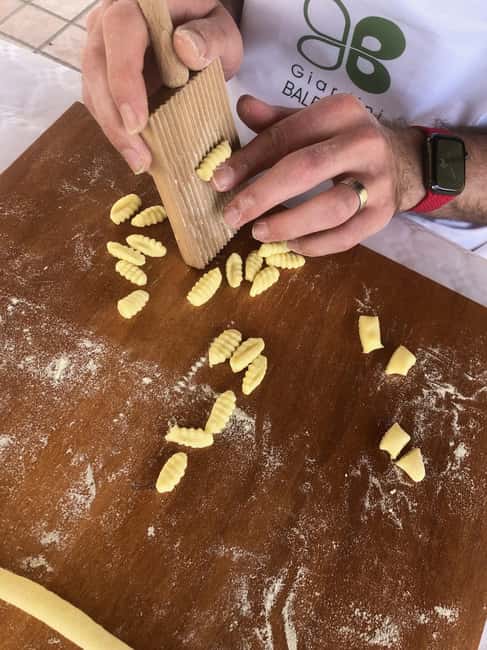
- Hands-on pasta work: you learn dough feel, rolling, and shaping steps
- A full meal: bruschetta, fresh pasta, homemade dessert, plus water and Gragnano wine
- Menu adjusts to the season: Sabrina tailors ingredients based on what’s available
Pasta and Pompeii: A Garden Class That Feels Like Dinner With Family
The best part here isn’t just learning pasta. It’s the rhythm of the evening. You begin outside, where the garden sets the tone. Then you move indoors and you’re treated like part of the process, not a spectator watching someone else cook.
A lot of Pompeii-area activities feel like they orbit around the ruins first and everything else second. This one flips that. Yes, you’re close to Pompeii, but your attention stays on the local kitchen—where Campanian Sunday food turns into a hands-on lesson. That shift makes it more memorable than a typical “tour and taste” setup.
Finding Giardini Balestrieri: Meeting Point and First Impressions
You’ll meet at Balestrieri Gardens, where you’ll find a sign indicating Giardini Balestrieri. That small detail matters because it sets expectations: you’re going to someone’s home, not a big commercial venue.
Once you’re there, the vibe is intimate and familiar. Multiple experiences in the provided details point to the same pattern: you get greeted warmly, you’re included in the flow of the home, and the kitchen work stays relaxed even when the task is hands-on. If you want the kind of afternoon where you can ask questions and actually get answers, this format is a good fit.
The Garden Stop: Where Your Ingredients Start Growing
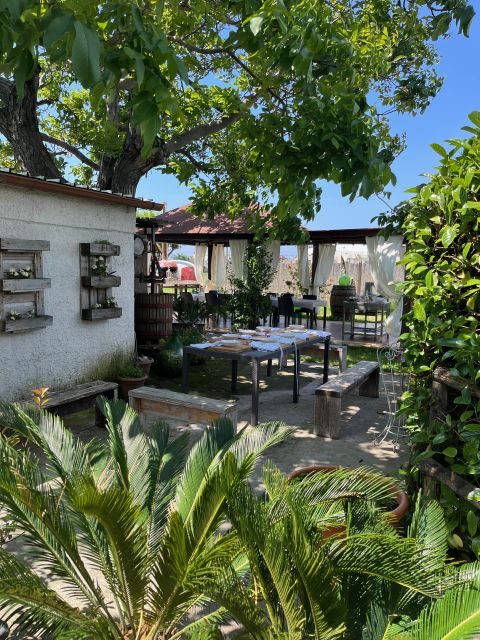
The class begins in the small garden, where Sabrina shows you what’s growing. You’ll then use those ingredients for parts of your meal—especially the seasonal vegetables used for the bruschetta.
This isn’t just a pretty photo moment. Learning where the ingredients come from changes how you taste. When you know you’re using garden products, you pay more attention to flavor, not just presentation. You’ll also hear practical notes about what’s used and why the menu shifts with the season and climate.
If you like experiences that connect food to place—without pretending you’re in a museum—this garden start is a strong reason to book.
Inside the Kitchen: Handmade Pasta Lessons the Traditional Way
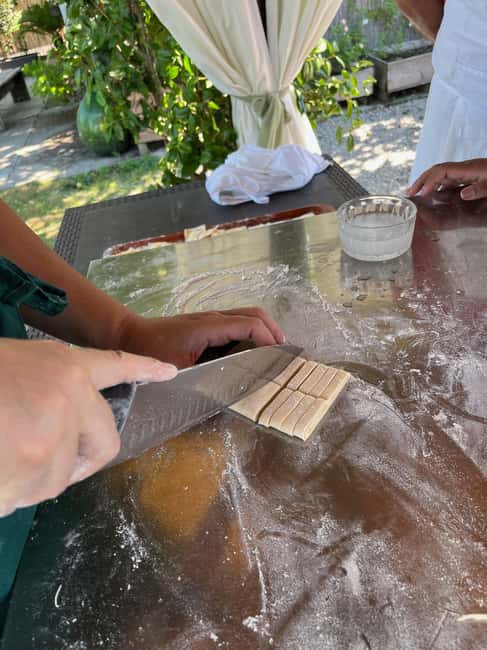
Then comes the part you’re really here for: handmade pasta, taught like it’s supposed to be taught. You enter the house kitchen and follow the recipes passed down through generations, with guidance focused on feel and technique.
What you can expect during instruction:
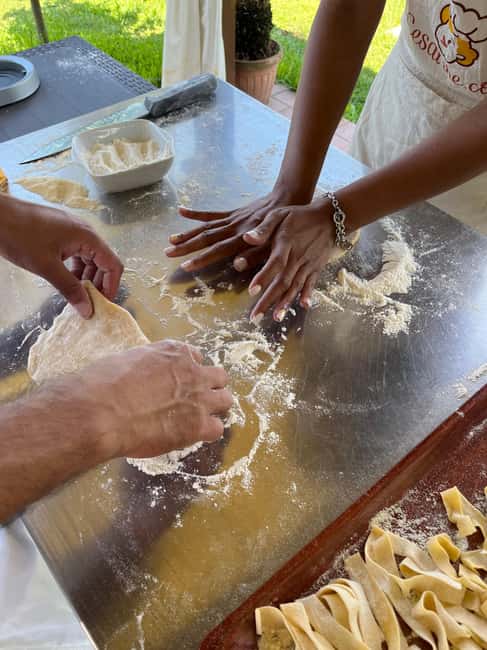
- you’ll learn how to make handmade pasta dough with flour and eggs
- you’ll watch, then try, with help adjusting your dough
- you’ll get tips on rolling it out correctly
- you’ll understand what to look for when the dough is right
Even if you’re not confident with cooking, the teaching style described is patient and hands-on. Sabrina and Rosalba are repeatedly mentioned as warm and involved, and the class is small enough that you’re not stuck waiting your turn forever.
One practical plus: since the ingredients are basic (flour and eggs), it’s easier to recreate later. You’re not memorizing a list of hard-to-source items. You’re learning process.
The Meal You Make: Bruschetta, Ravioli-Style Pasta, and Sunday Dessert
After working with the dough, you eat what you helped make. The included menu has a clear structure:
Bruschetta with seasonal vegetables
You’ll start with bruschetta made with seasonal vegetables. It’s a good opener because it helps you settle in before the flour-and-dough chaos starts. It also tastes fresher when those vegetables come from the garden you just saw.
Fresh pasta (often ravioli)
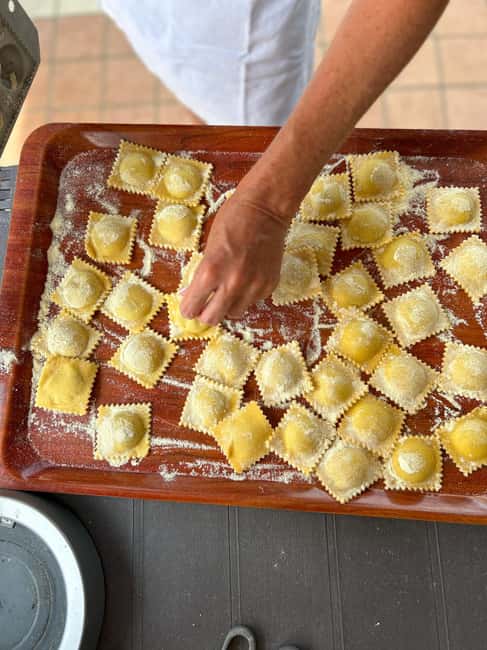
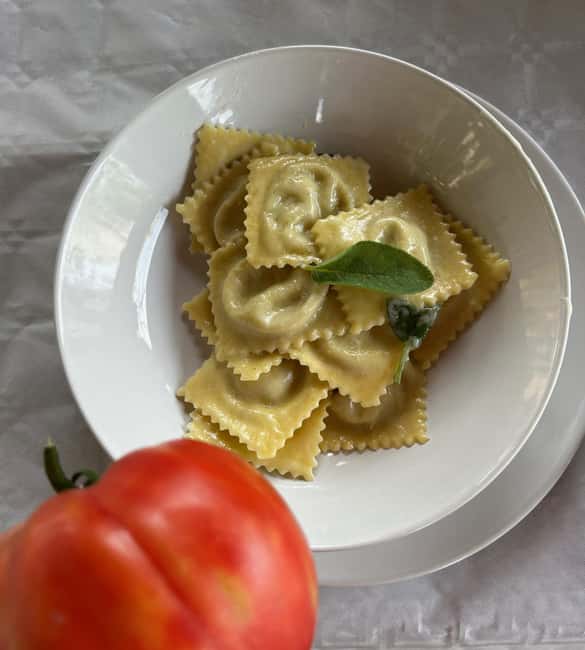
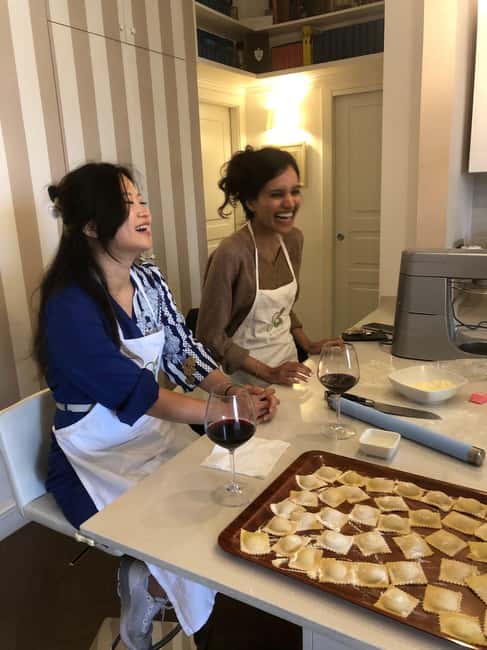
The class centers on fresh pasta, and the teaching focus often lands on ravioli from scratch. You’ll be guided through the steps so you’re not just shaping once—you’re participating in making the pasta itself, then moving it to the plate.
Homemade dessert (Campania style)
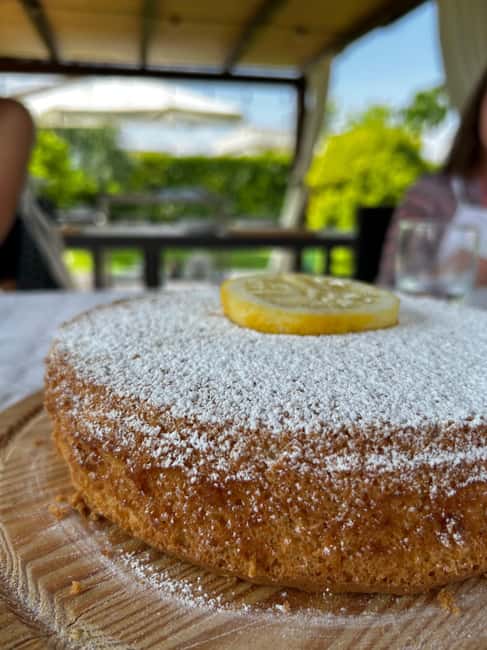
The sweet part is a typical Campania dessert, and in the details provided, the dessert is frequently described as a lemon caprese-style cake (often called caprese lemon cake). That matters because lemon and cheese flavors fit the region’s classic, homey cooking style—bright, not overly heavy.
Wine and water with your meal
You’ll also have Gragnano wine and water included. Gragnano is closely associated with pasta country, so it matches the theme without turning the experience into a wine tasting event.
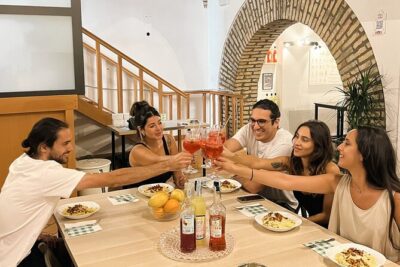
This whole meal setup is why the time works. You don’t just cook for an hour and then scramble. You cook, learn, taste, and finish together.
What You’ll Learn You Can Actually Use at Home
The most useful knowledge in a cooking class is rarely the recipe list. It’s the judgment calls.
Here, that includes things like:
- how the dough should feel when it’s at the right stage
- how to roll pasta so it cooks properly
- how to shape pasta without it turning into a doughy mess
You’ll also leave with a better understanding of Sunday cooking logic in Campania. That means thinking about what’s in season, not following a rigid menu. Sabrina’s approach—adjusting ingredients based on what’s available—shows you how locals cook with real constraints.
If you’ve ever made pasta at home and ended up with dough that felt wrong, this kind of feedback is exactly what you’re missing. It’s not magic. It’s guidance tied to touch and timing.
English Instruction and a Small Group That Stays Participatory
The class is taught in English and is limited to 10 participants. That group size is a big deal. With a large crowd, hands-on learning becomes a lecture. Here, it’s built so you can participate throughout the process.
It also means you’re more likely to get individual corrections. People in the provided details describe feeling involved the whole time, not just when they’re holding a rolling pin for a quick photo.
And yes, there are charming distractions. One review notes Gary the cat, and that’s the kind of small home-life detail that makes the place feel real rather than staged.
Price and Value: Is $94 Worth It?
At $94 per person for a 3-hour class, you’re paying for more than ingredients. You’re paying for:
- guided instruction in pasta technique
- a full meal you cook yourself
- wine and water included
- a small group format that keeps attention on you
If you’ve spent money in Italy on tours that mainly give you samples, this has a different value structure. Your participation is the product, and the meal is part of the learning. You get to sit down with food you made, which turns the class into a complete experience rather than a quick activity.
What could affect value for you: if you already know pasta well and just want a quick meal, it might feel like a lot of teaching time. But if you want a skill you can repeat later—this pricing is easier to justify.
Weather and Comfort: Garden Vibes, Kitchen Reality
This class has a garden start, but cooking happens in a real home kitchen. One description notes that setup is often outside, but conditions can shift, and you’ll still be able to do the class even when weather isn’t cooperating.
Practical tip: wear shoes you don’t mind getting flour on, and bring a layer if the air is cooler in the evening. You’ll be moving between garden and kitchen, so comfort matters more than fashion.
Who This Cooking Class Is Best For
This is a great fit if you want:
- a hands-on food lesson near Pompeii
- an experience that feels personal and local
- a meal that includes wine and dessert (and isn’t separate from the class)
It’s also especially good for couples and small groups because the pace stays relaxed. Families can work well too, since the teaching style is described as patient and inclusive.
Who might not love it: if your top priority is seeing Pompeii ruins themselves during the same timeframe, you’ll likely prefer an actual Pompeii guided visit and then do this class later or on a separate day.
Should You Book This Pasta Cooking Class Near Pompeii?
I think you should book it if you’re craving an Italy moment that doesn’t feel like a checklist. The garden-to-dough flow, the small group limit, and the fact that you eat what you make add up to real value for the time spent.
Skip it only if you want a high-energy city tour or if you’re mainly seeking a quick snack. This is a proper cooking class meal, with instruction at the center.
If you do book, treat it like a Sunday-style activity: slow down, ask questions, and focus on the technique. You’ll leave with better pasta skills and a dinner memory tied to Campania, not just to a ruin in the distance.
FAQ
How long is the pasta cooking class?
It lasts 3 hours.
How many people are in the group?
The group is limited to 10 participants.
Is the instruction offered in English?
Yes, the instructor teaches in English.
What’s included in the price?
The price includes a menu with bruschetta with seasonal vegetables, fresh pasta, homemade dessert, water, and Gragnano wine.
Is transfer included from your hotel or meeting area?
No, transfer is not included.
What is the meeting point?
You’ll find a sign that says balestrieri gardens.
Is there a minimum number of people required?
Yes. The experience has a minimum for two people.
Are gratuities included?
No, gratuities are not included.
Can I cancel for a full refund?
Yes. You can cancel up to 24 hours in advance for a full refund.
Is there a pay-later option?
Yes. You can reserve now and pay later.