REVIEW · CASABLANCA
Private CousCous Cooking Class in a Traditional Family Home
Book on Viator →Operated by Wissal · Bookable on Viator
Couscous starts with a warm welcome. This private class in Casablanca with Wissal and her mom feels like a peek into real Moroccan home cooking, beginning with mint tea and moving into traditional couscous and local salads. I like that you cook step by step, not just watch, and that the family shares stories while you work. One possible drawback: it’s in a home setting, so expect a simple kitchen setup and plan for the full 4 hours with an appetite.
I also like that the experience is truly personal: you’re not joining a big group. And if you’re vegan or vegetarian, you’re welcome too. The main thing to consider is timing—this is best when you can arrive relaxed, because you’ll be eating together once everything is ready.
In This Review
- Key highlights at a glance
- Aïn Chock arrival: mint tea first, then the work begins
- Wissal and her mom: how the class turns into real cooking
- Couscous in a family home: what you’ll actually take home
- Moroccan mint tea: more than a drink
- Local salads: learning the sides that make the meal
- Stories during cooking: culture you can actually use
- Lunch or dinner together: eating the results on-site
- The private setup: why it feels different from big classes
- Price and value: what $70 per person really buys
- Timing tips for a smooth 4-hour experience
- Who should book this couscous class?
- Should you book this couscous class in Casablanca?
- FAQ
- How long is the couscous cooking class?
- What’s the price per person?
- Where does the experience start?
- Is the tour private?
- What do we learn to make?
- Is lunch or dinner included?
- Are vegans and vegetarians welcome?
- What kind of ticket do I receive?
- Is it easy to reach by public transportation?
- What’s the cancellation policy?
Key highlights at a glance
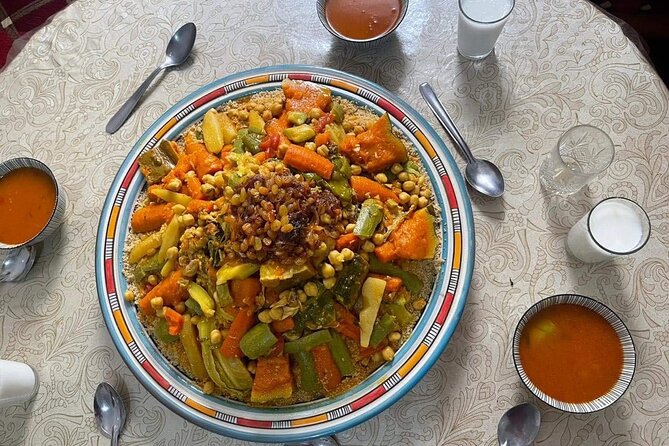
- Mint tea welcome and a hands-on lesson right when you arrive
- Step-by-step couscous teaching with Wissal’s mom as the main cook
- Local salads plus tips and techniques for Moroccan-style flavor
- Private format so it’s only your group in the kitchen
- Lunch or dinner together after you finish cooking
- Special local gifts at the end as a thank-you
Aïn Chock arrival: mint tea first, then the work begins
Meetup is in Aïn Chock, Casablanca, and the experience ends back there. That loop matters more than it sounds—home cooking experiences can get logistically messy, but this one stays simple: you go in, you cook, and you return to the same area.
When you arrive, the first “lesson” is Moroccan mint tea. You’ll not only drink it—you’ll learn how it’s made. This is a smart start for two reasons. First, tea is part of the rhythm of Moroccan daily life, so you’re not just jumping into cooking. Second, it gives you a smooth transition into the kitchen environment, where you’ll spend the next few hours.
One detail that helps: you’ll be in a home, not a restaurant classroom. That usually means less formal pacing and more conversation. In the best moments, you learn the why behind flavors—small choices, timing, and how the family expects food to come out.
You can also read our reviews of more tours and experiences in Casablanca.
Wissal and her mom: how the class turns into real cooking
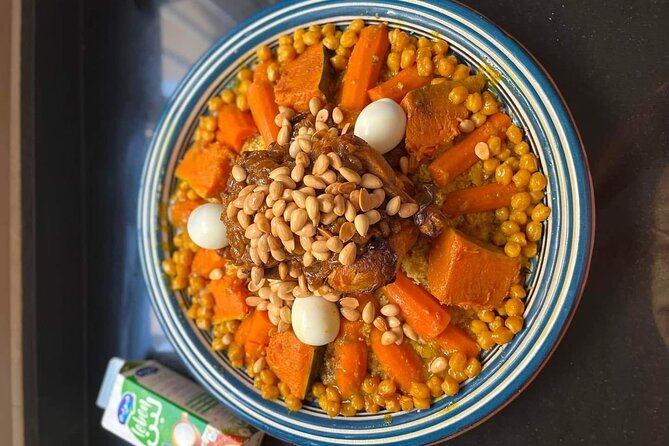
The heart of this experience is the cooking itself, led by Wissal and her mom. The info is clear: you’ll start the cooking class with her mom, and she’s described as the best chef in the family. That kind of family leadership is exactly why home classes work—food knowledge lives in people, not just in a recipe book.
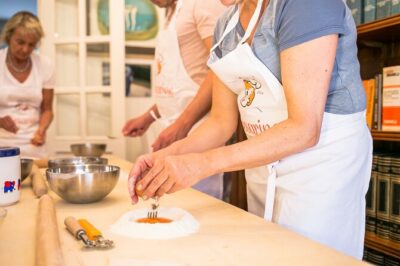
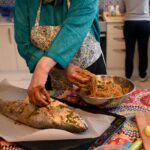
You’ll learn Moroccan recipes step by step, with a focus on couscous and local salads. The way the class is described suggests you’ll be guided through the process, including the small techniques and tips that make Moroccan cooking taste like Moroccan cooking.
This is also where you’ll likely get the practical, repeatable parts. You’re not just tasting “a dish.” You’re learning how the dish is built—how different components fit together on the plate. And because the instruction is personal (it’s a private activity, not a tour group shuffle), you can ask questions and get answers in context while you’re doing the work.
Couscous in a family home: what you’ll actually take home
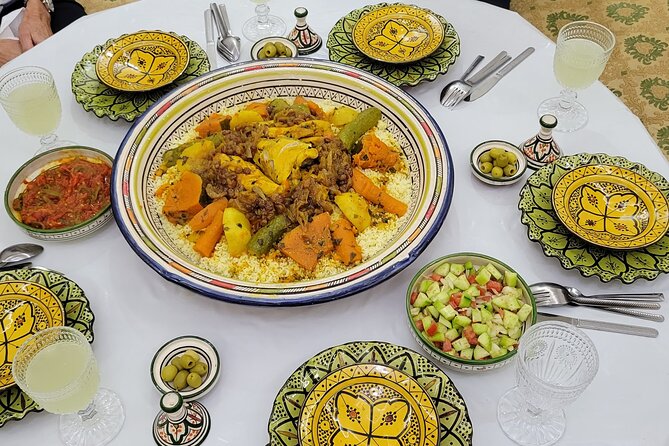
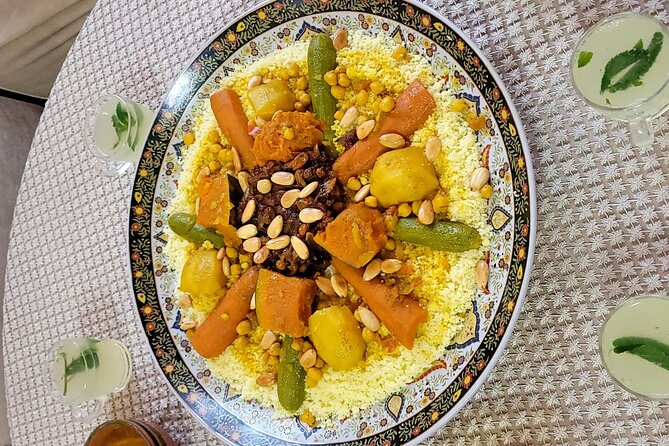
Couscous can sound like a single dish, but in Morocco it’s a whole approach to meals—how flavors balance, how textures work, and how components come together. In this class, you’ll focus on Moroccan couscous specifically, taught by the family.
I like that the lesson is presented as hands-on. The promise isn’t you’ll get a lecture on couscous history; it’s that you’ll make it and learn the “secrets” behind the family’s method. Even if you don’t end up recreating every step at home, you’ll leave with something more useful: a better understanding of what matters for taste and texture, and what ingredients and timing help the final plate feel right.
Also, the class isn’t framed as one rigid menu. The experience explicitly says vegans and vegetarians are welcome, which matters if your food needs are specific. If you book, I’d treat it as a chance to tell Wissal ahead of time what you avoid, so the family can match your cooking and meal together.
Moroccan mint tea: more than a drink
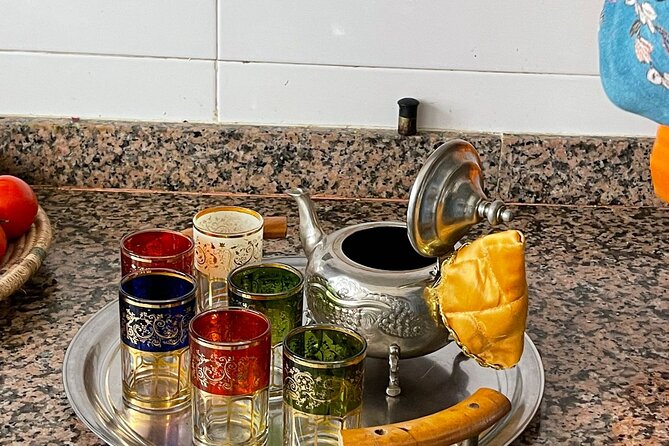
Mint tea can be tourist-friendly anywhere, but Moroccan mint tea is more than a beverage—you’ll learn it as part of the culture of hosting. Since you’ll get a lesson at arrival, you’re not left wondering how the tea is prepared. You’ll be in the kitchen when it happens, which is the fastest way to learn something like this.
Why this matters for your value: tea is often an afterthought in cooking tours. Here it’s built in at the start, so it’s part of your experience from minute one. When you understand the tea, you’ll also understand how the family’s kitchen works—what happens first, what’s prepared alongside cooking, and how hospitality is mixed into the food flow.
Local salads: learning the sides that make the meal
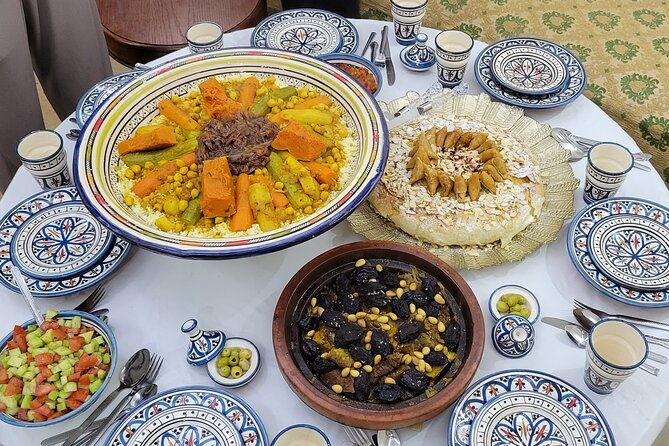
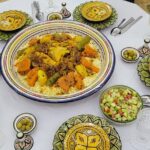
Along with couscous, you’ll make local salads. This is a big deal even if you think of salad as optional. Moroccan meals often rely on salads for freshness, acidity, and crunch to balance richer flavors.
The class description promises you’ll learn not just what to put in, but the “secrets tips and technics” of traditional cuisine. That’s the part you want as a home cook: the small choices that turn a generic salad into a Moroccan-style one. Even if you’re only able to recreate portions later, you’ll know what direction to go—what flavors to look for and how the salad supports the main dish.
And because salads are usually faster than elaborate dishes, this part of the class helps you see how the meal comes together as a system. You’ll end up with a full plate, not just one centerpiece.
Stories during cooking: culture you can actually use
One of the most praised parts in the reviews is the sense of daily life. The cooking class isn’t only about food. As you work, you’ll share stories and learn about Moroccan daily life and traditions.
This is where you get something practical for your trip, not just entertainment. After a few hours in a home kitchen, Morocco becomes easier to interpret in the streets—how people live, how hospitality works, and how food routines show up in everyday conversations.
If you’re the type who enjoys asking questions, this format rewards you. You’re not standing at a distance; you’re doing the cooking. That naturally leads to better answers because you can ask while you’re actively involved.
Lunch or dinner together: eating the results on-site
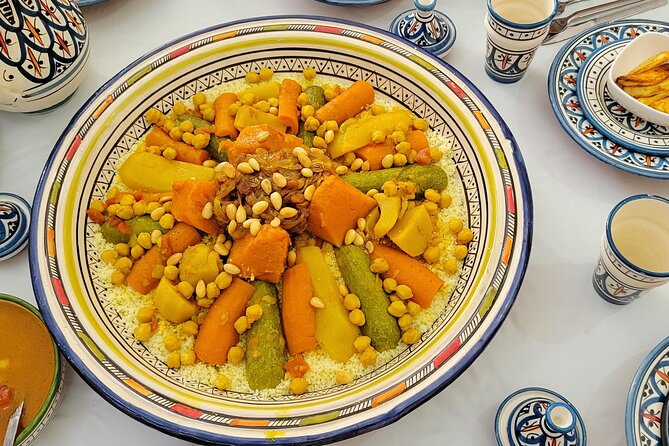
Once everything is prepared, you can enjoy dinner or lunch together. That’s a key part of the value for a $70 per person price point. You’re not paying for instruction alone. You’re paying for an entire shared meal experience produced in the home with the family who taught you.
And since the class includes mint tea and multiple dishes (couscous plus salads), you’ll leave fed in a real way. One review note described leaving full and with great memories, which fits this kind of setup: you cook, you eat, you don’t rush off to find food elsewhere.
The private setup: why it feels different from big classes
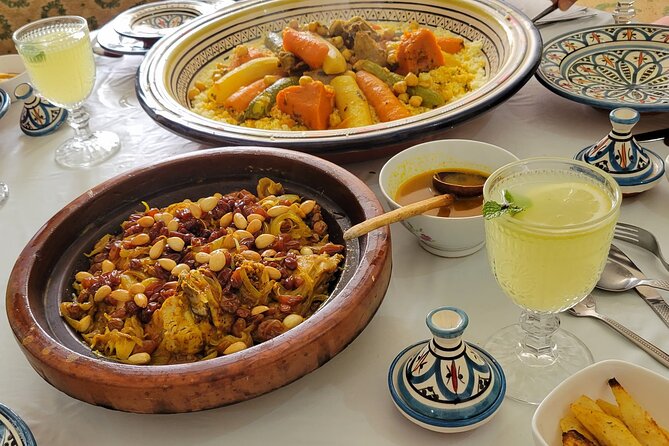
This is a private tour/activity, meaning only your group participates. That changes the entire tone. Big classes can turn into a conveyor belt of repeating instructions. A private format gives you more room for questions and personal attention, especially in a home kitchen where the pace can be flexible.
Another advantage from the reviews: Wissal’s daughter is keen to speak as much English as possible. Even when language is handled well, a home cooking class still moves at the speed of the kitchen. So if you care about conversation—food questions, Morocco questions—this likely fits you better than a strictly scripted lesson.
Price and value: what $70 per person really buys
At $70 per person, this class is not a budget impulse buy, but it also doesn’t feel inflated for what’s included. Here’s what you’re getting in plain terms:
- A private, family-led lesson (not a shared group)
- Step-by-step instruction for couscous and local salads
- A mint tea welcome with a lesson
- You eat the meal together once it’s ready
- You receive special local gifts as a thank-you
Also, the experience is often booked in advance—on average about 18 days ahead. That’s a useful signal. Popular home experiences tend to book up because people want the exact “family kitchen” feel.
If your travel style is about learning hands-on and eating what you make, this can be strong value. If you want a standardized, large-institution course with lots of printed materials and a formal classroom vibe, you might prefer a different type of cooking school.
Timing tips for a smooth 4-hour experience
The duration is about 4 hours. That’s a good length: long enough to cook properly and still share stories, but not so long that you’ll be exhausted.
A few practical pointers to make the most of it:
- Arrive a few minutes early so you can settle in before the mint tea.
- Bring an appetite—this is an eat-what-you-cook setup.
- If you have dietary needs, be ready to state them clearly. The class says vegans and vegetarians are welcome, but you’ll get the best result by communicating your preferences.
- Wear comfortable clothes you don’t mind getting kitchen-stuff on them. Home cooking is not a dry, spotless demo.
If you’re staying in Casablanca only briefly, think of this class as a “quiet day” option. One review described choosing it on a spare afternoon instead of another trip. That’s a smart travel move when you want something different from sightseeing traffic.
Who should book this couscous class?
Book it if you want:
- A family-home cooking experience in Casablanca, not a commercial studio
- Step-by-step help with Moroccan classics like couscous and salads
- A meal included in the price, made by the people teaching you
- A chance to talk with Wissal and the family during cooking
It’s especially good for couples, solo travelers who like conversation, and anyone who wants a calm, food-centered afternoon.
It may not be the best fit if you’re chasing a highly structured “course schedule” with lots of equipment and strict timing. This is a home kitchen experience, which is part of the charm—and part of the reason it won’t feel like a big cooking school.
Should you book this couscous class in Casablanca?
Yes, I’d book it if your goal is learning Moroccan cooking through a real family routine. The biggest strengths are the mint tea welcome, the step-by-step couscous instruction with Wissal’s mom, and the fact that you eat together at the end. Add the private format and the fact that vegans and vegetarians are welcome, and it becomes a practical, inclusive choice.
I’d skip it only if you need a fully formal restaurant-style setting or if you’re looking for a quick snack class instead of a full 4-hour meal-making session.
If you want one memorable Casablanca afternoon that’s more “life at home” than “tour at a distance,” this is a solid pick.
FAQ
How long is the couscous cooking class?
It’s about 4 hours.
What’s the price per person?
The price is $70.00 per person.
Where does the experience start?
It starts in Aïn Chock, Casablanca, Morocco.
Is the tour private?
Yes. It’s a private tour/activity, and only your group participates.
What do we learn to make?
You’ll learn how to make Moroccan couscous, Moroccan mint tea, and local salads.
Is lunch or dinner included?
Yes. After everything is prepared, you can enjoy dinner or lunch together.
Are vegans and vegetarians welcome?
Yes. Vegans and vegetarians are also welcome.
What kind of ticket do I receive?
You’ll get a mobile ticket.
Is it easy to reach by public transportation?
The meeting point is near public transportation.
What’s the cancellation policy?
Free cancellation is available up to 24 hours in advance for a full refund. If you cancel less than 24 hours before the start time, the amount paid isn’t refunded.