REVIEW · SANTORINI
Santorini Family Farm Food & Wine Tour with Cooking Class
Book on Viator →Operated by Argyros Travel · Bookable on Viator
Farm food and Santorini wine, in one afternoon. This family farm + wine + cooking class day takes you into rural Santorini for garden-to-table cooking, then pairs it with a four-glass wine tasting and a walk through Megalochori’s stone-path maze. I love how the meal is built around fresh farm vegetables, and I also like the small group vibe that keeps the conversations personal with your host, often Anna or Anna Maria.
One thing to plan for: it’s an outdoors-heavy afternoon on uneven village stone paths and you’ll be cooking and eating, including tomato-forward dishes. If you have a tomato allergy or you’re sensitive to strong flavors, tell your guide ahead of time so you’re not stuck guessing.
In This Review
- Key highlights to know before you go
- Why this Santorini Family Farm tour feels different than the cruise-line days
- The 4.5-hour schedule and how the timing usually works
- Megalochori and its kadounia: the village stop that slows you down
- Argyros Travel winery stop: four Santorini wines and why the volcanic setting matters
- The farm cooking class at the cave farm: tomatoes, fava, and eggplant
- What you actually make and eat: the sample menu (and what to look for)
- Transport, group size, and what to bring so the day goes smoothly
- Who should book this Santorini Family Farm tour (and who might not)
- Should you book this Santorini Family Farm Food & Wine Tour?
- FAQ
- How long is the Santorini Family Farm Food & Wine Tour with Cooking Class?
- What is the group size for this tour?
- Is the tour offered in English?
- Do you pick up guests from hotels?
- What dishes are included in the cooking class meal?
- How does the wine tasting work?
- What happens if the weather is bad, or I need to cancel?
Key highlights to know before you go
- Farm-grown ingredients power the cooking class, including tomatoes, fava beans, eggplant, and zucchini.
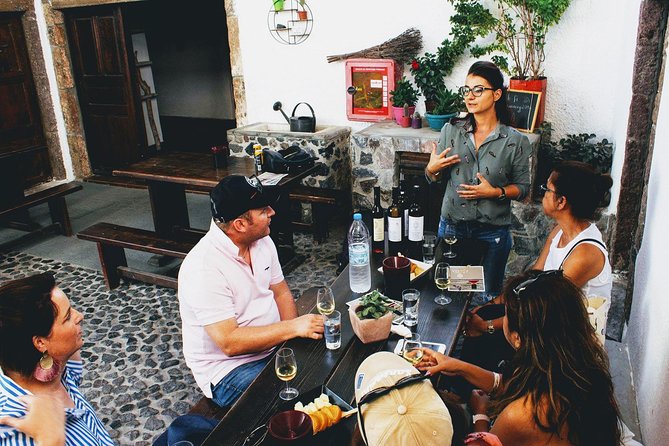
- You taste four Santorini wines during the wine portion, focused on local varieties and volcanic terroir.
- Megalochori’s kadounia stone pathways give you a real village feel without the loud, photo-only circus.
- Lunch becomes dinner: you cook multiple dishes and then sit down to eat what you make (outside, under shade when possible).
- Group size tops out at 12, so the day doesn’t feel rushed or lost in a crowd.
Why this Santorini Family Farm tour feels different than the cruise-line days
Santorini can be a hard island to do slowly. This tour is built for a different pace: fewer viewpoints, more agriculture, and a meal that actually has a story behind it.
The magic is that you don’t just taste food you eat later. You gather the ingredients mindset first—understand what gets grown and why—then you cook from it. The cooking class portion happens at a traditional cave farm setup, which gives the day that “real place” feeling instead of a kitchen staged for tourists.
The second big reason I like this plan: wine tasting comes as part of the same food-and-land theme. You’ll sip local wines from Santorini wineries, learning how island conditions shape grapes and flavor. It makes the day coherent, not just three separate stops taped together.
Value-wise, you’re paying for transportation, a live cooking class, a local guide, and four glasses of wine. At $145.12 per person, it’s not a budget deal—but it can feel fair if you care about food, you’re hungry for something more rural than the caldera viewpoints, and you prefer a smaller group format.
You can also read our reviews of more tours and experiences in Santorini.
The 4.5-hour schedule and how the timing usually works
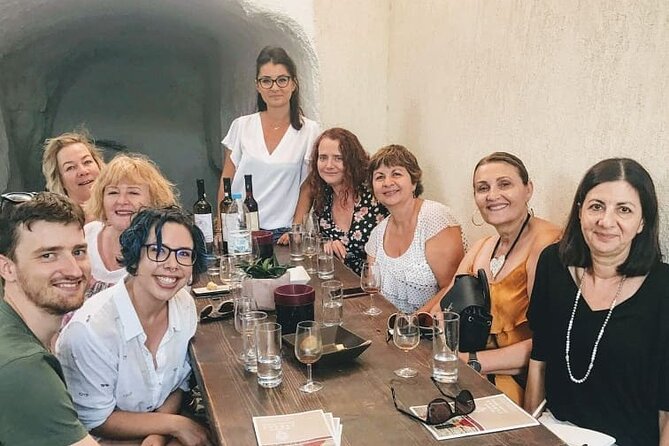
This experience runs about 4 hours 30 minutes total. The transfers are approximate, which matters because Santorini traffic and pickup timing can shift how quickly you reach each stop.
You’ll typically start at Stathmos Leoforion (Fira 847 00), with hotel pickup and drop-off for selected hotels. If your hotel isn’t on the list, you’re asked to message for pickup arrangements; if you don’t, they’re not responsible for misunderstandings. Translation: double-check your pickup details so you’re not standing around wondering.
On the ground, you’ll follow a steady rhythm:
- first the village walk,
- then the winery tasting segment,
- then the farm cooking and meal.
Because it’s a full cycle (you cook and then eat), the time feels concentrated. You don’t spend half the afternoon waiting for food to happen.
Megalochori and its kadounia: the village stop that slows you down
Megalochori is one of those Santorini villages that feels built for wandering. The highlight here is its kadounia—narrow stone pathways that form a maze-like pattern. It’s not “walk-by-and-photos-then-leave.” You actually get time to move through the lanes and take in how everyday life sits inside the architecture.
This stop is also strategically useful. After wine and before the heavier cooking portion, walking helps reset your appetite. It’s a gentle way to transition from tasting mode to cooking mode.
What to watch for: village streets can be uneven, and the pathways are narrow. Wear comfortable shoes with grip. If you’re on vacation with kids, this is the easiest part of the day to enjoy together, but you’ll still want an adult close by since children must be accompanied.
Argyros Travel winery stop: four Santorini wines and why the volcanic setting matters
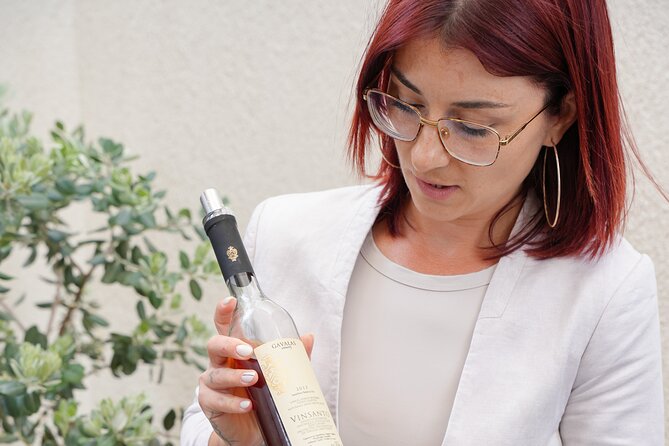
The wine portion is a tasting of four local Santorini wines from Santorini wineries. You’re not just sampling; you’re learning how the island’s volcanic terroir and indigenous grape varieties influence what ends up in your glass.
That terroir angle is practical, not academic. When you understand that the island soils and climate push grapes toward certain flavors, wine tasting becomes less random and more like reading a label with context. You’ll likely find yourself noticing differences between glasses instead of just chasing which one tastes best.
If you don’t usually drink wine, this portion can still work. A structured tasting of four glasses gives you enough variety to find at least one you like, and the guide’s explanations help you translate that into something you can remember after your trip.
One more consideration: this is wine with lunch/dinner coming right after. Pace yourself so you’re not too tipsy when you’re standing at a cooking station.
The farm cooking class at the cave farm: tomatoes, fava, and eggplant
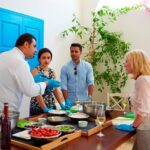
This is the heart of the day. Your cooking experience starts at a traditional cave farm, where you’ll use fresh, seasonal vegetables grown directly in the garden. That garden connection matters because it changes what you pay attention to when you cook.
Instead of just following steps, you learn local recipes and techniques passed down through generations. You also get a chance to see how the farm operates—talks with the family tree shade conversations help connect food to daily island life.
Hands-on cooking is where the day earns its high scores. It turns everyone from a passive eater into an active participant. Even if you think you’re not a “cooking class person,” this one is set up to be fun and doable.
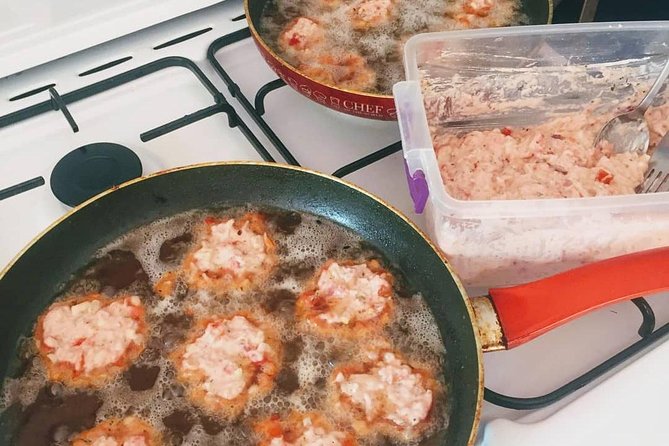
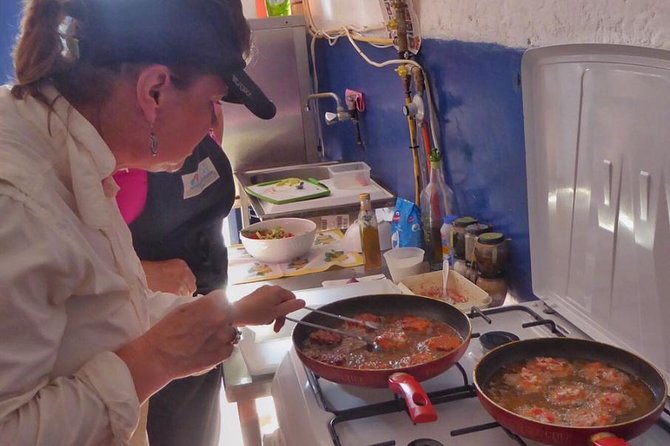
Expect a tomato-forward program. Dishes are built around local ingredients, and you’ll cook tomato fritters, a Greek salad using farm vegetables, and even dessert with homemade marmalade from cherry tomatoes. If tomatoes are a problem for you, tell the guide before the session so you can plan around it.

What you actually make and eat: the sample menu (and what to look for)
This tour isn’t light snacking. It’s a full meal created by your own hands, then served at the end.
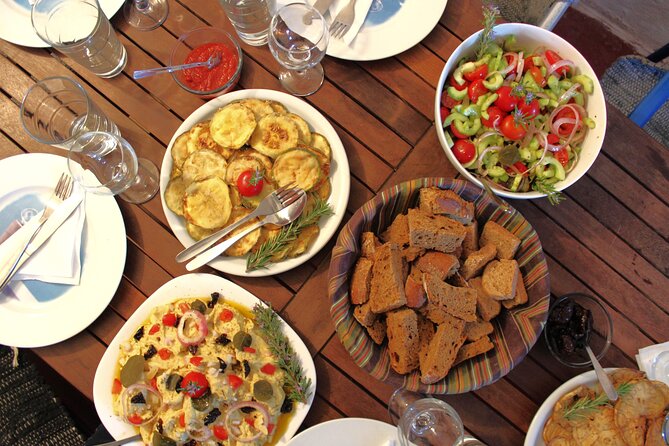
Here’s the flow of the sample menu and what it means on Santorini:
Starter: Tomato fritters (Domatokeftedes)
These are tomato balls made with fresh local ingredients harvested from the garden. I like this dish because it shows how locals handle something that can be plain elsewhere. Once you fry tomatoes with the right flavor mix, the tomato becomes the star instead of the supporting role.
Starter: Greek Salad
You’ll use cherry tomatoes, cucumbers, onions, feta, capers, extra virgin olive oil, and local olives. It’s the kind of salad that tastes like the ingredients were chosen for their own strengths, not just for “a salad component.”
Main: Wine tasting (four glasses)
The timing matters: you taste wine, then continue into the cooking and main course. It gives you a break that still fits the food theme.
Main: Fava (Santorini fava)
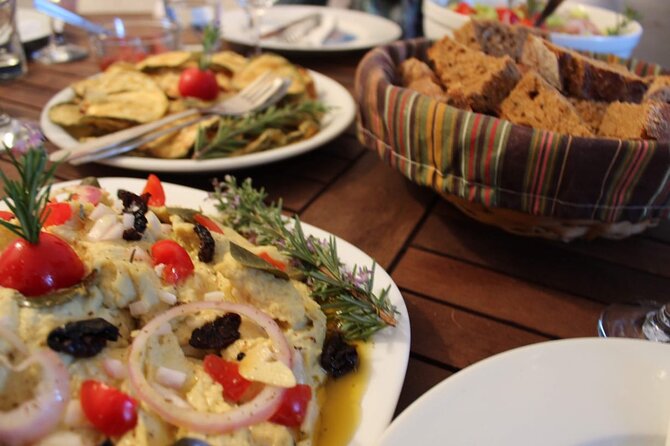
You’ll get a traditional yellow split pea purée, similar in texture to hummus, made with fava beans from the fields. The best way to enjoy it is to treat it like a regional specialty, not a hummus substitute. On Santorini, fava is its own thing.
Main: Fried white eggplant & zucchini
These are lightly fried, sliced vegetables prepared the traditional way. This is a good “vegetable comfort food” dish. If you usually avoid eggplant, you may still like it here because it’s fried lightly and served in a simple, recognizable style.
Dessert: Greek yogurt with homemade marmalade
Marmalade made from cherry tomatoes finishes the meal. It’s a sweet-but-not-too-sweet ending that ties back to the garden theme.
The setting also matters. People love eating outside—under shade from an old tree canopy is part of the day’s charm. That outdoor meal is one of the reasons this tour doesn’t feel like a quick stop; it feels like a gathering.
Transport, group size, and what to bring so the day goes smoothly
You’ll ride in an air-conditioned minivan, and you’ll get bottled water. With a max group of 12 travelers, you get enough attention from the guide to ask questions without feeling like you’re interrupting.
What you should bring:
- Closed-toe shoes with grip for stone pathways in Megalochori.
- Comfortable layers, since it’s an afternoon with outdoor walking and farm time.
- Sunscreen and a hat if you’re going in hot weather.
- If you have food sensitivities, be ready to flag them clearly before you start cooking, especially because the menu is tomato-heavy.
Also keep in mind that the experience has a weather requirement in practice. They say it operates in all weather conditions, but if poor weather cancels it, you’ll be offered a different date or a full refund. Translation: plan like it’s outdoors, and don’t assume rain is automatically a deal-breaker.
Who should book this Santorini Family Farm tour (and who might not)
I’d steer you toward this tour if you fall into any of these buckets:
- You want authentic Santorini agriculture rather than just caldera views.
- You like food experiences where you cook, not just taste.
- You want a smaller group format with time to chat and ask questions.
- You’re into Greek classics like fava, tomato fritters, Greek salad, and simple vegetable sides.
This tour may not be ideal if:
- You dislike wine tastings or don’t want alcohol included in the schedule. (Four glasses are part of the experience.)
- You have a serious tomato allergy or can’t handle tomato-based dishes. The menu is tomato-forward, so you’d need confirmation about adjustments.
- You’re looking for a purely scenic “hit all the famous places” day. This day favors rural settings and village walking over viewpoint hopping.
Should you book this Santorini Family Farm Food & Wine Tour?
If your trip includes more “views, photos, and transfers” than you’d like, this is a strong counterbalance. You get a full meal you cook yourself, a wine tasting built around the island’s conditions, and a village walk with Megalochori’s kadounia maze.
Add the fact that it scores a 4.9 out of 5 average rating with 99% recommended, and it’s easy to see what people value: the day feels personal, practical, and rooted in real farm-to-table life instead of a performance.
One smart move before you book: if tomatoes are an issue for you, message in advance and ask exactly what alternatives (if any) are possible. If not, it’s a delicious way to understand Santorini beyond the shoreline.
FAQ
How long is the Santorini Family Farm Food & Wine Tour with Cooking Class?
It lasts about 4 hours 30 minutes, including the planned activities and transportation time.
What is the group size for this tour?
The tour has a maximum group size of 12 travelers.
Is the tour offered in English?
Yes, it is offered in English.
Do you pick up guests from hotels?
Hotel pickup and drop-off are included for selected hotels. If your hotel is not listed, you’re instructed to message to set up the pickup time and place.
What dishes are included in the cooking class meal?
The sample menu includes tomato fritters (Domatokeftedes), Greek salad, fava, fried white eggplant & zucchini, and dessert of Greek yogurt with homemade marmalade.
How does the wine tasting work?
You’ll taste four glasses of locally produced Santorini wines as part of the experience.
What happens if the weather is bad, or I need to cancel?
The experience requires good weather. If it’s canceled due to poor weather, you’ll be offered a different date or a full refund. For cancellation, you can cancel up to 24 hours in advance for a full refund.