REVIEW · SANTORINI
Greek Cuisine Cooking Class in Santorini with Recipes and Wine
Book on Viator →Operated by Santorini Cooking Classes · Bookable on Viator
Greek comfort food starts in Megalochori. At a local restaurant, a chef-led class teaches you classic dishes like tzatziki and pasticio, then you eat what you make with Greek wine. I love the small-group limit of 15, and I love getting the full PDF recipes to cook at home. Just know it works as a rotation, so you might not be at the stove for every single minute.
Chef Christos keeps things fun while explaining what to do and why. You’ll chop, mix, and assemble several courses, including Greek salad and tomato fritters, then sit down together to enjoy the meal right after cooking.
The class runs about 3 hours 30 minutes starting at 11:00 am in Megalochori. You’ll have lunch included, and there are vegetarian and gluten-free options, but there’s no air-conditioned vehicle—so plan your own way there.
In This Review
- Key Points You’ll Care About
- Why Megalochori Works So Well for a Cooking Class in Santorini
- Your Menu: Tzatziki, Greek Salad, Tomato Fritters, and Pasticio
- Tzatziki (Starter)
- Greek Salad (Starter)
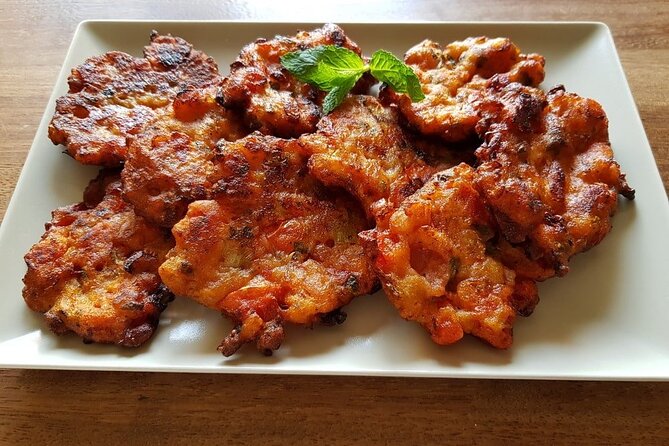
- Tomato Fritters (Starter)
- Greek Pasticio (Main) or Vegetarian Version
- What the 3.5-Hour Cooking Lesson Feels Like in Real Life
- Chef Christos: The Style That Makes or Breaks Your Experience
- Lunch With Wine: Eating What You Made (and Staying in a Food Coma)
- Price and Value: Is $145.12 Worth It?
- Practical Stuff: Meeting in Megalochori at 11:00
- Diet Options and Skill Levels: Who This Class Really Fits
- A Quick Reality Check: How Hands-On Is It?
- Who Should Book, and Who Might Skip It
- Should You Book This Santorini Greek Cooking Class?
- FAQ
- How long is the Greek Cuisine Cooking Class in Santorini?
- What time does the class start?
- Where is the meeting point?
- What’s included in the price?
- Is wine included?
- Are vegetarian or gluten-free options available?
- How large is the class?
- Is the class offered in English?
Key Points You’ll Care About
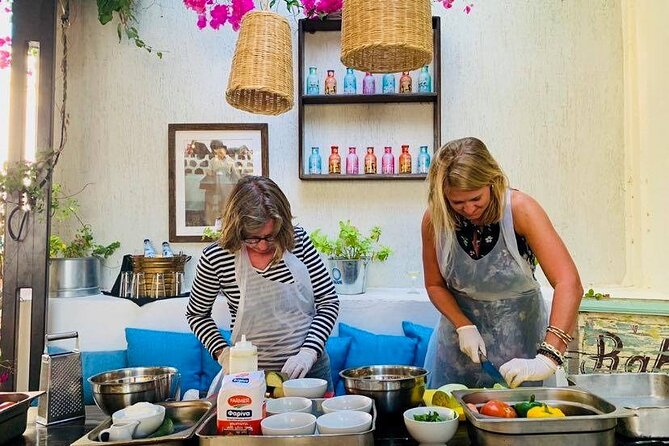
- Chef Christos teaches the technique in English, with lots of hands-on participation for most people
- A classic starter-to-main menu: tzatziki, Greek salad, tomato fritters, and pasticio (or a vegetarian version)
- Full PDF recipes so you can recreate the dishes at home, not just snack and forget
- Small-group format (max 15) that’s friendly for beginners and more experienced cooks
- Lunch and Greek wine included, plus bottled water with your meal
- Diet options available including gluten-free and vegetarian choices
Why Megalochori Works So Well for a Cooking Class in Santorini
If you’ve spent time in Santorini’s main towns, you already know the feeling: everything looks postcard-perfect, but it can also feel a bit staged. Megalochori is different. It’s a village setting where a cooking class feels like a real meal with real local flavors, not a performance for tourists.
What I like most about meeting in Megalochori is that you’re not racing around the island. This is a straightforward half-day plan: you show up, cook, eat, and then you’re back where you started. No transfers you need to figure out, no complicated schedule gymnastics.
And because the group is capped at 15 people, you’re far less likely to feel like a spectator. You’ll still rotate through dishes, but you’re not lost in a crowd.
You can also read our reviews of more tours and experiences in Santorini.
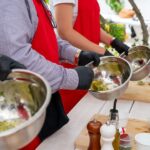
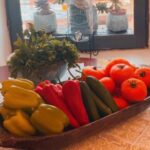
Your Menu: Tzatziki, Greek Salad, Tomato Fritters, and Pasticio
This class centers on food you’ll recognize, but you learn how Greek home cooks build flavor step by step. The menu is built to give you variety: cool starters, crispy or savory bites, then the baked comfort-food main.
Here’s what’s on the table:
Tzatziki (Starter)
Tzatziki is the classic Greek cooling sauce. In class, you’ll learn how to bring together ingredients so it tastes fresh rather than one-note. The real value here isn’t just having a recipe—it’s getting the technique that makes it creamy, tangy, and balanced.
Greek Salad (Starter)
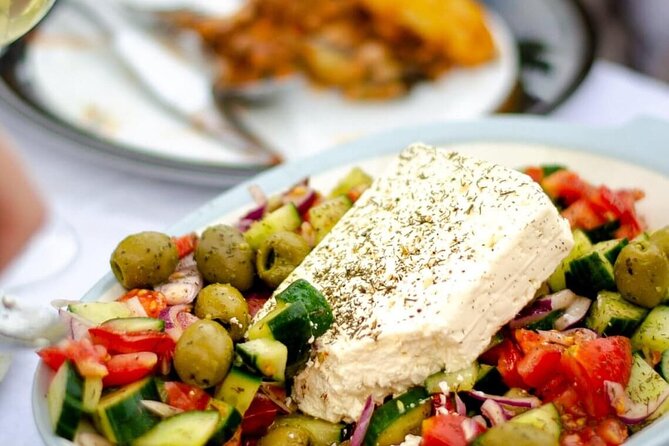
Greek salad seems simple, but it’s all about the order of operations: cut size, how you handle ingredients, and how seasoning ties everything together. Expect to learn how to make it taste like it belongs on a Greek taverna table, not like an afterthought.
Tomato Fritters (Starter)
Tomato fritters add contrast—something warm and savory after the cooler starters. If you’ve ever had fritters that felt oily or heavy, this is exactly the kind of dish where technique matters: how you prep, mix, and manage doneness so they come out satisfying without feeling like a greasy compromise.

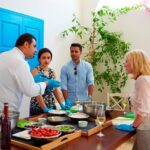
Greek Pasticio (Main) or Vegetarian Version
Pasticio is a baked Greek pasta dish that’s pure comfort. It’s also one of those dishes where the structure matters: the layers, the sauce, and the final bake all affect the texture you get when you cut into it. You’ll cook it as the class main, and if you choose the vegetarian option, you’ll follow the vegetarian pasticio version offered in the experience.
One smart thing about this menu: it teaches you a full meal rhythm. You’re not just making one dish and calling it a day. You’ll understand how Greek cooking balances fresh, fried, and baked.
What the 3.5-Hour Cooking Lesson Feels Like in Real Life
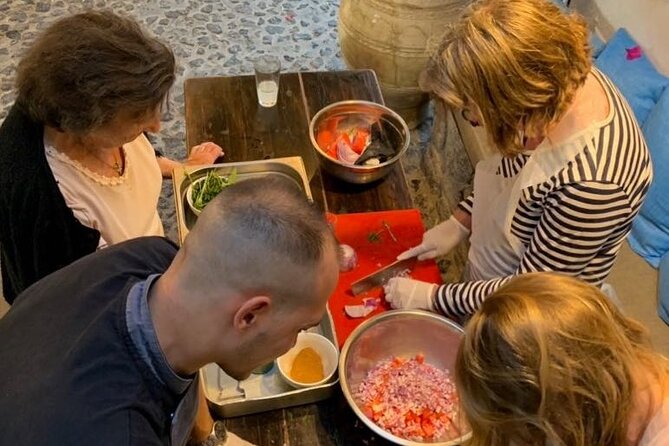
On paper, this is a hands-on cooking class. In practice, the experience runs as a guided workshop where you take turns on different dishes. That matters for your expectations.
You can expect a flow like this:
- You meet the host in Megalochori and get situated.
- The chef explains what’s coming next and demonstrates key technique.
- Then you rotate through parts of the menu, helping prepare dishes while others work through their stages.
- Finally, you eat everything together as lunch or dinner with wine.
So yes, you’ll cook. But if what you want is constant stove time—standing at one station for the whole session—this may feel more like a structured lesson with real participation, rather than a nonstop kitchen marathon.
The upside of the rotation is that you sample more skills. You’ll be around several dishes, and that makes it easier to remember what to do at home when you’re working with different techniques (mixing, prepping, assembling, baking).
Chef Christos: The Style That Makes or Breaks Your Experience
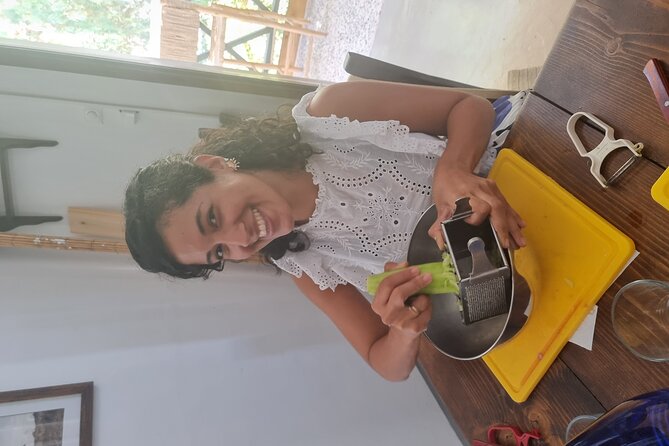
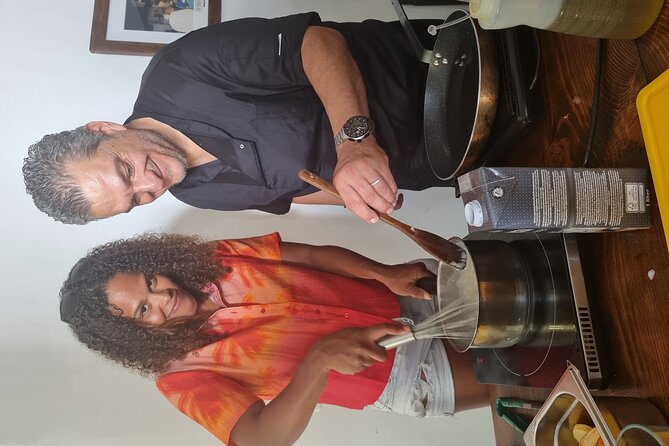
The chef instructor is a big part of why this class gets such strong scores. Chef Christos is known for explaining clearly and keeping the energy up, with humor thrown in as part of the teaching style.
Here’s what you’ll likely notice when you’re in the room:
- He talks through technique, not just motion
- He encourages participation so the class doesn’t stall
- He keeps things moving so you still finish a full meal
- He adapts when people need a little extra help
One thing to consider: his approach can be very focused and very talkative. If you love instruction that comes with personality, you’ll probably have a great time. If you prefer quiet, slow, one-on-one cooking, you might find the pacing a bit fast. Either way, the class is designed so you leave with usable skills—not just photos.
Lunch With Wine: Eating What You Made (and Staying in a Food Coma)
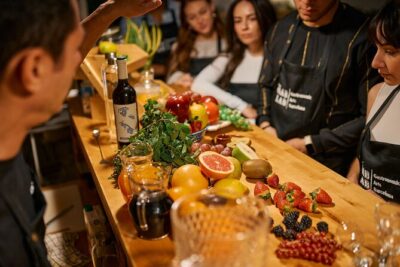
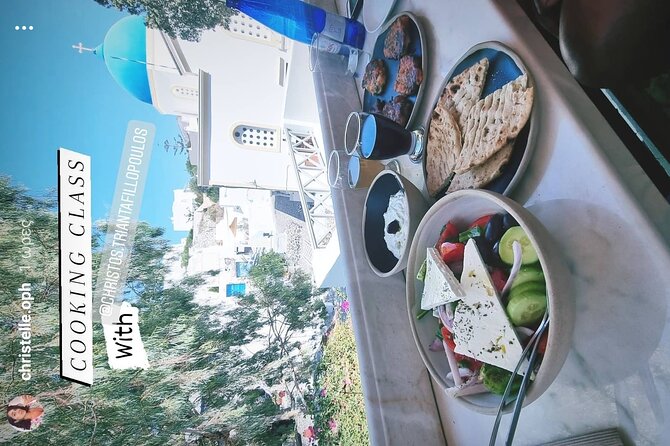
After cooking, you sit down and enjoy the fruits of your labor. The meal includes what you prepared, plus wine and bottled water.
This part matters more than it sounds. Many cooking classes turn into a quick tasting and a ticket stamp. Here, you’re eating a proper meal. That means you can taste the difference between what you thought you were doing and how it turns out on the plate.
Also: bring an honest appetite. A full menu of tzatziki, Greek salad, tomato fritters, and pasticio is a lot of food. If you’re used to light lunches while traveling, plan your day around this meal.
For wine, you get Greek wine with your lunch/dinner. It’s not about turning it into a party. It’s about letting you experience the food the way it’s served—warm, fresh, and paired right there on-site.
Price and Value: Is $145.12 Worth It?
At $145.12 per person for roughly 3 hours 30 minutes, this class sits in the mid-to-upper range of cooking experiences. The question is value: what do you walk away with?
Here’s what’s included:
- A hands-on cooking class
- Lunch (or dinner) made from your own dishes
- Bottled water
- Wine
- Full recipes in PDF form
- Gluten-free and vegetarian options available
- Small-group size (maximum 15)
That combo is why the price can make sense. You’re paying for:
1) A real chef-led lesson
2) A full meal with wine
3) Materials you can use later (PDF recipes)
The one extra cost to remember is transport. There’s no air-conditioned vehicle included. If you’re relying on local transit or walking from where you’re staying, that’s on you. But because the meeting area is near public transportation, you’re not locked into a private transfer just to make it happen.
My take: if you want one memorable, practical food experience in Santorini—something you can cook again at home—this is good value for the time you spend and what you actually get to eat.
Practical Stuff: Meeting in Megalochori at 11:00
This activity starts at 11:00 am and ends back at the meeting point. You’ll meet at Feggera, Megalochori 847 00, Greece.
A few practical points that make your day smoother:
- Bring your mobile ticket (it’s listed as the ticket format)
- Wear comfortable shoes. You’ll likely be moving around a small restaurant setup.
- Expect your own way to get there since no vehicle is provided
- Don’t plan anything right before the start time. Cooking classes run on the chef’s schedule, not yours.
Also, it’s offered in English, so you should be able to follow the explanations and ask questions as you cook.
Diet Options and Skill Levels: Who This Class Really Fits
The class is designed for all ages and skill levels, and that’s not just marketing. The dishes are classic, but the teaching approach is what makes it work for beginners.
You can participate even if you’ve never cooked much, because you’re not expected to invent Greek recipes from scratch. The chef demonstrates technique and you follow along with your turn at the tasks.
If you have dietary needs, good news: gluten-free and vegetarian options are available. The vegetarian version is specifically called out for pasticio, which helps because that main dish is usually the most challenging one for dietary restrictions.
The best fit is:
- You want to learn Greek flavors you can recreate
- You enjoy cooking but want guidance
- You want a shared meal experience in a small group
A Quick Reality Check: How Hands-On Is It?
This is the part I’d call out before you book, because it affects expectations.
You will cook, but not necessarily every dish from start to finish. The format uses turn-taking, so some parts of the class may feel more like a guided lesson with participation across stations.
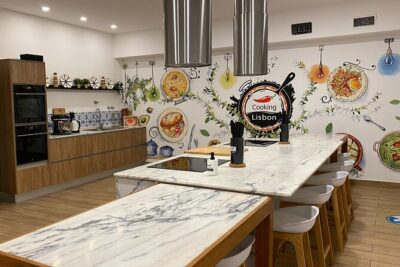
Also, cooking stations may not feel like a polished professional test kitchen. You might be working with limited hot surfaces and setup that’s more “restaurant practical” than “show kitchen.” That’s not automatically a problem, but if you’re the type who wants to control every pan and every second, you could feel slightly boxed in.
If you’re okay with rotating roles and learning multiple dishes over one meal, you’ll likely love it.
Who Should Book, and Who Might Skip It
This class is best when you want a real food lesson plus a real meal. It’s also a great break from the usual Santorini checklist because it gives you something to do with your hands while the island does its thing outside.
A key caution for cruise days: this class is not near the cruise ship port, and the timing can be tricky if your ship uses tenders. If you’re on a cruise and your schedule is tight, it’s safer to double-check you can get there early enough.
If you’re visiting by land and you can actually make the 11:00 am start, the logistics look manageable, especially since the meeting point is near public transportation.
And if plans change, you can cancel for a full refund up to 24 hours in advance.
Should You Book This Santorini Greek Cooking Class?
If you want hands-on Greek cooking in Santorini with a proper meal at the end, I think this is a strong booking choice. The combination of small group, chef-led instruction, multiple classic dishes, and PDF recipes is exactly what makes this kind of experience worth repeating at home.
I’d only hesitate if you strongly need nonstop stove time or a very “lab-like” kitchen setup. For most people, the rotation format is actually a plus: you learn more than one dish and still finish with a satisfying lunch.
If you’re choosing between this and a less structured food activity, pick the class. You’ll eat what you make, drink Greek wine with it, and leave with recipes you can trust when you’re back in your own kitchen.
FAQ
How long is the Greek Cuisine Cooking Class in Santorini?
It lasts about 3 hours 30 minutes.
What time does the class start?
The start time is 11:00 am.
Where is the meeting point?
The meeting point is Feggera, Megalochori 847 00, Greece.
What’s included in the price?
The price includes lunch, bottled water, wine, the hands-on cooking class led by an expert chef, and full recipes in PDF form.
Is wine included?
Yes. Wine is included with the meal.
Are vegetarian or gluten-free options available?
Yes. Gluten-free and vegetarian options are available.
How large is the class?
The class has a maximum of 15 travelers.
Is the class offered in English?
Yes, the class is offered in English.