REVIEW · BILBAO
Small-group Immersive Basque Cooking Class in Bilbao with Open Bar
Book on Viator →Operated by Gastronomía Bilbao · Bookable on Viator
Basque cooking here comes with real wine. In a max 12-person class you’ll learn Basque classics by cooking 2–3 starters, 2 mains, and dessert in the heart of Bilbao, with an open wine bar powering the whole experience.
I love the way this setup keeps things personal, fun, and focused on real food—not a rushed show.
I also like that you’re coached on technique as you go, not just handed a script, and you can leave with the full recipes to repeat at home. One thing to consider: the kitchen experience is more team-based than fully “everyone cooks everything independently,” so if you’re expecting solo stations for every dish, you may want to calibrate your expectations.
In This Review
- Key highlights you’ll care about
- Where the class starts in Bilbao: Salbe pl. 6 by the Guggenheim area
- Chef Mikel Larrañaga and the small-group rhythm
- What you’ll cook: Basque classics and seasonal swaps
- Your 3.5-hour run of Basque cooking (starters to sweet toast)
- 1) Welcome and the open bar mood-setter
- 2) Starters: bacalao and marmitako building blocks
- 3) Mains: the Basque stew and more
- 4) Dessert: sweet Basque toast
- 5) The shared meal and recipe take-home
- Open wine bar: what it adds (and how to keep your head clear)
- Price and value: is $181.02 per person worth it?
- Logistics and practical tips so you enjoy it fully
- Who this cooking class suits best
- Should you book this Basque cooking class in Bilbao?
- FAQ
- How long is the Basque cooking class in Bilbao?
- What is the group size?
- What’s included in the price?
- What dishes will I cook?
- Where do I meet for the class?
- Is the class offered in English?
- What is the cancellation policy?
Key highlights you’ll care about
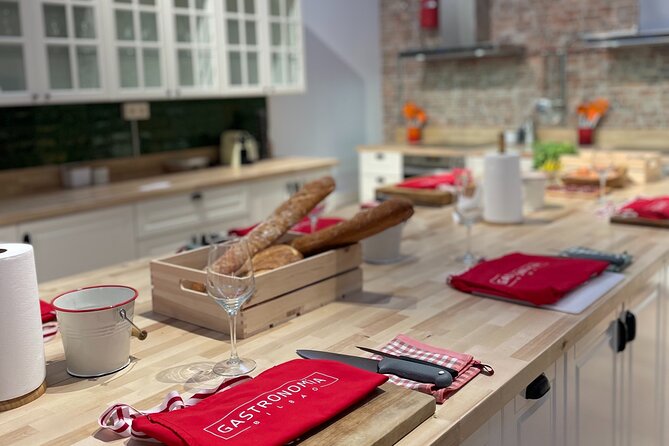
- Max 12 people means more attention and less standing around
- Open wine bar makes the meal feel like part of the lesson
- Market-driven menus keep dishes connected to what’s fresh
- Basque classics like bacalao and marmitako show up often
- Recipe take-home plus keeping your apron helps you practice later
Where the class starts in Bilbao: Salbe pl. 6 by the Guggenheim area
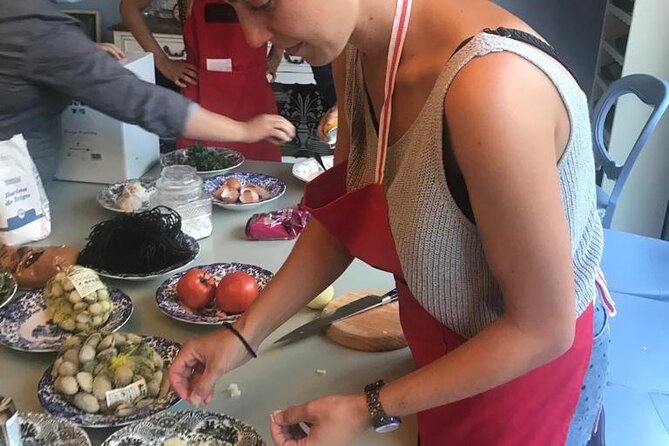
The meeting point is Salbe pl., 6 (48007 Bilbao), and the class runs about 3 hours 30 minutes, starting at 11:00 am. It ends back at the meeting spot, which makes your day plan easy: no long transfer, no “where do we go now?” scramble.
The venue is close to the Guggenheim Museum area, across the river. If you’re already doing museums or walking the riverfront, this class slots in cleanly as a hands-on break from sightseeing.
Practical note: you’ll use a mobile ticket, and you’ll get confirmation at booking. That’s one less thing to manage when you’re figuring out the city day-of.
You can also read our reviews of more tours and experiences in Bilbao.
Chef Mikel Larrañaga and the small-group rhythm
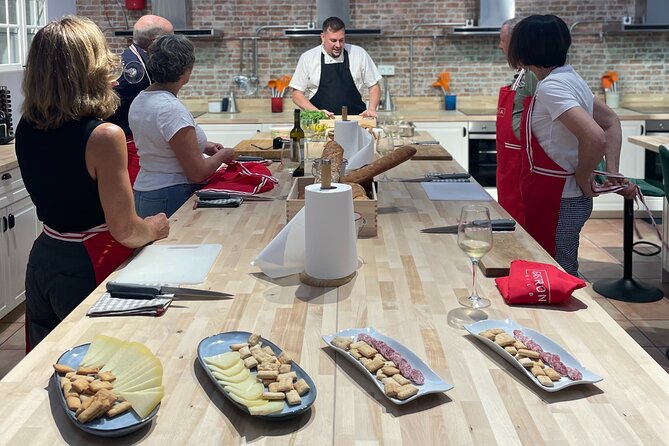
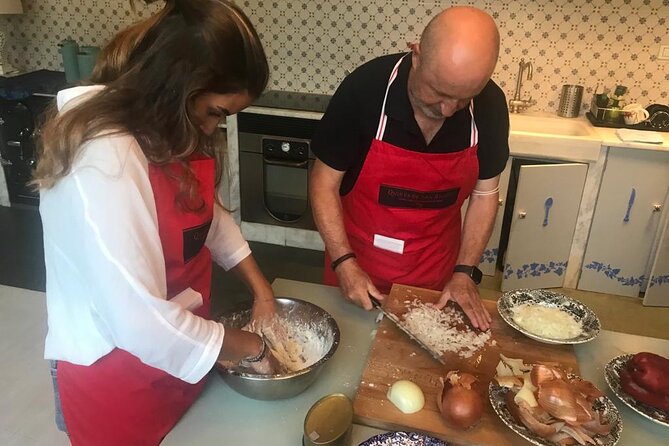
This class is led by Chef Mikel Larrañaga, and the vibe is warm and interactive. The biggest reason people love it isn’t just the food. It’s the way the chef turns cooking into a story: where the dishes come from, why Basque kitchens think the way they do, and how to get better with simple, repeatable technique.
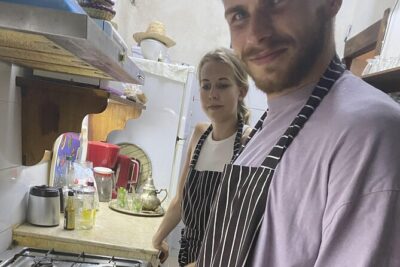
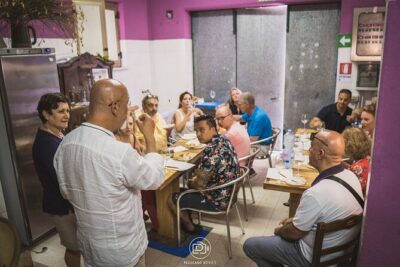
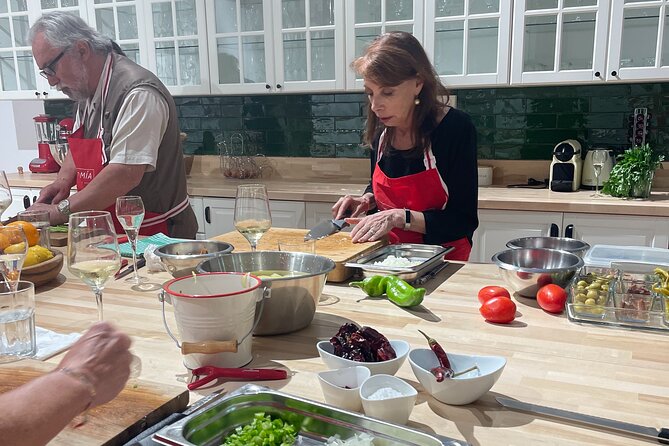
With a maximum of 12 travelers, you’re not lost in a crowd. You can ask questions, adjust as you cook, and actually watch what you’re doing. Even better, the class structure encourages participation, so it feels like you’re learning a skill set rather than attending a passive tasting.
One more detail that comes up often: you don’t just taste at the end. You stay engaged through the process, and the chef’s teaching style includes practical coaching (including things like knife skills and how to handle common prep steps).
What you’ll cook: Basque classics and seasonal swaps
You’ll cook a total of 2–3 starters, 2 mains, and dessert. The menu changes depending on what’s available in the market, so even if two weeks feel different, the goal stays the same: you’ll leave understanding the Basque approach to flavor, texture, and cooking methods.
A sample menu includes:
- Bacalao with tomato sauce (a Basque-region staple)
- Marmitako (the tuna-and-vegetable stew story—often described as the stew of Basque sailors)
- Marmitako again as a main course (yes, it can show up in more than one form across the menu)
- Sweet Basque toast (a classic dessert)
In real-life execution, you may also see other Basque favorites showing up on different days, such as La Gilda, chorizo in cider, txuleta, and torrijas. That’s not random—it’s the same idea: teach you the Basque classics through dishes that match what’s fresh.
Why this matters for you: if you’ve ever worried that cooking classes teach fancy techniques but not the local food, this one aims directly at the Basque table. You’re learning dishes you can actually order back in Bilbao.
Your 3.5-hour run of Basque cooking (starters to sweet toast)
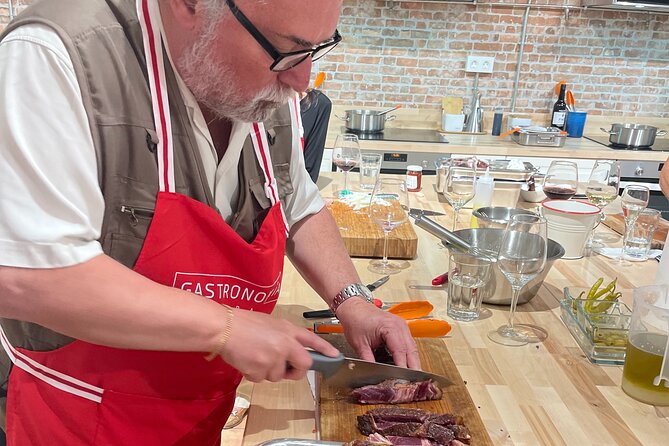
Here’s how the time typically feels, based on the class structure and what the chef focuses on.
1) Welcome and the open bar mood-setter
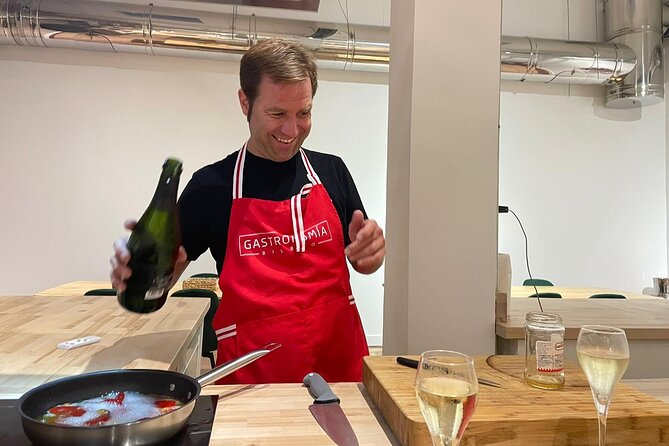
You start by getting settled at the kitchen space, and the open wine bar is part of the experience from the beginning. Food and drink aren’t treated as separate events; they’re part of the same “cook, taste, adjust” loop. If you like learning by eating as you go, this format fits.
This is also where the chef’s personality comes through. You’ll get context on what you’re cooking and why those dishes matter in Basque cuisine.
2) Starters: bacalao and marmitako building blocks
Starters set the foundation. If bacalao with tomato sauce is on the menu, you’ll work through how to manage the fish and build a sauce that tastes deep without being heavy.
If marmitako is included as a starter, you’ll start learning the “stew logic”: how fish stock, tuna, and local vegetables come together into something hearty and satisfying.
Even when the exact order shifts with the menu, the learning stays practical: you’re prepping, combining, and tasting with the chef coaching you toward the right texture and balance.
3) Mains: the Basque stew and more
For mains, you’ll move into the more “finished” version of what you started earlier. With marmitako commonly showing up, you’ll get another pass at the stew idea—how to refine it, and how to make it taste cohesive at the end.
Sometimes other mains may appear depending on market availability. The point is that you’re still cooking Basque staples, not a generic European menu.
4) Dessert: sweet Basque toast
Then comes dessert: sweet Basque toast. It’s a perfect finish because it’s not just sugary. It ties back to local comfort food, and the technique is usually the kind you can repeat later without needing special equipment.
If you care about leaving with “real recipes,” this is one of the best parts. Dessert is often where people expect a quick demo. Here, it tends to be part of the real cooking flow.
5) The shared meal and recipe take-home
After cooking, you enjoy what you made together. The experience is designed so you’re not only practicing in the kitchen—you’re also eating the results.
One standout perk from the class style: you can keep your apron and you may also get the full recipes afterward. That’s a big deal if you want to recreate a Basque meal at home rather than just posting photos.
Open wine bar: what it adds (and how to keep your head clear)
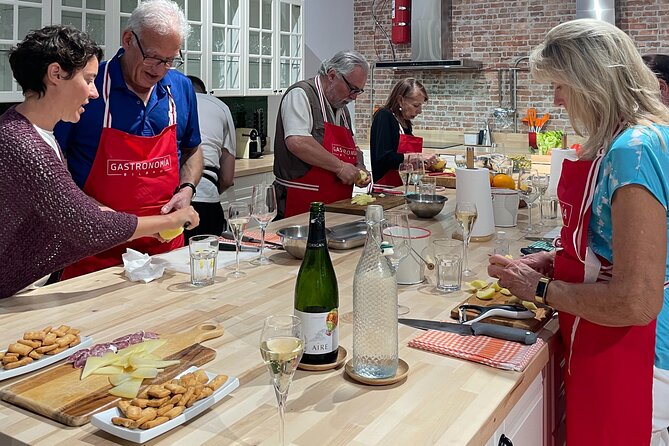
This class includes all food and drink, and the main “party element” is the open wine bar. In practice, that means the meal feels like a celebration, not a strict classroom.
For you, the benefit is more than fun. Wine helps you learn through comparison: you notice how acidity, salt, and richness behave when you taste. It also makes it easier to relax enough to ask questions without feeling stiff.
The only consideration is personal pacing. With 3.5 hours total and a steady flow of drinks, you’ll want to sip thoughtfully and plan to take it easy afterward. Bilbao is easy to walk, but you don’t want to make sightseeing decisions with a foggy brain.
Price and value: is $181.02 per person worth it?
At $181.02 per person, this isn’t the cheapest “fun activity” you’ll find in Bilbao. But it’s also not priced like a budget workshop.
Here’s why the value can make sense:
- Everything is included: all food and drink. That’s a meaningful offset in Spain, where wine and meals can add up quickly.
- Small group size (max 12): you’re paying for a tighter teacher-to-cook ratio, which is where many cooking classes justify their cost.
- You cook multiple courses: you’re not sampling two bites and leaving. You’re making starters, mains, and dessert.
- Technique + context: Chef Mikel Larrañaga brings storytelling and real teaching, including practical skills like knife work.
- Potential add-ons that matter: aprons to keep and recipes sent/received after. Those make the learning stick.
Where price might feel heavy is if you only want a quick tasting experience, or if you’re the type who hates hands-on cooking. Also, if you’re traveling solo and don’t enjoy a social table, you may want to confirm the vibe first. But if you like learning by doing and eating what you make, this is the kind of class that can earn its place on your Bilbao itinerary.
Logistics and practical tips so you enjoy it fully
A few small things can make your class smoother:
- Arrive a few minutes early at Salbe pl., 6 so you can settle without rushing.
- Wear comfortable shoes. You’ll likely stand, prep, and move around during cooking.
- Plan your day with the 11:00 am start. This is not an evening class, so you’ll want a morning routine that leaves room for lunch after.
- If you have dietary needs, you’ll want to check availability and communicate them when booking since the menu is market-driven.
- Bring curiosity for stories and techniques. The chef’s teaching style is a big part of the value.
If you’re visiting Bilbao by cruise, the location can still work. One reviewer noted it took extra effort to get there (walks plus transit), but the payoff was worth it. Translation: if you’re willing to make the effort, the experience is built for people who want an authentic food moment, not a quick stop.
Who this cooking class suits best
This class fits well if you:
- Want real Basque dishes (not generic “Mediterranean cooking”)
- Like a small-group setting with active participation
- Enjoy wine-friendly meals as part of the learning
- Prefer learning techniques you can repeat at home, especially with recipes provided afterward
It may be less ideal if:
- You want a strictly solo cooking experience where every person fully cooks every dish independently
- You’re trying to avoid alcohol entirely (the class includes an open wine bar, though you can always sip non-alcoholically if that’s right for you)
Should you book this Basque cooking class in Bilbao?
If you’re excited by the idea of cooking bacalao, learning the stew story behind marmitako, and finishing with sweet Basque toast, I’d lean toward booking. The price hurts a little at first glance, but the class structure—multiple courses, all food and drink included, max 12 people, and recipe take-home—is exactly how you convert money into memories.
Book it if you want an authentic Bilbao moment centered on Basque food and real teaching from Chef Mikel Larrañaga. If you’d rather just taste and move on fast, you might find the hands-on nature and the long sit-down meal style less your thing.
Either way, it’s a strong choice for travelers who want to leave Bilbao with more than photos.
FAQ
How long is the Basque cooking class in Bilbao?
It runs for about 3 hours 30 minutes.
What is the group size?
The class has a maximum of 12 travelers.
What’s included in the price?
All food and drink are included (with an open wine bar). Gratuities are not included.
What dishes will I cook?
You’ll cook 2–3 starters, 2 mains, and dessert. The menu changes based on what’s available, but bacalao with tomato sauce, marmitako, and sweet Basque toast are listed examples.
Where do I meet for the class?
Meet at Salbe pl., 6, 48007 Bilbao, Bizkaia, Spain. The tour ends back at the meeting point.
Is the class offered in English?
Yes, it’s offered in English.
What is the cancellation policy?
Free cancellation is available up to 24 hours before the experience’s start time for a full refund.