REVIEW · SA PA
Sapa: Bun Cha Cooking Class
Book on GetYourGuide →Operated by Local Guide Sapa · Bookable on GetYourGuide
Charcoal, herbs, and sweet-sour sauce—what’s not to like? In Sapa, this Bun Cha class teaches charcoal-grilled pork and the sweet-sour dipping sauce, then you eat what you make in a cozy, home-style setting. It’s the kind of activity that feels practical fast: you’re cooking, not just watching.
What I like most is the hands-on grilling process and the sauce lesson—two parts that can make or break a good Bun Cha. You’ll also get step-by-step help from the chef, with tips that make the whole dish easier to nail.
One consideration: pork is the star, so this class isn’t suitable for vegetarians who need a replacement ingredient.
In This Review
- Quick hits: why this Bun Cha class is worth your time
- Bun Cha in Sapa: Hanoi street flavors, taught simply
- The 2-hour flow: what you’ll do, in order
- Charcoal-grilled pork: the skill you’ll actually remember
- The sweet-sour dipping sauce: where you learn balance, not shortcuts
- The meal setting: why eating right away matters
- What’s included (and what you’ll need to plan)
- Languages, group size, and who the chef can help
- Price and value: why $25 can feel like a win
- Meeting point in Sapa: where to go
- Should you book this Bun Cha class in Sapa?
- FAQ
- Where is the meeting point for the Bun Cha cooking class?
- How long does the class take?
- How much does the class cost?
- What languages are used during the class?
- Is prior cooking experience required?
- Is this class suitable for vegetarians?
- What does the class include?
- What is not included in the price?
- How big is the group?
- Can I cancel or change plans?
Quick hits: why this Bun Cha class is worth your time
- Charcoal grilling practice that teaches you the real rhythm of Bun Cha
- Sweet-sour dipping sauce made the traditional way
- Chef-guided steps (including helpful tips like how to balance flavors)
- Small group size of up to 10 participants for real interaction
- Meal included right after cooking in a warm home-style setting
- Take-home recipes and ingredients/tools provided so you can recreate it
Bun Cha in Sapa: Hanoi street flavors, taught simply
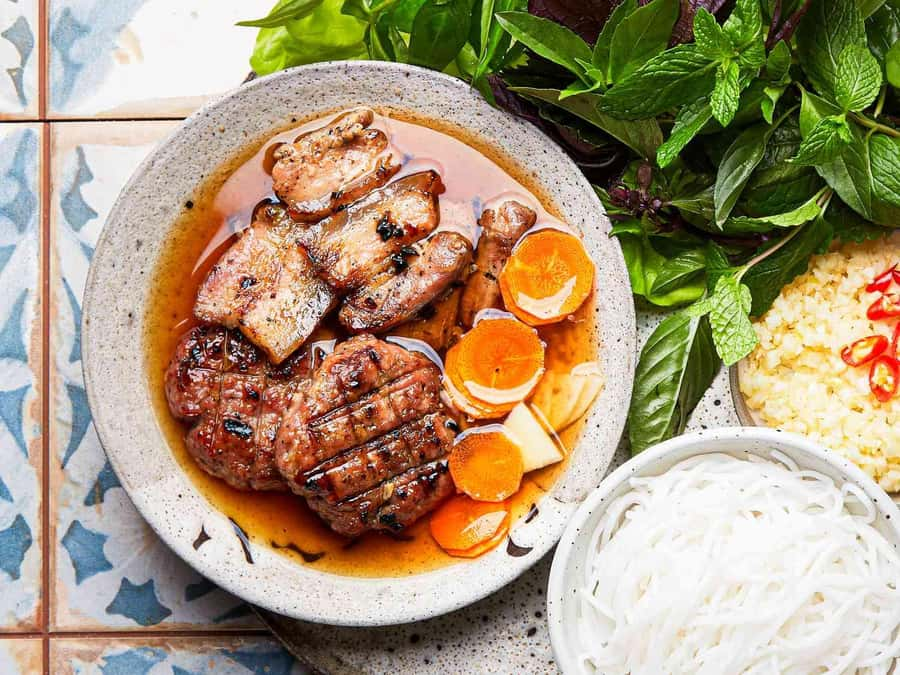
Bun Cha is one of those Vietnamese dishes that rewards attention. It’s not only about grilled meat—it’s about the balance: salty-sweet pork, fresh herbs, warm rice vermicelli, and a dipping sauce that hits sweet and sour at the same time.
In this class, you’re not stuck eating a plate of Bun Cha and calling it a day. You learn the parts that create the flavor. That’s the value: you’ll understand what to taste for, and you’ll be able to re-create the dish later without guessing.
Sapa is far enough from Hanoi to make the food feel like its own experience, but the technique and spirit are still very much northern Vietnamese. This class keeps it practical and food-first.
You can also read our reviews of more tours and experiences in Sa Pa.

The 2-hour flow: what you’ll do, in order
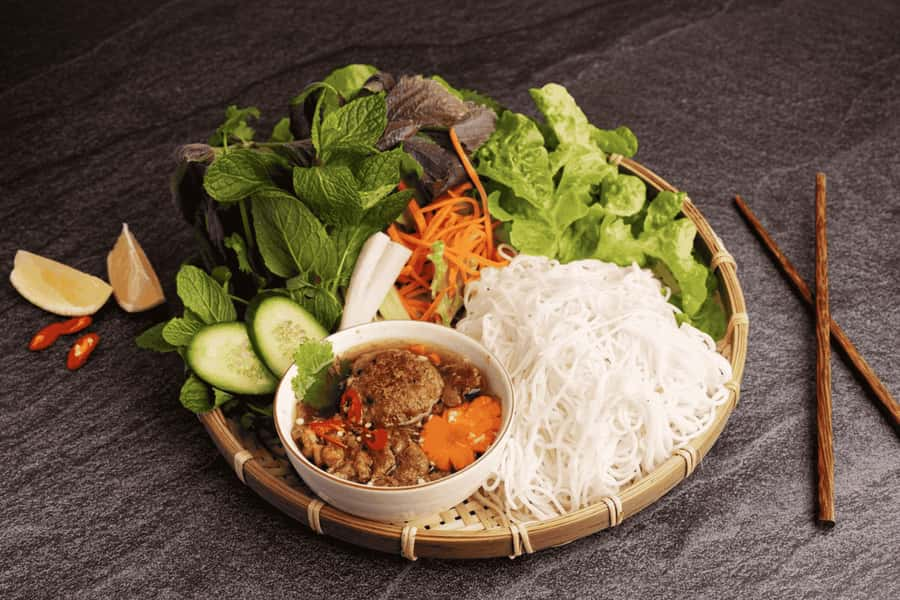
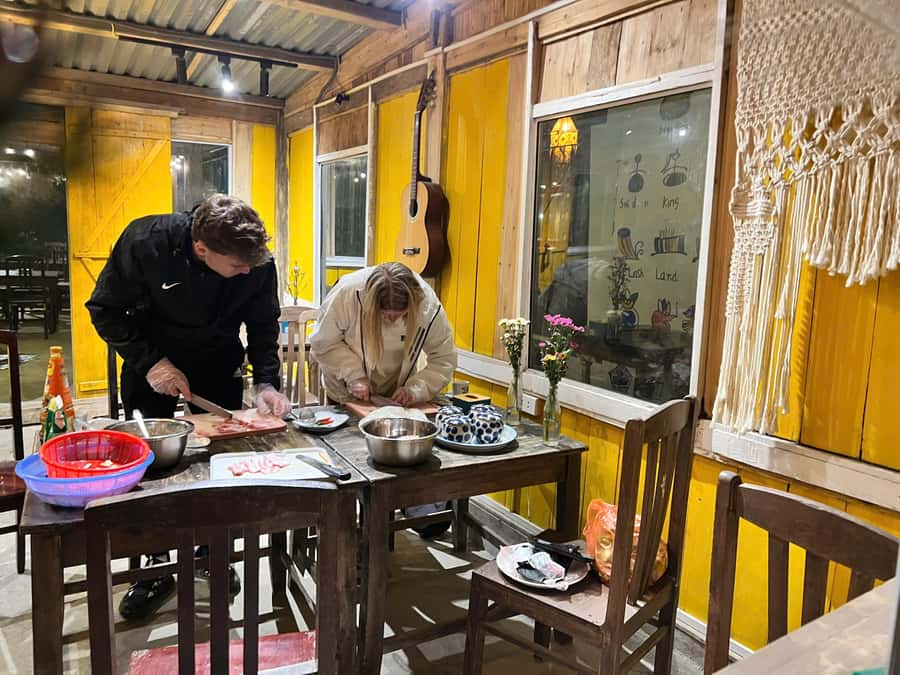
This is a compact class—about 2 hours total—with a clear sequence from ingredients to final meal. You start with a warm welcome, then move into cooking with the chef guiding you step by step.
Here’s the typical progression and what it means for you:
1) Welcome and ingredient intro
You’ll get a brief introduction to Vietnamese cuisine and the key ingredients behind Bun Cha. This matters because sauces and herbs can be confusing if you don’t know what role each ingredient plays. Instead of just following actions, you’ll understand what you’re building.
2) Marinate and prep
You’ll work through the prep for the meat, including marinating. Marinating isn’t just busywork—this is where flavor gets anchored. If the marination is too light, the grill can turn out flat; too heavy, and the sauce won’t save it.
3) Grill over charcoal
The main cooking moment is learning to grill the pork over charcoal. Charcoal grilling affects aroma and texture, so this isn’t the same as pan-frying. You’ll get guidance while you grill, so you’re aiming for the right doneness instead of playing by luck.
4) Make the sweet-sour dipping sauce
While the pork cooks, you’ll also prepare the traditional dipping sauce. This is a highlight because the sauce is where many people struggle at home. In this class, you’re taught the approach so you can taste as you go and understand the sweet-sour balance.
5) Eat what you made, family-style at home
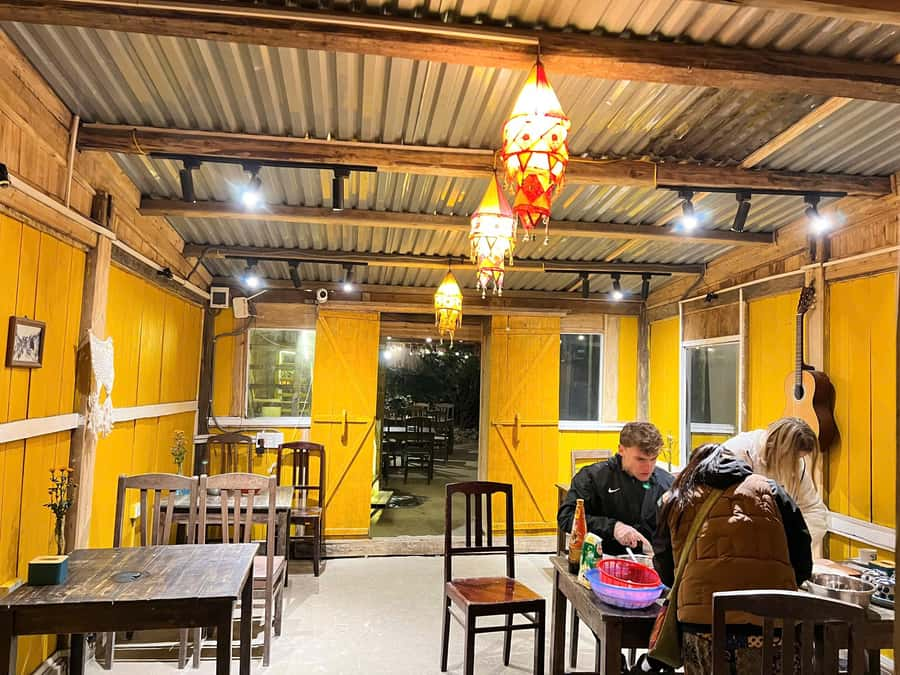
After cooking, you sit down and enjoy your meal in a warm, authentic home-style setting. That’s a big deal in a short class: you’re not waiting around for a demo to end—you’re eating while your cooking choices are still fresh in your mind.
Charcoal-grilled pork: the skill you’ll actually remember
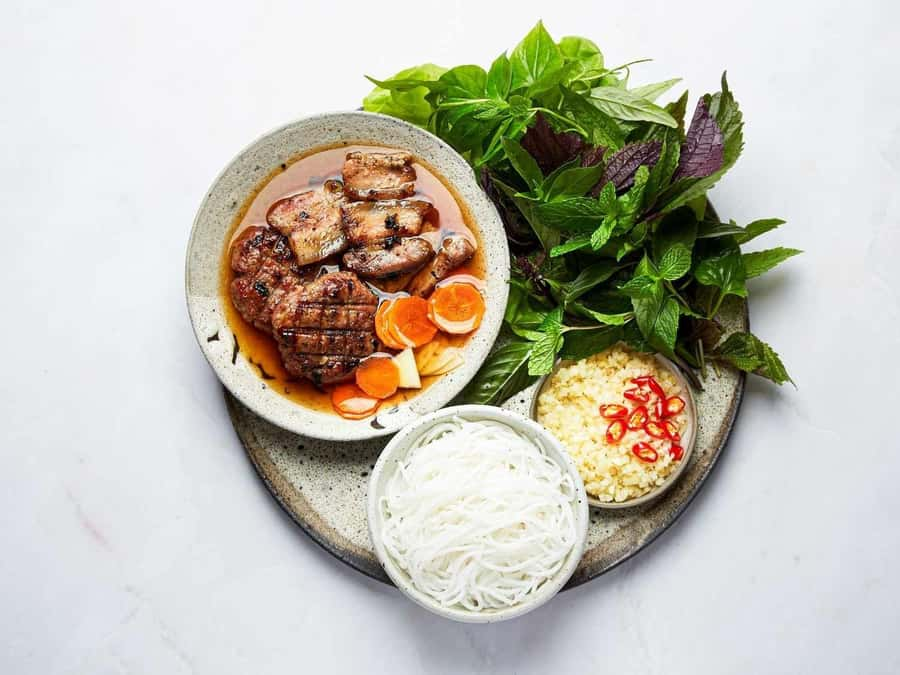
The grilling step is the heart of the experience. Learning to grill pork over charcoal is useful for two reasons: taste and confidence.
First, charcoal adds depth. Even if you’ve grilled meat before, Vietnamese pork needs a specific flavor approach, and it’s easiest to get that right when you’re guided in real time. You’ll be working with the marinated meat, so your job is to focus on heat and timing rather than guessing ingredients.
Second, you’ll learn how to avoid the two common grilling problems: undercooked pork that feels tough, and overcooked pork that dries out. The chef’s guidance is key here, especially if you’ve never grilled over charcoal.
If you like learning by doing, you’ll feel the difference immediately. The class is structured so you’re not just watching someone else grill—you’re involved in the process.
The sweet-sour dipping sauce: where you learn balance, not shortcuts
The sauce is what pulls Bun Cha into focus. It’s not simply tangy or simply sweet—it needs both, and it needs freshness and clarity so it works with herbs and noodles.
In this class, you learn how to make the sweet-sour dipping sauce as part of your hands-on cooking. That means you’re tasting and adjusting in a way that’s hard to replicate from a recipe alone.
Here’s the practical benefit: once you understand how the sauce should taste, you can use that knowledge outside of this class. Want to tweak it for your own preferences later? You’ll know what kind of correction to make—more sweetness, more sour, or a better balance—because you learned the goal during cooking.
Also, the guidance is clear enough for beginners. You don’t need prior cooking experience; the chef walks you through it step by step.
The meal setting: why eating right away matters
After you cook, you don’t just receive a takeaway box. You eat in a cozy, authentic home-style setting. This does two things for you.
One, it helps you judge your results while the process is still in your head. If the pork feels a little off, you can fix your thinking instantly. If the sauce tastes spot-on, you’ll remember exactly why.
Two, it gives you a more normal Vietnamese meal flow. Bun Cha isn’t meant to be eaten like a museum object. It’s built for sitting down, mixing herbs and noodles with sauce, and enjoying the combinations.
This is also where the class feels like more than a cooking lesson. You’re experiencing how the parts come together on a plate—right after you make them.
What’s included (and what you’ll need to plan)
This is one of those good-value classes where you’re not fighting the small print.
Included:
- Bún Chả cooking class
- Guidance from a local chef
- Meal of your creations
- Ingredients, cooking tools, and recipes to take home
Not included:
- Transportation to the venue
- Additional food and drinks
That means you should plan to arrive ready to cook and taste. If you want extra drinks or snacks beyond what’s served with your meal, you’ll need to handle that separately.
Languages, group size, and who the chef can help
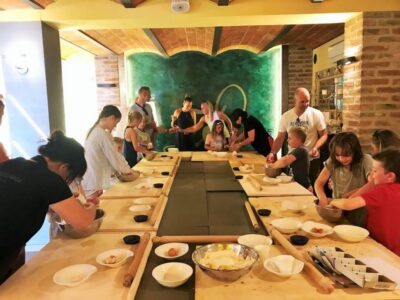
The class runs with English and Vietnamese instruction, and it’s limited to a small group—up to 10 participants.
That matters more than it sounds. When the group is small, you get closer support while grilling and while making the sauce. You can ask questions without feeling stuck in the back row.
If you’re a solo traveler, this small-group size is a plus. If you’re traveling with friends who all want to cook, you’ll still get attention.
Also, you don’t need prior cooking experience. The chef’s job is to guide you through each step, so nervous beginners usually do just fine.
Price and value: why $25 can feel like a win
At about $25 per person for a 2-hour, hands-on cooking class with an included meal, this is priced in the “seriously worth it” zone—especially because you get more than a tasting.
You’re paying for:
- real cooking time (marinate, grill, and sauce)
- guidance from a local chef
- a sit-down meal of what you make
- ingredients/tools and recipes you can take home
For many food tours, you pay for information and end up eating a fixed portion. Here, you do the work. That turns the price into something practical: you leave with skills and a dish you can repeat.
The only clear mismatch is diet. Since pork is central and can’t be replaced in this workshop, it’s not the right fit for vegetarians.
Meeting point in Sapa: where to go
You’ll meet at: 02 Nguyen Chi Thanh, Sapa, Vietnam. You can find it directly on Google Maps by searching this address.
Should you book this Bun Cha class in Sapa?
Book it if you want a short, hands-on cooking lesson with real technique—especially if you care about learning the charcoal grilling method and nailing the sweet-sour dipping sauce. The small group size also makes it feel personal, not rushed.
Skip it if you don’t eat pork. This workshop is not designed for vegetarian swaps, so you’d be paying for a dish built around pork.
If you like learning by doing and you want a meal that’s directly tied to what you cooked, this one’s a strong choice. For a $25 class, you’re getting a full experience: cook, eat, then take the recipes home.
FAQ
Where is the meeting point for the Bun Cha cooking class?
The meeting point is at 02 Nguyen Chi Thanh, Sapa, Vietnam. You can search the address on Google Maps.
How long does the class take?
The duration is about 2 hours.
How much does the class cost?
The price is $25 per person.
What languages are used during the class?
The chef/instructor provides instruction in English and Vietnamese.
Is prior cooking experience required?
No. The chef will guide you step by step, and no prior cooking experience is needed.
Is this class suitable for vegetarians?
No. This workshop is not suitable for vegetarians because pork is the main ingredient and cannot be replaced.
What does the class include?
It includes the Bun Chả cooking class, guidance from a local chef, and a meal of your creations. Ingredients, cooking tools, and recipes to take home are also included.
What is not included in the price?
Transportation to the venue and additional food and drinks are not included.
How big is the group?
The group is small and limited to 10 participants.
Can I cancel or change plans?
Yes. Free cancellation is available up to 24 hours in advance for a full refund, and there’s also a reserve now & pay later option for flexibility.