REVIEW · VARANASI
Cooking Class with Sona
Book on Viator →Operated by Cooking Class With Sona · Bookable on Viator
Sona’s kitchen lessons feel personal and practical. In Varanasi, this vegetarian cooking class turns you from eater into maker, covering chopping-to-cooking techniques plus regional-style flavors. I especially liked how Sona’s English is clear and how she explains each step in a way you can repeat at home. One thing to consider: it runs long enough that you’ll want a relaxed evening afterward, since you’re cooking and eating, not just watching.
You’ll build an at-home toolkit: curries, breads, snacks, and a warm tea-spice drink you can make again when cravings hit. The class focuses on homemade spices and shows how traditional dishes connect across North and South Indian tastes. Because it’s hands-on and meal-based, come hungry and ready to stay engaged.
This is also a nice value for the price because you’re getting lunch and dinner that you help prepare, guided by a local home cook. If you want a quick taste with no time investment, you may find a cooking class style less efficient. But if you want skills you can actually use later, this one fits.
In This Review
- Key things you’ll notice in Cooking Class with Sona
- Meet Sona in Varanasi and set yourself up for success
- What you’ll learn: vegetarian Indian cooking skills you can repeat
- The thali lesson: how a full plate teaches flavor balance
- Curries, veg, and homemade spice power (the practical flavor engine)
- Breads and snacks: chapati to naan, plus puri and bhature
- Drinks lesson: chai and tea masala as a finishing skill
- Lunch and dinner included: you’ll eat the results you make
- Location and logistics: a simple start, a smart setup
- Is the class beginner-friendly? Here’s how to judge fit
- Price and value: what $40.82 covers in real terms
- Should you book Cooking Class with Sona?
- FAQ
- Where does Cooking Class with Sona start?
- How long is the cooking class?
- What food is included?
- Is the class vegetarian?
- What dishes and items are taught?
- Are drinks included?
- What language support is offered?
- Is pickup or drop-off included?
- How do I receive my ticket?
- What is the cancellation policy?
Key things you’ll notice in Cooking Class with Sona
- Chopping-to-cooking practice, not just instructions from a distance
- Homemade spices for veggies/curry and drinks like chai/tea masala
- A full thali approach, with dal, chapati, sabji/curry, rice, and sweets
- Bread lessons across chapati, naan, puri, and bhature styles
- Vegetarian comfort food variety, including paneer and eggplant dishes
- Lunch and dinner included, so the class ends with real payoff
Meet Sona in Varanasi and set yourself up for success
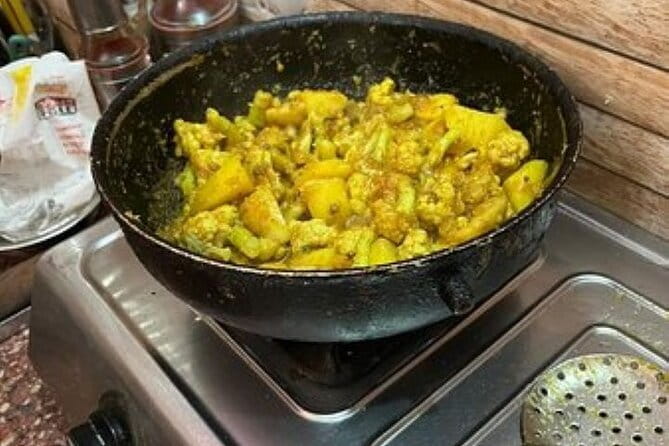
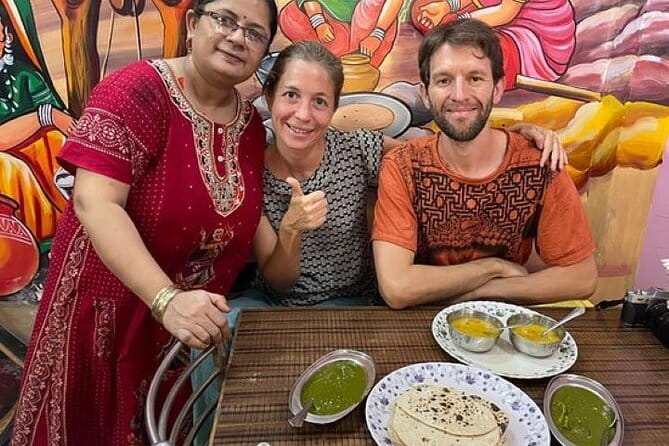
This cooking class is taught by Sona, a local home cook from Varanasi who focuses on vegetarian Indian food. Your meeting point is at Azure Paying Guest House, B 30/232 Assi, Ravidas Ghat Crossingh near Assi Ghat (Nagwa, Varanasi). The activity ends back at the same meeting point, so you’re not dealing with a long transit chain after you’re done cooking.
The first practical win here is that it’s private, meaning it’s just your group. That matters in a cooking class because you can ask questions without a crowd moving you along. It also makes it easier to keep your pacing steady if you’re new to Indian spices or cooking techniques.
You’ll want to plan for an active session. The class duration is listed as about 2 hours 30 minutes, and the full cooking process is described as taking around 3 hours. Either way, you’re spending most of your time with your hands involved—chopping, cooking, and assembling—then eating what you’ve made.
What you’ll learn: vegetarian Indian cooking skills you can repeat
The biggest promise of this class is that you’ll learn techniques you can use at home, not just a one-time meal. Sona teaches a complete cooking process, starting from chopping and moving all the way through to cooking. That’s the difference between a “watch and remember” class and one that actually upgrades your kitchen confidence.
You’ll also learn the logic behind traditional flavor building. Sona’s teaching includes traditions and historical tips about the cuisine, plus how local tastes connect across regions. In plain terms: you’re not just collecting recipes, you’re learning how Indian cooking thinks about balance—spices, heat, texture, and timing.
And yes, it’s vegetarian throughout. You’ll work with dishes that cover:
- Veggies and vegetable curry (sabji/curry)
- Dal and lentils
- Paneer-based dishes like butter masala
- Milk-cream style dishes like malai kofta
- Roasted eggplant (brinjal/aubergine)
- Bread types and snack items
Since you’ll be making a mix of dishes rather than only one, you’ll leave with a broader mental map of Indian cooking. That makes it much easier to adapt what you learn to what you can find in your local grocery store later.
The thali lesson: how a full plate teaches flavor balance
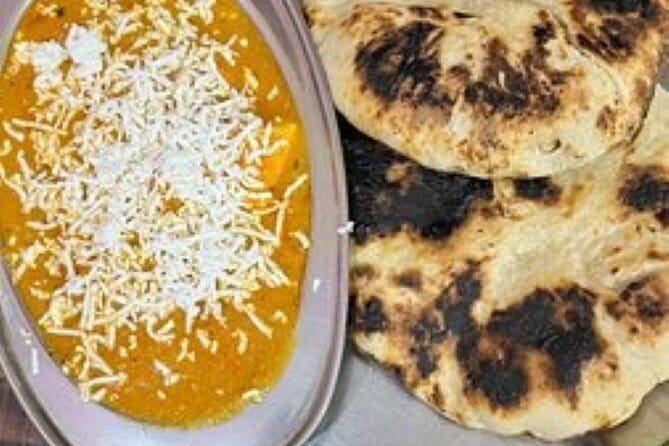
One of the clearest parts of the class is the thali—a full plate combination. You’ll cover chapati, dal, sabji/curry, rice, and sweets as part of the thali structure. Thali is a smart teaching framework because it forces you to think in complete meals: breads + lentils + vegetables + rice + something sweet.
Here’s why that matters for you: many visitors come away remembering a single curry, but thali helps you understand how multiple elements cooperate. The chapati gives a base for scooping and balancing spice. The dal adds creamy lentil depth. Rice helps smooth heat and gives a different texture. Then sweets finish the taste experience in a way that feels natural, not random.
Even if you don’t plan to cook a full thali back home, this lesson teaches useful ratios and sequencing. You learn how different dishes can share spice foundations while still tasting distinct.
Curries, veg, and homemade spice power (the practical flavor engine)
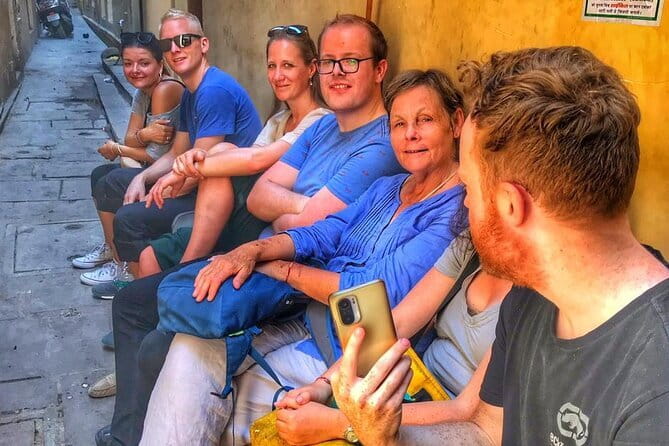
Sona’s class centers on traditional Indian taste using homemade spices. You’ll learn how spices support both vegetables/curry and drinks like Indian chai or tea masala. That’s useful because spice blends are often the most intimidating part of Indian cooking for beginners. Here, you’re not guessing—you’re getting taught in context.
Vegetable-focused dishes include what’s described as sabji/curry, plus specific options like:
- Paneer butter masala
- Malai (milk-cream) kofta
- Roasted eggplant (brinjal/aubergine)
If you’ve ever found paneer intimidating, a class like this is exactly where you should learn it. Paneer is forgiving, and the cooking approach can be learned step-by-step. The malai kofta angle also helps you understand how dairy-based flavors change the whole texture and mouthfeel of a curry.
And the roasted eggplant component is a great contrast. It teaches that vegetables don’t always need to be simmered to softness. Sometimes you get more character with roasting and then integrating it into the spice profile.
Breads and snacks: chapati to naan, plus puri and bhature

Another strong reason to choose this class is the variety of breads. Sona teaches bread making including chapati, naan, puri, and bhature. That covers breads suited to different textures and uses—flat and scoop-friendly chapati, richer breads like naan, and fried styles like puri and bhature.
You’ll also learn regional favorites and snack classics such as:
- Chole-bhature (a classic pairing)
- Pakora
- Samosa
This part is more than fun—it’s practical. If you know how to make even two bread types well, you can build meals around them instead of relying on takeout or store-bought naan. It also helps you understand why some Indian snacks taste the way they do: bread thickness, frying temperature, dough handling, and spice distribution all matter.
If you’re someone who likes to eat bread-based meals, this class is especially valuable. You’ll leave with techniques you can use on a regular cooking day, not just for festivals.
Drinks lesson: chai and tea masala as a finishing skill
Food classes often end before the best part: the drink. Here, drinks are included, and the focus includes Indian chai and tea masala. You’ll learn the traditional taste profile, tied back to homemade spices used in the flavoring.
I like that this isn’t an afterthought. Chai isn’t just a beverage in Indian meals—it often functions like a palate reset and a warm ending. Learning tea masala gives you a way to recreate the “spiced comfort” feel at home, especially when you want something warmer than coffee.
If you’re planning a dinner party or a family meal later, having a chai/tea masala method is a strong closer. It makes the whole cooking effort feel complete.
Lunch and dinner included: you’ll eat the results you make
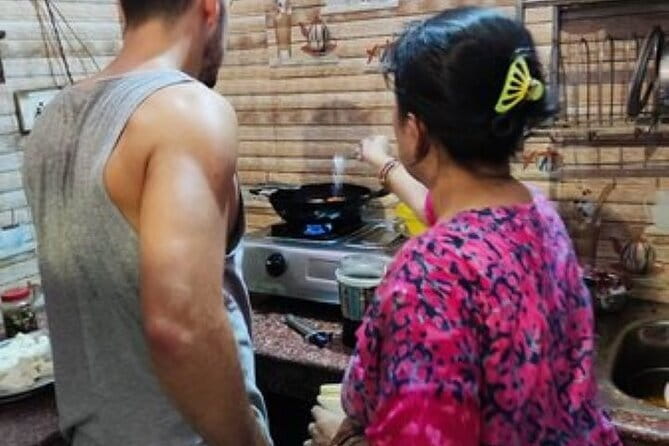
One of the highest-value details is that lunch and dinner are included, and the food is cooked as part of the class. That means you’re not paying for ingredients that disappear into a teacher’s kitchen. You get to participate and then actually sit down with the outcome.
Since it’s a cooking class built around multiple dishes, you’ll likely feel the payoff in both variety and satisfaction. A thali-style structure plus breads, snacks, and a drink creates a complete meal flow rather than a tiny tasting plate.
For your planning: bring a good appetite and a willingness to spend time. If you arrive stressed, you’ll feel it because the session is hands-on from start to finish. But if you show up ready to learn and taste as you go, the meal portion makes the experience feel fully earned.
Location and logistics: a simple start, a smart setup
The meeting point is specific and fixed: Azure Paying Guest House near Assi Ghat crossing in Varanasi. The good news is that it’s near public transportation. The not-so-fun part is that pickup and drop-off aren’t included, so you’ll need to handle getting there on your own.
Water bottles aren’t included either. That’s a practical note worth taking seriously in Varanasi, especially during long active sessions. I’d suggest you bring your own water so you’re not stuck improvising mid-cooking.
You’ll have a mobile ticket, and confirmation is received within 48 hours of booking if there’s availability. The class is also positioned as English and Hindi guided, which is helpful if you want clear explanations rather than struggling through cooking steps.
Is the class beginner-friendly? Here’s how to judge fit
Because the class teaches the complete process—from chopping to cooking—you don’t have to already know Indian techniques to get value. Sona speaks very good English and explains things well, which makes a major difference when you’re trying to follow spice measurements, timing, and texture cues.
That said, it is still a cooking class. Your comfort will depend on whether you like active learning and whether you can focus while using spices and working on multiple dishes.
This is a great match if you:
- Want to cook vegetarian Indian food at home
- Like building a whole-meal skill set (thali structure, breads, and accompaniments)
- Prefer learning from a local home cook over a demo-only style
- Want meals included so you leave fed, not just educated
It may be less ideal if you:
- Want a quick 60–90 minute activity
- Prefer non-food-focused experiences
- Dislike hands-on cooking or staying engaged for about 2.5 to 3 hours
Price and value: what $40.82 covers in real terms
At $40.82 per person, this class can look modest or steep depending on what you compare it to. The value becomes clearer when you match price to what’s included: English/Hindi guidance, lunch and dinner that are cooked as part of the experience, and instruction in multiple dishes.
A big portion of the cost is for labor and expertise—Sona is teaching homemade spice use, bread methods, and a full thali style meal flow. Plus, the class is private for your group, which reduces the “watching while others go ahead” frustration.
For $40.82, you’re essentially buying a meal experience plus cooking instruction that you can repeat. If you use the techniques later, the cost-per-use drops fast.
If your budget is tight and you mainly want sightseeing or only one dish, another option might be more economical. But if you want a real skill takeaway tied to food you’ll enjoy in the moment, this is strong value for Varanasi.
Should you book Cooking Class with Sona?
Book it if you want to leave with skills you’ll actually use: spice-based cooking, thali structure, bread-making basics, and chai/tea masala. The clear English explanations and the hands-on approach are exactly what make cooking classes worth the time.
Skip it only if you’re looking for a short, passive activity or you’re not interested in vegetarian cooking. Also, plan your evening accordingly because you’ll be cooking and eating for close to the full 3-hour process.
If you’re in Varanasi and you want one experience that combines local home-cooking authenticity with practical take-home results, Cooking Class with Sona is an easy yes.
FAQ
Where does Cooking Class with Sona start?
It starts at Azure Paying Guest House, B 30/232 Assi, Ravidas Ghat Crossing, near Assi Ghat, Nagwa, Varanasi, Uttar Pradesh 221005, India.
How long is the cooking class?
The duration is approximately 2 hours 30 minutes, and the overall cooking process is described as taking about 3 hours.
What food is included?
Lunch and dinner are included, and the food is cooked as part of the class.
Is the class vegetarian?
Yes. The cooking class teaches vegetarian food.
What dishes and items are taught?
You’ll learn dishes and styles such as thali (chapati, dal, sabji/curry, rice, and sweets), paneer butter masala, malai kofta, roasted eggplant, breads like naan/chapati/puri/bhature, and also items like chole-bhature, pakora, and samosa.
Are drinks included?
Yes. Drinks such as Indian chai and tea masala are included in what you learn.
What language support is offered?
The class includes an English, Hindi guide.
Is pickup or drop-off included?
No. Private transportation and pickup/drop-off are not included.
How do I receive my ticket?
You’ll receive a mobile ticket.
What is the cancellation policy?
Free cancellation is available. You can cancel up to 24 hours in advance for a full refund. If you cancel less than 24 hours before the start time, the amount paid is not refunded.