REVIEW · HERAKLION
Heraklion Private Cretan Cooking Class at a Traditional Village
Book on Viator →Operated by Greeking.me · Bookable on Viator
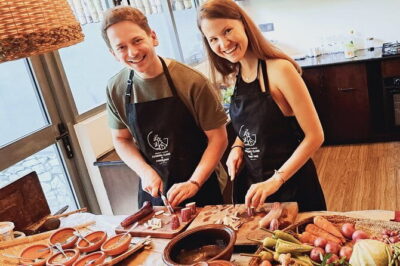
Heraklion tastes better with hands-on cooking. This private Cretan cooking class pairs step-by-step instruction with classic dishes like dakos, so you’re not just watching—you’re making. I also like the calm countryside setting 30 minutes outside the city, then the payoff meal you sit down to. One possible drawback: the village experience is described as a recreated village/living museum-style property, not a fully rough-and-real working farm village.
You’ll be picked up in a modern vehicle from downtown Heraklion (and dropped back off), then driven through Cretan village roads toward a viewpoint over herb-scented hills and the sea. This is the kind of setup where the day feels relaxed, because you’re not spending time hunting parking lots or figuring out buses.
The class runs about 4 hours, with multiple appetizers and dessert, plus wine during the lunch. If you’re hoping for a very long cooking session only, consider that some people felt the actual hands-on time was shorter than expected for the price.
In This Review
- Key things to know before you cook in Crete
- Getting out of Heraklion: the 10:00 AM ride to the countryside
- The village setting: scenic, but it may feel staged
- Meet your chef: private instruction and real cooking confidence
- What you actually cook: the Cretan menu in a hands-on order
- Tzatziki: the cooling start
- Dakos: rusks, tomato, and feta
- Dolmadakia: stuffed vine leaves
- A hearty main course feel (based on the class flow)
- Sarikopita: phyllo, cheese, and honey
- The village tour portion: what you’re learning before the apron
- Lunch + wine: the best time to slow down
- Price and value: $313.07 for 4 hours—what you should check
- Who this suits best (and who might want a different style)
- Quick practical tips so you get more from the class
- Should you book this private Cretan cooking class?
- FAQ
- How long is the Heraklion private Cretan cooking class?
- Is pickup included?
- Is this a private class or a group class?
- What language is the class taught in?
- What dishes will I cook or prepare?
- Is wine included?
- Where does the activity start?
Key things to know before you cook in Crete
- Private, hands-on instruction: you get one-on-one guidance instead of being pushed into the sidelines.
- Cretan classics you can repeat later: tzatziki, dakos, dolmadakia, and sarikopita are in the menu.
- Countryside + village-style visit: you’ll get a short village tour and a scenic drive out of Heraklion.
- Lunch is part of the deal: you eat a homemade multi-course meal with local wine.
- The vibe depends on the setting: it may be a recreated Greek village property, which some people find a bit odd.
- English-speaking chef support: you cook with an excellent English-speaking instructor.
Getting out of Heraklion: the 10:00 AM ride to the countryside
This starts at 10:00 am. If you’re staying in downtown Heraklion, pickup and drop-off are complimentary. If your hotel is outside the city center, plan on an extra charge for the extra travel time.
What matters here is the flow. Instead of you stitching together transport, the experience takes care of the main logistics: a driver, a modern vehicle, and a route that gets you out quickly. Once you’re away from the city, you trade traffic for countryside roads and open views.
You’re told the countryside area is about 30 minutes from Heraklion, and you’ll pass through village tracks. That short travel time is one of the practical advantages of a half-day class. You still get a sense of place without losing most of your day.
You can also read our reviews of more tours and experiences in Heraklion.

The village setting: scenic, but it may feel staged
Here’s the honest watch-out: the on-site village portion may be a recreated Greek village / living museum-style setup. That didn’t ruin the experience for everyone, but it did lower the satisfaction level for some people who expected to be in a more authentic, everyday working village.
Why this still can work for you: it often means the property is designed for comfort and smooth hosting. You’ll have a clear place to gather, cook, and eat without logistical chaos. And you can still enjoy the views—herb-scented hills and the sea—plus the short village tour that’s meant to explain Cretan village life.
My advice: if your top priority is authenticity in the sense of everyday life happening around you, temper expectations. If your priority is learning to cook and sitting down to a meal you made with guidance, this setting can still be a good fit.
Meet your chef: private instruction and real cooking confidence
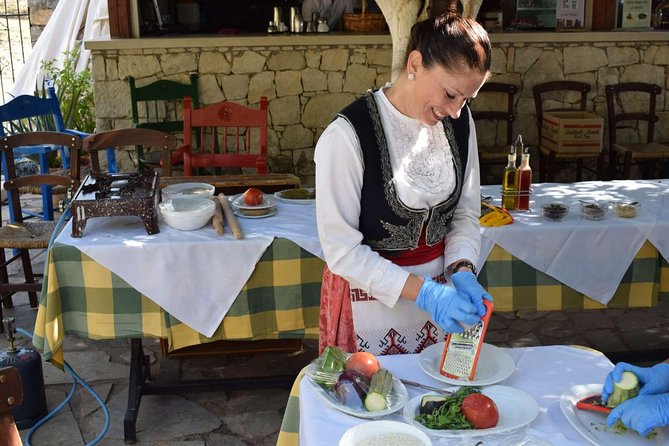
This is a private class, so you’re not competing with a crowd for attention. That one-on-one element is a big deal, especially if you’re the type who likes to ask why something works—like how to balance acidity in tzatziki or why the vine-leaf filling texture matters.
Your chef-instructor is English-speaking, and multiple guide names show up in the experience’s feedback—Chef Vicki is specifically mentioned as fun and excellent, and Evie is mentioned as kind, patient, and even adding some dancing. The lesson to take from that: you’re likely to get both skill and warmth, not just instructions barked over a cutting board.
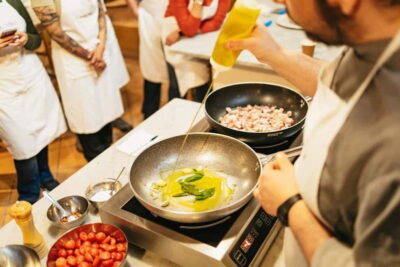
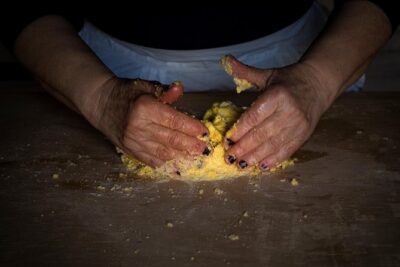
The class is described as step-by-step, focused on techniques and tips that make cooking easier at home. That’s what separates it from a simple tasting: you’re learning the process, not just the result.
If you have food allergies, there’s explicit reassurance in the experience feedback that allergies were handled with no problem. Still, the practical move is to message any dietary needs ahead of time so your chef can plan.
What you actually cook: the Cretan menu in a hands-on order
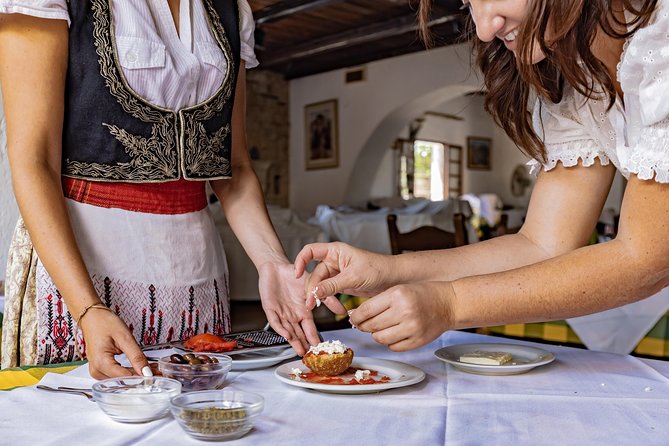
You’ll cook multiple dishes and then eat them as a multi-course lunch. Based on the provided menu, here’s what you should expect to make.
Tzatziki: the cooling start
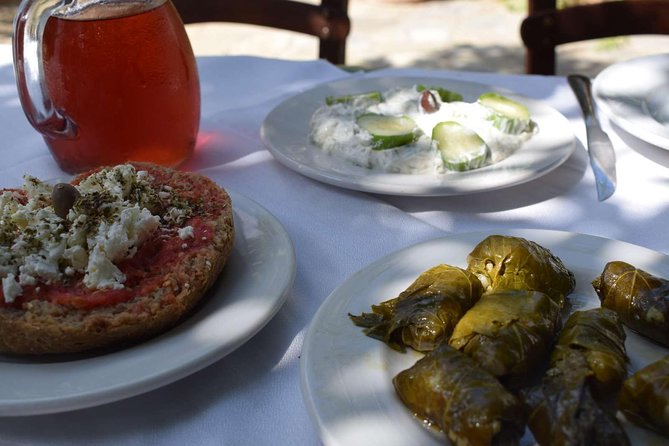
Tzatziki is yogurt mixed with garlic and cucumber, seasoned with herbs and vinegar. Why this is a smart first step: it teaches you how to balance flavor with acidity. Too much vinegar and it can slap. Too little and it tastes flat.
Also, it sets a pace for the day. You start with something forgiving and refreshing, then build confidence for the more involved items.
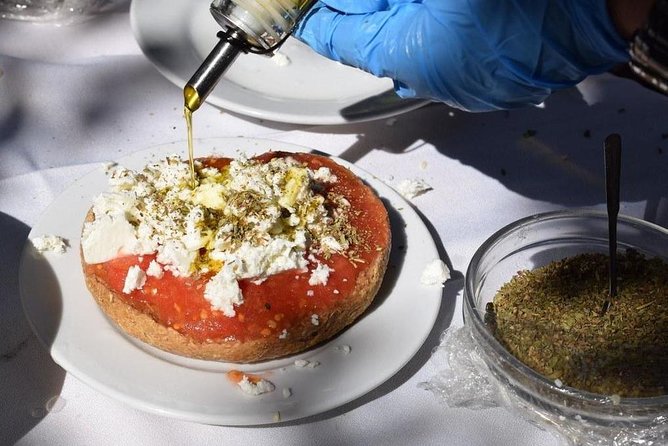
Dakos: rusks, tomato, and feta
Dakos is Cretan rusks topped with tomato sauce and feta cheese. This dish is a great example of how Cretan food often uses simple building blocks—but the timing and texture matter.
You’re not just assembling toppings. You’re learning the approach: how to treat the base so it works with the tomato. And once you taste what you made, you’ll understand why this is a go-to comfort dish on the island.
Dolmadakia: stuffed vine leaves
Dolmadakia are stuffed vine leaves with a rice and herb mixture. If you’ve never done vine leaves before, expect this to be the most technique-heavy item. Rolling takes patience, and the filling needs consistency.
The payoff is huge: once you’ve made them, you’ll feel how the flavors come together—herbs in the filling, the vine-leaf aroma, and a filling that tastes complete instead of separate.
A hearty main course feel (based on the class flow)
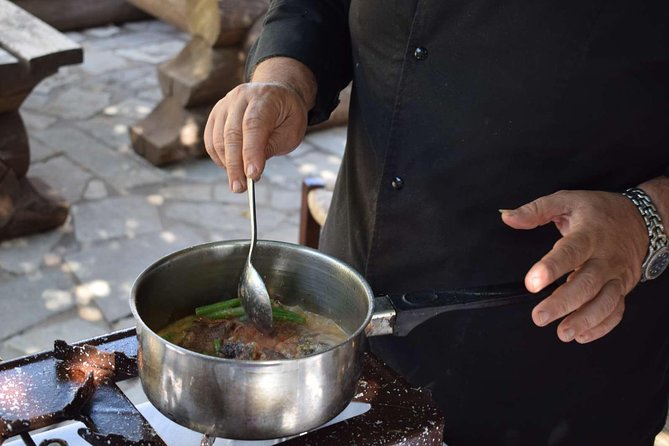
Along the way, the class includes a savory course that people describe as a meat-based stew-like dish. The exact dish can vary by class, but the overall structure is appetizers first, then something hearty, then dessert.
The key point for you: you’ll get a full meal, not just snacks. The final spread matters because it turns your work into something you can relax and enjoy.
Sarikopita: phyllo, cheese, and honey
Dessert is sarikopita: a traditional phyllo pastry pie with local cheese and honey. People call it unconventional, but it’s still traditional for the region.
Why sarikopita works after the savory dishes: the honey brings sweetness right away, while the cheese gives it body. You’re tasting a Cretan-style sweet that doesn’t feel like generic sugar pastry.
The village tour portion: what you’re learning before the apron
Before the hands-on cooking, you’ll likely take part in a short village tour and explanation of Cretan historical life and day-to-day culture. In experience feedback, one person described a tour lasting around an hour, with the cooking then taking about another 90 minutes.
That’s useful to know because it helps you picture the day. The village part sets the context, and then the kitchen part turns context into skills you can use later.
What makes this valuable for you: when food has a story, you taste it differently. Even if you don’t care about history as a topic, you’ll care about how ingredients and techniques evolved into what locals still cook now.
Lunch + wine: the best time to slow down
After cooking, you’ll sit down to taste everything you made. Included is an appetizer lunch with house wine (or other beverages, depending on what’s offered).
This part is more than a reward. Eating together is where you can judge what you did right and what you’d adjust next time. And it’s when the whole experience shifts from work to enjoyment.
The setting is described as scenic and relaxed, with big sky views over the sea. That’s the moment you’ll remember when you’re cooking dinner later and thinking, How did they make it taste like that?
A practical note: since wine is included, pace yourself. You’re going to be traveling back to Heraklion afterward, so keep the focus on the meal and the conversations.
Price and value: $313.07 for 4 hours—what you should check
At $313.07 per person for about 4 hours, this isn’t a cheap activity. The price makes sense if you strongly value:
- Private, one-on-one teaching
- A guided village visit plus scenic drive
- A multi-course homemade meal with wine included
- An English-speaking chef who can coach you through texture and timing
Here’s the honest consideration. Some feedback points to a mismatch between what people expected (more of an authentic village, and more cooking time) versus what they experienced (a recreated village setting and a cooking portion that felt shorter than expected). Another comment also suggested the cooking portion could feel basic for the price.
So how do you decide fairly? Ask yourself what you’re buying.
- If you’re buying skills and a full sit-down meal, the value can feel solid.
- If you’re buying hours of labor in the kitchen or pure off-the-beaten-path authenticity, you might feel underwhelmed.
Your best move is to align expectations. This is a structured cooking experience with a scenic outing and a chef-led menu. It’s not a self-guided food quest.
Who this suits best (and who might want a different style)
This works well for:
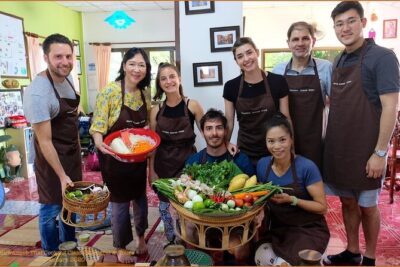
- Couples and small groups who want attention and coaching
- Food lovers who want to learn dishes they can reproduce: tzatziki, dakos, dolmadakia, sarikopita
- Travelers who like the mix of context + cooking (a village tour before the apron)
- People who want a calm half-day that ends with a satisfying homemade meal and wine
It may not be ideal if:
- You want only raw, everyday village life with no staged feel
- You expect a long cooking marathon with the majority of the 4 hours in active prep (some people felt the hands-on time was shorter)
- You’re extremely price-sensitive and can easily replicate a similar meal by eating out
Quick practical tips so you get more from the class
- Wear closed-toe shoes. Kitchens can get slippery and busy during rolling and chopping.
- Expect to taste as you cook. It’s normal to sample and adjust.
- If you have allergies or dietary limits, send details before you arrive so the chef can plan.
- If you’re sensitive to wine, go slow at lunch. You’ll still have plenty of flavor time without rushing.
Should you book this private Cretan cooking class?
I’d book it if you want a private, English-speaking chef-led cooking session in a scenic area outside Heraklion, with a full lunch made from scratch. The dish lineup is practical (and repeatable): tzatziki, dakos, dolmadakia, and sarikopita. Plus, you’re getting the village context and the drive, not just a meal.
Skip—or at least rethink—if your main goal is to experience a truly authentic working village with minimal staging, or if you expect the whole 4 hours to be heavy hands-on cooking. This is more “guided experience that ends with a meal” than “farm-to-table day of labor.”
If you match those expectations, you’ll leave with both dinner knowledge and island flavor memories.
FAQ
How long is the Heraklion private Cretan cooking class?
The experience lasts about 4 hours.
Is pickup included?
Hotel pick-up and drop-off are included if your hotel is located in downtown Heraklion. Hotels outside the city have an extra charge.
Is this a private class or a group class?
It’s private. Only your group participates.
What language is the class taught in?
The cooking class is offered in English.
What dishes will I cook or prepare?
The sample menu includes tzatziki, dakos, dolmadakia, and sarikopita.
Is wine included?
Yes. Lunch includes house wine or other beverages.
Where does the activity start?
It starts at 10:00 am. Your guide will arrange pickup based on where you’re staying in Heraklion. Confirmation is received at booking.