REVIEW · SURAT THANI PROVINCE
Koh Samui: Evening Thai Cooking Class with Organic Garden
Book on GetYourGuide →Operated by Jungle Kitchen · Bookable on GetYourGuide
Dinner with a cooking lesson feels rare. I love the open-air charcoal kitchen setup and the fact you start with an organic garden ingredient harvest before you touch a stove. It feels less like a class and more like hosting yourself to dinner, the Thai way.
One thing to consider: you’ll each make three dishes, so it’s normal to finish with more food than you expected. Plan to take your time with tasting, and know you may want to share if you can.
In This Review
- Key things I’d mark on your Koh Samui to-do list
- A garden-kitchen setting near Fishermans Village
- What you actually cook: soup or salad, curry from scratch, noodles or stir-fry
- Curry paste grinding with front-row views
- Charcoal stoves and traditional tools: why the heat matters
- The organic garden tour: ingredient picking that actually affects your meal
- How the class builds a menu around allergies and preferences
- The evening rhythm: what happens from 5pm to dinner time
- Price and value check: is $125 really fair?
- Comfort, shoes, and practical tips that actually help
- Who should book this Koh Samui cooking class?
- Should you book Jungle Kitchen on Koh Samui?
- FAQ
- What time does the class start?
- Where is pickup included?
- How many people are in the group?
- What dishes will I cook?
- Is the curry cooked from scratch?
- Will there be an organic garden tour and ingredient harvesting?
- Do they accommodate food allergies and dietary restrictions?
- Can vegetarians be accommodated?
- Is alcohol included?
- Can non-cooking companions join?
Key things I’d mark on your Koh Samui to-do list
- Harvest-first approach: tour the organic gardens and grab ingredients before cooking (weather permitting)
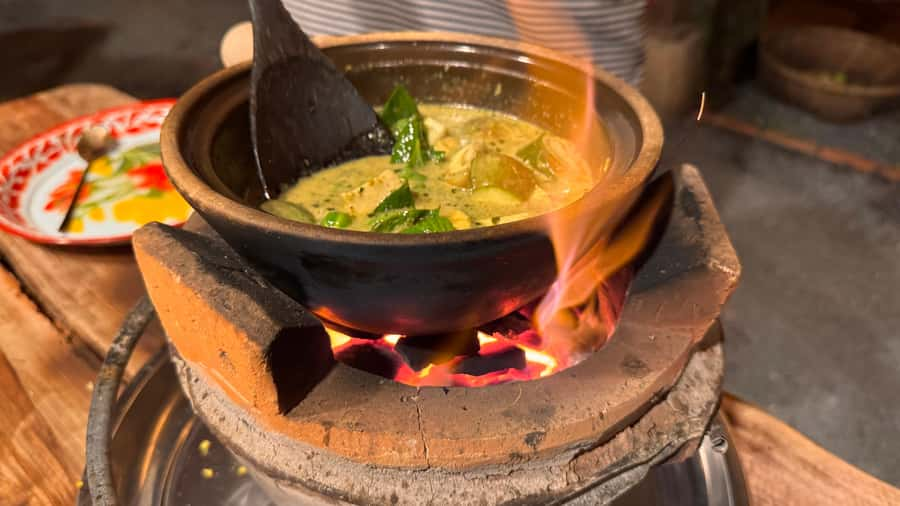
- Charcoal-stove cooking: traditional heat and tools, not a generic kitchen setup
- Curry paste hands-on: you grind spices for the curry paste with front-row views
- A menu shaped around you: allergies and favorites are collected in advance and used to tailor substitutions
- Small group dinner party vibe: limited to 8 people, with time to chat while you cook
- Non-cooking companions welcome: friends can join the garden tour and dinner for a set fee
A garden-kitchen setting near Fishermans Village
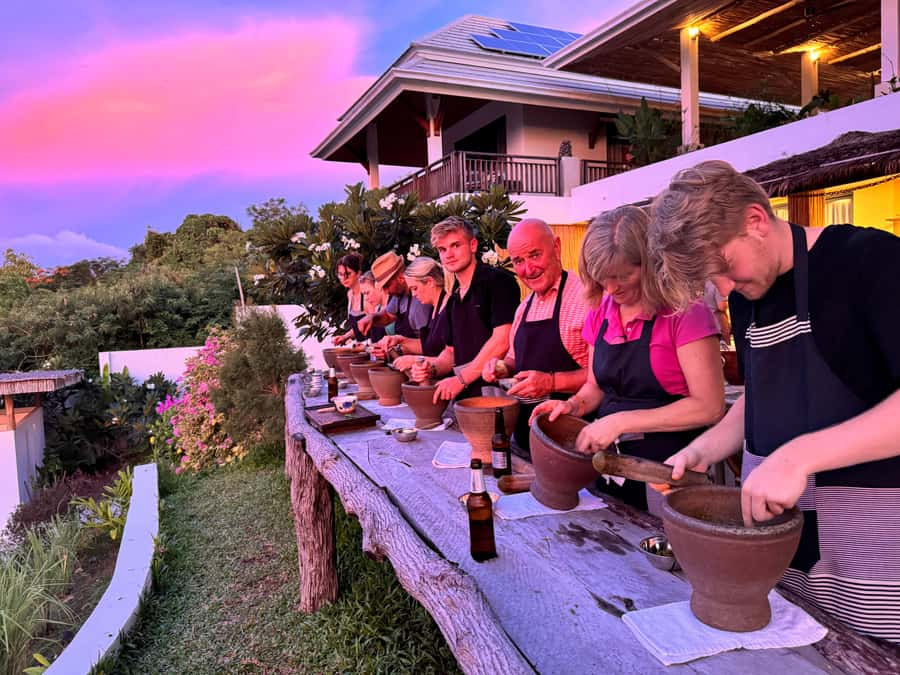
This class is built around a simple idea: you should eat well because you made it. The setting helps. You cook in an open kitchen a few minutes from Fishermans Village, with views that make the whole process feel like a night out, not a task.
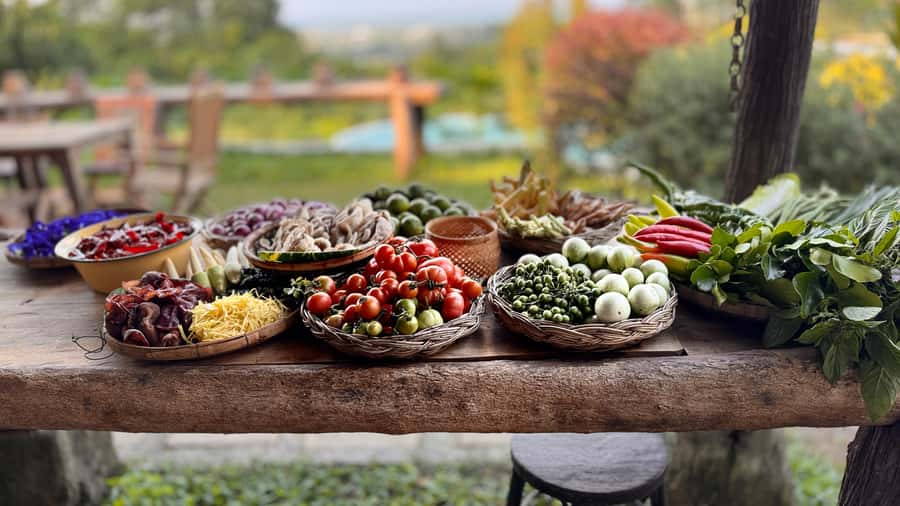
The vibe is hands-on from the moment you arrive. You get a welcome drink, a briefing, then you head out through the extensive organic gardens to collect ingredients you’ll actually use later. That garden-to-kitchen flow matters because it connects what you’re cooking to real produce and real herbs, not just ingredients that show up already chopped.
And because it’s limited to a small group (8 participants), the evening doesn’t feel rushed. You get room to ask questions, and the atmosphere stays relaxed even while everyone is working on their dishes.
What you actually cook: soup or salad, curry from scratch, noodles or stir-fry
You’ll cook the full arc of a Thai meal. Typically, your three dishes are a starter (either soup or salad), a curry that is made from scratch, and a noodle or stir-fry dish to finish.
Here’s why that combo works so well for most people:
- A starter teaches balance. Soup or salad sets the flavor profile early, so you understand how Thai seasoning builds layers.
- The curry is the centerpiece. It’s the dish where technique shows. You’ll work with spices and paste, then cook it to a finished result.
- The final noodle or stir-fry helps you practice heat control and texture. It’s one of the easiest ways to see how Thai cooking handles doneness and sauce thickness.
Even better, you will cook essentially the same dishes as everyone else in the group. If you have substitutions due to allergies or dietary needs, the class adapts. That means you’re still learning the core recipes and method, not being sent off to a completely different plan.
Curry paste grinding with front-row views
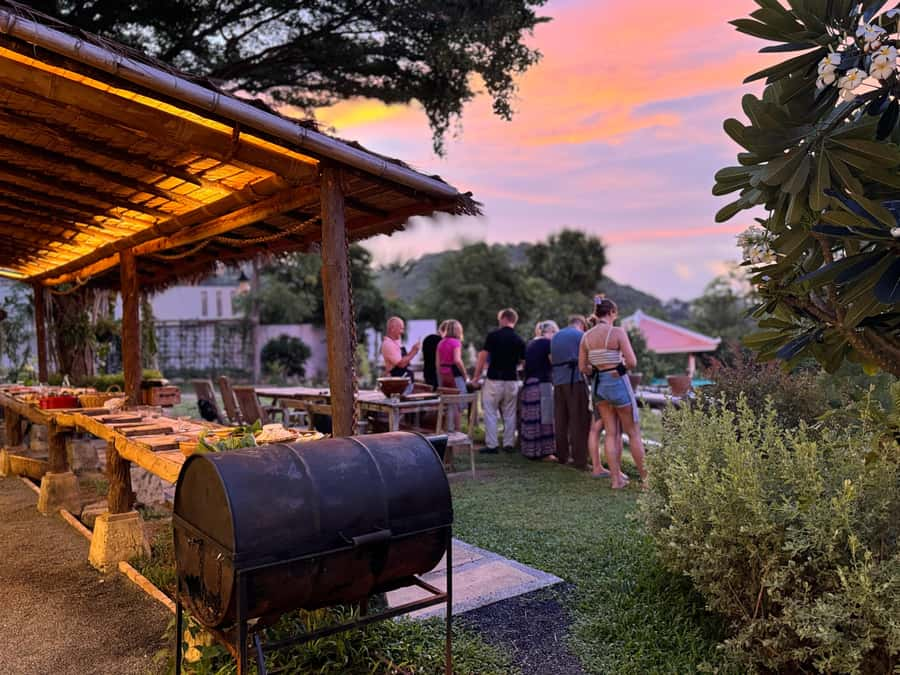
The curry part is where the evening gets memorable fast. Before cooking begins, you’ll be involved in grinding the spices needed for the curry paste. This is not staged or symbolic. It’s the real work that shapes the final flavor.
You’ll do that with an open-kitchen feel and outstanding views in front of you, which changes the energy of the class. Instead of staring at a screen, you’re watching the heat, listening to the rhythm of the kitchen team preparing charcoal stoves, and feeling like you’re part of the production.
If you care about why Thai curry tastes the way it does, this is the moment. Thai curry flavor isn’t only about ingredients; it’s about how spices are processed into paste and then cooked until their aromas change. This class gives you that hands-on “why” without turning it into a lecture.
Charcoal stoves and traditional tools: why the heat matters
You cook with charcoal stoves and traditional tools and techniques. That detail matters more than it sounds.
Charcoal heat tends to behave differently than many indoor burners. It can create a stronger, more immediate sear and encourage faster cooking when you’re working with noodles and stir-fry ingredients. It also gives the food a different background flavor profile. Even if you are not a “food nerd,” you’ll notice the cooking feels more alive.
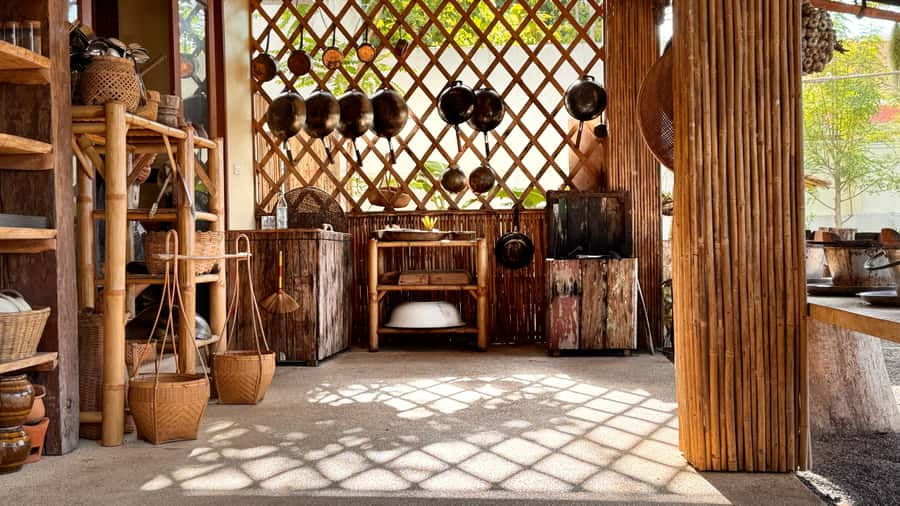
The class uses an open kitchen layout, so you’re not hidden behind a prep table. After a short break (while the staff get the charcoal stoves ready), cooking begins in earnest. That transition is also practical: it gives your hands a moment to reset, then you jump back in with the right equipment running.
The organic garden tour: ingredient picking that actually affects your meal
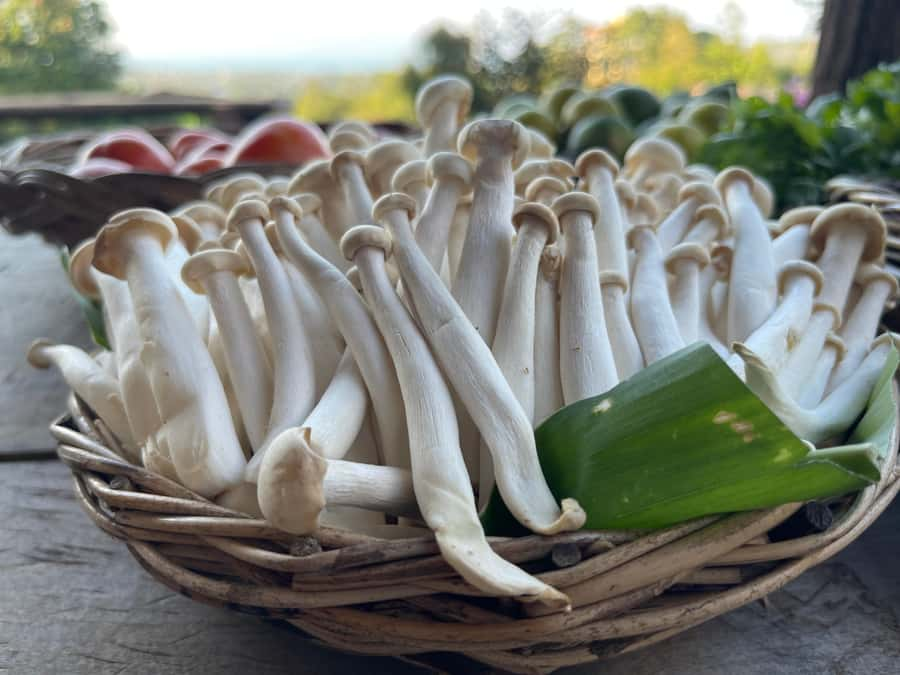
The garden tour comes right at the start. After the welcome drink and briefing, you walk through the extensive organic gardens to collect ingredients. The class notes that harvesting depends on weather, but the idea stays the same: you’re connecting your meal to what’s growing.
This isn’t just a scenic add-on. Seeing herbs and garden vegetables at the source changes how you think about flavor. When you later add something to a soup, curry, salad, or stir-fry, you’ll likely recognize the ingredient’s role right away.
It also makes the timing feel more natural. You arrive at 5pm, spend part of the evening outdoors collecting and learning, then cook as it transitions toward dinner. By the time you sit down, it feels earned.
How the class builds a menu around allergies and preferences
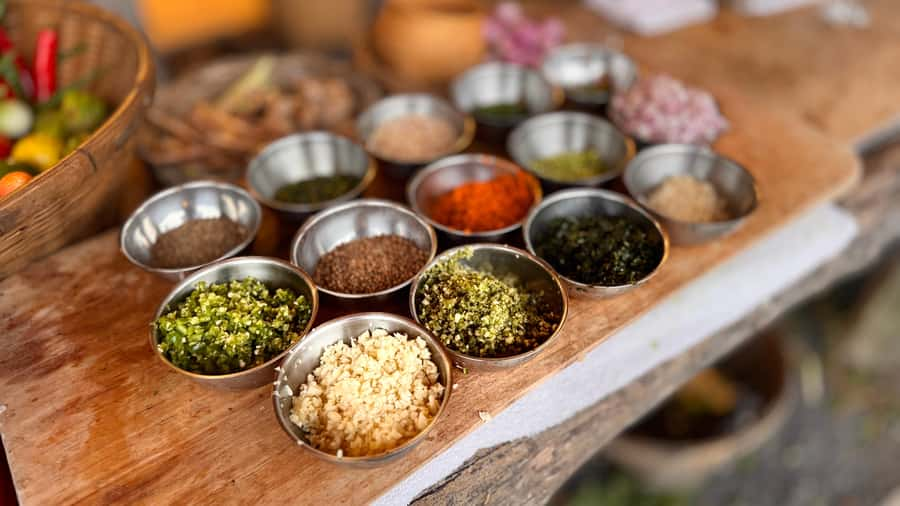
A standout part of this experience is the way they plan for your group ahead of time. In the days before class, they contact guests to ask about food allergies, diet restrictions, and favorite dishes. Then they set the menu latest on the morning of class, after hearing from everyone.
That means the evening isn’t one-size-fits-all. If you need substitutions, the class aims to keep everyone on the same dishes while swapping ingredients as needed.
Vegetarian substitution is a good example of what “tailored” can look like. Vegetarian adaptations may include alternatives for fish sauce and oyster sauce, and they can work surprisingly well when you understand the flavor function those sauces usually provide.
If you have allergies, this matters in a real way. You are not relying on guesswork at the stove. The group and menu are shaped ahead of time so everyone can cook the same structure of the meal.
The evening rhythm: what happens from 5pm to dinner time
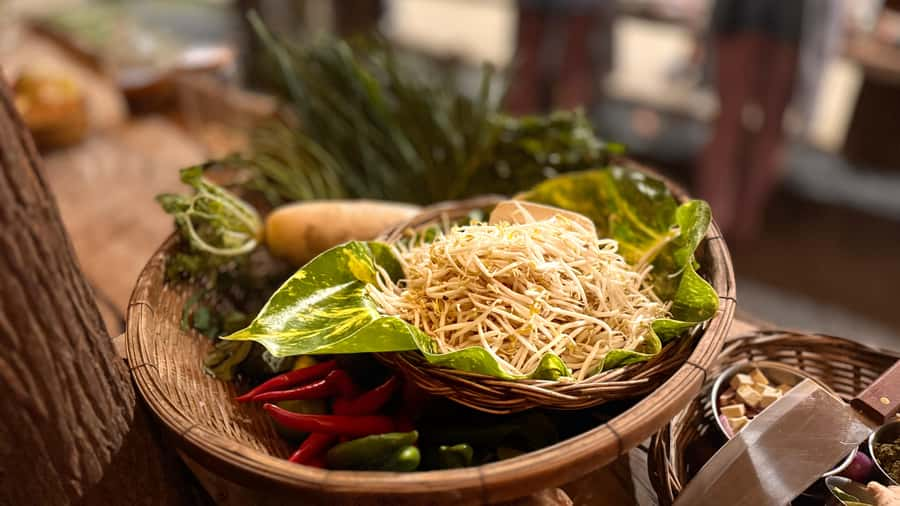
This runs about 270 minutes, usually from 5pm to around 9pm. The schedule is designed to keep you moving without feeling frantic.
- Welcome and briefing
You start with a welcome drink, plus a rundown of what you’ll do and how the evening flows.
- Organic garden tour and ingredient collection
You gather ingredients during the garden walk, weather permitting.
- Cooking prep and station work
You’ll typically tackle your starter (soup or salad), then shift to the curry process where spices are ground for curry paste.
- A short break for the charcoal stoves
The team prepares the charcoal stoves so cooking can begin properly.
- Main cooking and finishing
You’ll complete the curry and then make your noodle or stir-fry dish.
- Dinner in the gardens
Finally, you eat what you made, right in the garden setting.
That last part is the quiet genius of this style of class. Instead of “cook, then rush somewhere else,” you cook and then dine in the same setting. It turns the whole night into one continuous experience.
Price and value check: is $125 really fair?
At $125 per person, you’re paying for more than ingredients. You’re paying for a full guided meal experience: hands-on instruction, equipment, and a complete dinner you actually cook yourself.
Here’s what you get that helps justify the price:
- Three dishes from scratch, not one or two small plates
- Curry paste grinding and charcoal-stove cooking, which are method-focused, not shortcut-focused
- Garden tour with ingredient collection, which adds time, variety, and atmosphere
- Small group size (limited to 8), so attention doesn’t evaporate
- Dinner included, with soft drinks and a welcome drink (alcohol not included)
When you compare this to eating out plus paying for a cooking class separately, the structure starts to look like good value. You’re essentially buying a guided process plus the meal, in a setting that feels special without being overly complicated.
If you’re the kind of traveler who enjoys tasting and learning technique, this price tends to feel right. If you only want a quick snack and zero commitment, it might feel heavy. This class is for people who want to participate.
Comfort, shoes, and practical tips that actually help
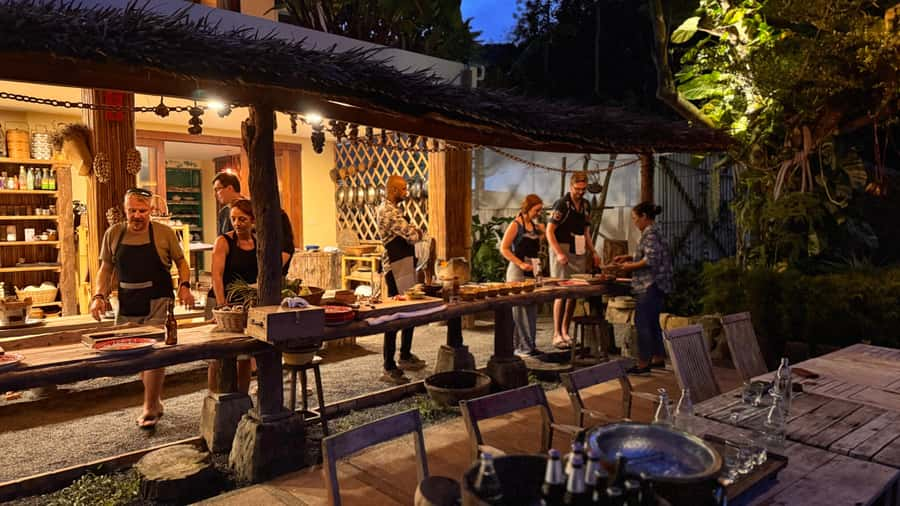
It’s outdoor-focused, so come ready for practical details.
Bring comfortable shoes. You’ll be walking through the garden and moving around an open kitchen area.
Also, plan your evening mindset. Because you make three dishes, you may not finish everything. One of the most common real-world outcomes of hands-on classes like this is food waste if you don’t manage portions. Tasting is part of learning, but you can slow down and share if you’re with friends.
If you’re bringing a companion who doesn’t cook, that can change the experience in a smart way. Non-cooking companions can join the garden tour, watch the cooking process, and enjoy dinner with complimentary soft drinks for 1,500 THB per person paid cash on arrival. That’s a nice option if you want a shared evening, but not everyone wants a hands-on role.
Who should book this Koh Samui cooking class?
This is an excellent fit if you:
- want a Thai cooking experience where you actually do the work (especially curry paste and curry technique)
- like dinner plans that feel social and relaxed, thanks to a small group setting
- enjoy markets, gardens, and ingredient-driven meals
- travel with friends or family and want an activity that becomes the meal
It may not be the best fit if:
- you want a short, low-effort activity
- you are very sensitive to outdoor walking and you dislike open-air cooking environments
- you prefer restaurants where you can order exactly what you eat
Language is English, and instruction is hands-on, so you don’t need Thai cooking background to join.
Should you book Jungle Kitchen on Koh Samui?
Yes, I think you should book it if your ideal night is practical and delicious. The combination of organic garden sourcing, charcoal-stove cooking, and a curry-centered learning experience gives you more than a typical cooking class dinner. It’s a full arc: gather, cook, and then eat in the same atmosphere.
I’d book especially if curry is on your wish list. The curry paste grinding and the way the kitchen team gets everything set up on charcoal stoves makes that part feel serious, not watered down.
Just go in knowing you’ll cook three dishes. If that sounds exciting, you’ll likely love the value. If you hate waste, bring a friend to share or plan to take your time with portions.
If your travel plans are flexible, you can also take advantage of reserving with later payment and a refund if you cancel within 24 hours of the class start.
FAQ
What time does the class start?
Classes start at 5pm, and the full experience runs about 270 minutes, with the evening finishing around 9pm.
Where is pickup included?
You can get free pickup from Fisherman’s Village only. If you’re staying elsewhere, transport can be arranged for an additional cost.
How many people are in the group?
The group is small, limited to 8 participants.
What dishes will I cook?
You’ll usually make three dishes: a soup or salad, a curry made from scratch, and a noodle or stir-fry dish.
Is the curry cooked from scratch?
Yes. The curry is the centerpiece, and you’ll grind the spices needed for the curry paste as part of the process.
Will there be an organic garden tour and ingredient harvesting?
An organic garden tour is included, and ingredient harvesting happens weather permitting.
Do they accommodate food allergies and dietary restrictions?
Yes. The team contacts guests in advance to ask about allergies and diet restrictions, then tailors the menu with substitutions.
Can vegetarians be accommodated?
Yes. Dietary substitutions are used where needed, and vegetarian adaptations may include alternatives for fish sauce and oyster sauce.
Is alcohol included?
No. Welcome drinks and soft drinks (water and soda water) are included, but alcohol is not.
Can non-cooking companions join?
Yes. Non-cooking companions can join the garden tour, watch the cooking process, and eat dinner for 1,500 THB per person paid cash on arrival. Soft drinks are complimentary.