REVIEW · ARUSHA
NGO Lifted Strong – Traditional Tanzanian Cooking Class
Book on Viator →Operated by Lifted Strong Community Organization (LISCO) · Bookable on Viator
Cooking with Arusha’s women changes your afternoon. This small-group Tanzanian cooking class with LISCO turns dinner prep into real-world support, with a welcome from Joyce and her team plus a dose of Swahili as you cook.
I like that it feels hands-on from the first ingredient to the last bite, not like you’re watching someone else work. You learn what goes into classic Tanzanian meals while also hearing why LISCO exists and how your booking helps.
I also really like the food side of it. You’re not just tasting; you’re helping make dishes like samosas, soup, ungali with vegetables and rice, and even cooked banana, depending on what you choose to prepare. The vibe is friendly and practical, guided by the Mama cooks and run by Joyce’s team.
One thing to consider: the format is more like cooking together than a rigid, step-by-step “classroom” lesson. If you want a formal style, this may feel a little looser, and it helps to plan for getting there since it can be a bit off the main street (pickup can help).
In This Review
- Key things worth knowing before you go
- Why this Arusha cooking class feels different from a typical workshop
- Getting there around 2:00 pm: center meetup or pickup
- The 3-hour flow: from ingredients to a full plate
- 1) Meet the team and get oriented
- 2) Prep time with real technique, not just chopping
- 3) Learn Swahili ingredient names while you cook
- 4) Eat what you made, then take the experience with you
- Meet Joyce and the Mama cooks: the heart of the class
- What you’ll cook in practice (and how to choose dishes you’ll enjoy)
- Swahili lessons that actually stick
- Vegetarian and vegan-friendly without feeling like a compromise
- Supporting LISCO: what your $50 actually does
- Logistics that matter for a smooth afternoon
- Time and duration
- Group size
- Ticketing
- Accessibility and animals
- Who should book this class, and who might want a different option
- Tips to get the most out of your cooking time
- Should you book NGO Lifted Strong – Traditional Tanzanian Cooking Class?
- FAQ
- What time does the cooking class start in Arusha?
- How long is the experience?
- How many people are in the group?
- Where do I meet for the class?
- Can I arrange pickup instead of meeting at the center?
- Do they offer vegetarian or vegan options?
- Will I learn Swahili during the class?
- Is the tour price $50 per person?
- Is there any confirmation after booking?
- Are service animals allowed?
Key things worth knowing before you go
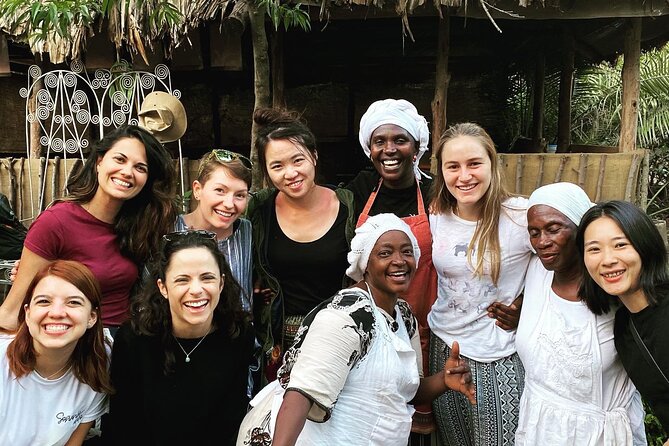
- Small group (max 10 travelers) means you actually get time at the cutting board
- 3 hours starting at 2:00 pm leaves you the rest of the day free
- Swahili ingredient names are built into the cooking, not tacked on later
- Vegetarian and vegan options can be accommodated if you tell them ahead of time
- You’re supporting LISCO while you cook, not after the fact
- Mobile ticket keeps things simple when you arrive
Why this Arusha cooking class feels different from a typical workshop
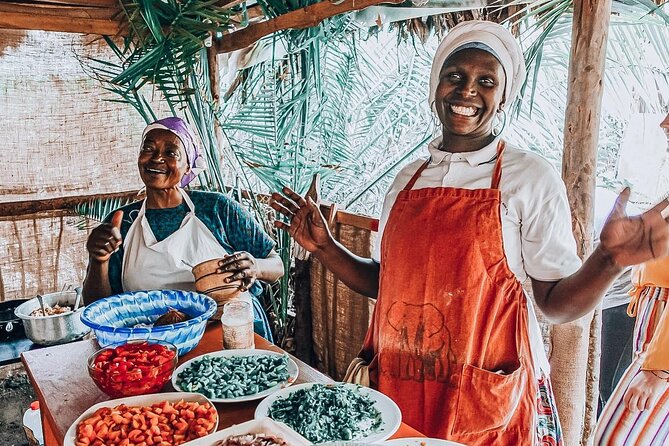
If you’ve done cooking classes before, you know the type: you show up, you get a quick explanation, you watch, you taste, and then you leave. This one in Arusha works differently because the class is part of the Lifted Strong Community Organization effort to support women facing major challenges.
You’ll cook with resilient women from the community, and the name you’ll hear again and again is LISCO. The cause is not background noise. It’s tied to the people you meet and the skills you’re practicing. That makes the whole afternoon feel purposeful without turning it into a lecture.
Also, the small group matters. With a max of 10 people, you’re more likely to be doing real tasks—prep, mixing, portioning, tasting, adjusting—rather than waiting your turn. It’s the kind of setup where you can ask questions and learn in a practical way.
Finally, you’re in Arusha, and that gives the experience a grounded, local feel. You’re not just learning recipes; you’re learning how cooking works in this community day to day.
You can also read our reviews of more tours and experiences in Arusha.
Getting there around 2:00 pm: center meetup or pickup
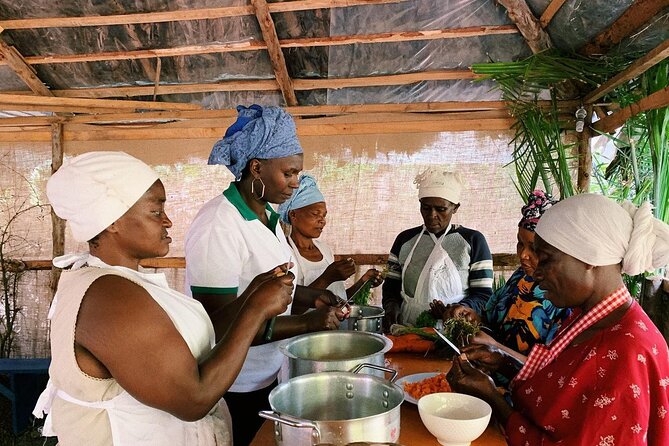
Your class starts at 2:00 pm, and it runs for about 3 hours. The activity ends back at the meeting point, so you’re not stuck figuring out how to get home right afterward.
You can either:
- meet at the center, or
- arrange for pickup
The meeting point is listed as MJHR+GF, Arusha, Tanzania. It’s also near public transportation, which helps if you’re already moving around town.
One practical tip: if you’re staying near the busier parts of Arusha and you’re used to walking everywhere, don’t assume the location is right on the main strip. It can be a little farther than you expect, so arrange pickup if you want less stress. If you do walk, leave a little extra time so you arrive settled, not rushed.
The 3-hour flow: from ingredients to a full plate
Here’s the basic shape of how your afternoon typically unfolds, and why it works so well.
1) Meet the team and get oriented
You’ll start with a welcome and a clear idea of what you’ll be cooking. Joyce and the women guiding the class set the tone quickly—friendly, practical, and focused on getting you moving.
A nice touch from the way the class is run: you may receive a message ahead of time to coordinate what you’ll cook together, depending on the session. That’s useful because it helps you choose dishes that fit your interests, and it keeps the group plan smoother.
2) Prep time with real technique, not just chopping
Then you get into production mode. You’ll help prepare produce and learn the way Tanzanian cooking uses ingredients in a particular order and with particular goals—texture, spice balance, thickness, and timing.
This is where the “together” part becomes real. You’re not just listening. You’re doing: mixing, shaping, portioning, and tasting as you go.
3) Learn Swahili ingredient names while you cook
The class doesn’t only teach recipes. It also gives you Swahili names for ingredients as you handle them. That’s one of the most memorable parts, because you remember it later when you see those same foods on menus or in markets.
It’s basic and useful: the words stick because they’re tied to action and smell, not a memorization drill.
4) Eat what you made, then take the experience with you
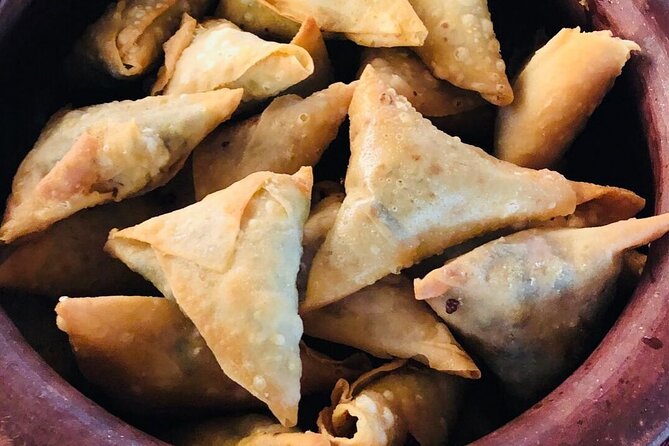
When the food is ready, you eat what you cooked. Several dishes show up across sessions—like samosas, soup, ungali with vegetables and rice, and cooked banana. And because you’re cooking a lot together, there’s a good chance you’ll end up with leftovers to take home.
Meet Joyce and the Mama cooks: the heart of the class
This class is guided by the Mama cooks—skilled local women who teach Tanzanian techniques—and supported by Joyce and her team. You’ll notice quickly that they’re patient with questions and comfortable sharing how they work.
Joyce’s role stands out in the way the experience feels organized and welcoming. She helps make sure you understand the plan and that your preferences are taken seriously—like dietary needs.
And because the group is small, you actually get to know the people involved. That’s a big part of why the class earns such strong ratings. It’s not just a cooking stop; it’s time spent with resilient women who are building a safer, steadier future through LISCO.
What you’ll cook in practice (and how to choose dishes you’ll enjoy)
The class is Tanzanian-focused, and some dishes appear repeatedly based on what groups make there. From the details provided, you can expect to learn and participate in making things like:
- Samosas (with hands-on prep and technique)
- Soup (paired with what else is on the menu that day)
- Ungali with vegetables and rice
- Cooked banana
A quick note on expectations: since the class is community-run and small, the exact menu can vary by session. The best approach is to go with curiosity and be ready to learn how each dish comes together.
If you have a strong preference—like you really want samosas or you’re more interested in the vegetable-forward plate—ask ahead if you can. The operation may coordinate what you prepare based on what you want.
Swahili lessons that actually stick
You learn Swahili names for ingredients as part of cooking. That matters because it gives you language that matches what you’re tasting and touching.
Instead of learning a list, you’ll hear words while an ingredient is in your hands: you smell it, cut it, cook it, and then you connect the word to the food. That’s why this kind of micro-language learning works.
Even if you don’t become fluent in an afternoon, you’ll walk away able to recognize ingredient terms that come up again around Arusha.
Vegetarian and vegan-friendly without feeling like a compromise
One of the easiest wins here is that vegetarian and vegan options are available. You’ll just need to let them know in advance.
This is important in practical terms. Some cooking classes say they can handle dietary needs, but what that often means is a minor swap. Here, the class is designed to work around your needs, and it’s done in a way that doesn’t take over the entire schedule.
If you’re vegetarian or vegan, this is a smart pick because you’re still learning core techniques—how Tanzanian flavors build—while staying aligned with your diet.
Supporting LISCO: what your $50 actually does
Let’s talk value, because $50 in Tanzania can mean different things depending on what’s included.
In this case, you’re paying for:
- a small-group, hands-on cooking experience
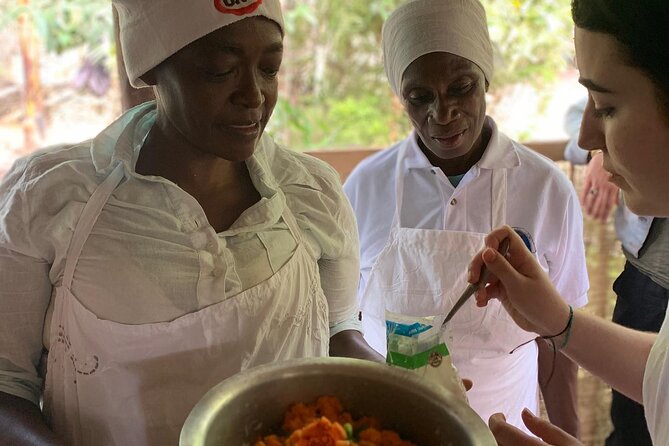
- about 3 hours with guidance from local cooks
- a meal made by you
- and direct support for LISCO’s mission to empower women facing hardships, including situations involving HIV, domestic violence, poverty, and poor health
That last part changes how the cost feels. You’re not just buying an activity; you’re putting money toward a community organization that works with women and girls.
It doesn’t turn the class into charity theater. The support is braided into the day: you meet the people, you cook with them, and you leave with real skills and a full belly.
Also, booking tends to happen ahead of time (often about 17 days), which is a signal that this is a popular, practical option in Arusha.
Logistics that matter for a smooth afternoon
Here are the nuts-and-bolts that help you avoid stress.
Time and duration
- Start: 2:00 pm
- Length: about 3 hours
- You get back to the meeting point afterward, so you can plan an easy rest of day.
Group size
Max 10 travelers, so expect a more personal pace.
Ticketing
You’ll get a mobile ticket.
Accessibility and animals
Service animals are allowed, and it’s near public transportation.
Who should book this class, and who might want a different option
This class is a great fit if you want any of the following:
- a hands-on cooking experience instead of a watch-and-taste tour
- to meet local women and learn how cooking supports community goals
- a short afternoon activity that doesn’t eat your whole day
- a vegetarian or vegan option handled in advance
- a little Swahili learning tied to real food
It might be less ideal if you want:
- a very formal, lecture-style class with strict timing and worksheet teaching
- a totally menu-predictable experience (the dishes can vary by session)
Tips to get the most out of your cooking time
These are small choices that make a difference.
- Arrive a few minutes early if you’re not using pickup. It keeps you relaxed for the first instructions.
- Let them know about dietary needs right away. It’s the easiest way to ensure the menu works for you.
- Pay attention when they teach the Swahili ingredient names. The words stick best when you repeat them during cooking.
- Ask about what you’re eating as you go. If you get a dish like ungali, soup, and banana, ask what changes the flavor or texture. You’ll learn faster when you connect steps to outcomes.
Should you book NGO Lifted Strong – Traditional Tanzanian Cooking Class?
If you’re in Arusha and you want an afternoon that’s social, practical, and meaningfully connected to the people who live there, this is an easy yes. You get real cooking tasks, not passive tourism, plus Swahili ingredient names that make the experience stick in your head.
It’s also good value: you’re paying for instruction and a meal while supporting LISCO’s work with women facing severe hardship. And with a small group and a 2:00 pm start, it’s the kind of activity that fits neatly into a normal travel day.
The only reason to hesitate is if you’re expecting a very formal cooking school structure. If you can go with the cooking-together style, you’ll likely leave with dishes you can recreate and a story that feels real, not staged.
FAQ
What time does the cooking class start in Arusha?
The class starts at 2:00 pm.
How long is the experience?
The cooking class lasts about 3 hours.
How many people are in the group?
The activity has a maximum of 10 travelers.
Where do I meet for the class?
The meeting point is MJHR+GF, Arusha, Tanzania. The activity ends back at the meeting point.
Can I arrange pickup instead of meeting at the center?
Yes. You can either meet at the center or arrange for pickup.
Do they offer vegetarian or vegan options?
Yes. The class can accommodate vegetarian and vegan preferences if you let them know in advance.
Will I learn Swahili during the class?
Yes. You’ll learn Swahili names for ingredients as you cook.
Is the tour price $50 per person?
Yes. The price is $50.00 per person.
Is there any confirmation after booking?
Yes. Confirmation will be received at the time of booking.
Are service animals allowed?
Yes. Service animals are allowed, and the activity is near public transportation.