REVIEW · MALAGA
Paella Cooking Class in Malaga
Book on Viator →Operated by Spain Food Sherpas · Bookable on Viator
Paella class starts at a real market. You meet at Atarazanas Market, shop with your chef for the right ingredients, and then cook in a modern kitchen with hands-on guidance. I like that you’re not just watching. You’re learning what goes into the pan and how to get the flavors right.
Two things I really appreciate: the market tasting, including Aloreña olives and olive oil, and the step-by-step help that makes paella feel doable. The only drawback to plan around is meeting-point confusion—double-check the exact address and arrive a bit early so you don’t miss the start.
In This Review
- Key highlights you’ll feel immediately
- Atarazanas Market: Where your paella really begins
- The small timing issue to watch
- The short walk to the Soho kitchen (and why it matters)
- Olive oil tasting and local snacks: tiny lessons with big payoff
- Gazpacho: the cold soup that teaches you Spanish flavor basics
- Making paella your way: sofrito, rice, and the gradual build
- Eating what you make: beer/wine, fruits, and the end-of-class sweet
- What you’ll take home: recipes that actually help you cook later
- Price and value: is $84.69 a fair deal?
- Who this Malaga paella class is best for
- Practical tips to make the day smooth
- Should you book this Paella Cooking Class in Malaga?
- FAQ
- How long is the paella cooking class in Malaga?
- Where do I meet for the class?
- What’s included in the class menu?
- Is English available?
- Are there vegetarian options?
- How large is the group?
- Is hotel pickup included?
- Is there a drinking age requirement?
- What happens at the end of the experience?
- Can I get a full refund if I cancel?
Key highlights you’ll feel immediately
- Atarazanas Market shopping with a chef, so you learn what to buy and why
- Olive oil tasting plus local snacks like roasted almonds and Aloreña olives
- Sofrito-first instruction for building paella flavor from the ground up
- A 3.5-hour hands-on class with cooking time, then lunch-style eating together
- Small group size (max 12), which keeps it interactive
- Recipes included, so you can repeat it at home without guesswork
Atarazanas Market: Where your paella really begins
The day starts at Kulinarea, in central Malaga, and then you’re guided to the market area—specifically the Atarazanas Market zone—where food is the main language. This is more than a walk-through. You’re looking at fresh fruit, vegetables, and local delicacies while your guide explains what matters for cooking.
One of the best parts is the ingredient logic. Your chef talks about how good paella starts with the right basics: the produce for flavor, and the pantry items that give that Malaga taste. You’ll also get help with menus and signs in another language, which is huge if your Spanish is still in the slow-building phase.
Expect tastings and samples that make the market feel real. You might try olive oils, olives, roasted almonds, and other local favorites. Some of the snacks and small plates you’ll encounter along the way are very Malaga-specific—like Aloreña olives (grown around the region) and tostón de bacalao, a rustic, thick-crusted bread topped with salt cod and orange. Even if you’re not a big foodie, those details teach you how Spanish flavors are built: salty, bright, and not shy about intensity.
If you want to turn this into a full “eat like a local” day, ask your guide for recommendations right after the class ends. You’ll leave with names of what to try next in Malaga, not just generic suggestions.
You can also read our reviews of more tours and experiences in Malaga.
The small timing issue to watch
Markets and meeting points can be a little chaotic when you’re juggling groups, photos, and transit. You can prevent most problems by showing up early and confirming the meeting address again the day of your class.
The short walk to the Soho kitchen (and why it matters)
After the market portion, you head to the cooking venue, about a five-minute walk away in Malaga’s Soho district area. That short walk matters. It keeps the class flowing, and it also means you’ll spend your energy cooking, not commuting.
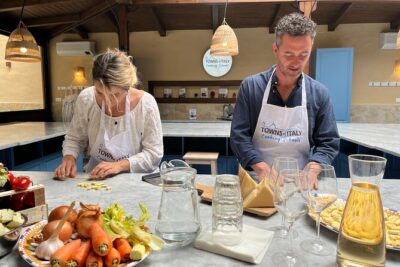
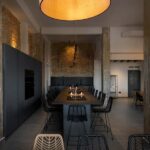
The kitchen setup is modern and comfortable. You’ll have space to work, and you’ll cook in a way that feels practical—stations, clear instructions, and enough room for everyone in the group (max 12). Reviews mention how clean and well arranged the space is, which you’ll appreciate once you start chopping and moving around with your pan.
Also, there’s no hotel pickup. You’ll need to get yourself to the meeting point area using public transportation or a short taxi/bus ride. That’s normal for this style of experience, and it usually keeps costs reasonable.
Olive oil tasting and local snacks: tiny lessons with big payoff
Before you start making paella, you’ll get a snack tasting session that doubles as a mini class on local ingredients. You’ll likely try extra virgin olive oils, plus samples like roasted almonds and Aloreña olives. Even if you think you already know olive oil, tasting multiple types helps you understand why Spaniards treat it like a key ingredient, not a background flavor.
You’ll also see how the class balances savory and sweet. There’s room for a chilled Andalucian favorite before the main cooking too. You’ll make gazpacho later, but the snack phase sets you up: you taste things, learn what they are, and then you start building your own meal.
And yes, the pace is fun. The guides I’ve seen highlighted for this experience tend to keep it upbeat and explain the food in plain terms, not lecture style. It’s one of the reasons people leave saying they want to cook again at home.
Gazpacho: the cold soup that teaches you Spanish flavor basics
Gazpacho is often treated like a simple starter. In a good class, it becomes a flavor lesson. Here, you’ll make a gazpacho before starting paella. It’s described as an Andalucian chilled soup usually made with raw tomatoes, cucumbers, and peppers.
In practice, this part teaches you two things fast:
- Freshness matters: raw vegetables taste different when they’re truly fresh and when they’re chopped/processed the right way
- Balance matters: gazpacho isn’t bland. It’s about salt, tang, and that clean, cold finish
You’ll follow the chef’s direction and get hands-on time. This is also where you’ll start building confidence for paella. Once you’ve blended gazpacho with the group, switching to hot cooking feels less intimidating.
Making paella your way: sofrito, rice, and the gradual build
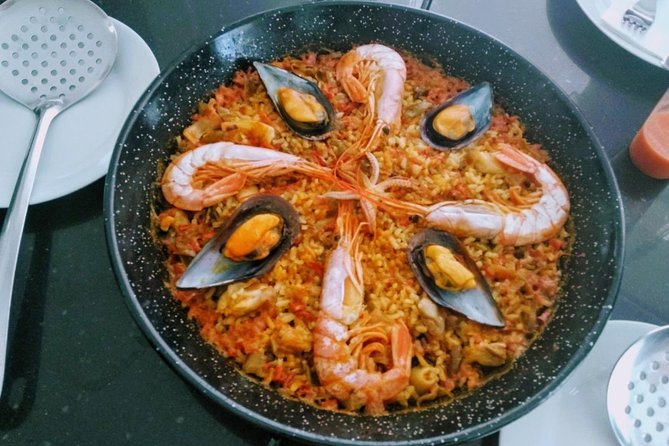
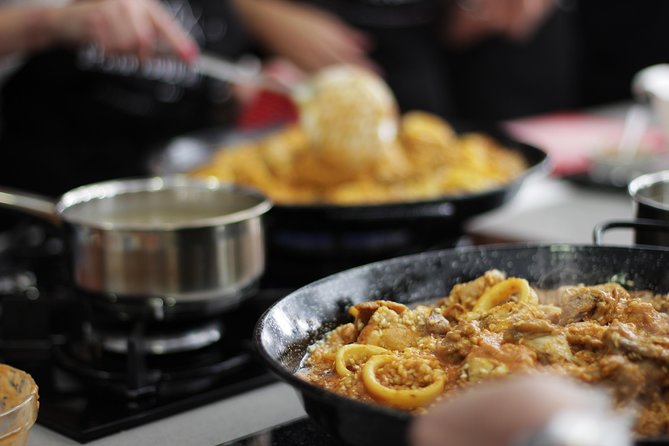
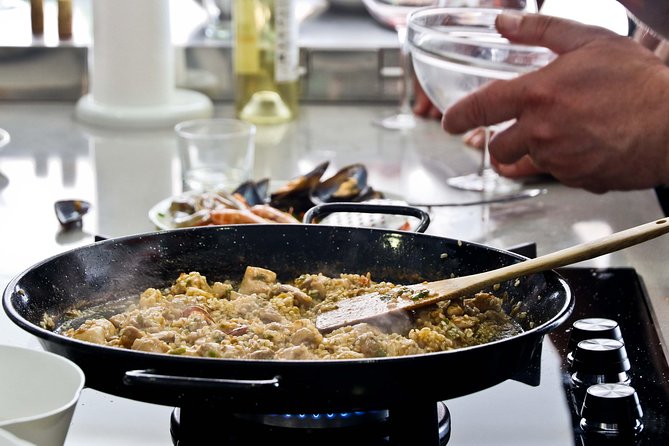
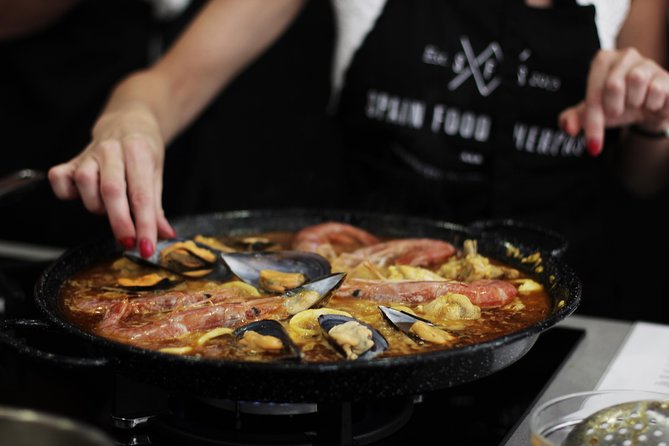
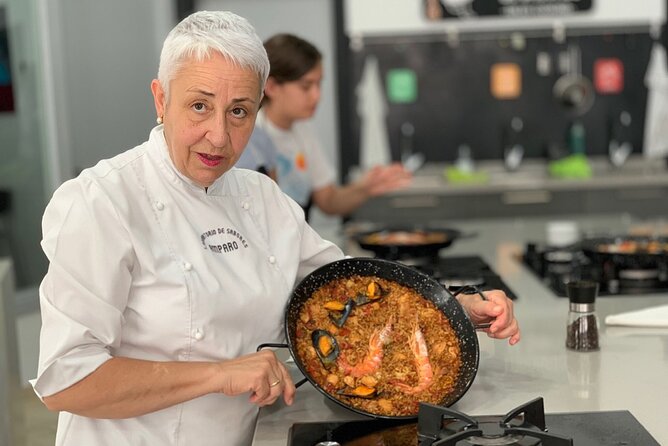
Then comes the main event: mixed paella. You’ll cook with step-by-step direction from your chef, including how to start with a sofrito base sauce and then bring the rest together gradually in the pan.
This is the core teaching moment. Paella has a reputation for being complicated. The class approach makes it feel logical:
- Build flavor with sofrito
- Add ingredients in the right progression
- Use guidance so your rice cooks the way it should
You’ll learn about the rice and the ingredients to use, not just the final steps. That means when you go home, you’re not stuck repeating the same “sounds right” guesswork. You’ll understand the role each component plays.
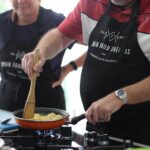
Expect a real working kitchen experience: you’ll join fellow cooks at the stoves and follow the chef’s cues. In some class setups, you may cook in teams or pairs, with shared pans—so you’re never alone, and you’re learning by doing with others next to you.
Eating what you make: beer/wine, fruits, and the end-of-class sweet
When your paella is done, you sit down with your group and savor your creations. This isn’t a quick snack-and-go. The meal is part of the experience, paired with a beer or regional wine.
The menu is laid out with multiple courses, so you get a full Spanish meal arc:
- Gazpacho as a starter course
- Mixed paella as the main
- Sangría and churros as part of the included menu experience
- Fresh fruits at the end
One of the quiet perks here is social time. You’ll eat with the other cooks in a small group. People swap ideas about their trips, their food likes, and what they’re planning to try next in Malaga. It turns a cooking class into a mini travel community.
Dessert matters too. Churros make a satisfying finish, especially after the work of cooking paella. It’s the classic Spanish close: warm, sweet, and easy to remember.
What you’ll take home: recipes that actually help you cook later
This class includes all the recipes. That’s a big deal if you’ve ever tried to recreate a dish and realized you remembered only the “vibe,” not the method.
The recipes tie directly to what you do in the kitchen:
- Gazpacho ingredients and how it’s put together
- Paella guidance that reflects the sofrito foundation
- Extra items from the menu that can help you repeat the full meal, not just one dish
You’ll also have a better sense of ingredient priorities. Tasting olive oils, smelling and selecting market produce, and getting tips on rice choices all add up. When you cook at home, you’re not starting from zero.
Price and value: is $84.69 a fair deal?
At $84.69 per person for roughly 3 hours 30 minutes, you’re paying for three things at once:
- A guided market experience focused on ingredient quality
- A hands-on cooking class with chef instruction in a working kitchen
- Multiple food and drink elements, including gazpacho, paella, wine or beer, and menu items like sangría and churros
If you’ve ever priced a standalone cooking class plus the cost of ingredients plus drinks and tastings, this often lands in a reasonable range—especially because the group is limited to 12 travelers. A smaller group usually means more attention and more chances for real questions while you cook.
Is it “cheap”? No. But it’s also not just a ticket to watch food happen. You leave with food in your stomach, skills in your head, and recipes in your hands.
Who this Malaga paella class is best for
This works especially well if you:
- Want a food-focused activity that feels authentic and hands-on
- Prefer learning with a guide instead of trying to figure everything out alone
- Like structured cooking with step-by-step support
It also fits mixed groups. Reviews mention multi-generation families and groups traveling together, and the cooking format seems built for everyone to participate. If you’re traveling solo, you’ll still have a social circle at dinner. If you’re a couple or group of friends, cooking together can be a fun shared task.
Language is English. If you’re traveling with friends who don’t speak Spanish, the market portion includes help interpreting signs and menus, which reduces stress.
And if you eat vegetarian, there’s a vegetarian option—tell the provider when booking so it’s handled ahead of time.
Practical tips to make the day smooth
Here’s how to make your day feel easy, not frantic:
- Arrive early at the meeting point so you’re not sprinting to catch the group. Meeting points can change, and it’s always safer to be early than right on time.
- The meeting point is at Kulinarea, Avenida de Manuel Agustín Heredia, 24, Distrito Centro, 29001 Málaga.
- No hotel pickup means you should plan your route using public transportation. The area is central, so it’s doable.
- Minimum drinking age is 18. If you’re booking for a group, keep that in mind.
- If you have dietary needs beyond vegetarian, mention it at booking. The experience asks you to advise specific requirements ahead of time.
Also, treat this like a learning day. Ask questions when you’re tasting olive oils and olives. Ask what to buy at the market later. Guides often have strong ideas about what’s worth trying in Malaga right after your class.
Should you book this Paella Cooking Class in Malaga?
I’d book it if you want your Malaga food experience to start at a real market and end with a meal you cooked yourself. The format is practical: shopping first, then prepping a gazpacho, then building paella with sofrito and clear instruction. You also get recipes, which turns a fun day into a skill you can use later.
Skip it (or at least reconsider) if you hate structured tours or you’re the type who needs perfect clarity on meeting points. The class is small and tightly scheduled, so being early and double-checking the meetup details will make all the difference.
Overall, this is the kind of activity that earns its place on a first-time Malaga itinerary: food you can actually taste, methods you can repeat, and market-to-kitchen teaching that doesn’t feel like a show.
FAQ
How long is the paella cooking class in Malaga?
The class is about 3 hours 30 minutes.
Where do I meet for the class?
You start at Kulinarea, Avenida de Manuel Agustín Heredia, 24, Distrito Centro, 29001 Málaga, Spain.
What’s included in the class menu?
You’ll have olive oil tasting, snacks (Aloreña olives or roasted almonds), gazpacho, paella, wine or beer paired with the menu, seasonal fruits, and all the recipes.
Is English available?
Yes, the experience is offered in English.
Are there vegetarian options?
Yes. A vegetarian option is available if you advise the provider at the time of booking.
How large is the group?
The maximum group size is 12 travelers.
Is hotel pickup included?
No. Hotel pickup and drop-off are not included.
Is there a drinking age requirement?
Yes. The minimum drinking age is 18.
What happens at the end of the experience?
The activity ends back at the meeting point.
Can I get a full refund if I cancel?
Yes, free cancellation is available. You can cancel up to 24 hours in advance for a full refund.