REVIEW · AMMAN
Private 2 Hour Cooking Class with the Locals in Amman
Book on Viator →Operated by Apollo Tours · Bookable on Viator
Cook with locals in Amman in two hours. This private class at Antika Amman Hotel turns Jordanian recipes into something you actually make, with a friendly instructor named Hiba and a professional chef guiding you from prep to plate. You finish by sitting down for a Jordanian feast that matches what you cooked.
I love the hands-on structure: you work through a starter, salad, an appetizer, and a main course in just two hours, then there’s dessert in the form of Arabic sweets plus coffee or tea. I also like that you leave with detailed recipes in hard copy, so the lesson doesn’t end when the aprons come off.
One possible drawback: because the class is short, you’ll likely focus on assembling and understanding the flow of a meal more than making every component entirely from scratch.
In This Review
- Key highlights to notice before you book
- Antika Amman Hotel Kitchen: a practical start in the city
- Two hours, four courses: how the menu works in real life
- The chef and Hiba: friendly instruction that turns into real tips
- Eating at one table: why the feast part is more than a photo op
- Arabic sweets, coffee, and tea: the finish you’ll remember
- Price and value: what $70 buys you in Amman
- Who should book this cooking class in Amman?
- Practical tips that make the class smoother
- Should you book this private cooking class?
- FAQ
- Where does the cooking class start?
- How long is the cooking class?
- Is this a private experience?
- What’s included in the price?
- What food is served during the class?
- Are alcoholic beverages included?
- Do I get recipes to take home?
- What time does the class operate?
- What happens if I cancel?
Key highlights to notice before you book
- Private 2-hour format means it’s just your group, with the chef and instructor staying with you
- Clear course progression: starter, salad, appetizer, main, then Arabic sweets
- You eat what you cook at one shared table right after cooking
- Take-home hard-copy recipes to recreate dishes later
- Coffee or tea included at the end, plus water during the session
- Hiba’s extra guidance beyond the kitchen, including recommendations for Jordan
Antika Amman Hotel Kitchen: a practical start in the city
The experience meets at Antika Amman Hotel, in the Ahmad Abu Sham Complex, on Al Kulliyah Al Elmiyah Al Eslamiyah St 2, Amman. It’s also described as near public transportation, which matters in a city where getting around can eat time if you’re not careful.
This is a private tour/activity, so it stays focused on your group rather than turning into a fast-moving shuffle with strangers. That typically makes a big difference for cooking classes—less waiting, more time to ask questions, and fewer moments where the chef is repeating the same thing for multiple people.
You’ll also see that the class window runs within 12:00 PM to 7:00 PM on Mondays (during the listed date range). If you like planning your day around a single anchor event, this helps: you can build the rest of your Amman schedule around a meal you’ll be part of.
You can also read our reviews of more tours and experiences in Amman.
Two hours, four courses: how the menu works in real life
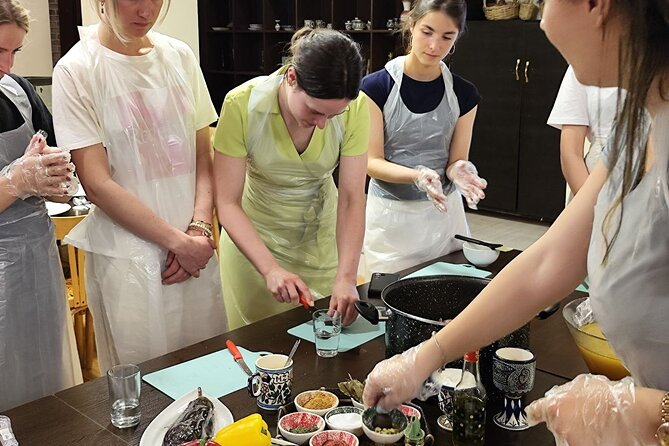
The class runs about 2 hours at Antika’s main restaurant. The timing is the whole point here: you get enough instruction to cook a complete Jordanian-style meal, without turning it into a half-day project.
Here’s the course flow you can expect:
- Starter: you begin with something simpler to learn technique and rhythm.
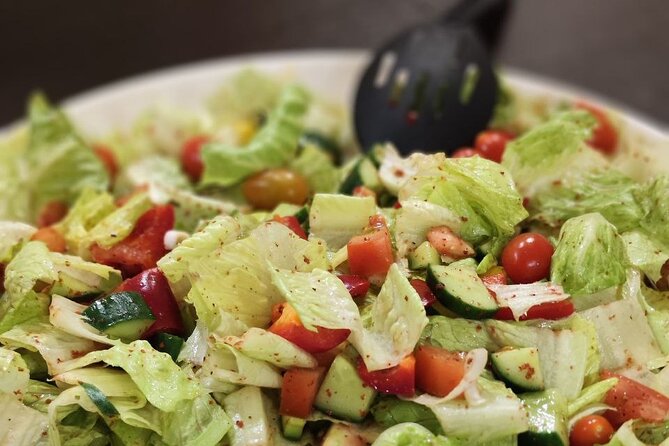
- Salad: a key part of Jordanian meals, where freshness and balance matter.
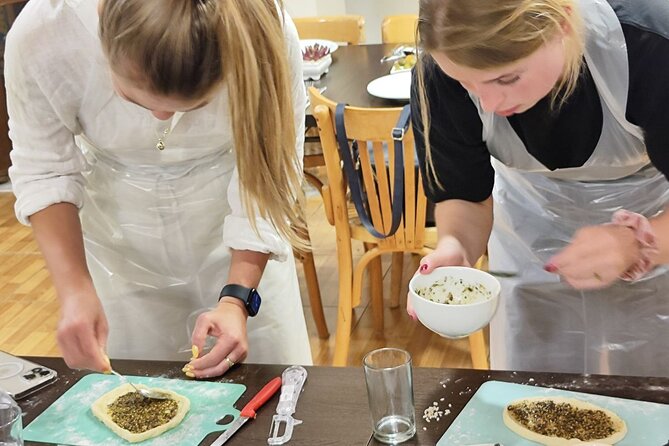
- Appetizer: usually where you get to practice shaping, seasoning, or assembling.
- Main course: the payoff course, where your skills from the earlier parts start to click.
After the main is done, dessert comes as Arabic sweets. Then you wrap up with coffee or tea, plus free drinking water during the session.
Because the class includes both lunch and dinner in the listing details, the takeaway is that you’re eating more than just a couple bites. In other words, you’re not paying for a sample and a recipe; you’re paying for a full meal experience that also teaches you how the meal fits together.
The most useful mindset for this class is to treat it like learning how to build a Jordanian menu, not just learning one dish. One review note mentioned that the shorter length can mean you learn how to construct a meal more than preparing every piece from scratch. That’s not a deal-breaker—it’s actually a smart way to spend two hours if you want variety and context.
The chef and Hiba: friendly instruction that turns into real tips
One of the strongest themes from the experience is the warmth and clarity of the instruction. One review specifically praised Hiba as friendly, and said she also stayed helpful even after the cooking session. That matters because Jordanian food isn’t only about ingredients—it’s also about how people talk about their cuisine: where it fits in a meal, why spices are used the way they are, and what to try next while you’re in the country.
You’ll be cooking with assistance from a professional chef and instructor, and the class is described as well-prepared with very little downtime. That usually means you don’t spend your time watching while other people catch up. Instead, you keep moving: chopping, mixing, assembling, and learning the logic behind each step.
One review also noted that the course taught multiple recipes and included special tips tied to the dishes. You can also expect the instructor to guide you through the overall structure of the meal, which helps if you’re the type who wants to reproduce food later. The hard-copy recipes you receive are the practical follow-through: you’ll have something tangible to reference once you’re home and your memory needs a hand.
Eating at one table: why the feast part is more than a photo op
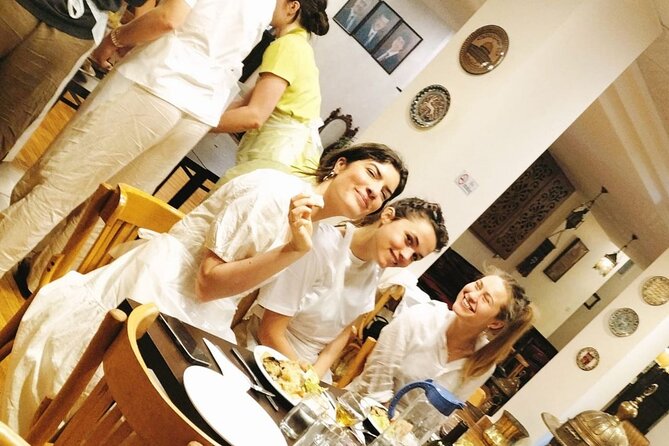
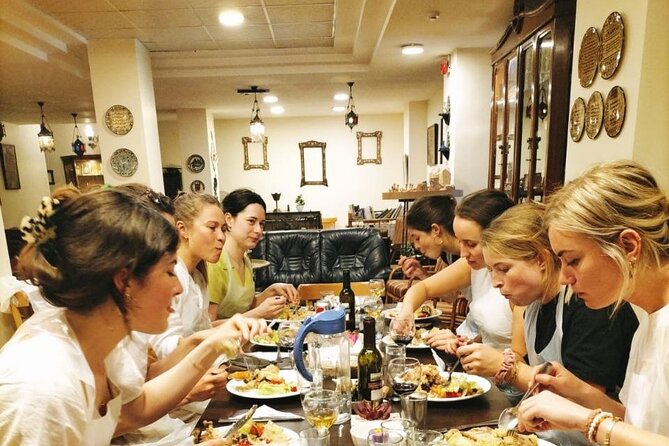
After the cooking, you gather around one big table and enjoy the dishes you personally cooked. That’s a big deal for two reasons.
First, it locks in learning. Food tastes different when you made it—sometimes better, sometimes just different in a way that makes you pay attention. Second, it turns the class into a social experience rather than a classroom. Even if your group is small, you’re still eating together like you’re part of the meal, not just observing it.
This is also where the Jordanian coffee or tea at the end feels logical. You’re not rushing off to the next stop; you’re sitting with what you made and finishing in a more relaxed, local-style way.
If you’re planning your day in Amman, I recommend treating this as your main food anchor. You’ll likely feel satisfied after the session, especially since lunch and dinner are both included in the broader meal setup.
Arabic sweets, coffee, and tea: the finish you’ll remember
The dessert is Arabic sweets, and the closing drink is Jordanian coffee or tea (choose the one that fits you best). Even if you’re already familiar with Middle Eastern sweets, I like that this experience doesn’t end with a bland send-off. You get a proper closing ritual.
Jordanian coffee and tea are often served at the pace of conversation. So plan to let this be a slow finish. If you have a night activity right after, try not to book it too tightly. Give yourself breathing room so you can actually enjoy the moment instead of sprinting to your next plan.
Price and value: what $70 buys you in Amman
At $70 per person, this class sits in the “more than a snack lesson, less than a full-day tour” category. The big question is value.
Here’s what you’re getting for your money, based on the inclusions:
- A private 2-hour cooking class
- Lunch and dinner (as part of the meal format)
- Coffee and/or tea
- Bottled water
- A full meal experience with starter, salad, appetizer, and main course
- Arabic sweets for dessert
- Hard-copy recipes to take home
So yes, you are paying for an instructor-led, private cooking session. But you’re also paying for a complete meal and a take-home guide. If you’re the kind of traveler who likes food as a skill—not just as entertainment—this is where the price starts to make sense.
One more timing note: it’s listed as commonly booked about 75 days in advance on average. That tells me you should plan ahead if your trip dates are fixed. Two hours can be easy to shuffle, but finding the exact private slot you want is usually the hard part.
Who should book this cooking class in Amman?
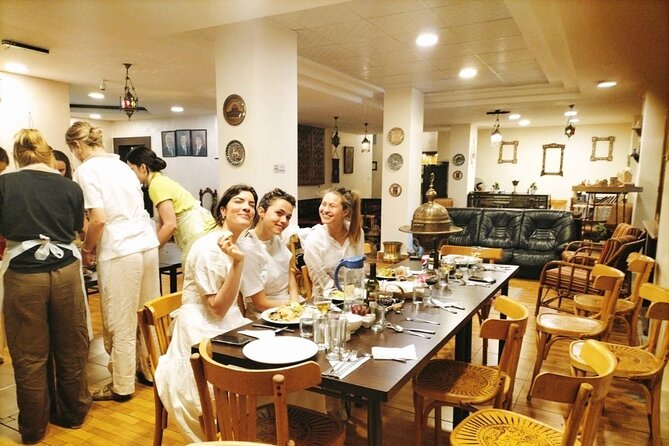
This experience is a great match if you:
- Want hands-on cooking rather than a food tour where you mostly watch
- Like learning the flow of a meal (starter → salad → appetizer → main) in a practical way
- Enjoy getting food suggestions from a real local guide like Hiba
- Want a fun, focused activity in a hotel setting that still feels home-style
It may be less ideal if you’re looking for a very long, deep “cook everything from scratch” day. The class is only two hours, and one review pointed out that the shorter format leans toward learning how to construct a meal rather than making every component on your own from the ground up.
And one more practical thought: alcohol isn’t included. If you’re expecting a class that pairs food with cocktails or wine, this won’t be that kind of night.
Practical tips that make the class smoother
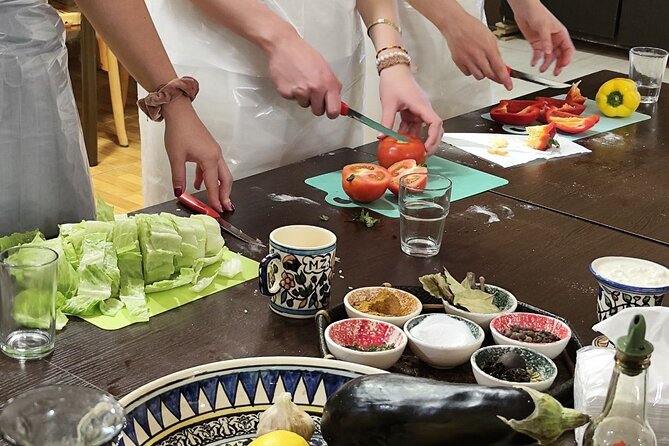
A few small moves will help you enjoy the experience more:
- Arrive a few minutes early so you can settle in before the cooking starts at the restaurant.
- Come ready to cook. This is hands-on, so you’ll want to be present and not just “spectate.”
- Plan your schedule with the meal in mind. Since lunch and dinner are part of the format, you probably won’t want a heavy dinner elsewhere right after.
- Ask questions while you’re cooking. If you care about recreating dishes later, this is your moment to get clarity on technique and timing.
- Take your hard-copy recipes seriously. When you get home, you’ll thank yourself for having exact steps in front of you.
Should you book this private cooking class?
I’d book it if you want a focused, local-feeling way to learn Jordanian cooking in Amman without turning the day into a marathon. The combination that wins here is simple: private instruction, a complete multi-course meal, and a take-home recipe booklet in hard copy.
If you’re the traveler who loves food stories, Hiba’s extra recommendations and insights make this more than a kitchen lesson. And if you’re short on time but still want to eat well and learn something you can reproduce, two hours is a strong bargain.
If your main goal is deep, ingredient-by-ingredient cooking for everything from scratch, you might find the time limit changes the emphasis. In that case, you’d need a longer class format or a different style of cooking experience.
Overall: this is a smart choice for couples, small groups, and anyone who wants Jordanian food through actual prep and cooking—not just tasting.
FAQ
Where does the cooking class start?
It starts at Antika Amman Hotel in the Ahmad Abu Sham Complex, on Al Kulliyah Al Elmiyah Al Eslamiyah St 2, Amman, Jordan.
How long is the cooking class?
The session is about 2 hours.
Is this a private experience?
Yes. It’s listed as a private tour/activity, so only your group participates.
What’s included in the price?
Coffee and/or tea, lunch, dinner, and bottled water are included.
What food is served during the class?
You can expect a starter, a salad, an appetizer, and a main course. Dessert is Arabic sweets.
Are alcoholic beverages included?
No. Alcoholic beverages are not included.
Do I get recipes to take home?
Yes. You’ll be given detailed recipes in hard copy when you leave.
What time does the class operate?
The listed opening hours show Monday from 12:00 PM to 7:00 PM (within the specified date range).
What happens if I cancel?
Free cancellation is offered. You can cancel up to 24 hours in advance for a full refund. If you cancel less than 24 hours before the start time, the amount paid is not refunded.