REVIEW · LONDON
Private South Indian Home Cooking Class in London with a Local
Book on Viator →Operated by Traveling Spoon · Bookable on Viator
Cooking in a real London home.
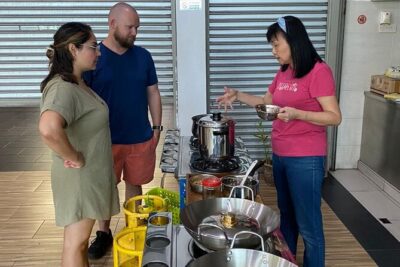
This private South Indian cooking class in Orpington is what I love most when I want personal, hands-on feedback without the canned restaurant vibe. You’ll learn classic dishes from Jemima (with her family joining in the background), and then you’ll eat what you helped make at their kitchen table—sometimes on the back patio in warmer months.
My other big favorite: the meal isn’t an afterthought. It’s the point. You’ll get a starter drink (like chaas/spiced buttermilk), plus dosas with tomato chutney, coconut rice, and a curry such as beef ularthiyathu. One possible consideration: there’s no hotel pick-up, so you’ll want to plan your own trip out to Orpington (London Zone 6).
In This Review
- Why this Orpington cooking class feels different
- Getting settled in Orpington: location and first impressions
- Meet Jemima and her family: how the class really runs
- What you cook: dosas, chutneys, rice, and curry building blocks
- Dosa basics: more than just a pancake
- Chutneys: the flavor switch
- Curry and rice: the “everyday” combo
- Drinks and starter: the small detail that sets the tone
- From kitchen table to back patio: eating like family
- Timing that won’t crush your day
- Price and value: is $105 per person worth it?
- Who this class is perfect for (and who should think twice)
- Practical notes for a smooth experience
- Should you book this South Indian home cooking class in London?
- FAQ
- How long is the private South Indian home cooking class in Orpington?
- Where does the experience start and end?
- What price should I expect?
- Is this a private experience or a group class?
- What dishes might be included?
- Are drinks included?
- Do I eat the food I help cook?
- Is hotel pick-up included?
- Is there free cancellation?
Why this Orpington cooking class feels different
- Private, family-based instruction: You’re not squeezed into a group demo. You can ask questions while you’re cooking.
- Dosa and chutney focus: You’ll work with South Indian staples like dosas plus tomato or coconut chutney, not just generic “spices.”
- The meal is part of the class: Cooking time is roughly 1 to 1.5 hours, then you eat together as the payoff.
- You get drinks included: Both alcoholic and non-alcoholic beverages come with the experience.
- A real suburb, not a tourist set: Orpington is quiet and residential, so it feels like an actual home cooking day.
- Flexible to tastes: From what I’ve heard in past experiences with this host family, they’ll adapt what they cook to your preferences when they can.
Getting settled in Orpington: location and first impressions
Orpington is on the outskirts of London, in Zone 6. That matters, because this experience isn’t designed to be “grab it on your way somewhere.” It’s a destination in itself. The start point is Station Approach, Orpington BR6 0SX, so plan to arrive a little early, get your bearings fast, and settle into a calm neighborhood rhythm before you start cooking.
What I like about this setup is that you’re not racing through the day. You’re trading central-London crowds for a quieter home setting. The downside is simple: no pick-up means you’re responsible for getting there by public transportation or another option you choose.
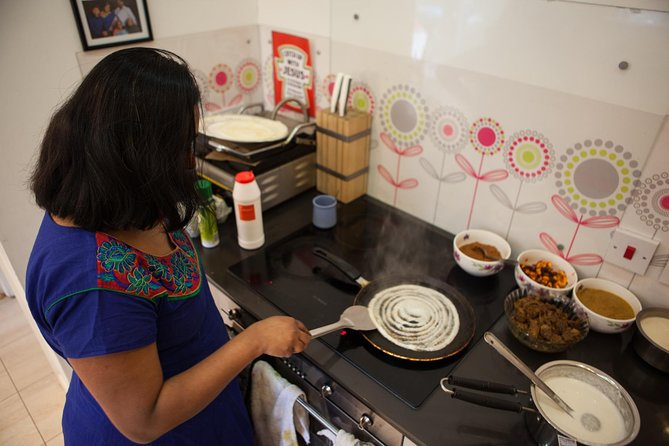
Once you’re there, the atmosphere is relaxed and family-oriented. Jemima’s home is where the class happens, and you’ll feel it in the pace—this isn’t a fast production line. It’s more like learning to cook the way someone in a household cooks: step by step, with questions welcomed.
You can also read our reviews of more tours and experiences in London.

Meet Jemima and her family: how the class really runs
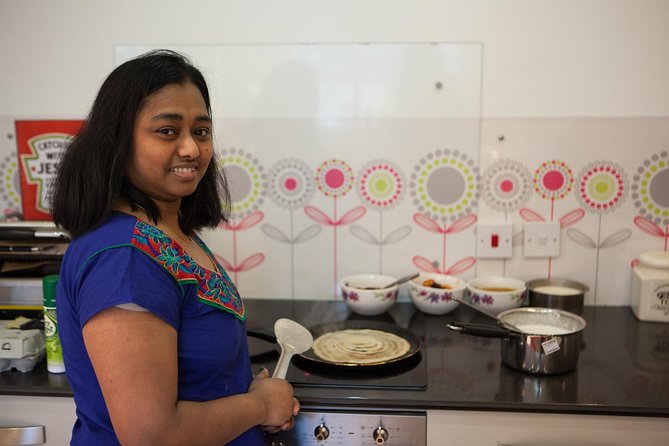
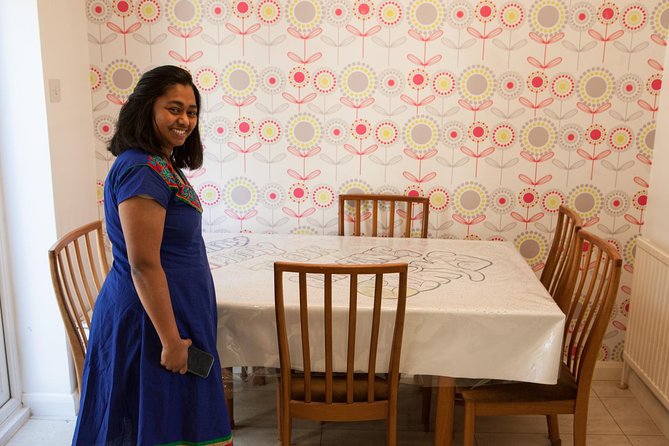
This is a private experience with only your group. You’ll meet Jemima (and her husband, Aaron) and cook in their family home kitchen. Because they live there, the class has a “normal day at home” feel rather than a staged performance.
Here’s the key rhythm to expect:
- You cook together with Jemima as your guide.
- You ask questions as you go, especially about ingredients, technique, and how South Indian flavors build.
- After cooking, you eat the meal you helped prepare.
One detail I think you should know: Jemima will serve you, and she’ll be happy to chat while you’re eating—but she won’t eat with you. The reason is practical: she wants to make sure your dosas stay piping hot. For me, that adds to the realism. It feels like home cooking where timing matters.
Also, the class length is about 2 hours 30 minutes. But the actual active cooking portion is roughly 1 to 1.5 hours depending on group size. So you should think of this as a full experience, not just a quick lesson. The meal and conversation take real time.
What you cook: dosas, chutneys, rice, and curry building blocks
South Indian cooking can sound like a lot if you’ve only had it in restaurants. In this class, you’ll get a grounded view of how dishes relate to each other. You’ll likely cover items from three main buckets: fermented batter-style staples (dosas/idlis), bright chutneys, and one curry plus a rice base.
You might learn to make dishes like:
- Tomato or coconut chutney (or both, depending on what Jemima chooses)
- A meat or vegetable curry
- Dosas and possibly idlis, depending on what’s on the menu that day
A sample menu gives a clear picture of the types of flavors you’ll work with:
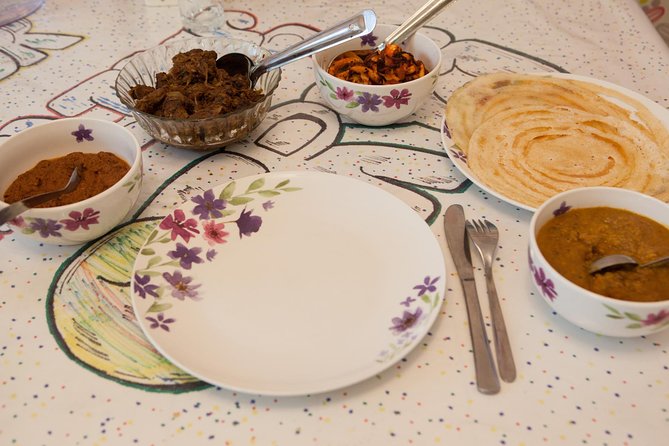
- Starter: a welcome Indian drink such as chaas (spiced buttermilk yogurt drink)
- Main: dosas with tomato chutney
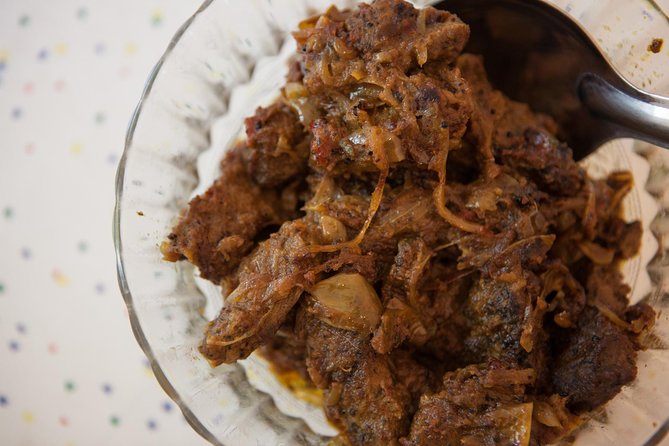
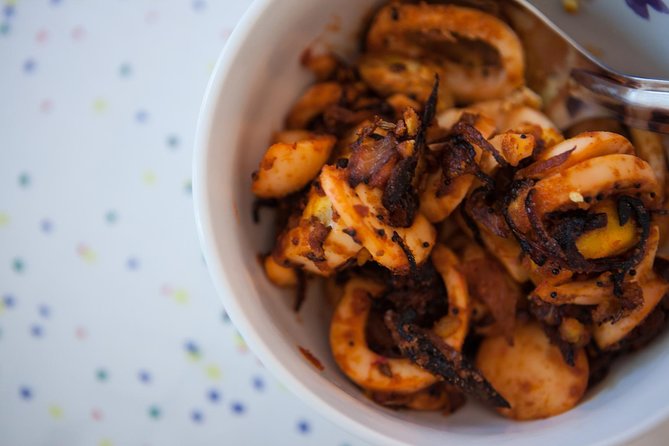
- Main: beef ularthiyathu (dry roasted beef with onions and spices)
- Main: coconut rice
- Dessert: fresh fruit
Even if you don’t end up making every dish from the sample menu, the structure is the same: chutney to cut through richness, curry for depth, and a rice side to balance and soak up flavors. This is one reason the class feels valuable. You’re not only learning recipes—you’re learning how people actually combine flavors at the table.
Dosa basics: more than just a pancake
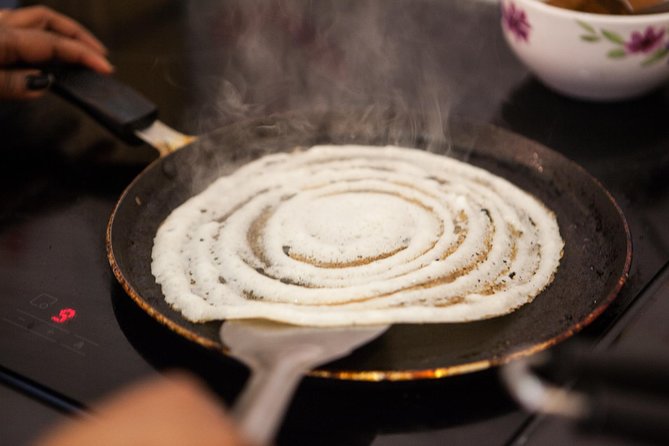
Dosas are a signature South Indian dish, and they’re a great learning topic because they’re built on batter and heat control. When you make dosas at home (even in a guided setting), you see how technique affects texture and timing. Expect plenty of hands-on guidance while you work toward that hot, fresh outcome.
If you’ve only eaten dosas that were already cooked for you, making them yourself is an eye-opener. You start to understand why everyone insists you eat them right away.
Chutneys: the flavor switch
Chutneys aren’t an accessory here. They’re a core flavor system. Tomato chutney brings tang and sweetness, while coconut chutney often feels creamy and fragrant. Either way, you’ll taste how chutney changes every bite of dosa and curry.
This is where you’ll likely ask the most questions. How do you adjust thickness? What changes when you use coconut versus tomato? How spicy should it be? That’s exactly the kind of conversation you’ll want with your host.
Curry and rice: the “everyday” combo
A curry like beef ularthiyathu is dry roasted with onions and spices, which is a different texture goal than many saucy curries. Learning a curry in this format teaches you how South Indian seasoning can work even without heavy gravy.
Then coconut rice ties it together. Coconut rice adds a mellow sweetness and aroma that pairs naturally with chutney and curry. It’s also a practical takeaway for you at home: rice is forgiving and repeatable, so even if your dosa skills take time, you can still cook something satisfying the same day.
Drinks and starter: the small detail that sets the tone
You’ll be offered alcoholic and non-alcoholic beverages. That alone makes the experience feel like more than a lesson. Food classes in general are better when you don’t feel rushed or dehydrated, and having drinks included helps you stay comfortable from prep through the meal.
You may start with a welcome Indian drink such as chaas, which is a spiced buttermilk yogurt drink. It’s a classic pairing because it refreshes your palate before you jump into dosa and curry flavors. If you like drinking something that tastes purposeful—not just “water on the side”—you’ll likely appreciate this part.
From kitchen table to back patio: eating like family
After the cooking portion, you sit down for the meal. The format is simple: you’ll eat at their kitchen dining table, and in summer you may enjoy the meal on the back patio.
This part is important because it changes what you learn. When you cook, you focus on steps. When you eat, you understand why those steps matter. You’ll notice how chutney brightens the dosa, how curry depth builds after the first few bites, and how coconut rice softens the overall flavor picture.
Also, because Jemima serves you and keeps dosas hot, the meal stays fresh. That’s not a small thing. Dosas can lose their best texture if they sit too long, and fresh dosas are where you really taste the difference.
If you’re the kind of person who enjoys chatting while eating, you’re in luck. The host family chats as they serve, and you’ll have time to ask follow-up questions that come naturally once you taste the food.
Timing that won’t crush your day
The total time is about 2 hours 30 minutes. It’s long enough to feel like you had a proper experience, but short enough that you can still plan other London activities afterward.
If you want to make a smart day of it, keep your schedule flexible. Cooking can be hands-on and occasionally take longer than you expect, especially if you’re actively asking questions. And since the cooking portion is around 1 to 1.5 hours, the rest of the time is built around serving, sitting, and eating.
My practical advice: don’t book this as your only activity with zero buffer travel time. Orpington is not central London, so allow extra minutes for getting there calmly and leaving comfortably afterward.
Price and value: is $105 per person worth it?
At about $105 per person, this isn’t a budget activity. But I think it’s reasonable for what you’re getting—if you want a real home-cooked experience rather than a generic cooking demo.
Here’s the value breakdown that matters:
- Private format: You’re not sharing instructor attention with a crowd.
- Home kitchen setting: You’re cooking in someone’s real family space, not a rented studio.
- Meal included: You’re paying for both the lesson and the food you eat.
- Multiple dishes: Even the sample menu includes starter drink, dosas with chutney, curry, coconut rice, and dessert.
- Beverages included: Alcoholic and non-alcoholic drinks are part of the experience.
The biggest thing you get for your money is feedback. When you’re learning techniques—like dosa-making or building chutney—you benefit from a host who can correct, explain, and answer questions right then. In a group class, that kind of attention often gets swallowed by time limits.
So if your goal is to learn dishes you can actually cook later, this has stronger value than a quick tasting alone.
Who this class is perfect for (and who should think twice)
This is a great match if you:
- Want a private South Indian cooking class in London with room to ask questions
- Love dosas, chutneys, and curry and want to understand how they’re made
- Prefer authentic, residential experiences over showy tourist food events
- Enjoy food and conversation at the table, not just in a classroom setting
You might think twice if:
- You need hotel pick-up or very structured timing from central London
- You’re looking for a primarily hands-on “learn everything in 60 minutes” style experience
- You dislike being served and standing around during the final hot-food timing (since the host serves and eats differently)
Practical notes for a smooth experience
You’ll start at Station Approach in Orpington and end back at the meeting point. That makes it easy to plan where you’ll go after, but it also means your travel day planning matters.
A couple more practical details that help:
- It’s listed in English.
- Service animals are allowed.
- You’ll receive confirmation at booking.
If you’re sensitive to group pacing, also remember that class cooking time can vary (roughly 1 to 1.5 hours) depending on group size. Since it’s private, it should feel controlled—but group needs can still shape pace.
Should you book this South Indian home cooking class in London?
If you want to eat well and learn something real, I’d book it. The combination of private instruction, a home setting in Orpington, and a meal that’s built from what you cooked is exactly the kind of experience that makes a trip feel personal instead of performative.
Choose this class especially if London food options have started to feel generic to you. A South Indian home meal with Jemima and Aaron gives you not just flavors, but context: how chutney and curry work together, why dosa timing matters, and how everyday families actually cook and serve.
If you’re okay planning your own trip out to Zone 6 and you’re excited about dosas, chutneys, and curry, this is an easy yes.
FAQ
How long is the private South Indian home cooking class in Orpington?
It runs for about 2 hours 30 minutes.
Where does the experience start and end?
It starts at Station Approach, Orpington BR6 0SX, UK, and it ends back at the meeting point.
What price should I expect?
The price is $105.00 per person.
Is this a private experience or a group class?
It’s private. Only your group participates.
What dishes might be included?
You may make traditional South Indian dishes such as tomato or coconut chutney, a meat or vegetable curry, and dosas or idlis. A sample menu includes chaas, dosas with tomato chutney, beef ularthiyathu, coconut rice, and fresh fruit.
Are drinks included?
Yes. Alcoholic and non-alcoholic beverages are included, and the starter may be a welcome Indian drink like chaas.
Do I eat the food I help cook?
Yes. After the cooking class, you enjoy the South Indian meal you helped prepare.
Is hotel pick-up included?
No. Hotel pick-up and drop-off are not included.
Is there free cancellation?
Yes. You can cancel up to 24 hours in advance for a full refund.