REVIEW · SAN MIGUEL DE ALLENDE
San Miguel de Allende: Mexican Cooking Class | Mole & Salsas
Book on GetYourGuide →Operated by Azteca Entertainment SMA Mexico · Bookable on GetYourGuide
Mole isn’t just a sauce here—it’s the lesson. In San Miguel de Allende, this hands-on class pairs two homemade salsas and a from-scratch mole with Mexican chocolate water and red wine, all in an antique mansion. You’ll learn why the ingredients matter, not just how to stir them, and you’ll leave with dinner that tastes like your work.
What I like most is the small-group feel (up to 6), which keeps the pace practical and personal with the chef. I also love that you’re not stuck eating someone else’s food; you make it, then sit down and enjoy it. One thing to consider: at $212 per person for a 3-hour class, it’s best when you genuinely want technique, not just a quick snack-and-photo stop.
In This Review
- Key Highlights You Should Know
- Why Mole and Salsas Are the Perfect San Miguel Skill
- Inside Aldama 9: Antique Mansion Setting, Practical Kitchen Time
- What You’ll Make: Two Salsas, Ancestral Rice, and Enmoladas
- Mole Technique: How You Learn What the Ingredients Do
- The Drinks Matter: Chocolate Water and Mexican Red Wine
- Dinner on Site: Eating What You Made in a Historic Space
- Dietary Preferences: Vegetarian, Vegan, and Gluten-Free Options
- Price and Value: Is $212 Worth It?
- Practical Tips for Your 3-Hour Class in Centro
- Should You Book This Mole & Salsas Class?
- FAQ
- How long is the San Miguel de Allende mole and salsas cooking class?
- Where is the meeting point?
- How many people are in the group?
- What language is the instructor?
- What do I make during the class?
- What drinks are included?
- Is dinner included?
- Are dietary needs accommodated?
- Is it wheelchair accessible?
- Is there a refund if I cancel?
Key Highlights You Should Know
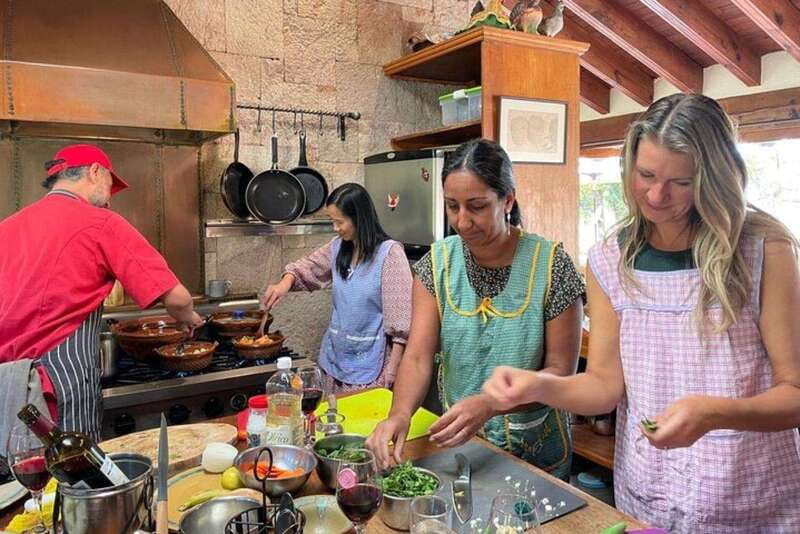
- Small group cooking (max 6) so you actually get hands-on time
- Chef Miguel teaches in English or Spanish with an emphasis on ingredients and tradition
- Two salsas plus a mole made for dinner, not just tasting
- Mexican chocolate water and Mexican red wine included during the session
- Comfort-food menu: ancestral rice and enmoladas with mole
- Diet-friendly options for vegetarian, vegan, and gluten-free preferences
Why Mole and Salsas Are the Perfect San Miguel Skill
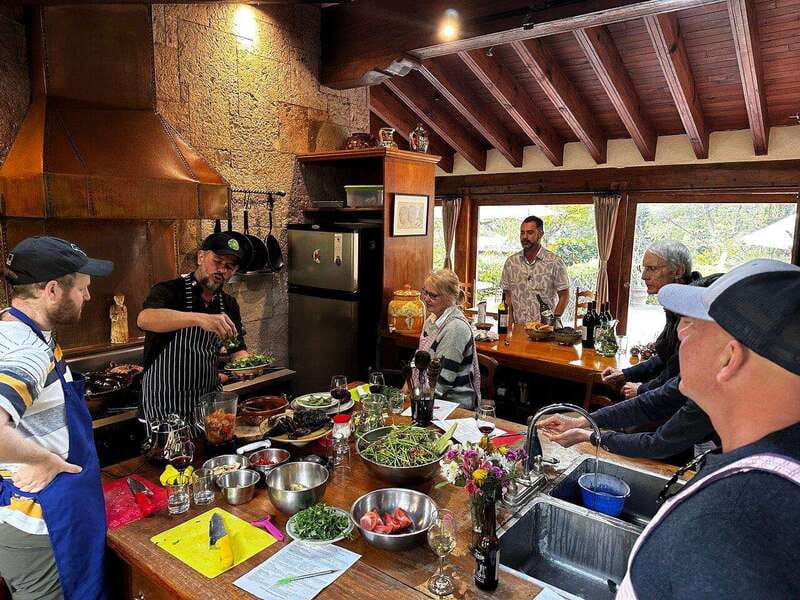
San Miguel de Allende is full of great food stops, but a cooking class gives you something a restaurant can’t: repeatable technique. Mole and salsas are not “one recipe.” They’re a way of balancing flavors, textures, and heat. That’s why this class works so well for first-timers and food lovers alike. You taste as you go, then you build.
Mole also has a reputation for being complicated, and the class doesn’t pretend otherwise. You’ll learn that mole is more than one ingredient or one step. It’s layers—often with a long ingredient list—and the chef’s job is to help you understand what each component does. That mindset is what turns mole from intimidating to approachable.
Salsas matter just as much. In this class, you make two different styles, then pair them with white and blue-corn chips. You don’t just dump salsa on chips and call it a day. You learn how different ingredients shift sweetness, smokiness, and acidity, and you start seeing salsa as a full flavor system.
You can also read our reviews of more tours and experiences in San Miguel De Allende.
Inside Aldama 9: Antique Mansion Setting, Practical Kitchen Time
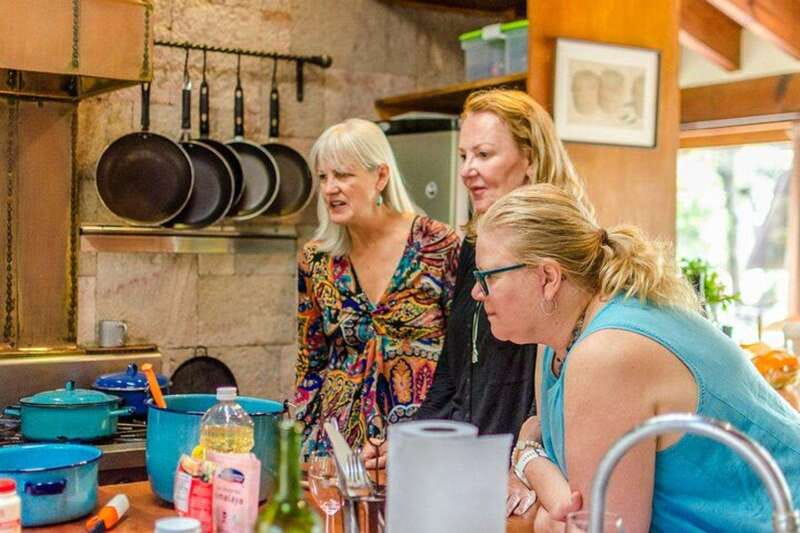
You’ll meet in Centro at Aldama 9, right where the class takes place. It’s described as being about a block and a half from the Parroquia, so you’re close enough to walk in with ease and still feel like you’ve stepped into a local, lived-in space. Once you find Aldama, you ring the doorbell and you’re in.
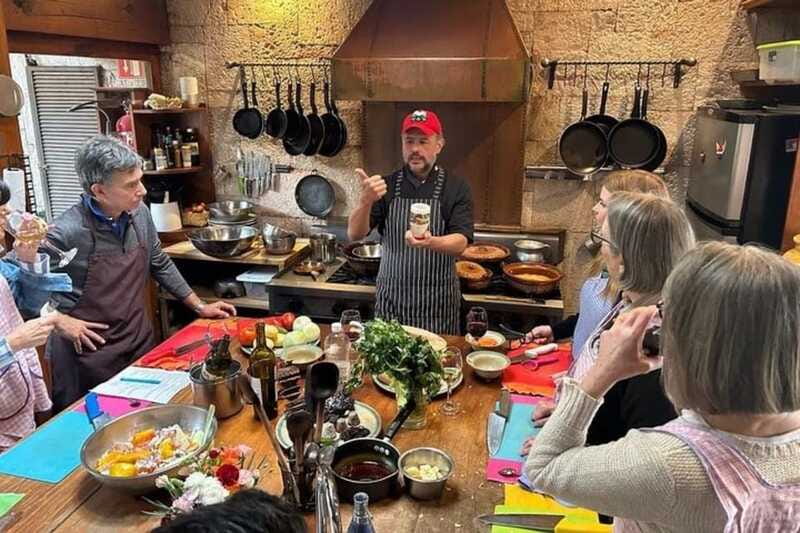
The setting matters here. Cooking in an antique mansion isn’t just for atmosphere. It usually means a quieter, more contained space than a busy restaurant kitchen, which helps when you’re focused on texture and timing. And because the class caps at 6 people, the kitchen doesn’t get crowded or chaotic. You can ask questions, you can taste, and you can move around without feeling like you’re in a production line.
From what I gathered about the teaching style, the chef keeps things clear and upbeat. Miguel is described as passionate about food and teaching, and that shows in how the class flows: you get explanations of ingredients and cultural context while still doing the work. It’s a nice blend of practical and meaningful.
What You’ll Make: Two Salsas, Ancestral Rice, and Enmoladas
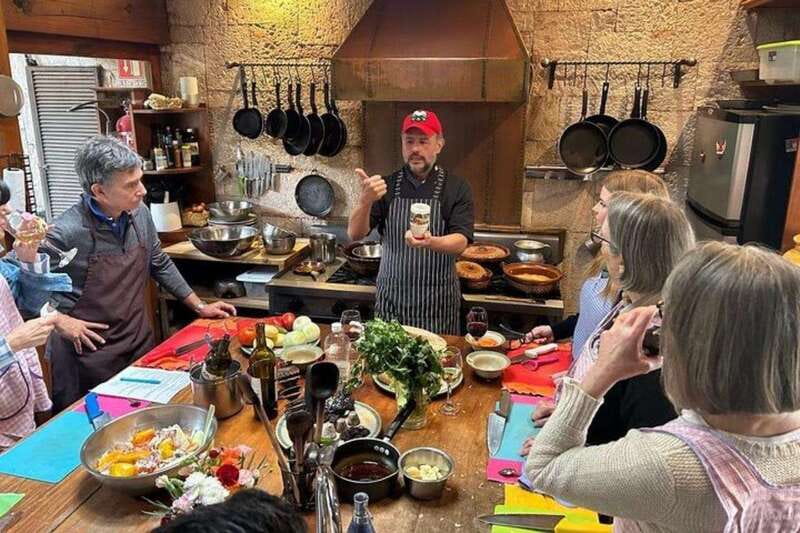
The menu is designed like a full meal, not a handful of bites. You’ll work through:
1) Two authentic Mexican salsas
You’ll prepare two different salsas and enjoy them with white and blue-corn chips. The chips aren’t an afterthought. They’re the delivery system that helps you notice differences between salsas. If one has more fruit or more roastiness, you’ll feel it right away with a simple bite. And the class includes wine during this part, which makes the pairing aspect more fun and easier to compare.
2) Ancestral Mexican rice
The rice is described as Mexican traditional white rice prepared with corn, carrots, zucchini, and other local ingredients. This is smart because it gives you a neutral, comforting base that balances the stronger flavors of mole and salsa. Also, learning how vegetables get folded into rice is useful back home. It’s one of those techniques that scales well for weekday cooking.
3) Mole served over enmoladas
The main dish is enmoladas stuffed with potatoes and covered with Mexican mole sauce. This matters for a few reasons. First, it makes mole a real dinner component, not just a sauce you taste from a spoon. Second, enmoladas are a structured way to enjoy mole: the potatoes bring mildness, and the mole coats the whole bite.
And the mole itself is the star of the class. One session is described as including a 34-ingredient mole, which tells you what kind of attention and time goes into it. Even if you’re not counting ingredients yourself, you’ll feel the labor behind it. That’s exactly why the class is worth it if you like food that feels made, not assembled.
Mole Technique: How You Learn What the Ingredients Do
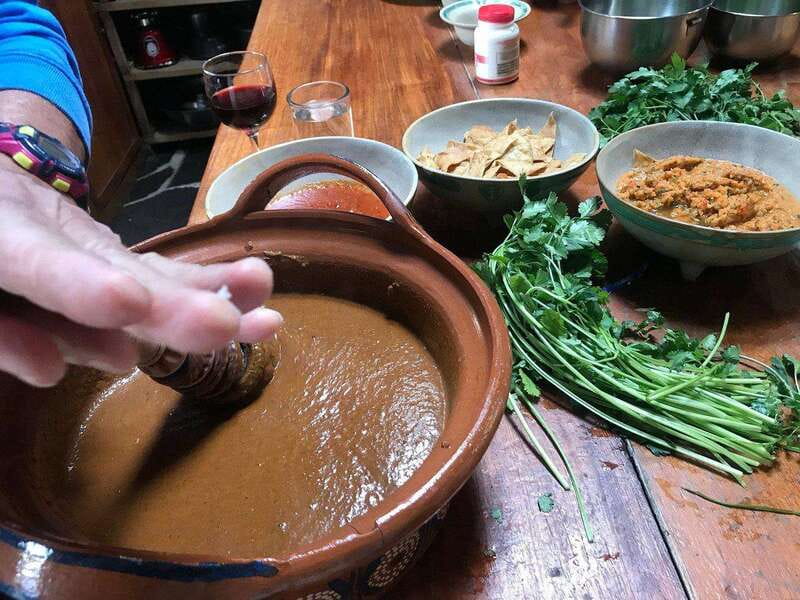
A good cooking class doesn’t just hand you steps. It helps you connect steps to outcomes. Here, you’ll get explanations of the history and significance of mole and salsas in Mexican cuisine, plus the role of each ingredient you’re using.
That approach is valuable because it gives you confidence if you want to cook later without the instructor standing over your shoulder. You’re not only memorizing a recipe. You’re learning why certain ingredients are included—sweetness, toastiness, spice heat, acidity, thickness. You’ll also be using fresh, local ingredients during the class, which makes the flavors clearer and the lesson more realistic than cooking with generic pantry items.
If you’ve ever made mole at home and it tasted flat or one-note, the “ingredient role” instruction is what can save you. Mole is supposed to feel layered. Salsas are supposed to taste intentional. The class format supports that by teaching you to pay attention.
The Drinks Matter: Chocolate Water and Mexican Red Wine
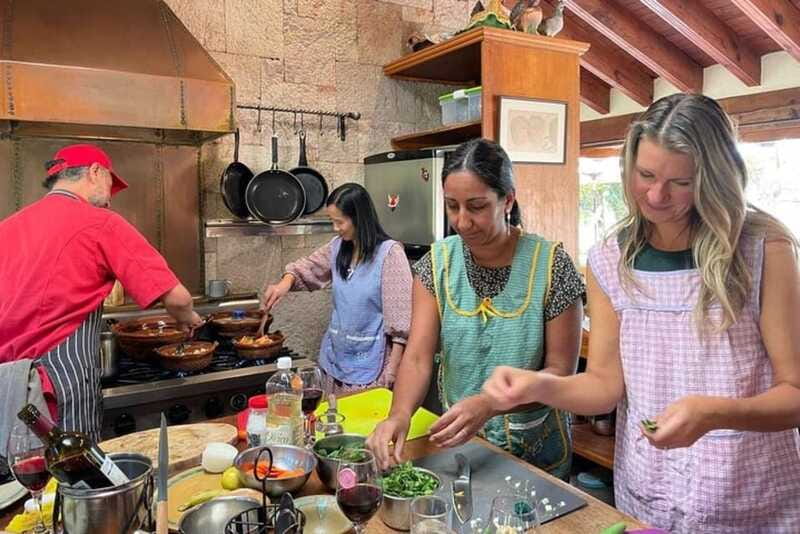
This isn’t a BYO-drinks situation. Mexican chocolate water and Mexican red wine are included, and they’re used in a way that supports the flavors you’re making.
Mexican chocolate water is interesting because it’s not just dessert energy. It’s a warm, spiced, chocolate-forward flavor that can complement spice and roasted notes. When you sip it during the cooking and tasting, it helps you understand how sweetness and bitterness interact with mole components.
Then there’s the Mexican red wine. You’ll sip it throughout, and you’ll also pair it with the salsa-course chips. That pairing structure is practical. Wine and salsa are tricky together in a random tasting setup, but when you’re doing it in an organized way, you learn faster. It also makes the class feel like a full experience, not a rushed workshop.
Just keep in mind the class is still about cooking and eating. If you’re sensitive to alcohol or prefer to avoid it, plan accordingly.
Dinner on Site: Eating What You Made in a Historic Space
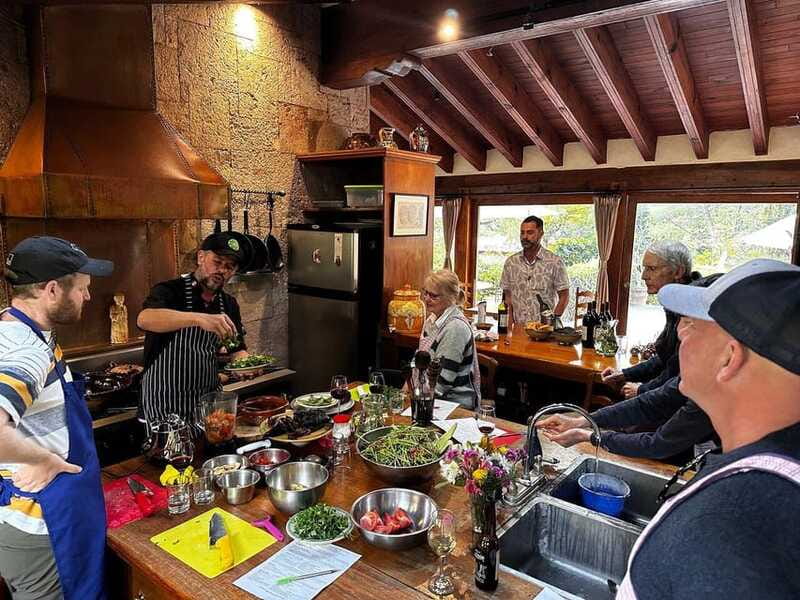
After you cook, you sit down to dinner featuring the mole and salsas you prepared. That’s one of the most satisfying parts of this kind of class. You’re not waiting for the end to taste your work. You’re building your meal in real time, then enjoying it in the same setting.
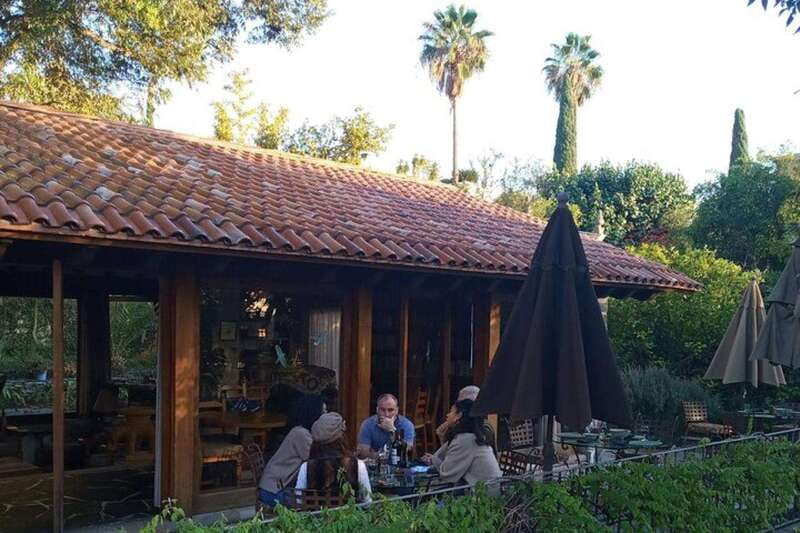
There’s also mention of a terrace dining setup, which I like in a practical sense. Cooking classes can sometimes feel like you’re stuck in a classroom chair with a rushed plate. A terrace or separate dining area tends to slow things down. You can talk with the group, taste calmly, and actually appreciate what you made.
The dinner format also makes the dishes feel complete. Enmoladas with mole, rice as a supporting dish, and salsas that add bright flavor all work together. It’s a meal designed around the same lesson: how different flavors build a balanced plate.
Dietary Preferences: Vegetarian, Vegan, and Gluten-Free Options
One of the best parts of this class is how it’s described as inclusive. The class is designed to accommodate vegetarian, vegan, and gluten-free preferences. That’s not always true with mole-based cooking, since mole ingredients can vary and cross-contact matters in many kitchens.
Here, the class is set up so you can still participate fully. The chef explains ingredients and techniques, which is helpful when you need adjustments. Even when you’re not eating the exact same version as someone else at the table, you still learn the logic of the dish.
If you have dietary needs, you should still confirm what’s possible for your exact restrictions when you book, especially for gluten-free. But the fact that these preferences are specifically mentioned is a strong sign you’ll be taken seriously.
Price and Value: Is $212 Worth It?
At $212 per person for 3 hours, you’re paying for more than a recipe. You’re paying for guided instruction, all ingredients, a full dinner, plus Mexican chocolate water and Mexican red wine. You’re also paying for the small-group experience (limited to 6), which is what turns cooking from a spectator hobby into something you can learn.
If you compare it to a typical tour that only gives you a tasting or a short demo, this costs more. But it also gives you a full meal you helped create, plus drinks that are part of the experience rather than an add-on.
For me, the class feels like good value if you fit one of these profiles:
- You want a hands-on skill you can repeat at home (mole technique and salsa flavor building).
- You like cooking with a chef who explains ingredients, not just timing.
- You’re traveling with one or two people who also enjoy food and want a shared activity.
If you only want a quick bite or you don’t eat much, it may feel pricey. But if you enjoy learning and eating what you make, the price makes more sense.
Practical Tips for Your 3-Hour Class in Centro
A few small things will make your time smoother.
First, show up ready to cook. You’re making salsas and mole components plus enmoladas and rice, so expect active work. Wear comfortable clothes you don’t mind getting a little kitchen-life on them.
Second, plan your walk from the Parroquia area. The meeting point is at Aldama 9 in Centro, about a block and a half from the Parroquia. From there, you’ll walk down Cuna de Allende to Cuadrante, turn left, then take an immediate right onto Aldama. Walk about half a block to Aldama 9 and ring the doorbell to enter. It’s not complicated, but having this in your brain before you go saves time and stress.
Third, think about timing in your day. Three hours passes quickly when you’re tasting and cooking. I’d treat this as a main activity, not something to squeeze in between museum stops.
Finally, come hungry, especially for the dinner portion. You’ll be sampling along the way, but the meal at the end is part of what you paid for.
Should You Book This Mole & Salsas Class?
Book it if you want San Miguel de Allende food that’s more than eating. This class is built around real technique: making two salsas, working on mole with detailed ingredient explanations, and finishing with a full dinner of enmoladas and rice. The small group size and the energy from chef Miguel are exactly the kind of setup that turns a lesson into a memory.
Skip it only if you’re mostly after a casual show or you don’t care about learning flavor-building skills. At $212, you should go in expecting to cook, taste, and eat.
If that sounds like your kind of day, this is a strong choice for a memorable culinary experience in Guanajuato.
FAQ
How long is the San Miguel de Allende mole and salsas cooking class?
The class runs for 3 hours.
Where is the meeting point?
You meet at Aldama 9 in Centro, right where the class takes place.
How many people are in the group?
The group is limited to 6 participants.
What language is the instructor?
The instructor teaches in English and Spanish.
What do I make during the class?
You’ll prepare 2 authentic Mexican salsas, an ancestral Mexican rice, and mole served over enmoladas.
What drinks are included?
Mexican chocolate water and Mexican red wine are included.
Is dinner included?
Yes. After cooking, you’ll enjoy dinner featuring the mole and salsas you prepared.
Are dietary needs accommodated?
The class is designed to accommodate vegetarian, vegan, and gluten-free preferences.
Is it wheelchair accessible?
Yes, the class is described as wheelchair accessible.
Is there a refund if I cancel?
Free cancellation is available up to 24 hours in advance for a full refund.