REVIEW · ROPPONGI
3-Hour Shared Halal-Friendly Japanese Cooking Class in Tokyo
Book on Viator →Operated by Yalla Tabakh Tokyo · Bookable on Viator
Tokyo kitchens beat restaurant tables for learning. This Halal-friendly cooking class puts you in a real home-style setup with a small group feel, and you’ll leave with practical skills you can actually repeat at home. I especially like that you’re not stuck watching; you cook, then you eat what you made. The one thing to consider is that aprons can cost extra if you don’t bring your own, so plan for a bit of kitchen mess.
You’ve got two menus to match your mood. The Classic option is cozy and straightforward, built around sushi, Japanese pizza, and wagyu steak taught by a home cook. The Premium option shifts toward an Omakase experience with an experienced chef and multiple courses that can include seasonal items or specialized techniques.
One more practical note: the class runs about 3 hours 30 minutes, starting at 11:30 am in Minato City, so it’s best paired with an easy afternoon plan afterward.
In This Review
- Quick hits before you book
- Minato City meeting point: a real home-kitchen feel near transit
- Classic menu: sushi, Japanese pizza, and wagyu taught by a home cook
- Sushi basics that you can use later
- Japanese pizza: fun, practical, and very learnable
- Wagyu steak: learn technique, not just flavor
- Premium Omakase: multiple courses with an experienced chef
- Why Omakase-style classes are worth it
- The main trade-off
- Halal-friendly in practice: what you can expect from the setup
- What “3 hours 30 minutes” feels like when you’re actually cooking
- Aprons, WiFi, and the small comforts that save your day
- Price and value: what $85 buys you beyond the meal
- Who this works for (and who should think twice)
- Should you book this Halal-friendly Japanese cooking class in Tokyo?
- FAQ
- FAQ
- Where is the cooking class located?
- What time does the class start?
- How long is the experience?
- What is included in the price?
- What dishes are taught in the Classic class?
- What is included in the Premium class?
- Is the cooking class Halal-friendly?
- Is there a limit on group size?
- Do I need to bring an apron?
- Is there Arabic translation available?
- Can I cancel for a full refund?
Quick hits before you book
- Fully Halal-friendly format: the class is designed around Halal requirements from start to finish.
- Two paths: Classic vs Premium: pick a home-cook menu or go for an Omakase-style course experience.
- Small group cap: you’re limited to a maximum of 10 travelers, which helps you get personal attention.
- Lunch is part of the deal: ingredients and lunch are included, so you’re not paying extra to eat.
- English instruction with options: classes are in English, and an Arabic translator is available if you need one.
Minato City meeting point: a real home-kitchen feel near transit
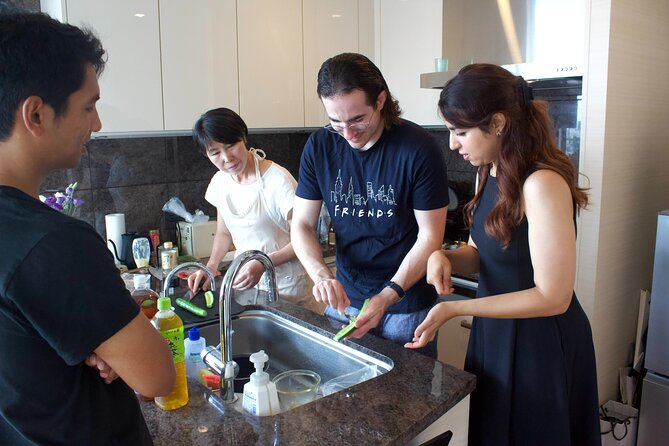
The best part of this class is the setting. It’s based in Minato City, and the meeting point is near public transportation. That matters more than you’d think in Tokyo: if getting there is easy, you arrive less rushed and you can focus on cooking.
The group size stays small (up to 10), so you don’t feel like you’re in a factory production line. In a cooking class, that translates into less waiting and more chances to ask questions while you’re working.
Also: you get a mobile ticket. It’s one less thing to manage in a city where you’ll likely be moving around with transit apps and train times.
You can also read our reviews of more tours and experiences in Roppongi.
Classic menu: sushi, Japanese pizza, and wagyu taught by a home cook
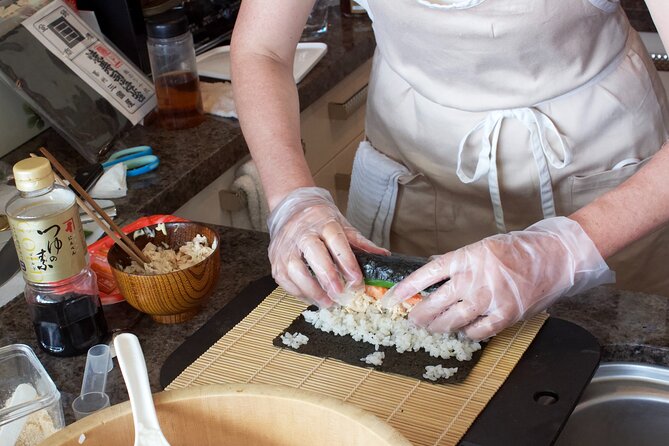
If you want the warm, hands-on experience, choose Classic. The menu is built around three standout dishes: sushi, Japanese pizza, and wagyu steak. Each dish is provided and taught by an experienced home cook, which tends to be where the “why” lives—how Japanese home cooks think about flavor balance, technique, and timing.
Sushi basics that you can use later
Sushi lessons are valuable because they teach structure. Even if you don’t become a sushi chef, you’ll learn how the ingredients and handling affect the final bite. Expect you’ll practice techniques tied to your menu version, not just watch someone do it.
What I like about this for travelers: sushi is one of those foods people order endlessly in Japan, but it’s also hard to cook well without guidance. A class like this gives you a repeatable baseline.
Japanese pizza: fun, practical, and very learnable
Japanese pizza can feel familiar but not identical to what you might expect back home. The class gives you the chance to make it in a way that fits the local style. For me, this is the “instant payoff” dish: once you learn the method, you understand why it works.
If you’re the type who likes food that’s a little playful but still grounded in proper technique, this part is a win.
Wagyu steak: learn technique, not just flavor
Wagyu steak is a big-deal ingredient in Japan, and learning how it’s handled is more useful than you might think. Steak is where people often fail by cooking it the wrong way (timing, heat, and rest). A home-cook-led lesson helps because you’ll usually get practical direction you can apply immediately.
One caution: steak and kitchen tools means you should be ready for active participation. If you’d rather take photos than cook, this may feel like too much work—in a good way, but still.
Premium Omakase: multiple courses with an experienced chef
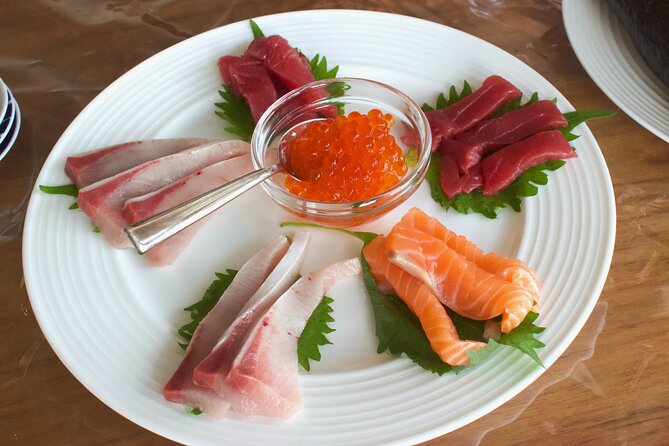
If you want something more special than the basics, go Premium. The Premium class is described as an Omakase experience provided by an experienced chef. Omakase usually means you get a sequence of courses, and this format may include seasonal items or specialized techniques you might not see on a regular menu.
Why Omakase-style classes are worth it
This is about education through pacing. Instead of learning one dish only, you get a broader sweep of Japanese cooking logic—how courses connect, how flavors are adjusted, and how technique shows up across different plates.
It also suits you if you like food as an experience, not just a recipe. You’ll likely come away with more ideas for how to build a full meal at home, not just how to reproduce one item.
The main trade-off
The Premium concept promises more finesse and more courses, which often means the structure can feel a bit more curated. If you’re hoping for a super laid-back, cozy “we all cook together at your speed” vibe, the Classic menu may fit better.
Halal-friendly in practice: what you can expect from the setup
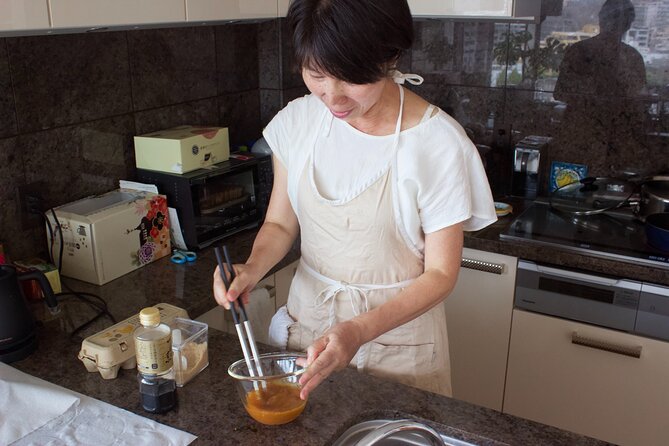
The class is marketed as fully Halal authentic Japanese cooking, which is the headline reason to book. This matters because Tokyo has plenty of food choices, but “Halal-friendly” can range from vague to clearly planned.
Here, the promise is that the cooking environment and menu are built for Halal standards. Practically, that means you can focus on learning technique and tasting the final results without constantly second-guessing whether key ingredients fit your needs.
One thing to do before you go: if you have strict dietary rules, send a quick message when you book. The data says classes can include an Arabic translator request, and that same contact channel is usually the best way to confirm details for your specific situation.
What “3 hours 30 minutes” feels like when you’re actually cooking
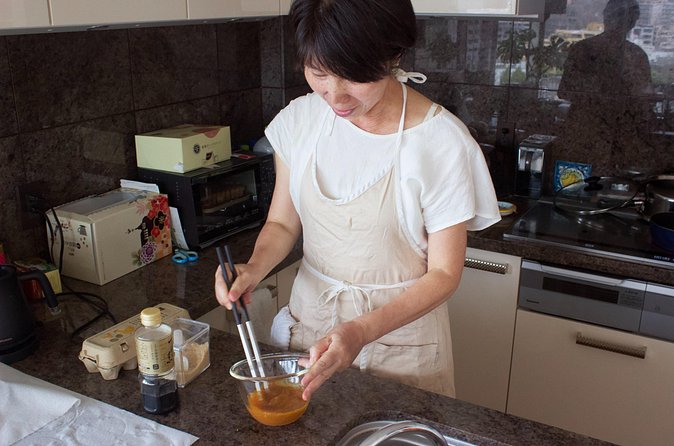
This experience runs about 3 hours 30 minutes and starts at 11:30 am. In real life, that time window is long enough to do more than “sample and leave.” It’s long enough to practice, cook, and sit down together for lunch.
For most people, the rhythm looks like this:
- You arrive and get oriented with the menu and cooking approach.
- You work through the dish or course tasks tied to your selected category (Classic or Premium).
- You eat the results as part of the session, with lunch included.
The big advantage of a mid-day class is that you’re not hunting for lunch afterward. The experience includes lunch, and the ingredients fee is included too.
Aprons, WiFi, and the small comforts that save your day
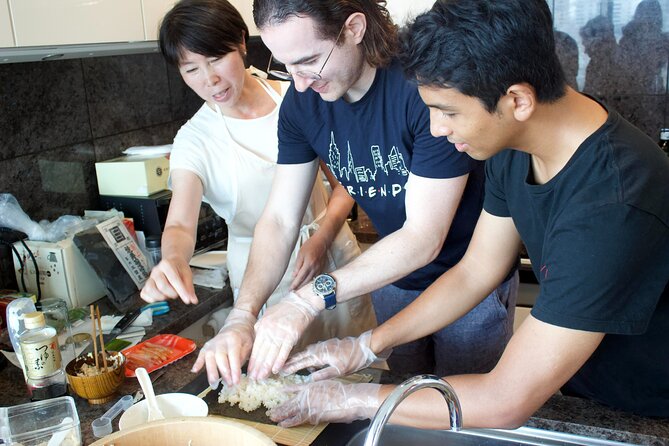
Tokyo is great, but kitchens are messy. If you don’t want your clothes to get dirty, bring your own apron. The info also says aprons can be rented for an extra charge, so either way you’ll be covered—it just depends on how you plan.
You’ll also have WiFi, which is handy if you want to look up a sauce technique later or just share the day’s progress with a friend. (And yes, you’ll probably want to share. Making sushi or a Japanese-style pizza in Tokyo is a story.)
One last comfort: the class has an Arabic Translator option. The sessions are provided in English, and translation can be arranged if you contact them for what you need. If Arabic language support matters for you, don’t assume it’s automatic—confirm it at booking.
Price and value: what $85 buys you beyond the meal
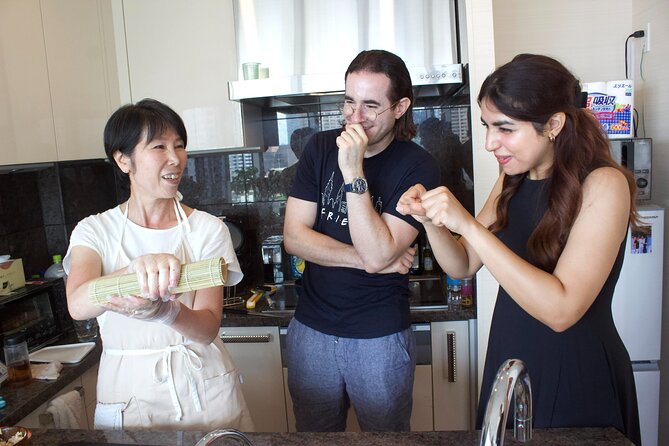
At $85 per person, you’re paying for three things:
- Instruction from a home cook or an experienced chef
- Ingredients (included)
- Lunch (included)
That changes the math versus a typical meal. In many Tokyo food experiences, you pay mostly for eating. Here, you’re paying for the cooking lesson plus the meal—so you’re buying skills and a full lunch in one package.
Classic is the best value if you want practical technique across multiple dishes: sushi + Japanese pizza + wagyu steak. Premium is the better choice if you want the chef-led Omakase structure with multiple courses and potential seasonal or specialized touches.
If you’re price-sensitive, compare the Classic and Premium options directly before booking, because the activity price shown here may or may not vary by menu tier. A quick check can prevent surprises.
Who this works for (and who should think twice)
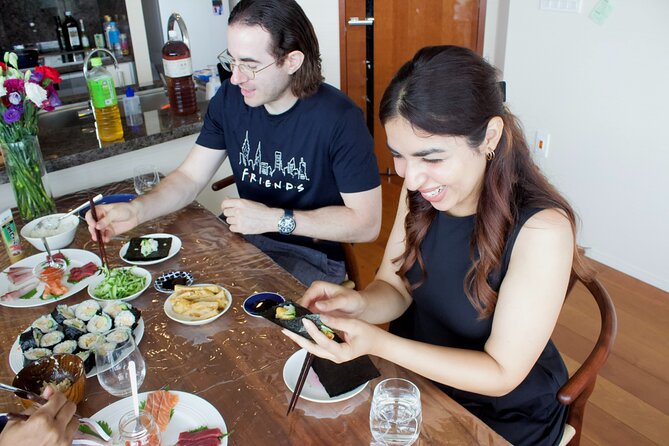
This class fits you best if:
- You want to learn Japanese cooking skills, not just eat
- You’re traveling with dietary needs and want a Halal-friendly setup
- You like small groups and real interaction
- You’re in Tokyo for a short time and want a meal + lesson in one go
You might think twice if:
- You dislike hands-on cooking and want mostly observation
- You’re very strict about staying clean and don’t want to deal with aprons or kitchen mess (bring your own to make this easy)
- You’re expecting a long sightseeing-style itinerary (this is a kitchen experience, not a tour of multiple landmarks)
Should you book this Halal-friendly Japanese cooking class in Tokyo?
Yes, if you want an authentic Tokyo food day with a real learning angle. The combination of small-group size, Halal-friendly format, and included lunch makes this feel like a complete, efficient experience rather than a quick snack-and-watch activity.
Book Classic if you want cozy, home-cook instruction and a clear menu: sushi, Japanese pizza, and wagyu steak. Book Premium if you’d rather be guided through an Omakase-style course flow led by an experienced chef, especially if you enjoy seasonal items and technique-driven cooking.
Just do two prep steps: bring an apron (unless you’re okay renting), and confirm Arabic translation needs early if you want support in that language. After that, you’re set for a very Tokyo experience—hands, knives, and all.
FAQ
FAQ
Where is the cooking class located?
The class meets in Minato City, Tokyo, Japan, and it ends back at the meeting point.
What time does the class start?
The start time is 11:30 am.
How long is the experience?
The duration is approximately 3 hours 30 minutes.
What is included in the price?
Lunch is included, and the ingredients fee is also included.
What dishes are taught in the Classic class?
The Classic menu includes sushi, Japanese pizza, and wagyu steak, provided and taught by an experienced home cook.
What is included in the Premium class?
The Premium class is an Omakase experience provided by an experienced chef, with multiple courses and the possibility of seasonal items or specialized techniques.
Is the cooking class Halal-friendly?
Yes. The class is described as fully Halal and authentic.
Is there a limit on group size?
Yes. The maximum group size is 10 travelers.
Do I need to bring an apron?
If you don’t want your clothes to get dirty, you should bring your own apron. Aprons can be rented for an extra charge.
Is there Arabic translation available?
Classes are provided in English, and an Arabic Translator is available if you contact the provider for those who need it.
Can I cancel for a full refund?
Yes. Free cancellation is available, and you can cancel up to 24 hours in advance for a full refund.