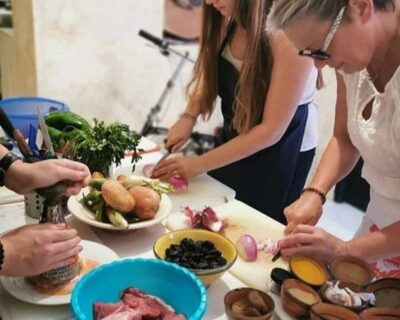
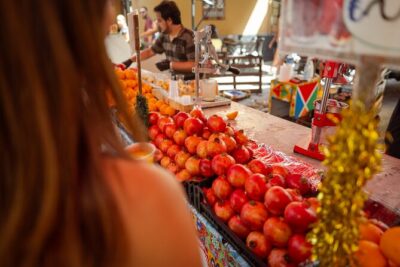
A hilltop kitchen turns pasta into stories. This Tuscan villa class in the Val di Chiana area is interesting because you cook with fresh garden produce and homemade olive oil, then sit down to what you made with local red wine. The only real catch is the location: you’re on a rural hill, so plan how you’ll get there and back.
I like that this feels hands-on from the first minutes, not a watch-and-hope demo. It’s also run by a family team—Chef Dandy leads the lesson, with help from Chef Otelia and others—taught in English. At about 5 hours, it’s a full evening, so wear comfy shoes and keep your hunger dialed up.
In This Review
- Key highlights you’ll care about
- Cooking Class in a Tuscan Villa Near Cortona: The Big Reason It’s Worth It
- The Villa Setting: Val di Chiana Views and a Calm Place to Learn
- Arrival and First Sip: Aperitif, Focaccia, and Olive Oil Tasting
- Hands-On Main Course: Tagliatelle with Tuscan Ragù
- Making tagliatelle the practical way
- The ragu lessons: flavor without shortcuts
- What you should expect when it’s time to eat
- Dessert Workshop: Tiramisu Made the Correct Way (So You Can Repeat It)
- Wine and Olive Oil: How the Pairing Works During the Lesson
- Timing, Pacing, and Group Style in a 5-Hour Evening
- Price and Value: What $203.61 Buys You in Tuscany
- Who Should Book This (and Who Should Think Twice)
- Practical Tips Before You Go
- Should You Book This Cooking Class Near Cortona?
- FAQ
- What will I cook and eat in the class?
- Where does the experience start?
- How long does the cooking class last?
- Is it taught in English, and is it private?
- Can they accommodate allergies or dietary restrictions?
- Are service animals allowed?
Key highlights you’ll care about
- Hilltop setting in Val di Chiana with woodland views (yes, you might spot animals from the property)
- Aperitif plus olive oil tasting right before you cook: spritz and focaccia show up early
- Fresh pasta and Tuscan ragù, made by you: you’ll hand-roll tagliatelle and build the sauce
- Tiramisu taught step-by-step so you can repeat it at home without guessing
- Family-led instruction with Chef Dandy, Chef Otelia, and team members like Sofia and Nina
- A real-feeling meal since you eat what you cook, paired with their red wine
Cooking Class in a Tuscan Villa Near Cortona: The Big Reason It’s Worth It
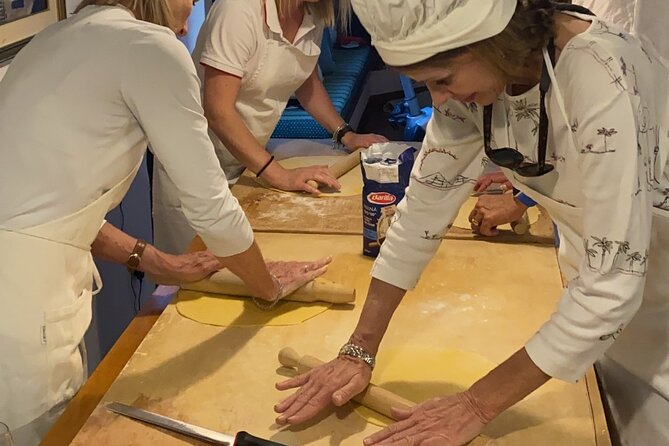
This isn’t the kind of cooking class where you learn a few tricks and move on. You spend the evening actually doing the work: prepping, rolling, cooking, and then eating the finished meal like it belongs on a family table.
I love how the experience anchors itself in local basics. You’re not handed a bag of mystery ingredients. You’re using olive oil from their olive trees, vegetables grown in their garden, and wine they produce locally. It gives the whole night a clear point: traditional Tuscan food tastes like where it’s made.
One thing to consider: you’ll be in a working kitchen. That means expect hands-on mess (very light mess) and a slower rhythm than a timed restaurant meal. If you want fast and flashy, this may feel like the opposite. If you want real technique, it’s perfect.
You can also read our reviews of more tours and experiences in Arezzo.
The Villa Setting: Val di Chiana Views and a Calm Place to Learn
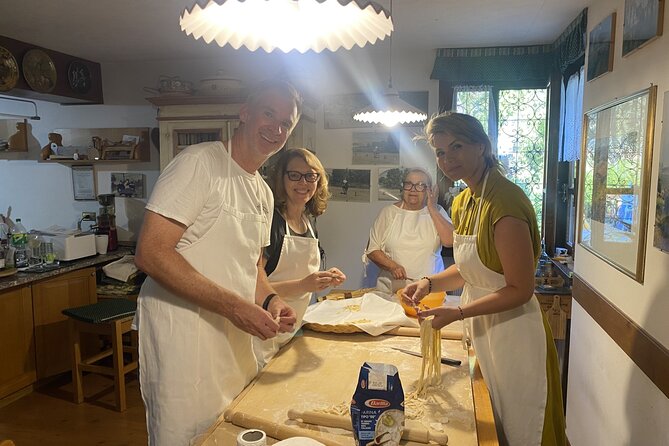
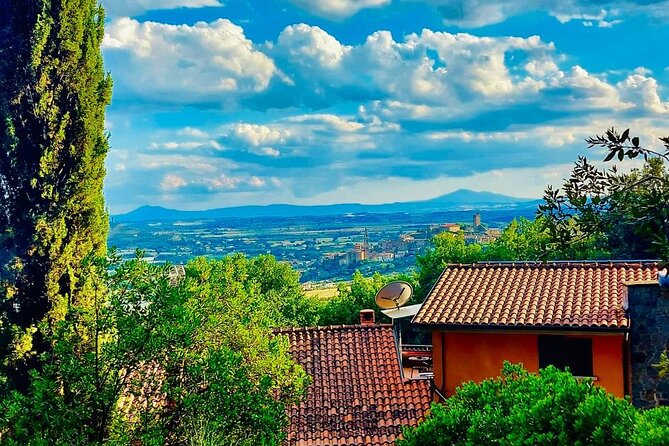
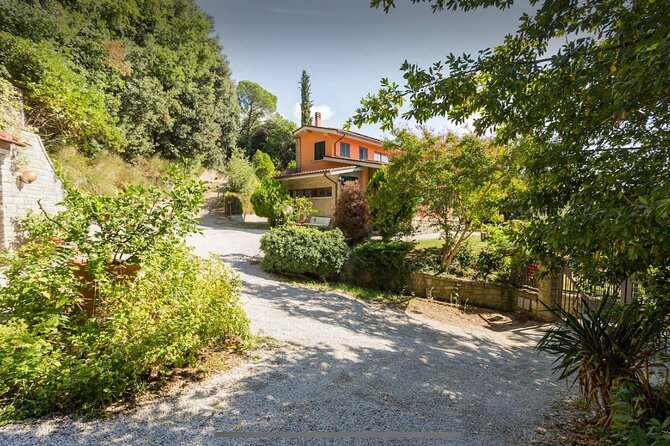
The class takes place in a charming villa on a hill in the Val di Chiana countryside area, near the Cortona side of things. The views are part of the lesson, not an afterthought. During down time, you’re surrounded by woodland, and some of the best moments come from simply looking out while the rest of your group is still cooking.
It also matters that this is hosted at a home on a hill, not a big commercial kitchen. You get a relaxed pace and a “stay awhile” vibe. In practice, that means you’ll have time to ask questions while you’re kneading, rolling, or stirring, instead of feeling like you have to keep up with a race timer.
If you’re prone to motion sickness on winding roads, plan transport carefully. The meeting point is in Castiglion Fiorentino (52043), and getting to a hilltop property usually means curvy local roads.
Arrival and First Sip: Aperitif, Focaccia, and Olive Oil Tasting
Before the flour flies, you start with an aperitif and oil tasting. The sample menu calls for a spritz and focaccia paired with an olive oil tasting. This is a smart warm-up because it sets your taste expectations for the food you’re about to make.
Here’s what I think you’ll enjoy: olive oil isn’t just a condiment in this class. It’s treated like an ingredient with personality. Tasting it early helps you understand why Tuscan cooking leans on simple flavors and good fat instead of heavy sauces or complicated shortcuts.
One practical tip: pay attention to what you taste at the start. The oil you’re tasting now is the same type of local oil that shows up in how the food is handled later. When you cook it yourself, it clicks faster.
Also, if you’re someone who likes to snack while learning, you’ll probably be happy here. Some sessions include little bites while you prep—exact timing can vary, but the vibe is that you’re eating as you learn.
Hands-On Main Course: Tagliatelle with Tuscan Ragù
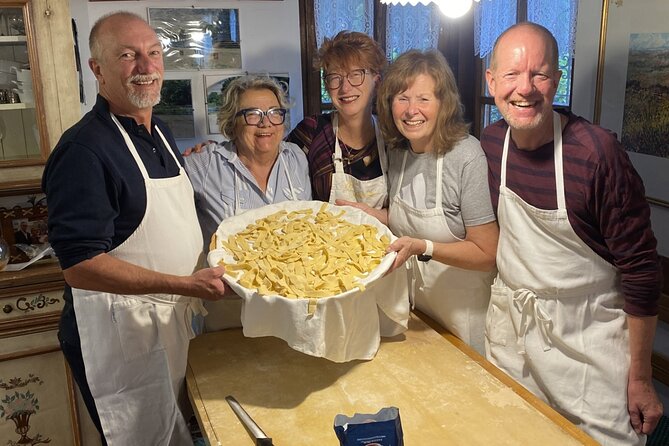
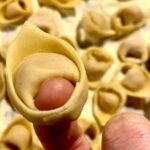
The core of the class is making fresh pasta and a traditional Tuscan ragù. You’ll prepare homemade tagliatelle and the ragu sauce yourself, with the instruction paced for the group.
Making tagliatelle the practical way
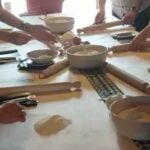
Hand-rolling pasta is where this class earns its value. It forces you to learn technique you can repeat later: how dough should feel, how to shape it, and how to manage your timing so it cooks well.
This is also where the “family teacher” approach pays off. Chef Dandy is known for being patient and helpful, and it matters when you’re learning a tactile skill. You don’t need to be a confident cook. You need to be willing to try.
The ragu lessons: flavor without shortcuts
The ragù is the other main win. You’re taught traditional technique and how to build flavor without overcomplicating it. Instead of adding extra ingredients to mask taste, you learn how to get depth through proper cooking and correct balance.
If you want a takeaway you’ll use at home, this is it. Restaurant pasta often tastes great, but it can also feel generic. Ragù made the traditional way gives you something more personal—like the kind of sauce that tastes better the next day because the flavors have time to settle.
What you should expect when it’s time to eat
After cooking, you sit down and enjoy the meal you made: tagliatelle with ragù. Expect it to feel like dinner, not like a class cafeteria.
And if your group is larger, it may be split into smaller cooking teams at times so the instructor can actually guide everyone. One session was described as having a total class size of 16 people, managed by splitting into two smaller working groups.
Dessert Workshop: Tiramisu Made the Correct Way (So You Can Repeat It)
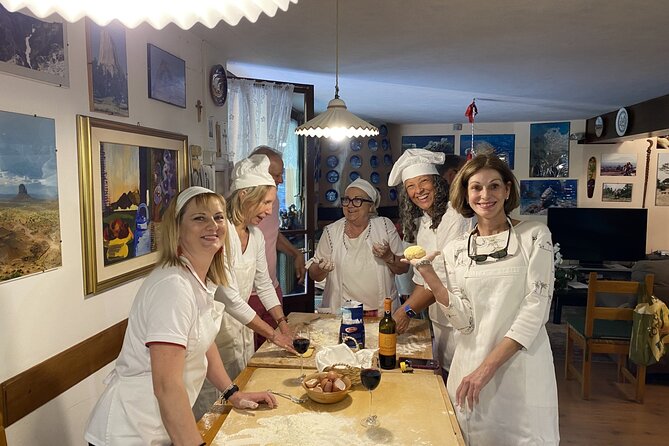
Dessert is tiramisu, and you’ll make it yourself. This is a huge deal because tiramisu is one of those desserts people think they understand—until they taste a version made with correct method.
The class approach focuses on the steps so the dessert turns out right, not just once. Many people come away saying they don’t want restaurant tiramisu after learning the method here. That usually comes down to texture, flavor balance, and how the components are handled.
It’s also a good way to end the night because it wraps up the theme of the whole experience: simple ingredients, handled well, using technique instead of shortcuts.
Wine and Olive Oil: How the Pairing Works During the Lesson
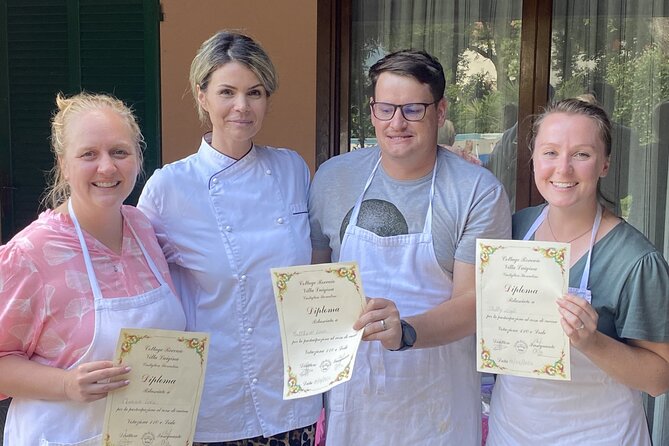
Wine shows up early and keeps going. You’ll sip red wine produced by a local farmer, and in practice the hosts’ homemade wine shows up as part of the experience. Some people even describe it as bottomless, which tells you the evening has a steady flow rather than a single token pour.
Olive oil tasting is part of the same idea. You’re learning food culture by tasting it while you cook. When your sauce hits the pan and you already know how their oil tastes, the cooking feels more confident.
Just keep one reality in mind: wine is part of the meal. Plan to relax afterward. If you’re driving yourself, think twice. If you’re using a driver or public transport, give yourself a little buffer time.
Timing, Pacing, and Group Style in a 5-Hour Evening
The lesson runs about 5 hours. In some cases it can run closer to 5.5 hours. That’s a comfortable length: long enough for you to learn real skills and eat properly, not so long that it becomes tiring.
Pacing tends to be unhurried. You’re not constantly doing the next task. There are moments where you pause, talk, taste, and reset. That matters because pasta and sauces reward attention. Rushing tends to ruin texture.
This is also a private class. Only your group participates. In real terms, that usually makes the experience feel less like a factory line and more like your own cooking night in Tuscany.
Instruction is in English. The team may also use other languages, but English instruction is part of the offering. If you’re traveling with someone less comfortable with Italian, that’s a big plus.
Price and Value: What $203.61 Buys You in Tuscany
At $203.61 per person for about 5 hours, this isn’t a cheap activity. But it’s also not just a meal.
You’re paying for:
- Hands-on instruction in fresh pasta and traditional ragù
- Ingredients and tastings included in the experience style (olive oil tasting, aperitif)
- A full meal plus dessert, meaning you’re not separately budgeting for dinner afterward
- Local wine paired with the evening
- A setting you can’t fake at home: a hilltop villa in the Val di Chiana area
In other words, the cost covers the whole experience. If you love cooking, you’ll feel it was worth it because you’re leaving with technique. If you just want to eat well with no interest in learning, you might question the price. But if you’re the kind of traveler who likes to come home with something you can cook again, this class is built for that.
Who Should Book This (and Who Should Think Twice)
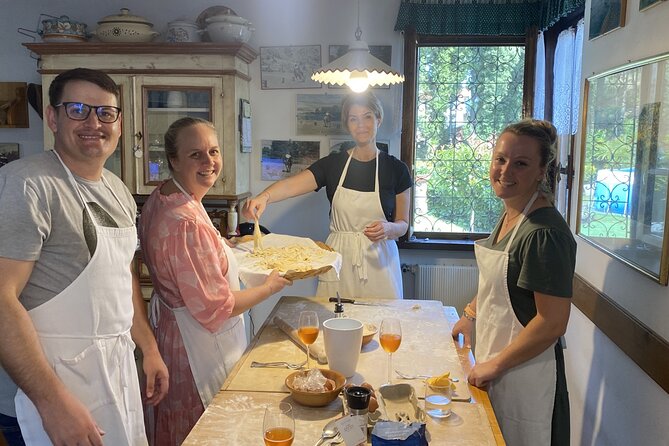
This class is a strong fit if you:
- Want traditional Tuscan cooking skills you can reproduce
- Love local food culture: olive oil, wine, garden vegetables
- Prefer a family-run feel over big group spectacle
- Enjoy hands-on activities where you get to eat what you make
You might want to reconsider if you:
- Have very tight mobility limits. (It’s a home setting on a hill, and the experience includes working in the kitchen.)
- Are looking for a quick, easy, sit-down-only event. This is a do-it-yourself meal.
- Don’t want wine at all. Wine is part of the experience, and it can shape the mood of the evening.
Practical Tips Before You Go
- Wear comfortable shoes. You’re on a hill, and you’ll be moving around a bit.
- If you have allergies or dietary restrictions, tell the hosts when you book. They ask you to let them know, and at least one guest shared that gluten-free needs were handled with special attention.
- Bring a good appetite and some patience. Pasta dough and sauce don’t like panic.
- If you’re coming from the Cortona side, you may find transportation options via the host. One guest arranged transport from Cortona with Chef Dandy, with the father driving.
Should You Book This Cooking Class Near Cortona?
Yes, I’d book it if you want a real Tuscan evening with food you learn to make, not just food you consume. The combination of hands-on pasta, a proper ragù lesson, and tiramisu training is what turns this into a memory you can cook again later.
If you’re on the fence, decide based on one question: do you enjoy learning through doing? If the answer is yes, this is a very strong choice for the Arezzo and Cortona area.
FAQ
What will I cook and eat in the class?
You’ll make fresh pasta and a traditional Tuscan ragù, plus a traditional Italian dessert: tiramisu. The starter includes an aperitif with spritz and focaccia, along with an olive oil tasting.
Where does the experience start?
The class starts at 52043 Castiglion Fiorentino, Province of Arezzo, Italy, and it ends back at the meeting point.
How long does the cooking class last?
The experience lasts about 5 hours (approx.).
Is it taught in English, and is it private?
Yes, the class is offered in English. It is also private, meaning only your group participates.
Can they accommodate allergies or dietary restrictions?
They ask you to let them know about allergies or dietary restrictions. If you have specific needs, contact them and share details so they can try to accommodate.
Are service animals allowed?
Yes, service animals are allowed.