REVIEW · WARSAW
Flavours of Polish Christmas: 4 course dinner + cooking class
Book on Viator →Operated by Maria Oskroba · Bookable on Viator
Christmas in Warsaw tastes like home.
This December-only-style experience turns a Polish Christmas dinner into a hands-on cooking night with pierogi at the center—guided by Maria Oskroba and her team. I like that you learn real technique (dough, rolling, folding) and then eat what you make, and I love that the meal comes with specific Polish Christmas traditions you actually practice at the table. One thing to consider: the dinner includes a fish starter, so if you’re vegetarian or vegan, you’ll need to skip that portion.
You’re not crammed into a big group either. With a maximum of 10 travelers, it feels more like a small family workshop than a classroom, and the evening runs about 2 hours 30 minutes starting at 5:30 pm. The only real drawback is also the nature of the experience: you’re busy from start to finish, so it’s not the best fit if you want a slow, sightseeing-style evening.
In This Review
- Key highlights you’ll feel right away
- Warsaw at 5:30 pm: why this feels like the real deal
- The 4-course Christmas menu: what you’ll actually eat
- The pierogi class that teaches technique, not just shapes
- Polish Christmas traditions you’ll practice at the table
- Drinks included: liqueur tasting without the pressure
- Small group size in Warsaw: why max 10 changes everything
- What you take home: recipes, photos, and the dumpling confidence bonus
- Price and value: is $120.52 really fair?
- Practical tips so you enjoy it fully
- Who this Warsaw Polish Christmas class is best for
- Should you book Flavours of Polish Christmas?
- FAQ
- What is the duration of Flavours of Polish Christmas in Warsaw?
- What time does the class/dinner start?
- Where does it meet in Warsaw?
- How many people are in the group?
- What will I learn to cook during the class?
- What dishes are included in the 4-course dinner?
- Is there an option for vegetarian or vegan diners?
- Are drinks included?
- What take-home materials are included?
- Can I cancel and get a refund?
Key highlights you’ll feel right away
- Pierogi from scratch: knead dough, roll it out, fold like a pro, and learn tasty shortcuts
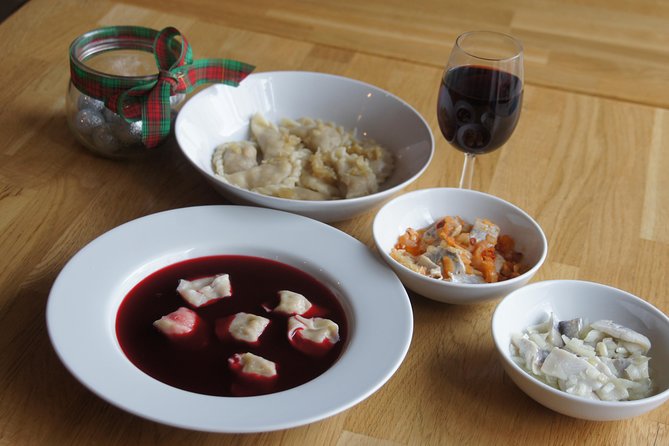
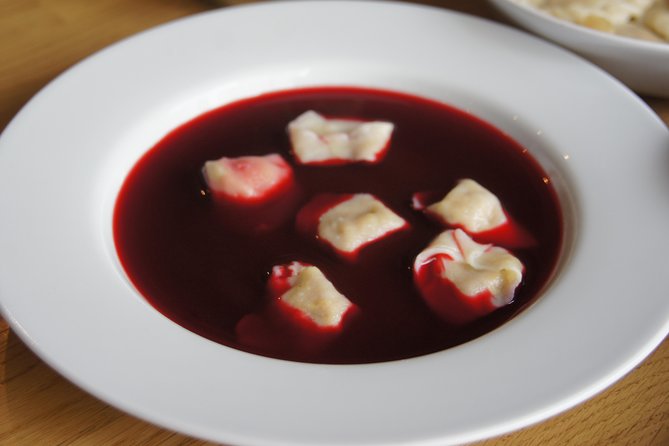
- A true 4-course Christmas meal: beetroot soup with mushroom dumplings, plus more festive favorites
- Polish Christmas traditions at the table: breaking wafers and setting an extra plate
- Drinks included: liqueur tasting, with a soft drink option
- Small group energy (max 10): plenty of attention while you cook
- Take-home value: English recipe booklet and a link to class photos
Warsaw at 5:30 pm: why this feels like the real deal
If you’re in Warsaw in December and you want something more meaningful than another generic dinner, this kind of class works. It starts in the early evening (5:30 pm), so you still get your night in the city after. And because it’s built around Christmas food, the timing matters: you’re eating the flavors people actually treat as special.
What makes it feel authentic is the structure. You don’t just watch someone else cook. You get step-by-step instruction, then the group sits down together to eat a 4-course Christmas dinner. That combo is the whole point: learning plus eating, all in one evening.
The venue is called PIEROGI & MORE warsztaty kulinarne, in central Warsaw (Stawki 3, 00-193). It’s also near public transportation, which is a practical win when winter roads and tram connections are doing their own thing. Bring your curiosity, and come hungry—you’ll use both.
You can also read our reviews of more tours and experiences in Warsaw.
The 4-course Christmas menu: what you’ll actually eat
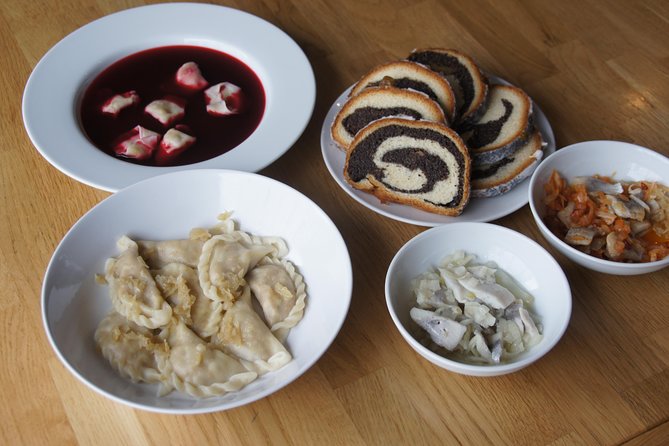
The dinner is built around the dishes people associate with Polish Christmas. The overview explains an important detail: almost all of the dishes served on that day are cooked only once a year. That’s why this menu feels like more than a “comfort food” event. It’s festive food with a one-season attitude.
Here’s what you can count on tasting:
Course 1: beetroot soup + mushroom-stuffed dumplings
You’ll taste beetroot soup, served with mushroom stuffed dumplings. In Polish Christmas cooking, small dumplings are a common move in soups—light enough for the dish, but hearty enough to feel like a proper celebration.
Pierogi-making moment: sauerkraut filling
You’ll make pierogi (traditional dumplings) with a vegetarian filling: sauerkraut. This isn’t a “form a few and call it a day” situation. The class focuses on dough handling and folding technique, so you’re learning how the dumplings hold their shape and flavor.
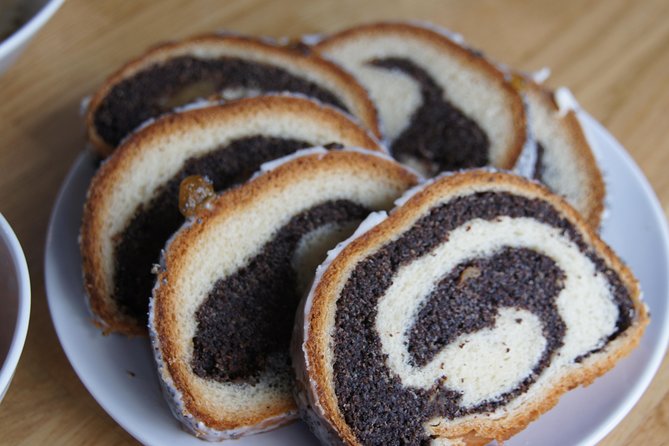
Dessert: poppy seed cake
You’ll finish with a festive poppy seed cake. Poppy seed shows up a lot in Polish holiday baking because it’s flavorful, keeps well, and feels like winter comfort. If you usually skip dessert, this is one worth making room for.
And a fish starter is included
One practical note from the experience info: they serve fish as a starter. The good news is that you can skip this dish if you’re vegetarian or vegan. The rest of the meal is part of the experience, and the core cooking is dumplings with sauerkraut.
Even if you’re not a “food tourist,” this menu makes it easy to taste a complete Polish Christmas meal rhythm: soup, dumplings, and a serious dessert finish.
The pierogi class that teaches technique, not just shapes
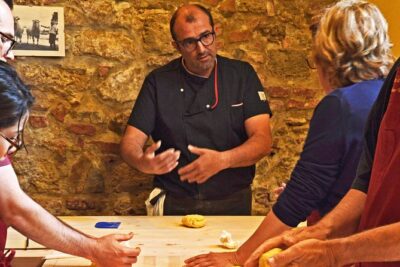
The heart of the evening is the dumplings class. After a short introduction, you’ll learn how to prepare dumplings with vegetarian filling—sauerkraut. Then you’ll work through the steps in a way that actually helps you cook later at home.
This is what the class focuses on:
Dough work (the make-or-break step)
You’ll learn how to knead the dough and then roll it out properly. Dumpling dough is forgiving, but only if it’s handled right. Overwork it and it gets tough. Roll it wrong and the dumplings become uneven.
Folding technique and consistency hacks
You’ll practice various techniques of folding the dumplings. The experience also mentions “hacks” that make them really tasty. Translation: you’ll get practical tips that go beyond plating and into flavor and texture—things you can repeat in your own kitchen.
Cooking methods that match the dish
You’ll also learn the dumpling-making process as a system, not a single trick. The goal is that when you go home, you can recreate the dumplings with confidence instead of guessing.
A big reason people rate this so highly is that you’re not just doing one tiny task. You’ll handle the dough, learn the folding, and then eat the results. That’s how you leave with both a full stomach and a new skill.
Polish Christmas traditions you’ll practice at the table
Food is the headline, but the experience also includes Polish Christmas traditions that you learn alongside the cooking. And importantly, they’re interactive—not just a lecture while everyone politely snacks.
You’ll get a handout with Polish Christmas traditions and hear stories as the evening unfolds. Two specific traditions mentioned in the experience details are:
Breaking wafers
This is part of the holiday ritual rhythm in some Polish Christmas celebrations. Doing it in a guided way helps you understand that these are symbolic actions tied to the season.
Setting an extra plate
You’ll also learn about the tradition of placing an extra plate at the table. It’s one of those customs that makes Christmas feel communal and thoughtful, like the table is meant to include more than the people already sitting there.
Some groups also describe a warm, family-style mood, with the evening feeling social and cheerful. If the group energy is good, you may find yourselves singing carols together at the table—because this kind of workshop often turns into a little celebration, not a rigid class.
Drinks included: liqueur tasting without the pressure
A full 4-course dinner is usually enough. Here, they also include a tasting of traditional Polish liqueurs (or a soft drink option). For people who don’t drink much, it’s a manageable way to try something local without committing to a heavy night.
This matters for value. You’re getting the meal, the class, and a cultural tasting element in one package. You can treat the liqueur tasting as part of the storytelling—small sips while you learn what’s going on at the table—rather than it turning into a separate bar stop.
Small group size in Warsaw: why max 10 changes everything
With a maximum of 10 travelers, you get something most big food tours don’t: attention. You’re more likely to get real feedback on what you’re doing with the dough, how you’re folding, and what to fix if something looks off.
It also changes the vibe. Instead of split-second photos and quick turns, you end up sitting together at a big family-style table. That group table dynamic is where a cooking evening starts to feel special—you share the same pace, the same smells, and the same moment of tasting what you made.
If you’re traveling solo, it’s also easier to connect. You’re not hiding behind a large crowd. If you’re going with friends or family, it’s a fun way to do “an activity” that still ends with a proper dinner.
What you take home: recipes, photos, and the dumpling confidence bonus
Food experiences should give you something that lasts longer than the meal. Here, you do.
You’ll receive:
- An English recipe booklet so you can recreate the dishes later
- A link to pictures taken during the class
- A handout with Polish Christmas traditions
That recipe booklet is especially valuable because dumpling dough and filling balances matter. After the class, you’ll remember technique in a more useful way—like you know what dough should feel like, not just what it looked like once plated.
And if you’ve ever made dumplings at home that turned out wrong, you’ll appreciate the value here: you learned the steps from someone who’s explaining why things work, not only what to do.
Price and value: is $120.52 really fair?
At $120.52 per person, this isn’t a bargain-basement workshop. But the structure explains the price.
You’re paying for four things:
1) A hands-on cooking class (pierogi with dough + folding technique)
2) A 4-course dinner built around Polish Christmas dishes
3) Included drinks, including liqueur tasting (or soft drink)
4) Take-home materials: English recipe booklet, traditions handout, and class photo link
In Warsaw, when you price out a dinner plus a guided activity, the math gets closer. And because this is capped at 10 people, you’re not getting scaled-up volume. You’re getting a guided small-group experience with a lot of work time in the kitchen.
Also, the fact that it runs only during the Christmas season (December only style) adds to its appeal. It’s not something you can replicate anytime you find yourself hungry for dumplings. It’s built for the moment.
If you care about value in experiences, this is the kind that leaves you with both a meal and a skill you can use again.
Practical tips so you enjoy it fully
A few things make this smoother:
Go with empty room in your stomach
The class is active, and the dinner is a real sit-down. Don’t plan a heavy snack beforehand.
Know the vegetarian note
The dumpling filling is vegetarian (sauerkraut). But there’s a fish starter included. If you’re vegetarian or vegan, you can skip that dish.
Plan your winter travel time
Even though it’s near public transportation, December schedules can be slower. Build in time so you’re not rushing when you should be focused on dough and folding.
Arrive early enough to settle
Start time is 5:30 pm and the experience ends back at the meeting point. Since it’s a compact evening, being late can throw off your pace.
Bring curiosity about traditions
The traditions part—breaking wafers, setting an extra plate—adds a cultural layer that’s easy to miss if you only come for the food. If you’re the type who likes to understand meaning, you’ll enjoy this.
Who this Warsaw Polish Christmas class is best for
This is a strong fit if you want:
- A hands-on food experience (not just tasting)
- A way to learn Polish Christmas culture through real actions at the table
- An evening activity that works well for visitors who want a memorable, local-style night
- A small group experience in Warsaw (max 10)
It’s also great for couples and friends, because you can collaborate while cooking and then enjoy the results together.
Who might consider alternatives: if you don’t eat fish, you’ll need to skip that starter (not a dealbreaker, but plan for it). And if you prefer long, unstructured sightseeing evenings, this is more structured and kitchen-focused than “walk around town.”
Should you book Flavours of Polish Christmas?
If you’re in Warsaw during December and you like the idea of learning a classic dish properly, I think you should book it. The combination is hard to beat: pierogi technique + a real 4-course Christmas dinner + Polish traditions in one evening. And because the group is small, it’s not just a ticket—it’s time with someone guiding you through steps you’ll remember.
Book it especially if:
- You want more than a meal out
- You want a recipe and something you can repeat at home
- You enjoy holiday customs as part of the experience, not just background info
Skip it if:
- You want a casual, slow night with no kitchen work
- You strongly prefer vegetarian/vegan dining with no fish at all (since fish is served as a starter)
If you do book, do one thing: bring an appetite and a willingness to get flour on your hands. That’s where the fun is.
FAQ
What is the duration of Flavours of Polish Christmas in Warsaw?
The experience is approximately 2 hours 30 minutes.
What time does the class/dinner start?
It starts at 5:30 pm.
Where does it meet in Warsaw?
The meeting point is PIEROGI & MORE warsztaty kulinarne, Stawki 3, 00-193 Warszawa, Poland.
How many people are in the group?
The maximum group size is 10 travelers.
What will I learn to cook during the class?
You will learn how to make pierogi, including kneading the dough, rolling it out, and different folding techniques, with a vegetarian sauerkraut filling.
What dishes are included in the 4-course dinner?
The experience includes beetroot soup with mushroom stuffed dumplings, pierogi with sauerkraut, and poppy seed cake. A fish starter is also included.
Is there an option for vegetarian or vegan diners?
If you are vegetarian or vegan, you can skip the fish starter dish. The dumpling filling taught in the class is vegetarian (sauerkraut).
Are drinks included?
Yes. There is a tasting of traditional Polish liqueurs, and a soft drink option is included.
What take-home materials are included?
You receive an English recipe booklet, plus a handout with Polish Christmas traditions, and a link to pictures taken during the class.
Can I cancel and get a refund?
No. The experience is non-refundable and cannot be changed for any reason.