REVIEW · SAN GIMIGNANO
Golden Grains & Gourmet Pasta Cooking Class
Book on Viator →Operated by Podere La Marronaia- Sosta Alle Colonne · Bookable on Viator
You can smell the countryside before you start. This 3-hour cooking class at Podere La Marronaia near San Gimignano is built around a simple thrill: you grind organic grain yourself, then turn it into pasta in a rustic kitchen with vineyards and olive groves all around.
I especially like the teaching style. You get hands-on guidance from the chef team at this family-run estate, and the experience is designed so novices can keep up—even when you’re kneading, rolling, and shaping pasta for the first time.
One thing to think about before you book: at $378.16 per person, it’s not a casual, low-cost activity. If you’re mainly shopping for value on time spent eating, compare it with longer cooking experiences in the area.
In This Review
- Golden Grains & Gourmet Pasta: the highlights that matter
- Arriving at Podere La Marronaia outside San Gimignano
- Milling organic grain: the most memorable part of the lesson
- From dough to dinner: shaping pasta and making the sauces
- Eating the results: what the meal time feels like
- Estate tasting: organic and biodynamic wine plus olive oil and balsamic
- Price and value: why $378.16 makes sense here (and when it doesn’t)
- Who should book this class in San Gimignano?
- Practical tips before you go (so you can enjoy the day)
- Should you book Golden Grains & Gourmet Pasta?
- FAQ
- Where does the cooking class start?
- How long is the Golden Grains & Gourmet Pasta cooking class?
- What’s included in the experience?
- Is the class suitable for beginners?
- How many people are in a group?
- Do I get to take part in milling the grain?
- What’s the ticket format?
- When will I receive confirmation?
- Is free cancellation available?
- FAQ
- Are service animals allowed?
- Is it near public transportation?
Golden Grains & Gourmet Pasta: the highlights that matter
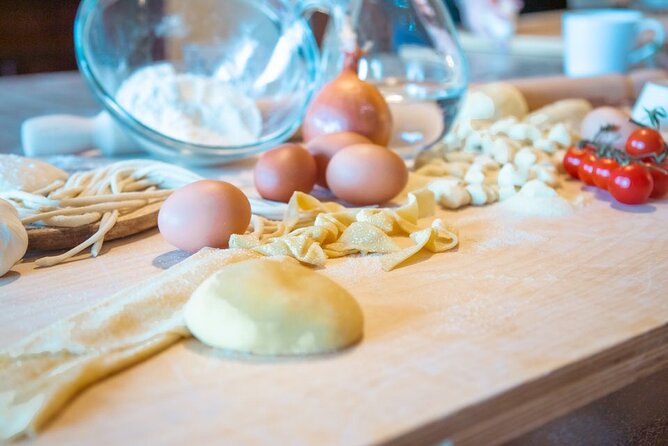
- You mill 3 types of organic grain using their table mill, so you understand pasta at the source.
- You learn multiple pasta shapes and techniques, not just one quick dough trick.
- Sauces use fresh local ingredients, so your dinner tastes like Tuscany rather than like a lesson.
- Wine and olive oil tasting is built into the meal, including estate organic and biodynamic wines plus extra-virgin olive oil and balsamic vinegar.
- Small group size (max 6) keeps instruction personal.
- Chef Leonardo is noted for patience, which matters if you’re nervous in the kitchen.
Arriving at Podere La Marronaia outside San Gimignano
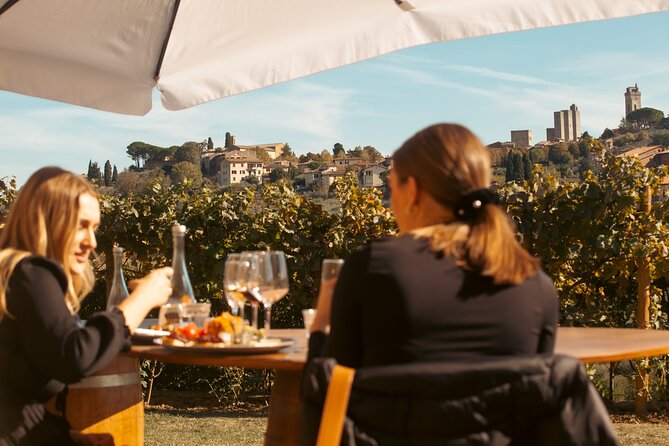
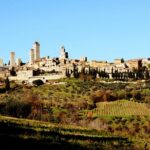
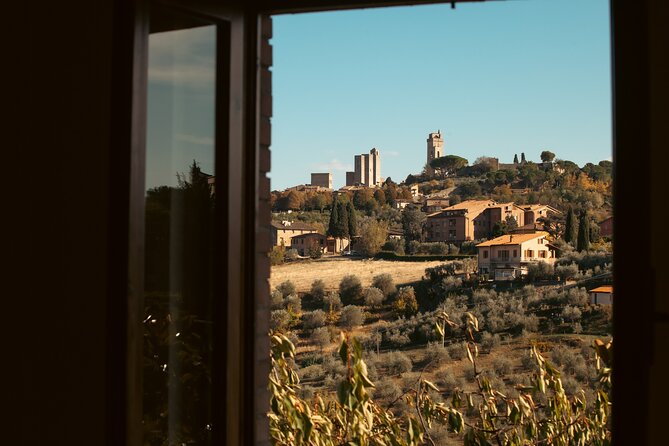
The first thing you’ll notice is the setting. This class takes place at a family estate, Podere La Marronaia (Sosta Alle Colonne), in the countryside just a short walk from San Gimignano’s historic center. You’re not stuck in a commercial studio. You’re cooking where the farm life is part of the day—vineyards in the background, olive trees nearby, and views of the town in the distance.
The meeting point is Via Martiri di Citerna, 2, 53037 San Gimignano SI. The activity ends back there, so you’re not planning a confusing second pickup or transfers after your meal.
This format also supports small-group cooking. With a maximum of 6 people, you’re more likely to get real attention when dough gets sticky or questions pop up. In a bigger class, you’d wait your turn and hope for help. Here, the pace feels steadier.
You can also read our reviews of more tours and experiences in San Gimignano.
Milling organic grain: the most memorable part of the lesson
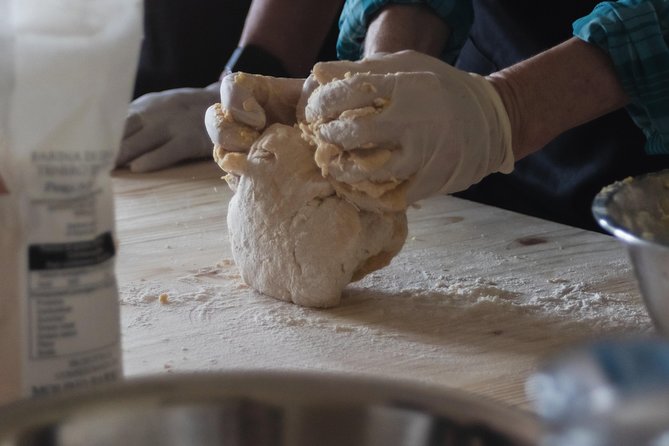
Most pasta classes start at flour. This one starts earlier—at the grain. You’ll mill three different kinds of organic grains using the estate’s table mill. It sounds simple, but it changes your understanding fast.
When you grind the grain yourself, you connect a few dots that are hard to “get” from watching:
- what pasta dough actually feels like before it’s smooth
- why the grain choice affects the dough and the final texture
- how much effort “from scratch” really means in real hands
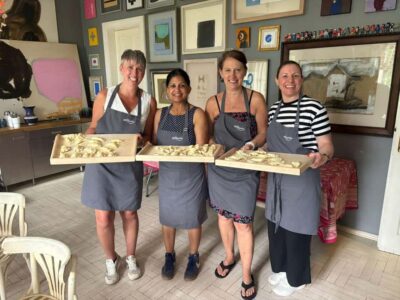
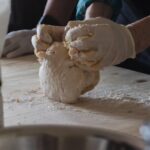
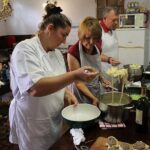
After milling, you move through the core techniques: kneading, rolling, and shaping traditional Tuscan pasta. The class is hands-on from the start, and it’s built for all skill levels. If your cooking experience is limited, that matters. You’ll still do the work; you’re just doing it with step-by-step guidance.
I like that the class doesn’t treat the pasta as a single task. You’ll shape different varieties, which gives you variety on your plate and variety in your skills. By the time you sit down to eat, you’re not thinking, Now what do I do with this ball of dough?
From dough to dinner: shaping pasta and making the sauces
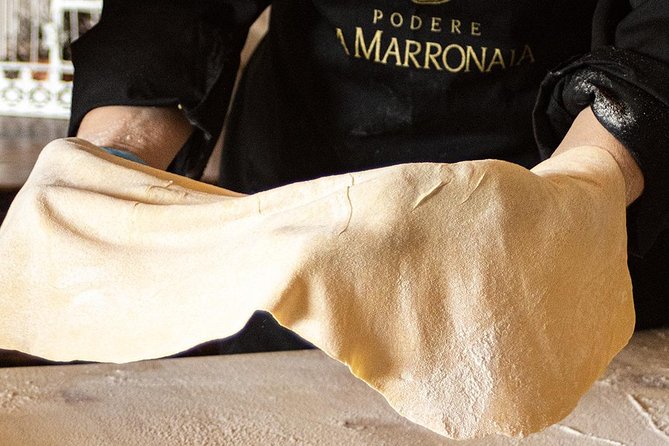
The heart of the class is the pasta work itself. You’ll learn how to knead properly, how to roll dough without it turning into an uneven sheet, and how to shape pasta into forms you’ll actually recognize on a plate.
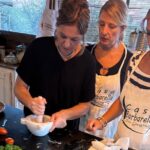
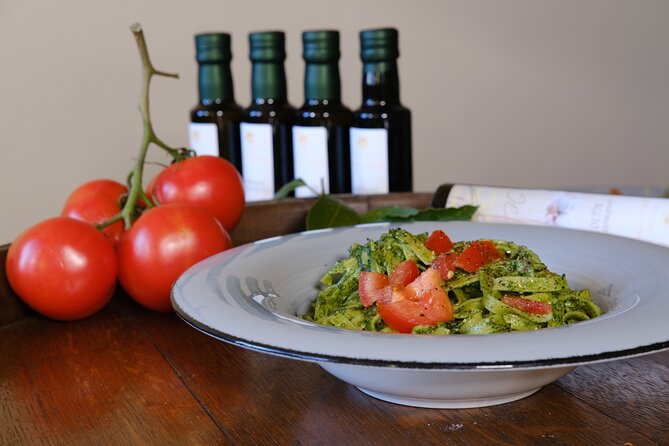
Then comes the part many classes gloss over: sauces. You’ll prepare authentic sauces using fresh local ingredients that complement your pasta. This is where your meal stops being “pasta you made” and becomes dinner you understand.
Here’s why that matters for your takeaway. If you only learn dough, you’ll still be guessing at the pairing once you’re home. When you make sauce alongside the pasta, you learn the logic of a Tuscan meal: pasta is the vehicle, but the sauce is what gives it direction.
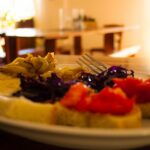
And yes, you may also get to make bruschetta-style bites as part of the experience. One thing people tend to remember is that the class doesn’t feel like pasta alone—it’s a fuller meal experience, the kind you’d actually serve to friends.
Eating the results: what the meal time feels like
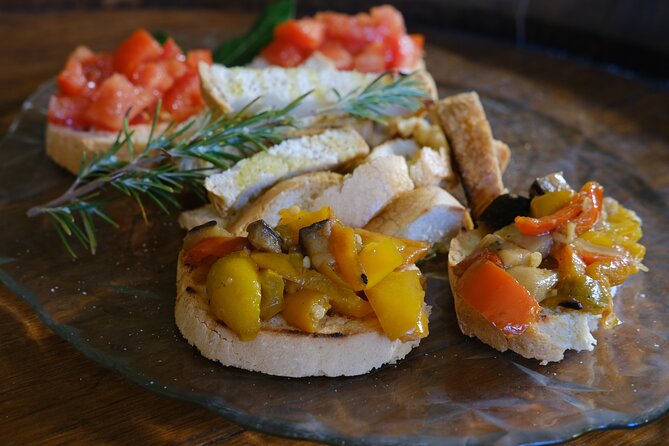
Once you finish cooking, you eat what you made. That sounds obvious, but in a lot of hands-on classes, the food becomes a takeout situation or a fast pass. Here, there’s a relaxed post-cooking break in a charming setting.
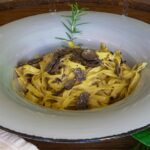
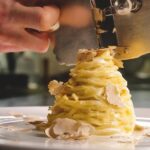
You’ll sit down with your handmade pasta dishes and sauces, and you’ll get to enjoy the meal at a tempo that lets you taste properly. That pacing matters. If you rush through dinner, you don’t notice the difference between good dough and great dough. You don’t notice how sauce thickness changes with ingredients.
Also, because the group is small, the dinner moment doesn’t feel crowded or performative. It feels like you’re sharing dinner with a table full of people who are in the same phase—still talking about the dough, still learning.
Estate tasting: organic and biodynamic wine plus olive oil and balsamic
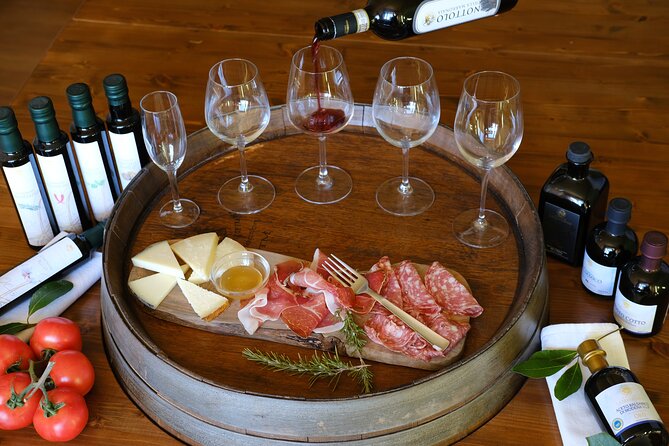
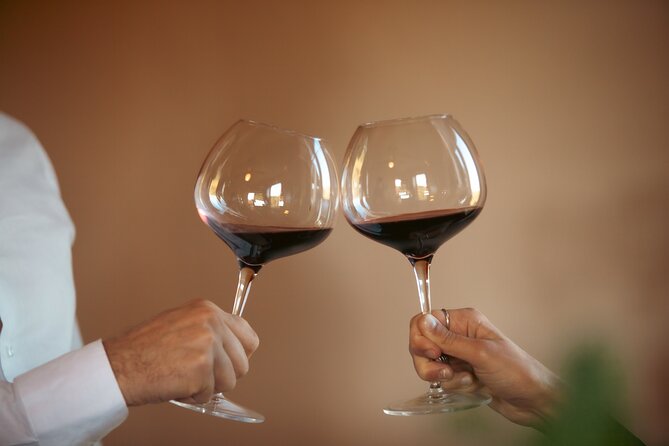
This class includes tastings from the estate: organic wines and biodynamic wines, extra-virgin olive oil, and balsamic vinegar. This isn’t just a token pour at the end. It’s integrated into the meal experience, so you can connect flavors to what you cooked.
What I like about adding olive oil and vinegar is that it teaches you how Italian eating balances richness and brightness. Olive oil isn’t only for drizzle—it’s also part of the “architecture” of flavor. Balsamic vinegar brings a sweet-tart note that can change how sauce tastes on the pasta.
The wine pairing also gives context for the menu. Even if you don’t consider yourself a wine person, tasting helps you notice things like aroma and acidity that make food taste more vivid. The estate approach—organic and biodynamic—adds another layer, because you’re tasting what the farm chooses to grow and how it’s farmed.

Price and value: why $378.16 makes sense here (and when it doesn’t)
At $378.16 per person, this class costs more than a basic pasta course you might find in a major city. So you should ask: what are you paying for?
You’re paying for a few real upgrades:
- Grain-to-pasta instruction, including milling 3 organic grains on a table mill (not just working with pre-made flour).
- A family-run estate setting with countryside views near San Gimignano.
- Small-group teaching (max 6), which reduces the “waiting around” problem.
- Estate products included with the meal: organic and biodynamic wines, extra-virgin olive oil, and balsamic vinegar.
You’re also paying for something harder to measure: instruction quality that helps beginners succeed. Chef Leonardo gets mentioned for patience, and that’s the kind of detail that can make or break a first-time cooking experience.
When might it not be a fit? If you’re on a tight budget, or if your main goal is simply eating a Tuscan meal without a hands-on workshop, the price will feel steep. In that case, you’d probably get more satisfaction from a lower-cost meal option and a different kind of activity that stretches your time.
But if you want a structured, farm-based cooking session with actual technique—and you care about tasting the estate products—you’re paying for value, not just for the fact that it’s “Italy.”
Who should book this class in San Gimignano?
This experience is best for you if:
- you want a hands-on Tuscan cooking lesson rather than a quick demonstration
- you’re a beginner and want patient coaching while you knead and shape dough
- you love food that comes with a story—grain, farm products, and local ingredients
- you enjoy a small-group vibe where you can ask questions and get attention
It’s also a strong choice if you’re already spending time in San Gimignano and want to balance sightseeing with something practical and memorable. This class pairs well with a day of walking the medieval lanes, then ending with dinner made from scratch outside town.
One caution: the class lasts about 3 hours. If you’re hoping for a longer “full day on the farm,” this may feel short. On the flip side, the timing is a good size for a busy itinerary.
Practical tips before you go (so you can enjoy the day)
A few small things help you get the most out of the experience:
- Wear clothes you’re comfortable getting flour on. Even careful rolling gets messy.
- Plan to walk to and from the meeting point near San Gimignano’s center. The estate is close enough to be convenient.
- Go in hungry, because you’ll be cooking and then eating what you make.
- If you’re nervous about cooking, treat that as normal. This is designed for all skill levels, and the chef guidance is a big part of the appeal.
If you’re sensitive to alcohol, keep in mind there is a tasting component with estate wines. You can still enjoy the olive oil and balsamic tasting if you prefer to keep it light.
Should you book Golden Grains & Gourmet Pasta?
Book it if you want a genuine Tuscan cooking class that starts with the grain, not just the flour—and if you value small-group instruction plus estate tastings as part of the meal. This is the kind of experience where the work you do in the kitchen directly shapes what you taste at the table.
I’d skip it if you’re mainly chasing a budget-friendly activity, or if you’re looking for something with more time on the farm or fewer hands-on steps. At this price, you’ll want to be sure you’re the type of person who enjoys learning technique and eating the results.
FAQ
Where does the cooking class start?
The class starts at Via Martiri di Citerna, 2, 53037 San Gimignano SI, Italy.
How long is the Golden Grains & Gourmet Pasta cooking class?
It lasts about 3 hours.
What’s included in the experience?
You’ll make traditional Tuscan pasta from scratch, prepare sauces, and then enjoy a tasting of estate organic/biodynamic wines, extra-virgin olive oil, and balsamic vinegar.
Is the class suitable for beginners?
Yes. The experience is described as suitable for all skill levels, and most people can participate.
How many people are in a group?
The maximum group size is 6.
Do I get to take part in milling the grain?
Yes. You’ll mill 3 different kinds of organic grains using the estate’s table mill.
What’s the ticket format?
You’ll have a mobile ticket.
When will I receive confirmation?
Confirmation is received within 48 hours of booking, subject to availability.
Is free cancellation available?
Yes. You can cancel up to 24 hours in advance for a full refund.
FAQ
Are service animals allowed?
Yes, service animals are allowed.
Is it near public transportation?
Yes, it’s near public transportation.