REVIEW · KO LANTA
Half Day Lanta Thai Cookery School From Koh Lanta
Book on Viator →Operated by Oh-Hoo · Bookable on Viator
Your spice skills will level up fast. This half-day Thai cookery school on Ko Lanta teaches you four dishes in a traditional teak house inside a rubber plantation, with herbs and vegetables grown on-site.
I like that it’s taught by Aon and Chien, with real restaurant experience and a focus on explaining spices, herbs, and techniques. I also like the practical payoff: you get a recipe book, a completion certificate, and you can take leftovers back to your hotel.
One thing to consider: the menu is shared. The group picks 4 out of 10 dishes together, so if you’re hoping for a very specific dish, you’ll still be able to adjust meat type and spice level, but you can’t fully control the overall lineup.
In This Review
- Key points before you go
- Aon and Chien teach in a teak house with garden-grown ingredients
- How the four-dish lesson actually works (and how much control you get)
- Morning schedule: a welcome drink, hands-on cooking, and leftovers by early afternoon
- Afternoon schedule: late pickup, slower pace, and dinner-ready leftovers
- The tastings and the takeaway part that actually makes it worth your time
- Price and value: why $52.35 can feel fair for a full half-day
- Vegetarian, vegan, spice settings, and kids rules that keep it workable
- Non-cooking guests: what it costs if your friend wants to skip the stove
- What the rubber plantation setting adds to the class
- Should you book this Koh Lanta Thai cookery class?
- FAQ
- How long is the Koh Lanta Thai cookery school class?
- Do they pick you up from your hotel?
- What time does the morning class start and end?
- What time does the afternoon class start and end?
- What dishes do you cook?
- Can I choose spice level or meat type?
- Are non-cooking guests allowed?
- How big is the class?
- What happens if the weather is bad or the class can’t run?
Key points before you go
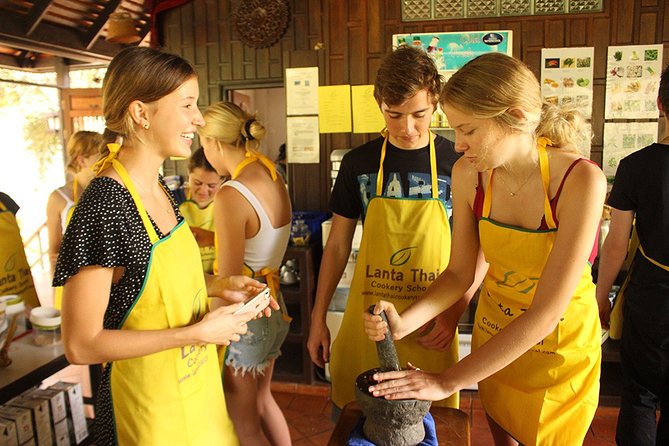
- Teak house class setting in a rubber plantation with a garden where herbs and vegetables are grown
- Aon and Chien teach and share plenty of spice-and-plant knowledge
- Four dishes in one half day with included food tastings
- Morning or afternoon sessions with leftovers packed up for your hotel
- Flexible comfort level: dishes can be vegetarian, vegan, spicy, or non-spicy
- Small groups: limited to max 12 persons, with up to 10 travelers
Aon and Chien teach in a teak house with garden-grown ingredients
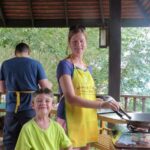
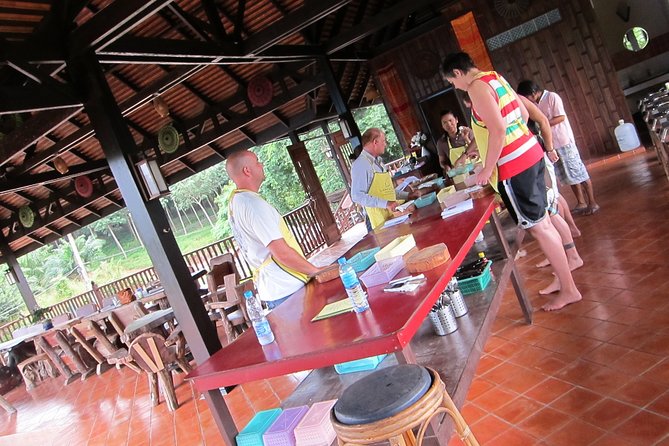
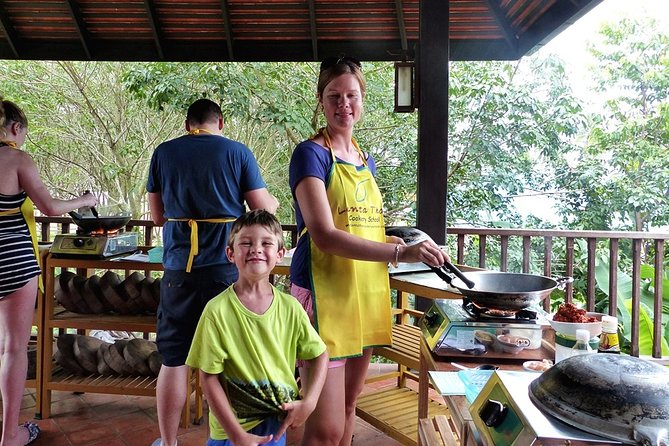
Koh Lanta has plenty of cooking demos. This class feels more like a real kitchen day with locals, because you’re not just watching—you’re cooking in a traditionally built teak house on a working rubber plantation.
The school sits amid a lush property where they grow vegetables and herbs in their own garden. That matters more than it sounds. When you cook with ingredients that come from the surrounding grounds, you learn what “fresh” really means in Thai cooking: sharper herbs, brighter flavors, and a clearer sense of what each ingredient contributes.
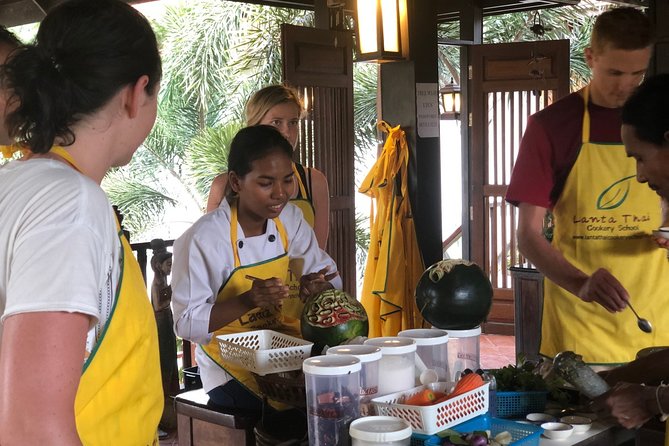
Your teachers are Aon and Chien, both with many years of cooking and chef experience from restaurants. They’re also known for teaching, and they have strong knowledge of spices, herbs, and other plants from the garden. In plain terms: you don’t just follow steps. You learn why the steps work, and how to adjust flavors without turning the dish into guesswork.
You can also read our reviews of more tours and experiences in Ko Lanta.
How the four-dish lesson actually works (and how much control you get)
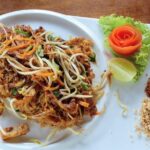
The class is built around making four different dishes. The examples the school mentions range across curries, soups, and stir-fries, so you’re not stuck cooking one “theme” the whole time. You’ll also do tasting as you go, so you can taste what’s happening before you’re fully finished.
Now the part that makes people either happy or slightly annoyed—your dish choices. The group selects 4 out of 10 dishes together. But you can customize details individually: you can choose the type of meat (if you’re eating meat), and you can set the spice level for your own preferences.
That flexibility is huge for couples and friends. One person can go mild while another goes spicy, without the entire class having to agree on one flavor setting.
You can also make dishes vegetarian or vegan, and the school says all dishes can be adjusted to either vegetarian, vegan, spicy, or non-spicy. If you’ve ever taken cooking classes where the vegetarian option means a sad swap, this setup is more comfortable: the class is set up to adapt.
One small extra note: children aged 7–11 can choose only 2 dishes. Adults and older teens can choose among the options within the class structure.
Morning schedule: a welcome drink, hands-on cooking, and leftovers by early afternoon
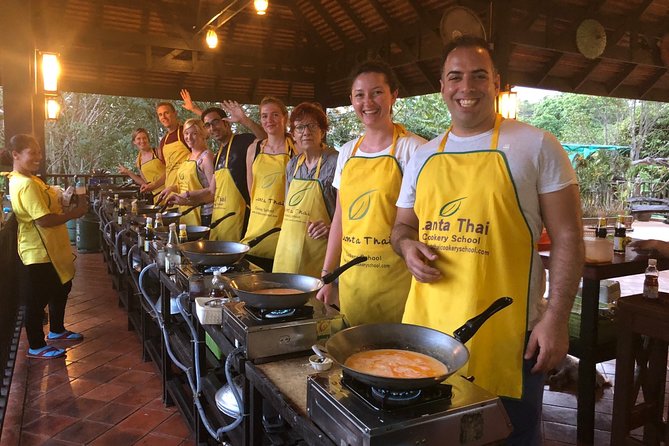
The morning option is built for people who want the rest of the day free. Pickup is on Koh Lanta at 09:30am, and you start with a welcome drink at 10:00am. At 10:15am, you get cooking instructions, then at 10:30am you’re in the cooking rhythm.
Most people think a cooking class is just chopping and stirring. This one is more structured. You’ll be guided through techniques and ingredient handling, and you’ll likely get lots of attention as you practice. The class size is limited to a maximum of 12 persons, so you’re not lost in a crowd while the teacher is teaching to the front row.
Lunch plan? Not exactly. But it works like this: you cook, you taste, and then you bring food home. At 01:45pm, you take leftovers back to your hotel. That timing is ideal if you want an afternoon beach break, a scooter wander, or just to do nothing with a clear mind.
If you’re the type who likes tasting something you made in the real order of cooking, the morning session is a good fit. You get your “food win” before the day gets too loud.
Afternoon schedule: late pickup, slower pace, and dinner-ready leftovers
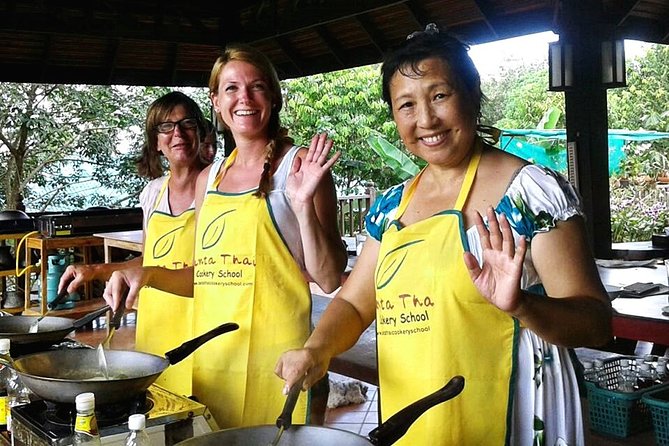
The afternoon class starts later, for travelers who want to sleep in or fit in a morning errand. Pickup is on Koh Lanta at 03:30pm, then you get a welcome drink at 04:00pm. Cooking instruction starts at 04:15pm, and you begin cooking at 04:30pm.
The pacing tends to feel more relaxed because you’re starting after the hottest part of many days. When you finish, you don’t just walk away—you return with leftovers. At 07:45pm, you take food back to your hotel.
This is a great option if you want to avoid spending extra money on dinner that night. Thai cooking leftovers often reheat well, and since the class includes tastings and lets you pack up what’s left, you’re not leaving hungry or empty-handed.
Also, evening classes tend to fit better if you’re sharing the experience with people who don’t want an early start. If you and your travel buddy are doing multiple activities in a day, the afternoon timing makes it easier to stitch together a sane schedule.
The tastings and the takeaway part that actually makes it worth your time
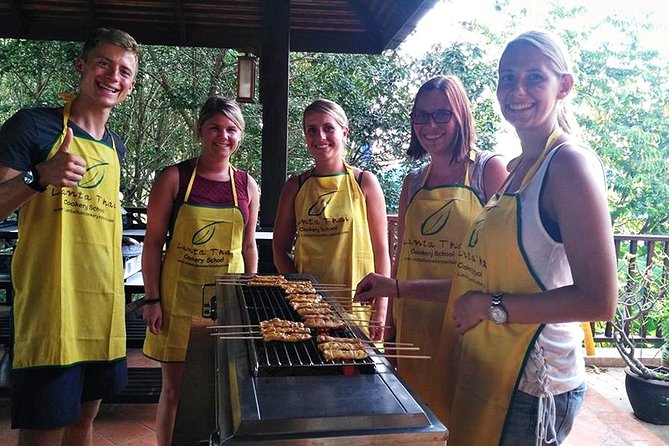
What you get out of a cooking class depends on two things: learning and eating. This one hits both.
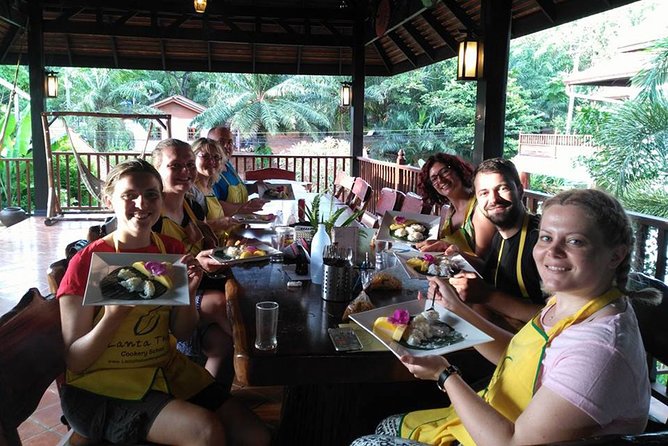
Food tastings are included, which means you’re not waiting until the end to know if you nailed the flavor. You taste during the process, which helps you understand Thai balance: salty, sweet, sour, and heat working together. That’s also why the spice control is useful. You can learn the core recipe and still steer the final heat level to your comfort.
You also get to take leftovers back to your hotel. That’s not a small detail—it changes the value equation. You’re essentially getting a meal outcome for your class day plus a second meal for later, and that’s one of the easiest ways to stretch your vacation budget.
On top of that, you take home a recipe book and a completion certificate. That might sound sentimental, but it’s practical. A recipe book helps you repeat what you learned at home without trying to remember every step from memory, and a certificate gives you something to keep track of what you actually made.
Price and value: why $52.35 can feel fair for a full half-day
At $52.35 per person, this half-day class is priced like an activity, not just a dinner experience. Here’s what makes it feel more reasonable than it looks on paper:
First, pickup is offered. Transport isn’t just a perk here—it’s part of what you pay for. If you’ve ever tried to reach a cooking school on your own, you know how much time and hassle that can add.
Second, the class includes food tastings, and you can take leftovers home. That’s real edible value, not just a couple of bites.
Third, you get a recipe book and completion certificate. Those are direct, tangible takeaways. A good cooking class teaches you how to cook, but the ability to replicate it later is what keeps the experience from fading after the day ends.
Finally, the class is small. Maximum group size is limited (up to 12 persons), which tends to improve the quality of instruction and how quickly you can get help when you’re chopping, mixing, or adjusting flavor.
Is it a “cheap” activity? No. But it’s not overpriced for what you actually do and what you bring back.
Vegetarian, vegan, spice settings, and kids rules that keep it workable
One of the most practical parts of this experience is how flexible it is with dietary preferences. The school says all dishes can be vegetarian, vegan, spicy, or non-spicy to suit your taste.
That matters if you’re traveling with someone who eats differently than you. You don’t have to split up or settle for a basic alternative. The class structure is set up so you can choose how the dishes land.
Spice control is another big factor. Thai food can be amazing and still not match your heat tolerance. Here, you can pick your spice level individually, while still learning the dish as it’s supposed to be.
For families: children aged 7–11 can join, but they can choose only 2 dishes. That’s a clear expectation, so you can plan the day around what your child can handle and what the class will support.
Non-cooking guests: what it costs if your friend wants to skip the stove
Not everyone in a group wants to cook. If someone is a non-cooking guest, they are required to pay 500 Baht per person, and that includes food and transportation.
This is helpful because it spells out what’s included rather than leaving you guessing. It also tells you to budget if you’re bringing along a friend who wants to experience the setting but not take part in the cooking.
What the rubber plantation setting adds to the class
The school isn’t in a generic studio kitchen. You’re cooking in a traditionally built teak house in the heart of a rubber plantation.
That has a real impact on the vibe. It feels less like a performance and more like a working environment tied to local life. And because you’re taught by people with deep knowledge of spices and plants from the garden, the setting reinforces the lesson rather than distracting from it.
If you like travel experiences that connect food to place, this one makes that connection in a tangible way. Even if you only take home a handful of key techniques, the environment helps the learning stick.
Should you book this Koh Lanta Thai cookery class?
Book it if you want a hands-on half day, not a short demo. The combination of a small group, guided instruction from Aon and Chien, tastings included, and leftovers packed up for your hotel makes it a strong value for the time you spend.
I’d also book it if your group has mixed dietary needs. The class is set up to adjust dishes to vegetarian, vegan, spicy, or non-spicy, and you can customize spice level and meat type based on your own preferences.
Skip or choose carefully if you’re very specific about which exact dishes you want, because the group picks 4 out of 10 dishes together. You still get control over meat type and spice level, but not full control over the menu lineup.
If you’re hoping to leave with skills you can actually reproduce, this is exactly the kind of class that gives you the tools and the written recipe support to do it.
FAQ
How long is the Koh Lanta Thai cookery school class?
The class runs for about 4 hours.
Do they pick you up from your hotel?
Yes, pickup is offered on Koh Lanta for both the morning and afternoon sessions.
What time does the morning class start and end?
Morning pickup is at 09:30am, and you return for leftovers at 01:45pm.
What time does the afternoon class start and end?
Afternoon pickup is at 03:30pm, and you return for leftovers at 07:45pm.
What dishes do you cook?
You will learn to make four different dishes, with the group choosing 4 out of 10 dishes together.
Can I choose spice level or meat type?
Yes. While the group chooses the 4 dishes, individually you can choose the type of meat (if applicable) and the spice level. All dishes can be made vegetarian, vegan, spicy, or non-spicy.
Are non-cooking guests allowed?
Yes. Non-cooking guests must pay 500 Baht per person, which includes food and transportation.
How big is the class?
The class size is limited to a maximum of 12 persons, and the tour notes a maximum of 10 travelers.
What happens if the weather is bad or the class can’t run?
The experience requires good weather. If it’s canceled due to poor weather, you’ll be offered a different date or a full refund. It also requires a minimum number of travelers; if it doesn’t meet that minimum, you’ll get a different date/experience or a full refund.