REVIEW · BUDAPEST
Hungarian Home Cooking Class with Chef Marti
Book on Viator →Operated by Flavors of Budapest · Bookable on Viator
One kitchen. One country’s comfort food.
This Hungarian Home Cooking Class in Budapest is interesting because you cook local dishes in a cozy studio apartment with a chef who talks food and everyday life, not just recipes. The setup is small and personal, and the menu is designed to show off Hungarian staples like goulash and chicken paprikash.
Two things I really like: you get free hotel pickup and drop-off, which makes it easy to fit into a busy trip. And you leave with take-home recipes plus practical cooking tips you can actually use at home. One drawback to consider: the standard menu is likely butter-heavy, so if you’re sensitive or have specific dietary needs, you’ll want to message ahead.
In This Review
- Hungarian Flat Cooking in Budapest: Chef Marti’s Class in Plain Terms
- Key Takeaways Before You Book
- A Budapest Kitchen You Can Actually Picture: Location and Setup
- What Chef Marti Teaches You While You Cook
- The Menu Flow: Starter Tastings to Full Comfort-Dish Cooking
- Stop 1: Flavors of Budapest (Starter + ingredient tasting)
- The mains: classic dishes with real technique
- Tasting, Drinks, and Eating What You Made
- Dietary Needs: How Flexible Is It, Really?
- Free Pickup and the Small-Group Advantage
- Price and Value: Is $106.92 a Good Deal?
- What You’ll Learn About Budapest Through Food
- Who This Class Fits Best (and Who Might Prefer Something Else)
- Should You Book This Hungarian Home Cooking Class?
- FAQ
- How long is the Hungarian Home Cooking Class?
- What does the class cost per person?
- Is the class offered in English?
- Is pickup and drop-off included?
- How big is the group?
- What if I have dietary restrictions?
- What dishes might we cook?
- Does the experience include drinks?
- Is there any requirement for the class to run?
Hungarian Flat Cooking in Budapest: Chef Marti’s Class in Plain Terms
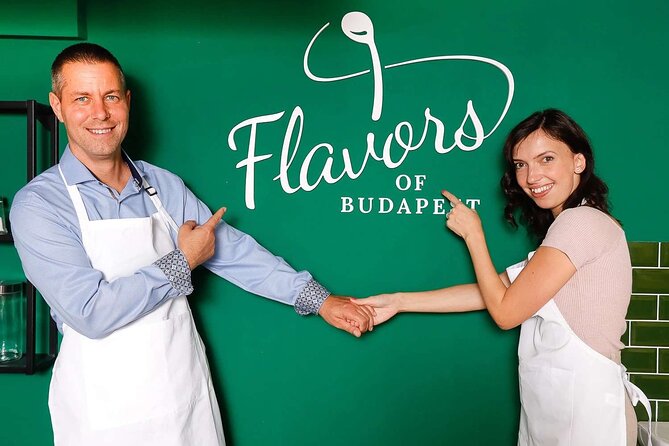
This is a hands-on cooking experience, not a “watch the chef” show. You’re in a real kitchen space, in the middle of Budapest, working through the steps of Hungarian dishes while Chef Marti shares the stories behind ingredients, customs, and how home cooking changes over time.
The class runs about 2.5 hours, in English, with a mobile ticket. Small-group format keeps the experience focused, but the most helpful part is that you can often adjust what you cook if you have dietary needs.
The vibe is family friendly. It’s also the kind of activity that works well if you want something more meaningful than another walking tour stop: you eat what you make, and you learn how to build flavor with Hungarian staples like paprika, creamy dairy elements, and hearty meats.
Key Takeaways Before You Book
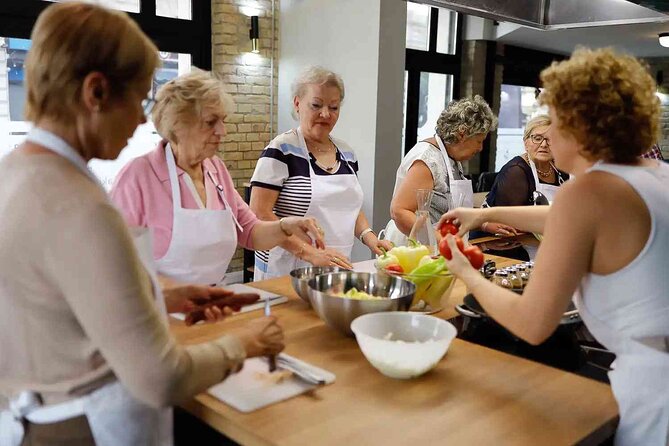
- Hands-on from start to finish: you’re cutting, prepping, and cooking, not just tasting.
- Small group, maximum 10: personal attention is part of the deal.
- Free hotel pickup and drop-off: it saves time and stress.
- A “Hungary through food” culture lesson: you’ll get customs and ingredient context alongside the recipes.
- Menu can be adjusted: vegetarian is supported, and other needs can be requested.
You can also read our reviews of more tours and experiences in Budapest.



A Budapest Kitchen You Can Actually Picture: Location and Setup
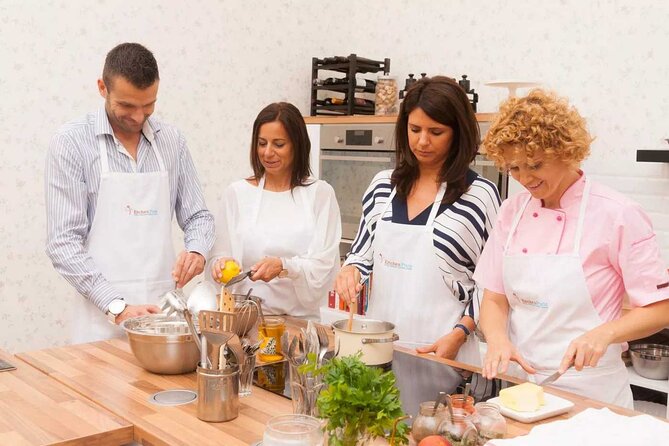
The meeting point is Budapest, Király u. 77, 1077 Hungary. The area is convenient to public transportation, and you’ll also get free hotel pickup and drop-off—big value if you’re staying farther out or you don’t want to navigate with a timetable.
Inside, the cooking happens in a cozy studio apartment in the heart of Budapest, described as being in a historic upper-middle class building. That matters more than it sounds. A home-style apartment kitchen changes the feel: it’s more about real cooking workflow—how people prep, taste, and manage the pace—than about demo stations and show lights.
Also, with a max of 10 travelers, you’re not squeezed into a mass-group format. That means you’re more likely to get the help you need if you’re unsure about technique or ingredient handling.
What Chef Marti Teaches You While You Cook
Chef Marti’s focus isn’t only the final dish. It’s how Hungarian food is built: ingredients, traditions, and the small shifts that happen over generations.
From the class style described, you should expect lots of explanation as you work. You’ll learn about authentic ingredients and everyday life tied to what’s on your cutting board. There’s also a strong emphasis on getting you comfortable with the “why” of flavor—especially paprika and dairy-based elements that show up across multiple Hungarian dishes.
If you’re traveling with kids, this is also a good fit because it’s active. There’s a clear rhythm: prep, cook, taste, learn. And the group size stays manageable, so questions don’t get lost.
The Menu Flow: Starter Tastings to Full Comfort-Dish Cooking
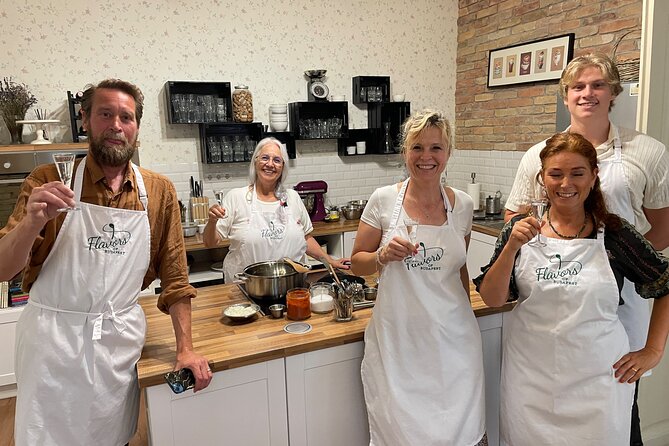
The session’s structure is designed around Hungarian flavor in layers, not just one dish.
Stop 1: Flavors of Budapest (Starter + ingredient tasting)
You start with Hungarian bites, often described as a farmer’s plate. This is where you get an “orientation” to the flavors. Expect to taste things like different paprikas, sausage, and a spicy curd cheese cream. It’s a practical way to learn what ingredients taste like before you cook with them.
This start is useful for two reasons. First, you get instant context: you’re not learning paprika as a concept—you’re tasting it. Second, it helps you understand why Hungarian recipes often feel both hearty and seasoned.

The mains: classic dishes with real technique
Based on the menu examples, you may cook one or more of these Hungarian favorites:
- Goulash soup with beef meat and celery
- Chicken paprikas with small dumplings (with dairy, egg, and flour)
- Stuffed cabbage with pork, dairy, and egg
- Savoury meat crepe a la Hortobágy style (with dairy, egg, flour)
Here’s what matters for you: these dishes teach different cooking skills. Goulash soup gives you a foundation for a rich, paprika-forward stew. Chicken paprikas tends to be about balancing creamy elements and dumplings. Stuffed cabbage is a “patience dish,” and it teaches you how to handle fillings and bake/finish the meal. Crepes help you see how Hungarian cooking extends beyond soups and roasts.
And if your group has specific preferences, you might end up cooking a menu you’d choose rather than a one-size-fits-all set. One key detail: dietary restrictions are considered, but the standard menu can use a lot of butter—so plan accordingly if butter is an issue for you.
Tasting, Drinks, and Eating What You Made
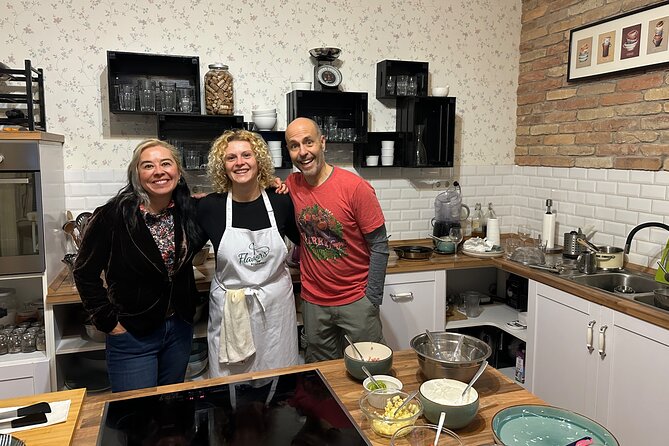
This class isn’t just work and then “good luck.” You’ll taste Hungarian bites during the session, and you’ll eat the dish(es) you helped prepare.
Drinks included are practical and friendly: mineral water, homemade soft drinks, and wine. That’s part of the value because it turns the evening into a proper meal experience rather than a strict cooking lesson where you barely get to linger.
If you’re the kind of traveler who wants a night where you talk, eat, and learn without rushing, this format fits well.
Dietary Needs: How Flexible Is It, Really?
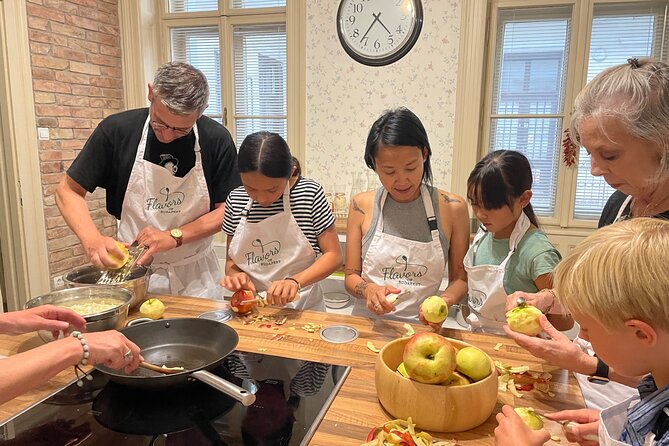
The big win here is that dietary needs are taken seriously—at least at the request stage. Vegetarian options are available if you advise during booking.
For other needs—gluten-free, lactose-free, nut allergy—you should ask. You’ll want to give details early so the kitchen can plan around ingredients that matter.
One realistic note from the way menus are described: standard dishes may include dairy-heavy and butter-heavy components. So if you avoid dairy or butter, don’t assume a simple swap. Message your needs so Chef Marti can adjust what you cook.
Free Pickup and the Small-Group Advantage
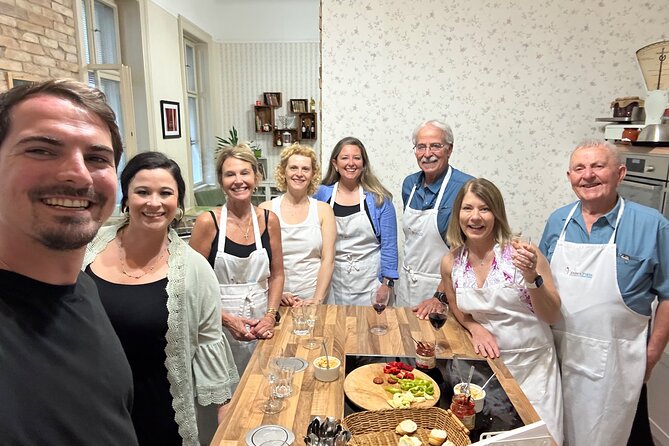
Getting to and from the class is handled for you. Free hotel pickup and drop-off reduces the main travel friction point: time. Instead of worrying about transit or finding the exact building on foot after dark, you can focus on the experience itself.
The small-group size (maximum 10) also changes the quality of learning. Cooking is physical and step-based. When the group is small, it’s easier to get personal guidance—especially if someone needs help with chopping, timing, or getting the sauce right.
And on top of that, you should know there’s a minimum of 4 participants required for the class to run. If you’re booking close to your travel dates, keep that in mind in case the session needs to confirm with enough people.
Price and Value: Is $106.92 a Good Deal?
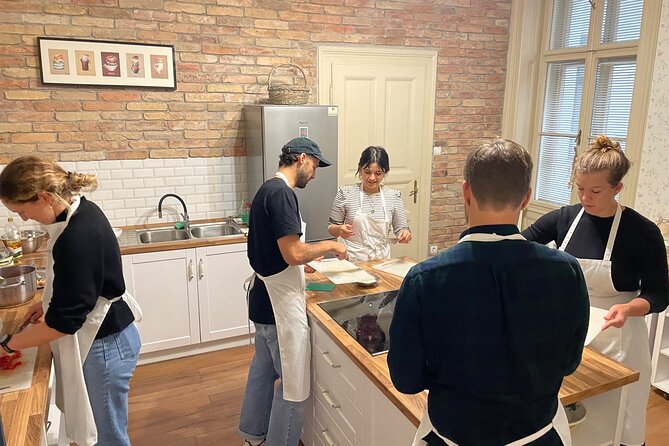
At $106.92 per person for about 2.5 hours, you’re paying for more than “a meal.” You’re paying for:
- a hands-on cooking session with a professional local chef
- ingredients, kitchen tools, and equipment provided
- tastings during the session
- drinks included (mineral water, homemade soft drinks, wine)
- a cozy studio apartment location
- take-home recipes
- free hotel pickup and drop-off
- English instruction
If you’d otherwise pay for a cooking class + groceries + a restaurant meal (plus transport), the value becomes easier to see. Also, the take-home recipes can extend the benefit beyond one night. It’s the kind of experience that turns into a “we made that” story back home.
What You’ll Learn About Budapest Through Food
A good cooking class teaches technique. A great one teaches context.
Chef Marti’s class is built around stories about Hungarian customs, culture, and history tied to everyday food. That’s not just trivia. It helps you understand Hungarian flavors while you taste them, and it gives you better “trip legs” for the rest of Budapest—like what to look for in markets or which dishes you’ll recognize when you see them on menus.
And since this is a local kitchen experience (not a tourist-only stage), you’re more likely to get practical restaurant and sightseeing recommendations that make sense for how locals actually move through the city.
Who This Class Fits Best (and Who Might Prefer Something Else)
You’ll probably love this if:
- you want a real food-focused experience in Budapest
- you prefer active learning over passive sightseeing
- you like comfort food and want to cook Hungarian dishes yourself
- you travel as a family and want a warm, hands-on evening
- you want something memorable that goes beyond a typical restaurant meal
It may be less ideal if:
- you’re very sensitive to dairy or butter and need strict substitutions
- you’re hoping for a purely tour-like format with lots of walking and landmarks
- you prefer ultra-fast activities where you don’t want to sit down and eat as part of the learning
Should You Book This Hungarian Home Cooking Class?
Yes, you should book if you want an authentic Budapest night with a real chef, real ingredients, and a meal you helped create. The free pickup and drop-off make it easy, the small group keeps it personal, and the included drinks and take-home recipes turn the price into something you’ll feel for days afterward.
My advice: when you book, send your dietary needs clearly, especially if dairy or gluten is involved. Also, pick this as one of your “anchor” experiences—an evening where you slow down and learn, not one where you rush to fit ten things into your schedule.
If you like the idea of cooking comfort food in a local apartment kitchen and leaving with recipes you’ll actually use, this is a strong choice.
FAQ
How long is the Hungarian Home Cooking Class?
The cooking experience runs about 2 hours 30 minutes.
What does the class cost per person?
The price is $106.92 per person.
Is the class offered in English?
Yes, it is offered in English.
Is pickup and drop-off included?
Yes. Free hotel pickup and drop-off are included.
How big is the group?
There is a maximum of 10 travelers.
What if I have dietary restrictions?
Vegetarian options are available if you advise at booking. Other needs like gluten-free, lactose-free, and nut allergy can be requested.
What dishes might we cook?
The sample menu includes goulash soup, chicken paprikas with small dumplings, stuffed cabbage, and a savoury meat crepe a la Hortobágy style, plus a starter of Hungarian bites.
Does the experience include drinks?
Yes. Drinks included are mineral water, homemade soft drinks, and wine.
Is there any requirement for the class to run?
Yes. Minimum 4 participants are required for the class to run.