REVIEW · AO NANG
Krabi: Morning/Afternoon Thai Cooking Class at Ya’s Cookery
Book on GetYourGuide →Operated by Ya Thai Cookery School · Bookable on GetYourGuide
Thai cooking has a clear payoff fast. In Krabi, you’ll learn Southern favorites in a small-group class with Thai chef Ya, from picking ingredients in the herb garden to cooking your own meal. I love that you get real choice—you select four dishes and can adjust spice and even go vegetarian if you want. The class is designed so you’re not stuck waiting around; you’re chopping, slicing, and stir-frying while you learn the “why” behind the flavors.
One thing to plan for: this is not a slow sightseeing tour. You’ll be on your feet doing prep work, and it’s not suitable for people with mobility impairments, plus you’ll want closed-toe shoes and you can’t bring luggage or large bags.
In This Review
- Key Highlights You’ll Feel Immediately
- From Hotel Pickup to a Streamside Kitchen in Krabi
- Choosing Ingredients in the Herb Garden: Where Flavor Begins
- Your Morning or Afternoon Class Menu: Pick 4 Dishes
- Morning Class: Choose 4
- Afternoon Class: Choose 4
- Spice and vegetarian swaps
- Cutting Boards, Woks, and the Chef’s Step-by-Step Logic
- The Meal You Cook: Eat Your Work (and Get That Spice Balance Right)
- The Take-Home Cookbook: Your Future Krabi Kitchen
- Price and Value: Is $53 Worth It in Krabi?
- Who Should Take This Class (and Who Should Skip)
- Should You Book Ya’s Cookery Class in Krabi?
- FAQ
- Where does the class pickup happen?
- How long is the cooking class?
- What dishes can I choose in the morning session?
- What dishes can I choose in the afternoon session?
- Can the food be adapted for vegetarian preferences?
- What languages are used during the class?
- What should I bring, and what’s not allowed?
Key Highlights You’ll Feel Immediately
- Chef Ya teaches in English and Thai, so you can ask questions and actually understand the steps.
- You choose 4 dishes (morning or afternoon), which keeps the class personal instead of one-size-fits-all.
- Ingredient prep is partly done: herbs and produce are portioned in trays, so you focus on cutting and cooking.
- Spice control is part of the lesson, and you can adapt for vegetarian preferences.
- You eat what you cook right after finishing, so the work turns into a satisfying meal.
- A cookbook comes home with you, in English, so you can repeat the dishes later.
From Hotel Pickup to a Streamside Kitchen in Krabi
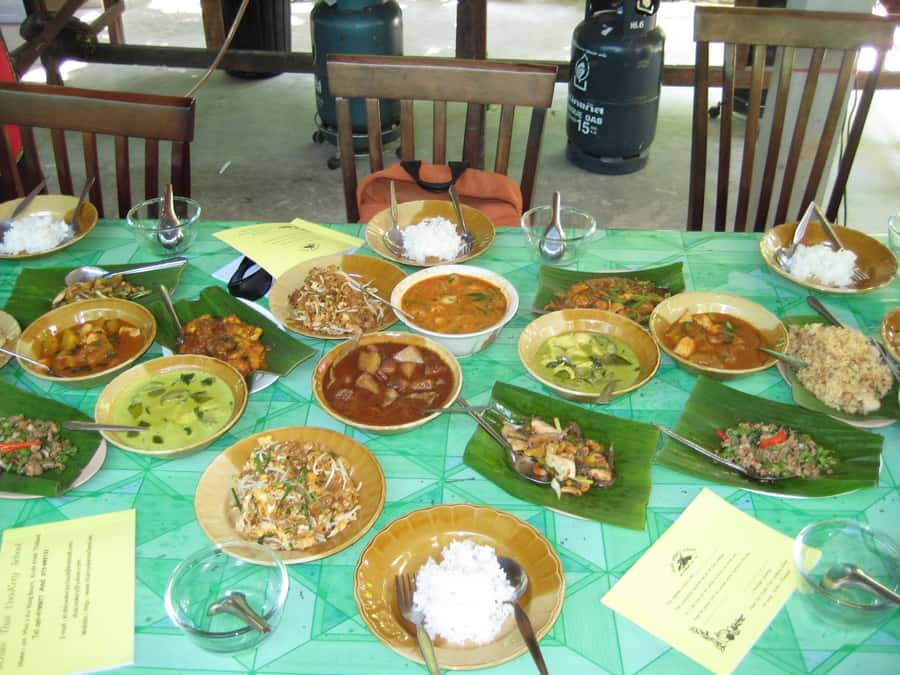
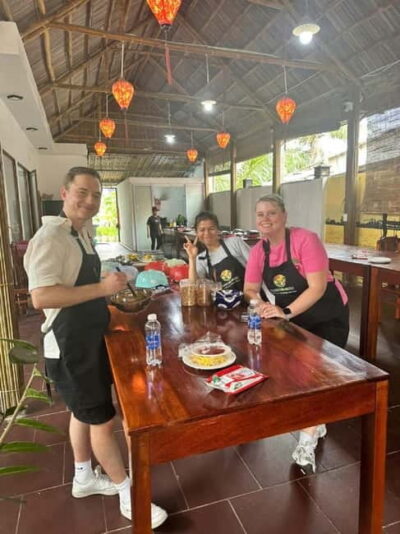
The experience starts with a straightforward hotel pickup in a local truck. If you’re staying in Ao Nang or Ao Nam Mao, the round-trip transfer is included, which removes the biggest hassle for a cooking class day. The ride takes you to Ya’s Cookery School, a cooking setup near a small stream, where the atmosphere feels rural and practical—exactly what you want when you’re learning food, not touring a showroom.
Once you arrive, the class moves quickly into food mode. You’ll get a clear sense of how the kitchen runs and what your role is. You won’t be handed a mystery list and sent off. Instead, you’ll be guided into the flow: choose ingredients, do prep, cook your selected dishes, then sit down to eat.
If you’re staying outside Ao Nang and Ao Nam Mao, you may need to plan an add-on transfer. The class offers hotel round-trip transfers for Klong Muang, Tubkaek Beach, and Krabi Town at set per-person rates, with a minimum and maximum group size for those areas.
You can also read our reviews of more tours and experiences in Ao Nang.
Choosing Ingredients in the Herb Garden: Where Flavor Begins
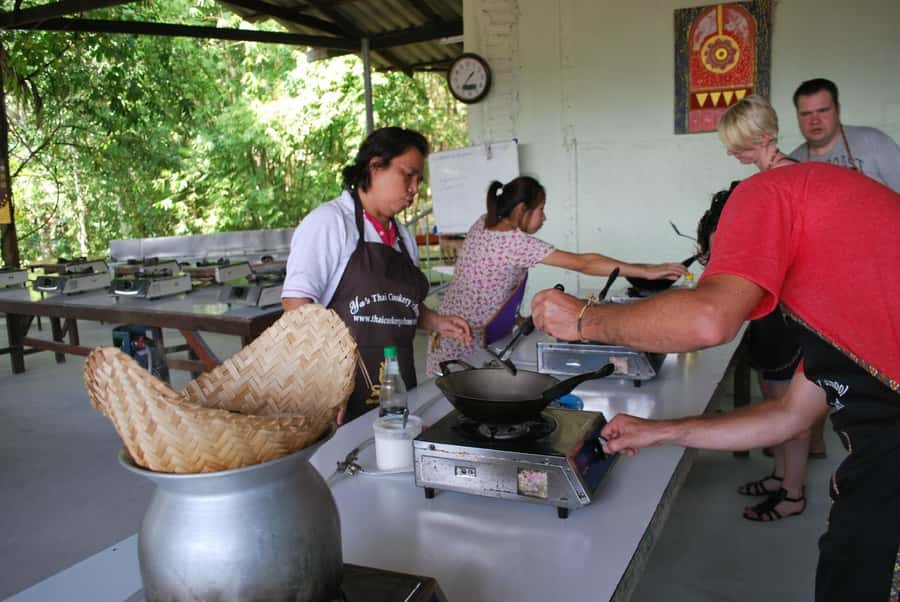
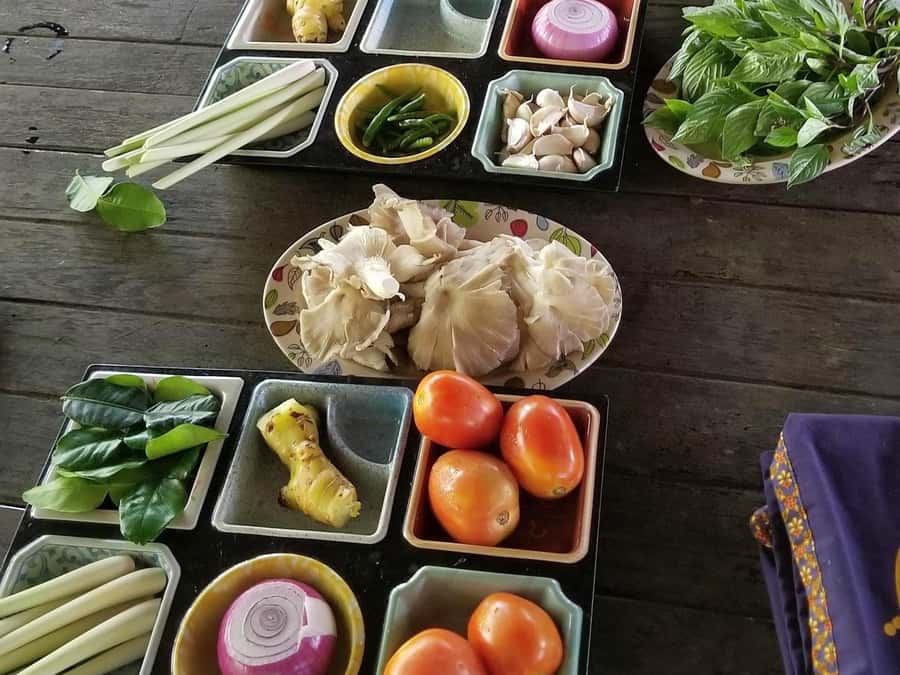
Before you start cooking, you do something that makes Thai cooking easier to understand: you pick ingredients yourself. You’ll choose fresh produce from the school’s herb and plant area. The key detail is how the station is set up—ingredients are measured out and staged for each dish in plates and trays.
That matters. It means you’re not wasting time weighing everything from scratch or guessing amounts. You still do the hands-on work—cutting, slicing, chopping, and dicing—but the class keeps you on schedule so you can actually finish four dishes and eat the results.
You’ll also learn how Thai flavor is built from multiple directions at once. In practice, it’s not just one sauce or one spice. It’s aromatics plus balance: salt, sour, sweet, heat, and fragrance. Seeing and touching ingredients early makes those flavor lessons stick.
And yes, you’ll get to work with the kind of herbs and produce that often define Southern Thai cooking—especially when you’re making dishes like curries, soups, and salads.
Your Morning or Afternoon Class Menu: Pick 4 Dishes
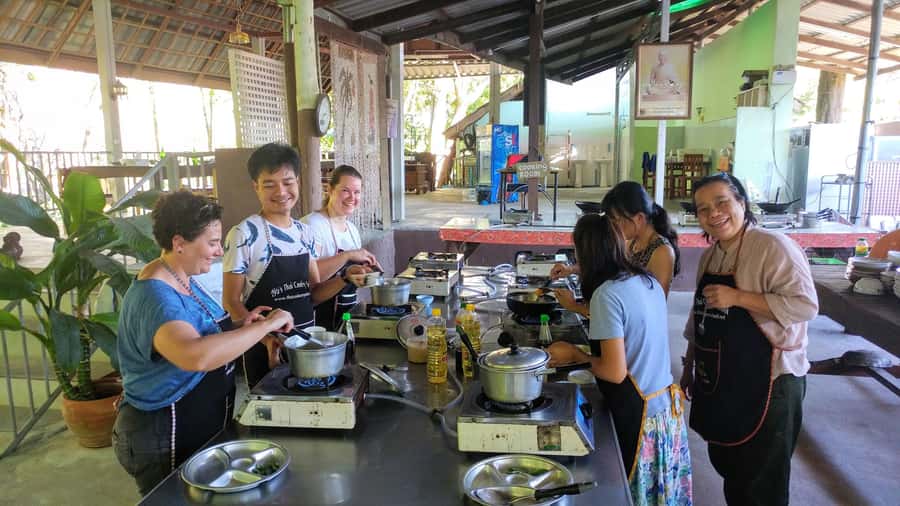
Here’s the fun part: your class is built around choice. For both the morning and afternoon sessions, you select four dishes from specific options, which is one of the reasons the class works for different tastes and skill levels.
Morning Class: Choose 4
Morning options include:
- Massaman Curry
- Red Curry
- Chicken with Vegetable Yellow Curry
- Lab Kai (Chicken Mint Salad)
- Pad Thai
- Stir-Fried Chicken with Cashew Nuts
- Stir-Fried Sweet and Sour Chicken
- Vegetable Fried Rice with Chicken or Vegetables
- Spicy Prawn Soup (Tom Yam Goong)
- Chicken in Coconut Milk
If you want a mix of comforting curry, punchy stir-fry, and one Thai soup, morning is a great lineup. Massaman and coconut-milk dishes tend to feel approachable for first-timers, while Tom Yam gives you a bold, fragrant challenge.
Afternoon Class: Choose 4
Afternoon options include:
- Spring Rolls
- Sweet Sticky Rice with Mango Curry
- Green Curry
- Panang Curry
- Pad Thai
- Chicken in Coconut Milk
- Stir-Fried Chicken & Holy Basil
- Papaya Salad
- Stir-Fried Morning Glory
- Spicy Prawn Soup
Afternoon classes naturally lend themselves to a broader “Thai meal arc,” since you can add salads, greens, and even a dessert-style sweet sticky rice with mango curry. If you’re craving that bright, tangy salad component, papaya salad is your slot.
Spice and vegetarian swaps
You’re not stuck with one flavor intensity. You can adapt dishes to taste, and the class can be adapted for vegetarian preferences. That flexibility is genuinely useful—Thai cooking often depends on balancing sauces and fresh herbs, and you can still learn the method even if you’re not using meat.
Cutting Boards, Woks, and the Chef’s Step-by-Step Logic
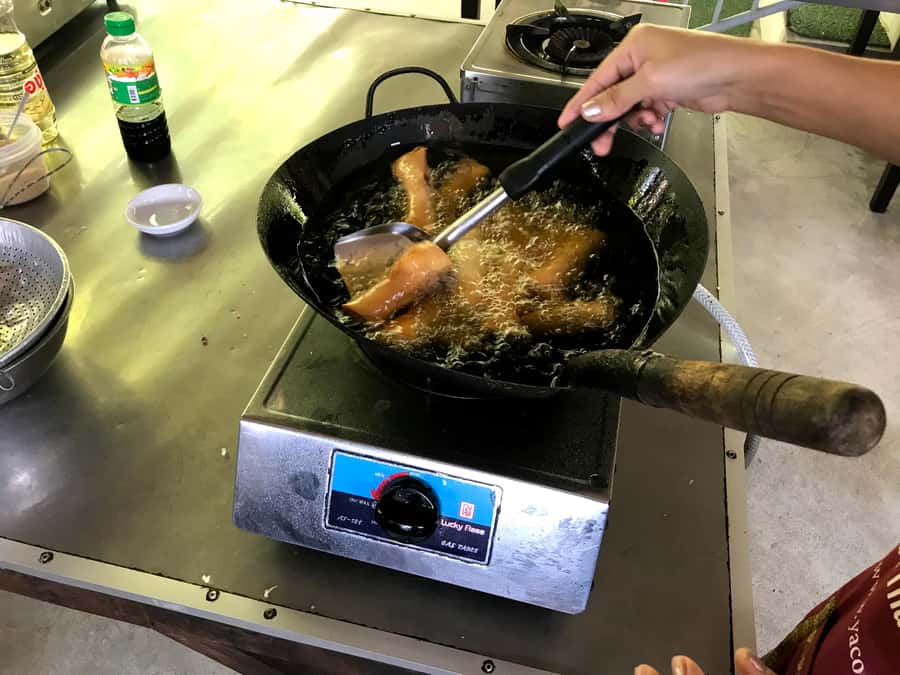
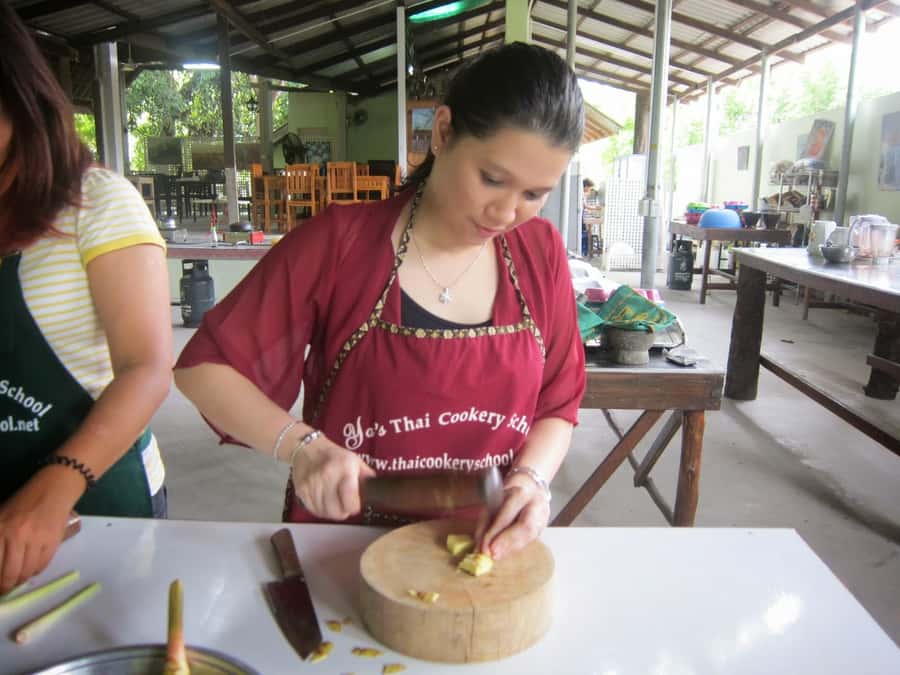
Thai cooking can look intimidating. The class design helps a lot because ingredient prep is partially staged ahead of time. You’ll still do the physical work—cutting, slicing, chopping, dicing—but you start from the right foundation rather than from a pile of unknowns.
You’ll practice core Thai techniques that show up across different dishes:
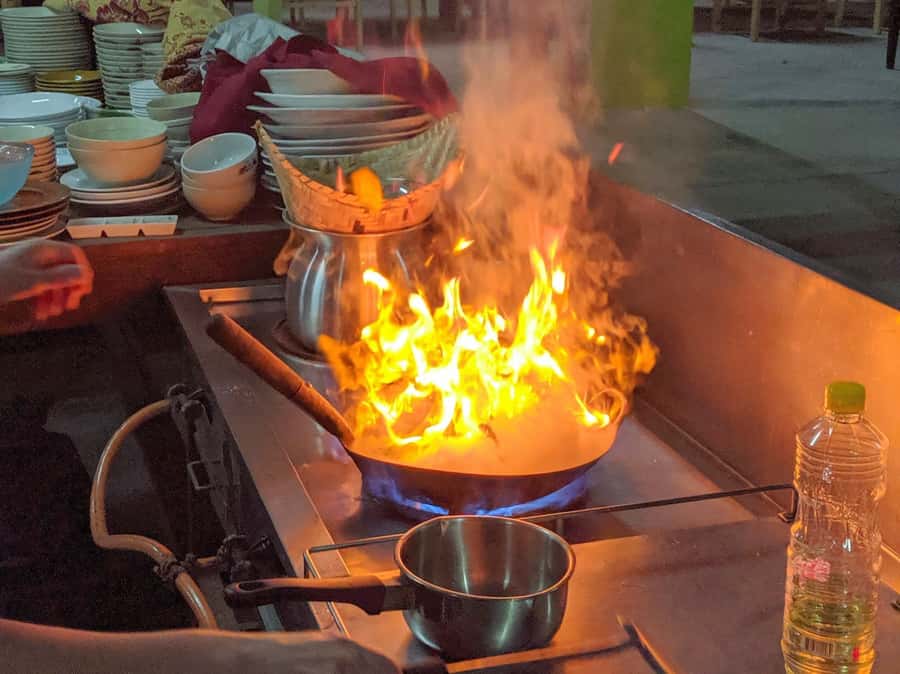
- Stir-frying (high heat, quick movement, timing matters)
- Curries (building flavor with curry paste and coconut-based balance)
- Thai soups (aromatics plus sour and heat, depending on the dish)
- Salads (sharp flavors and fresh herb finishing)
Chef Ya’s approach is the kind that builds confidence. You’ll learn what each step is trying to achieve. For example, curries aren’t just “add paste and hope”—they’re about how the paste integrates with coconut milk and how the final seasoning should taste.
Also, because the class is taught by a professional Thai chef and includes English support, you can ask practical questions without the lesson turning into a language puzzle. The instruction is in English and Thai, so you’re not left guessing at what you’re doing in the wok.
One of the best elements is the pace. You’re cooking while the lesson happens, not just watching demonstrations. That’s why you come out with new skills rather than only memories of food photos.
The Meal You Cook: Eat Your Work (and Get That Spice Balance Right)
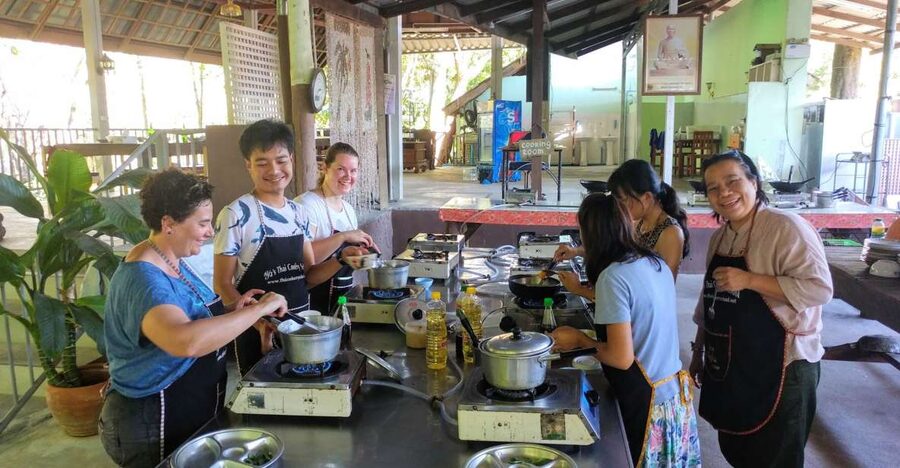
When you finish the last dish, you eat what you prepared. That’s a big deal for motivation. Many cooking classes teach technique and then send you off to eat something else later. Here, the system is built so the meal is the finish line and the reward.
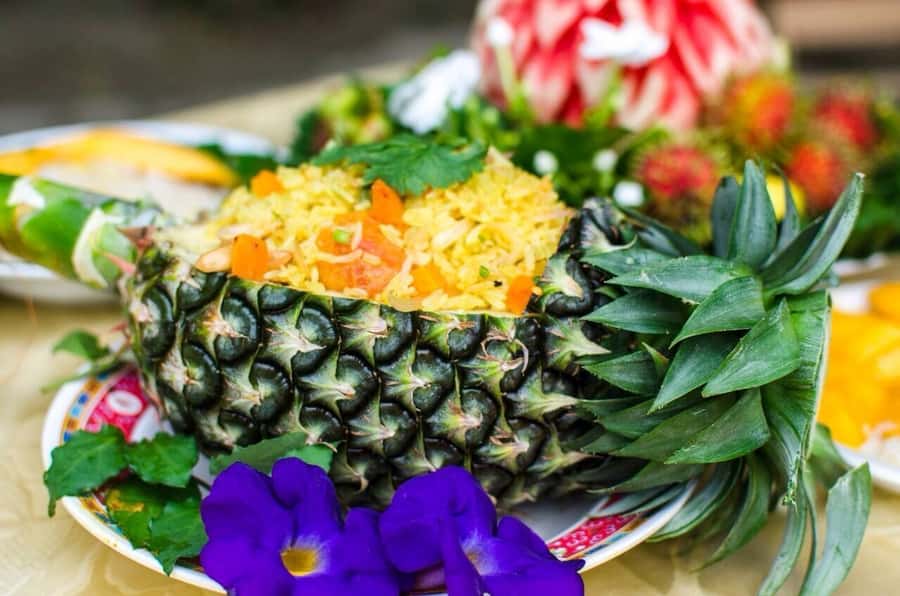
Along the way, you’ll also have fruits and preparation of spicy Thai salads. Even if you choose different dishes, you’ll still get that side component that shows how Thai meals can move between warm, savory, and sharp fresh flavors.
What I like about this setup is that it helps you understand Thai “balance.” In the bowl, everything clicks: curry richness against bright salad notes, or a soup’s tang beside a stir-fry’s salty-sweet edge. Then you can adjust flavors for your own taste when you repeat the recipes later.
And since you can tune spiciness, the final meal doesn’t turn into a punishment. You get heat where you want it, not where someone else thinks you should suffer.
The Take-Home Cookbook: Your Future Krabi Kitchen
You’ll leave with a cookbook that includes recipes and instruction in English. This is exactly the kind of souvenir that’s actually useful. Instead of a magnet or a t-shirt that does nothing at home, you get a guide you can use when you want to recreate what you learned.
The cookbook is especially valuable because it connects the method to written steps. When you’re cooking months later, you might remember the flavors but forget the order of operations. Having English instructions helps you re-run the lesson at your own pace.
If you’re a home cook, this is the part you’ll appreciate most. Even if you’re a beginner, it gives you a path to repeat results without needing the class again right away.
Price and Value: Is $53 Worth It in Krabi?

At $53 per person for a 4-hour class, this sits in the “solid value” category for cooking experiences in Thailand. The value comes from what’s included, not just the sticker price.
You get:
- Round-trip hotel transfer from Ao Nang and Ao Nam Mao
- Ingredients, recipes, and English instructions
- Food and water
- Fruits and spicy Thai salad prep
That inclusion matters because cooking classes often become expensive once you add transportation and extra meals. Here, you’re paying for a full experience: prep, cooking, eating, and a take-home cookbook.
If you’re not in Ao Nang or Ao Nam Mao, transfers are available as add-ons. The fees are clearly set per person for places like Klong Muang, Tubkaek Beach, and Krabi Town, and those transfers require a minimum and maximum group size. So you’ll want to check your pickup area when deciding if the class fits your budget.
Bottom line: if you want hands-on food skills plus a meal plus a cookbook, this is a pretty efficient deal for the time.
Who Should Take This Class (and Who Should Skip)
This is best for people who want to learn by doing. If you like cooking, enjoy food markets, or want to stop eating Thai food and start understanding it, you’ll fit right in.
It’s also a good match if you’re traveling with a partner or going solo. Choice is built in: you pick dishes, then adjust spice to your comfort level. That means you can handle different preferences without the day becoming a compromise.
One clear consideration: it’s not suitable for people with mobility impairments. The class involves active prep work and a normal kitchen workflow.
Practical notes to plan around:
- Wear closed-toe shoes.
- Avoid bringing luggage or large bags.
Should You Book Ya’s Cookery Class in Krabi?
If your goal is more than tasting Thai food—if you want real technique, clearer flavors, and a meal you can recreate—then yes, I’d book it. The class is built for payoff: fresh ingredient selection, active prep, cooking multiple dishes you choose, then eating the results.
I’d especially recommend it if you want Southern Thai favorites like curries and soups, plus a dish with attitude like spicy prawn soup or Thai salads. Chef Ya’s setup makes it beginner-friendly without watering down the experience, and the ingredient staging keeps you focused on cooking rather than logistics.
Before you book, just confirm your pickup area and make sure you can handle a 4-hour, hands-on session. If you want that mix of learning and eating, this one’s a strong pick for Krabi.
FAQ
Where does the class pickup happen?
Round-trip hotel transfer is included if you stay in Ao Nang and Ao Nam Mao. Transfers for Klong Muang, Tubkaek Beach, and Krabi Town are available as add-ons during checkout.
How long is the cooking class?
The class runs for 4 hours. The exact starting time depends on the session availability you choose.
What dishes can I choose in the morning session?
In the morning session, you choose 4 dishes from: Massaman Curry, Red Curry, Chicken with Vegetable Yellow Curry, Lab Kai, Pad Thai, Stir-Fried Chicken with Cashew Nuts, Stir-Fried Sweet and Sour Chicken, Vegetable Fried Rice with Chicken or Vegetables, Spicy Prawn Soup (Tom Yam Goong), and Chicken in Coconut Milk.
What dishes can I choose in the afternoon session?
In the afternoon session, you choose 4 dishes from: Spring Rolls, Sweet Sticky Rice with Mango Curry, Green Curry, Panang Curry, Pad Thai, Chicken in Coconut Milk, Stir-Fried Chicken & Holy Basil, Papaya Salad, Stir-Fried Morning Glory, and Spicy Prawn Soup.
Can the food be adapted for vegetarian preferences?
Yes. The dishes can be adapted to taste and can also be adapted for vegetarian preferences.
What languages are used during the class?
The instructor provides instruction in English and Thai.
What should I bring, and what’s not allowed?
Bring closed-toe shoes. Luggage or large bags are not allowed.