REVIEW · SIHANOUKVILLE
Kampot Cooking Class by Eco Lotus Kampot
Book on Viator →Operated by Kam and Tour · Bookable on Viator
Herbs you pick yourself taste better. This Kampot cooking class pairs a Samaki Market ingredient tour with hands-on Khmer cooking at Eco Lotus Kampot.
You get two standout things: a real look at how people buy food locally, and a guide who patiently answers questions while you work. One thing to consider: you’ll keep a tight schedule, so you’re not signing up for a long, wander-at-will Kampot day.
At $25 per person for about 5 hours, I see solid value—especially because the market stop and the cooking admission are included, plus you’ll sit down to a communal meal at the end. The group stays small (max 15), which makes it easier to ask questions without the usual rush.
The only drawback I’d flag is time. Stop 1 in Kampot is brief, and the day is designed around three fixed blocks: a market run, then a focused cooking session. If you’re hoping for lots of free time for sightseeing, you may feel boxed in by the plan.
In This Review
- Key Highlights You’ll Really Care About
- Khmer Cooking in Kampot: Practical, Hands-On, Not Performative
- Price and Value: What $25 Buys in Real Food Time
- Getting Picked Up and Finding the Start Point Quickly
- Stop 1 in Kampot: A Brief Guided Setup
- Samaki Market: Selecting Ingredients Like You Mean It
- Eco Lotus Kampot: Garden Harvest to Khmer Stove
- What You’ll Actually Cook (Savory Dishes Plus Dessert)
- Meal Time: The Communal Part That Makes It Stick
- Logistics That Keep the Day Smooth
- Who Should Book This Cooking Class
- A Small Balanced Note Before You Go
- Should You Book Kampot Cooking Class by Eco Lotus Kampot?
- FAQ
- What is the price per person?
- How long is the experience?
- Where does the tour start and end?
- What time does it start?
- Does the experience include pickup?
- Does it include visiting a market?
- What happens at Eco Lotus Kampot?
- Are admission tickets included?
- Is there a maximum group size?
- Can I cancel for a full refund?
Key Highlights You’ll Really Care About
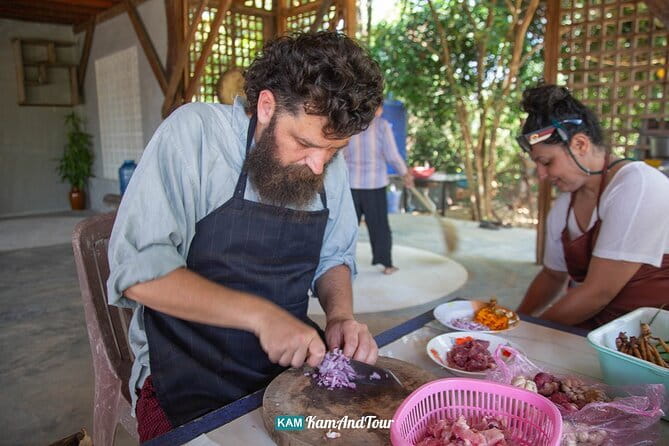
- Samaki Market ingredient selection: You go market-style and choose fresh items for what you’ll cook.
- Organic garden herb harvesting: You collect vegetables and herbs directly from the property’s organic garden.
- A small class size (max 15): More hands-on time, fewer waiting turns.
- Chef support at the cooking spot: You don’t have to scramble—there’s a team there to help with ingredients.
- Khmer dishes plus one dessert: It’s not only savory; you’ll learn a sweet finish too.
- Pickup and a simple route: You start with hotel pickup and return to the meeting point.
Khmer Cooking in Kampot: Practical, Hands-On, Not Performative
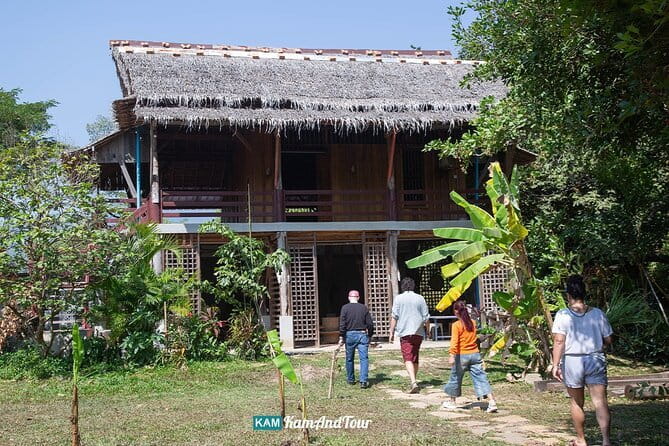
A cooking class in Cambodia can go one of two ways: either you watch, or you cook. This one is built for cooking. You start with a quick Kampot orientation, then head to a local market to pick ingredients, and finally move to Eco Lotus Kampot for the main event.
What makes it feel authentic is the sequence. You don’t just get ingredients handed to you. You see them first, you choose, and then you carry that logic into the way Khmer food is prepared—starting from fresh veg and herbs through to finished plates.
I also like the home-base setting. The cooking happens at a traditional home stay environment, which matters because it changes the vibe from classroom to kitchen life. And with a small group, it’s easier to ask your questions as you go.
You can also read our reviews of more tours and experiences in Sihanoukville.
Price and Value: What $25 Buys in Real Food Time
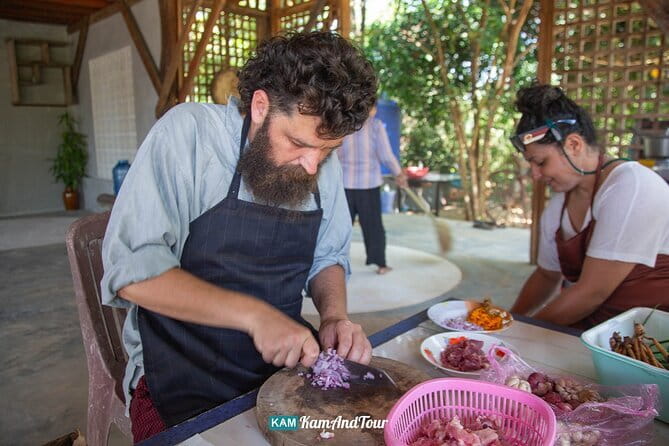
At $25 per person for around 5 hours, the big question is value. Here’s how I’d break it down based on what’s included:
- Pickup offered, so you’re not spending your energy figuring out transportation.
- Admissions included for the market stop (Samaki Market) and the Eco Lotus Kampot cooking admission.
- Food involved: you’ll cook a set of dishes and then share a communal meal afterward.
- Class size is capped at 15, which usually means less crowding and more individual attention.
So yes, you’re paying for more than a simple cooking demo. You’re paying for a short food tour (market + ingredient choice) and a hands-on cooking block. If you want the Khmer food experience but don’t want to burn a whole day, this price lands in a sweet spot.
One more value point: admission at Stop 1 in Kampot is free, which helps keep the overall cost reasonable compared with other food experiences that bundle everything under a single higher ticket.
Getting Picked Up and Finding the Start Point Quickly
The activity starts at J55G+CQ5, Entanou Bridge, Kampot, Cambodia, and it ends back at the same meeting point. The scheduled start time is 9:00 am.
Pickup is offered, but the key practical detail is how the day flows once you arrive. When you get out of the car, you’ll reach the place where the cooking class takes place. There’s no relocation after that. You can sit in one place while the team supports you with ingredients, tools, and help as needed.
Why this matters: short food days feel easier when you’re not moving around constantly. You’re here to cook and learn, not to spend time in transit.
Also, the day runs near public transportation, and service animals are allowed. And because the class is described as suitable for most travelers, it’s a good choice if you want something interactive without needing special skills.
Stop 1 in Kampot: A Brief Guided Setup
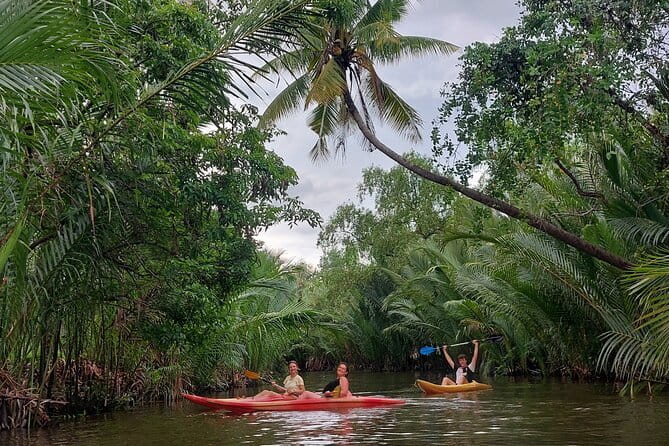
Stop 1 is in Kampot and lasts about 20 minutes. You’ll get picked up from your hotel and enjoy a guided experience there, with admission included as free for this stop.
This part is short on purpose. Think of it as a quick orientation so you understand what you’re about to do and where you’ll be in the next steps. If you like to connect context to food, this little starter helps. If you’re hoping for a long Kampot town stroll, you won’t get that here—the day is built around the market and cooking.
So your mindset should be: I’m here for a food day, not a full sightseeing day. Once you accept that, the schedule makes sense.
Samaki Market: Selecting Ingredients Like You Mean It
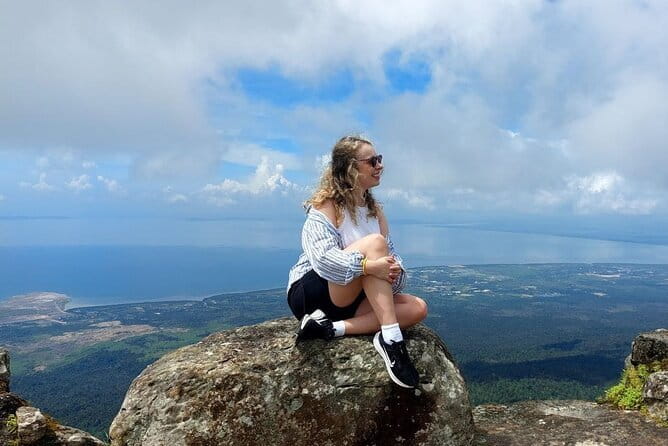
Then comes the heart of the process: Samaki Market. This stop runs about 40 minutes, and the admission is included.
This is where the experience turns from cooking class into a true food experience. You go market-side to explore and select fresh ingredients. That’s a big deal because Khmer cooking relies on the balance of herbs, aromatics, vegetables, and the ingredients people use at home—not shelf-stable substitutes.
In a market like this, your choices influence how your final dishes taste. Even if you don’t know Cambodian ingredient names, you’ll still benefit from seeing what’s fresh and understanding how those ingredients get used.
One detail that stands out in the way this is set up: the market portion isn’t just a quick look-see. You’re there to select items that connect directly to the dishes you’ll cook later.
Eco Lotus Kampot: Garden Harvest to Khmer Stove
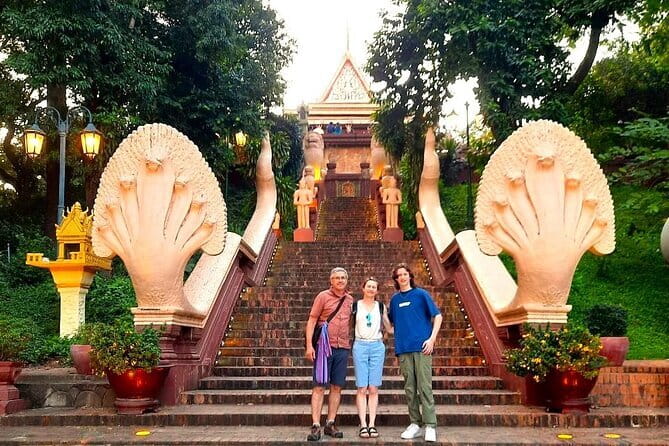
The final block is the main event at Eco Lotus Kampot, set at a traditional home stay. You’ll arrive, then start with ingredient gathering from the organic garden.
From there, you’ll do the hands-on learning:
- collecting fresh vegetables and herbs
- learning how to prepare and cook three authentic Khmer dishes
- plus making one dessert
- finishing the session and then sharing a communal meal
This part is built to teach process, not just outcomes. Harvesting herbs right from the property changes how you see the cooking steps. You’re not imagining what an herb looks like. You picked it. That makes it easier to remember how it smells, how it feels, and what role it plays in the dish.
One practical comfort point: at the cooking site, you’re not forced into constant movement or relocation. You sit in one place, and a team of chefs supports you with ingredients so you can focus on cooking steps.
What You’ll Actually Cook (Savory Dishes Plus Dessert)
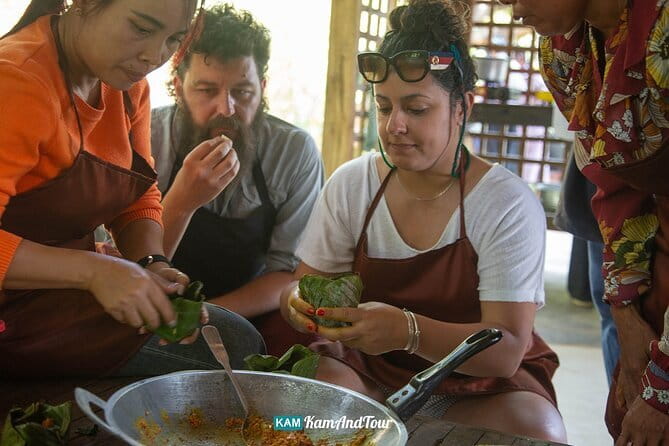
The class covers three popular Khmer dishes and one dessert. Specific dish names aren’t listed in the details you provided, but the structure is clear: you’ll work from prep to completion, and you’ll finish with food you made yourself.
Here’s the useful way to think about it. A Khmer cooking class isn’t only about taste. It’s about method:
- how herbs and aromatics get handled
- how vegetables are prepped
- how flavors come together during cooking
- and how the final dessert rounds out the meal
Because the day includes a communal meal after cooking, you’re also getting the social side of food culture, not just the cooking skills. That’s often what makes a cooking class memorable: you leave with recipes and also with context—how food fits into an everyday shared table.
Meal Time: The Communal Part That Makes It Stick
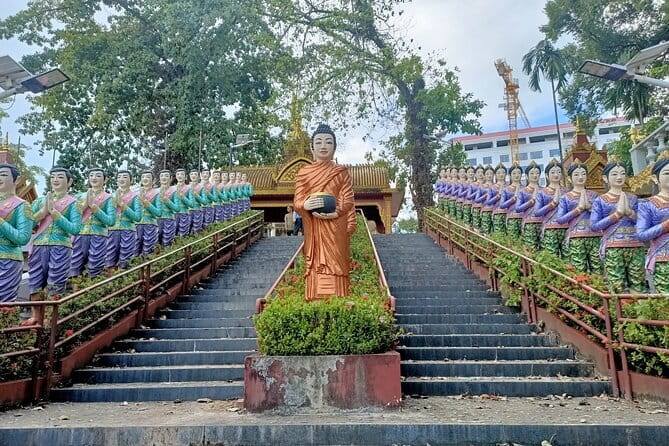
After you finish cooking (the session can end around 12:00 PM or 5:00 PM, depending on the schedule), you’ll have a communal meal.
This is the portion I recommend showing up hungry for. Not because you won’t have enough food—because eating what you cooked is the fastest way to lock in what you learned. You can compare your expectations to the actual result, then ask questions while everything is still fresh in your mind.
Also, since this is a small group experience (max 15), the communal meal feels more like shared lunch than a rushed handoff. That matters when you’re trying to learn food culture, not just collect photo opportunities.
Logistics That Keep the Day Smooth
A few practical details help this class run without stress:
- Group size max 15: more attention, less waiting.
- Pickup offered: reduces early-day hassle.
- Mobile ticket: fewer paper problems.
- Return to the meeting point: you don’t have to figure out how to get back.
- Approx. 5 hours: a short, focused commitment.
- Start time 9:00 am: good if you like mornings and want your day free afterward.
There’s also an intentional pacing difference. Stop 1 is brief. Stop 2 is a focused market block. Stop 3 is the long cooking session. That means you’re not asked to sit through hours of standing and watching.
One more consideration: this experience is described as accessible for most travelers, but it also sounds like it’s a real cooking workflow. If you’re sensitive to kitchen heat or you have mobility limits, you’ll want to consider your comfort level when cooking and sitting.
Who Should Book This Cooking Class
I think this tour works best for you if:
- you want Khmer cooking skills with hands-on steps
- you like markets and ingredient selection
- you care about organic produce and herb flavor
- you prefer smaller groups over crowded tours
- you want a half-day plan that feels culturally grounded
It’s also a good fit if you’re the kind of traveler who enjoys asking questions. The experience is set up with a guide and a team of chefs who support ingredient handling and answer questions as you cook.
If you’re chasing a party atmosphere or a nightclub-style tour vibe, this isn’t that. This is kitchen-focused, food-focused, and calm enough that you can actually learn.
A Small Balanced Note Before You Go
The class format is structured. Stop times are fixed, and the day’s design prioritizes the cooking experience over long wandering. If you want flexibility—like turning the market stop into extra shopping time or adding extra sightseeing—you may find the schedule limiting.
But if you treat this as a food class that includes market context, the tight schedule is exactly what keeps it efficient and good value.
Should You Book Kampot Cooking Class by Eco Lotus Kampot?
If you want a real Kampot food experience—market ingredients, organic garden herbs, and Khmer dishes cooked by your own hands—then yes, I’d book it.
Here’s the decision cheat sheet:
- Choose it if you value hands-on Khmer cooking and ingredient sourcing.
- Choose it if you like small group learning and guided Q&A.
- Consider a different option if you need lots of free time for sightseeing, because this runs on a tight plan and wraps back at the meeting point.
At $25 for about 5 hours, with market admission, cooking admission, and a communal meal included, it’s a strong deal—especially for anyone who’s been disappointed by cooking classes that feel more like a show than a skill-building session.
FAQ
What is the price per person?
It costs $25.00 per person.
How long is the experience?
It’s approximately 5 hours.
Where does the tour start and end?
The activity starts at J55G+CQ5, Entanou Bridge, Kampot, Cambodia, and it ends back at the same meeting point.
What time does it start?
The start time is 9:00 am.
Does the experience include pickup?
Yes, pickup is offered from your hotel.
Does it include visiting a market?
Yes. You visit Samaki Market for about 40 minutes, and admission is included.
What happens at Eco Lotus Kampot?
You arrive at the traditional home stay, harvest fresh vegetables and herbs from the organic garden, learn to prepare and cook three Khmer dishes and one dessert, and then share a communal meal. This stop is about 4 hours with admission included.
Are admission tickets included?
Admission is free at Kampot for Stop 1. Admission is included for Samaki Market and for Eco Lotus Kampot.
Is there a maximum group size?
Yes. The maximum is 15 travelers.
Can I cancel for a full refund?
Yes. Free cancellation is available up to 24 hours in advance of the experience start time for a full refund.
—
If you tell me your travel dates and whether you’re starting from Sihanoukville or already in Kampot, I can help you decide if the 9:00 am timing fits your day plan.