REVIEW · LUANG PRABANG
Luang Prabang: Mekong River Cooking Class with Hotel Pickup
Book on GetYourGuide →Operated by 856today · Bookable on GetYourGuide
Luang Prabang food can start with a boat lunch. This Mekong River cooking class turns a morning market stroll into real cooking practice, and then finishes with a peaceful lunch on the Mekong River. I especially like that you’re not just watching—you’re learning Lao dishes step by step, including classics like fish in banana leaf and mango sticky rice. One possible drawback: you’ll be on a boat, so if you’re prone to motion sickness, think twice.
The other big win for me is the small group size, which makes it easier to get hands-on help from the chef. You also have clear vegetarian options if you need them, and the cooking still follows the same Lao flavor logic. Just plan for sun and timing: it’s about 5 hours total, with market walking in the morning light and some time on the pier.
In This Review
- Key things that make this cooking class worth your time
- What Makes This Mekong River Cooking Class Different in Luang Prabang
- Getting from Your Hotel to the Market: Tuk-Tuk Time and Timing Sense
- The Morning Market Visit: Ingredients, Choices, and Real Lao Shopping
- Boat-Board Cooking Class: What You Actually Do and Why It Works
- The Menu You’ll Cook: Meat Dishes, Vegetarian Dishes, and How They Fit Together
- Lunch on the Mekong: Your Food, River Views, and a Slower Finish
- Price and Value: Is $65 Fair for a 5-Hour River Class?
- Small Group, Multilingual Chef, and Teaching That Keeps You on Track
- What to Bring, What to Expect on the Boat, and Who Should Skip It
- Should You Book This Luang Prabang Cooking Class?
- FAQ
- How long is the Luang Prabang Mekong River cooking class?
- Do they pick you up from your hotel?
- What happens during the morning market visit?
- Is the cooking class on the boat?
- What dishes can you cook?
- What’s included in the price?
- Are drinks included?
- Who is this not suitable for?
Key things that make this cooking class worth your time
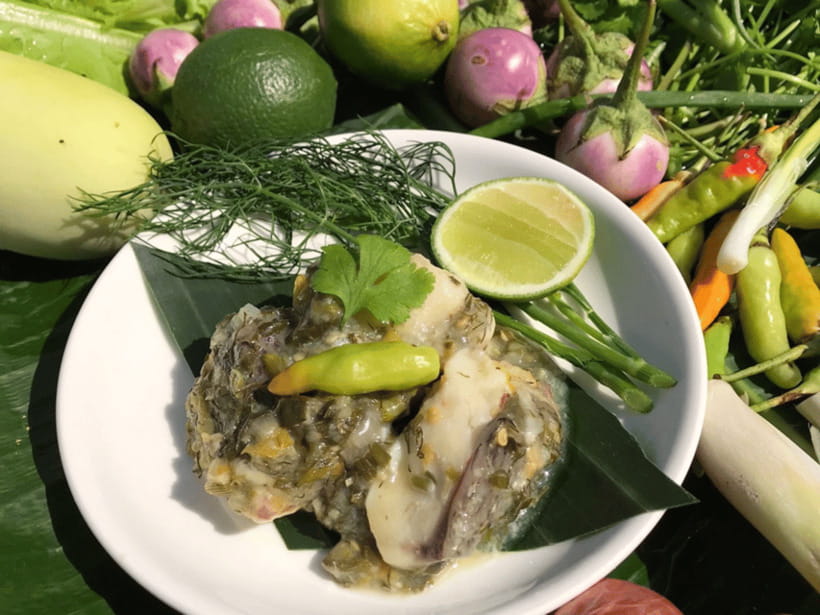
- Morning market sourcing: you pick ingredients at a local food market before you cook
- On-board cooking table: you cook on a boat setting, not in a generic kitchen
- Lao menu focus: banana-leaf steaming and lemongrass flavors show up across dishes
- Vegetarian substitutions that still fit: mushroom, tofu, and tofu salad are built into the menu
- Small group learning: limited to 6 participants, so questions don’t get lost
What Makes This Mekong River Cooking Class Different in Luang Prabang
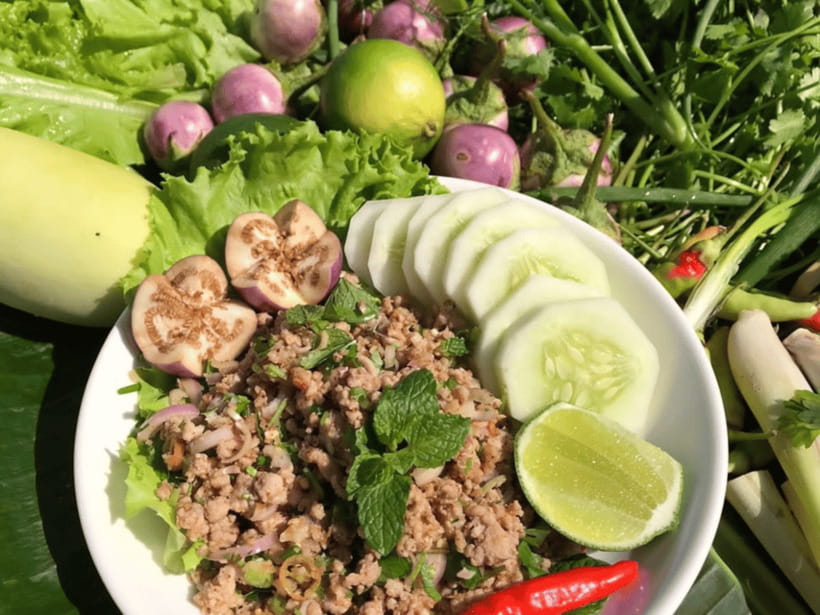
This isn’t a cooking show. It’s more like food prep with a teacher, plus a calm river break at the end. The flow matters: you start by shopping for what you’ll cook, then you move to the pier, and you actually make the dishes at your own table on the boat.
I love that the dishes are classic Lao and built around a few standout techniques. You’ll see banana leaf used for steaming, lemongrass showing up in both meat and vegetarian versions, and mango sticky rice as the sweet finish. That gives you more than recipes—you get a feel for how Lao flavors balance.
The setting helps, too. You’re on the Mekong, not stuck in a restaurant. Even if the river view feels simple, it makes lunch feel slower and more “you made this” than “you ate that.”
You can also read our reviews of more tours and experiences in Luang Prabang.
Getting from Your Hotel to the Market: Tuk-Tuk Time and Timing Sense
You’ll be picked up from your hotel on Luang Prabang’s peninsula, then taken by tuk-tuk with short rides built into the schedule. Expect about two tuk-tuk legs of around 15 minutes each, plus time at the market and on the boat.
This structure is practical: it keeps the day moving without feeling like a long tour bus day. It also means you’re not starting the cooking portion late. You’ll meet your chef at the morning market and begin walking right away, which is ideal if you want to see ingredients while they’re fresh and active.
Plan to be at the pickup point at least 10 minutes early. The tour notes that this is a join-in style pickup, so you might wait a bit if the route has unforeseen delays. If you’re the type who hates surprises, build in a cushion at the start of your day.
The Morning Market Visit: Ingredients, Choices, and Real Lao Shopping
The market stop is around 45 minutes, and that time is the heart of the experience. You’ll stroll through the food market with your chef, looking for the ingredients your class will use. This is where you learn what matters in Lao cooking: what to buy, how ingredients show up in local dishes, and what to pair together.
One detail I really appreciate: the chef’s approach isn’t just about cooking steps. During one recent class, the instructor, Sing, walked the group through the market explaining fruits, vegetables, and meats. In that same session, he was careful and sensitive with a vegan participant, asking whether she’d rather not see the animal parts of the market. She was fine with seeing everything, but she still appreciated the thought.
That’s the kind of guidance that changes how you feel on a food tour. You get context without being steamrolled.
What to look for, as a participant? Think of the market as your ingredient checklist for dishes like:
- fish cooked in banana leaf
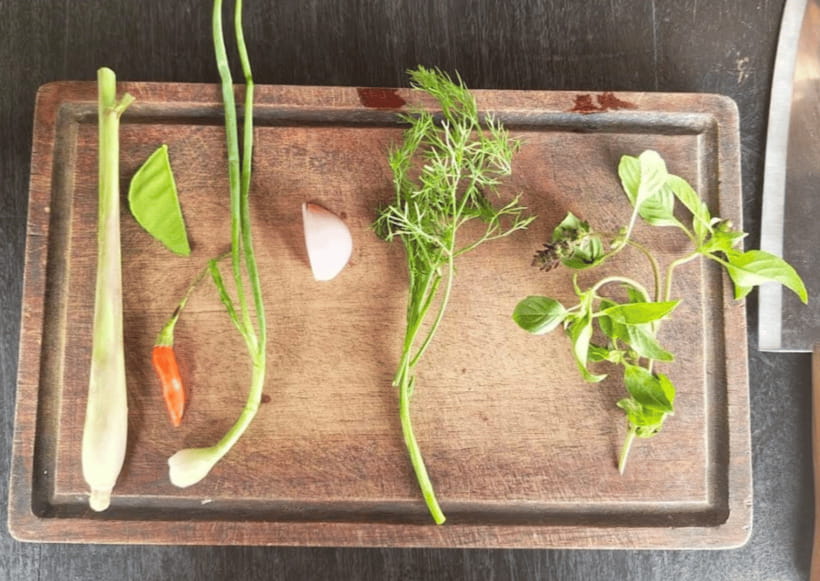
- lemongrass-forward flavors in the pork (and tofu) dish
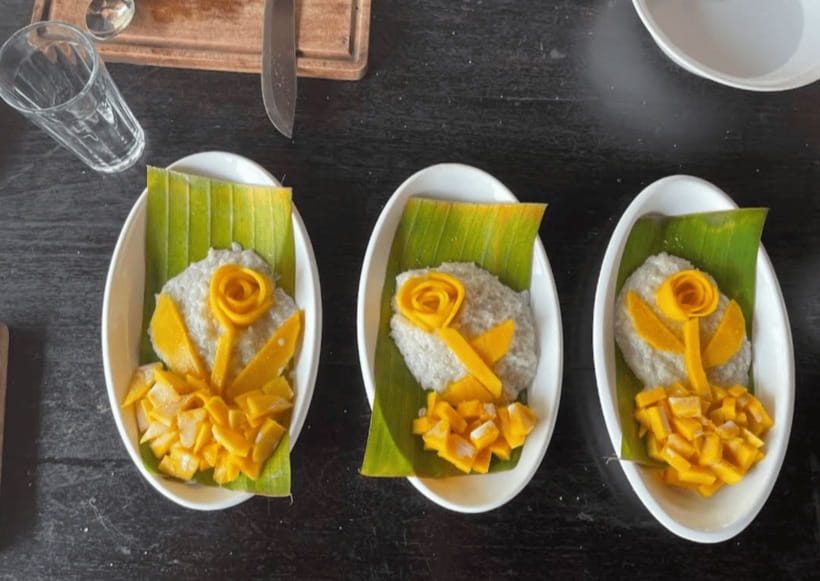
- fresh fruit for the mango sticky rice component
If you come hungry, you’ll have an easier time. Markets can smell strong and be visually intense, so bring your patience and expect to focus more on choosing ingredients than on snacking.
Boat-Board Cooking Class: What You Actually Do and Why It Works
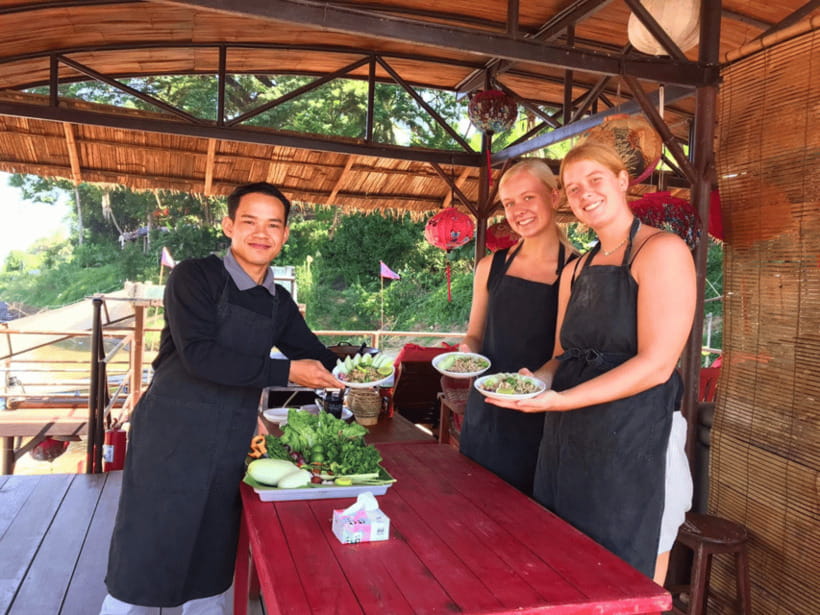
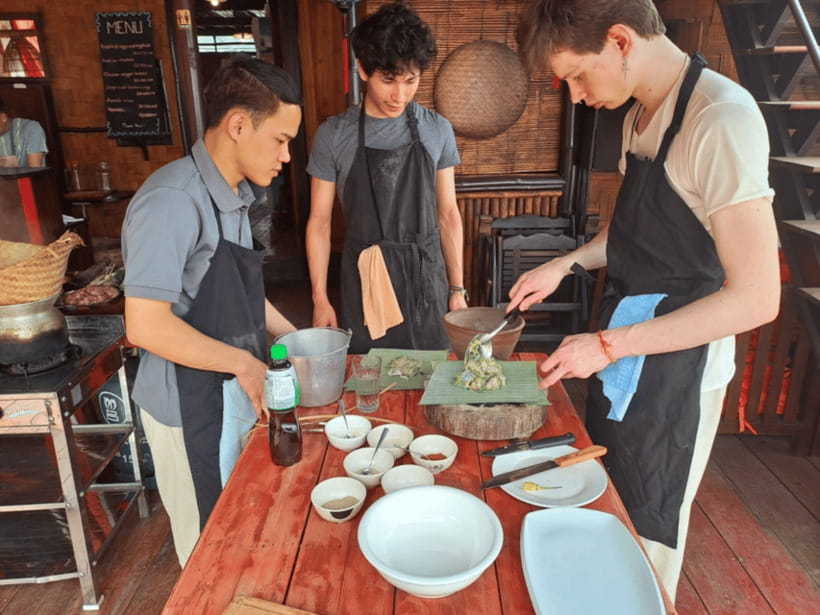
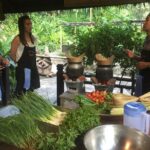
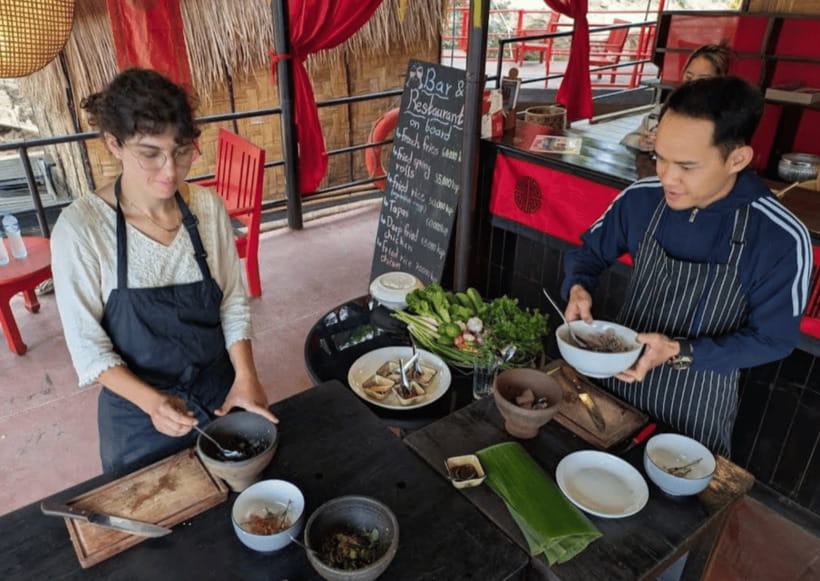
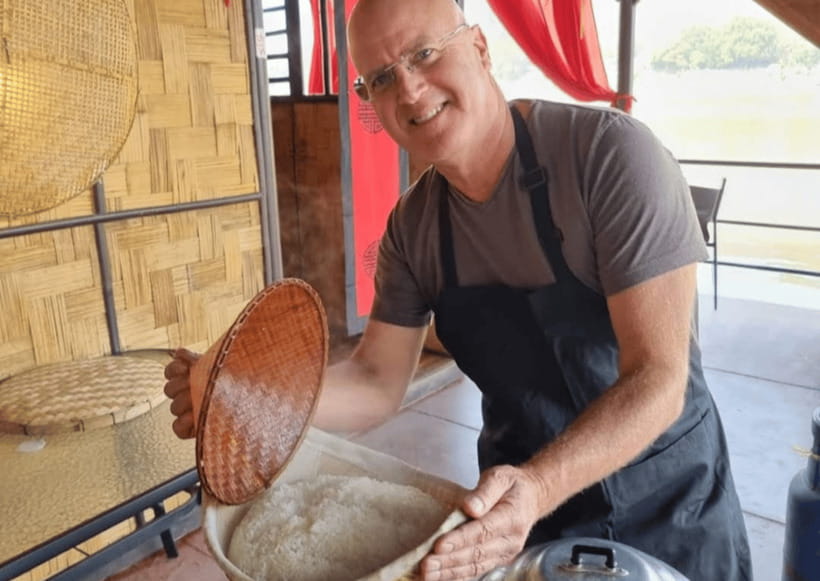
After the market, you head to the pier and board a boat. Then it’s aprons on and hands to the task. The cooking class itself is about 2 hours, which is long enough to learn without turning into a marathon.
Here’s what makes the on-board setup useful: you cook in the environment you’re eating in. That might sound small, but it changes your pacing. You’ll likely feel less like you’re commuting and more like your day is built around one continuous activity.
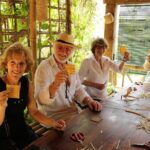
Also, the class is set up for a group of up to 6, so you’re not waiting your turn for everything. With a small crew, you can ask questions, correct techniques, and get feedback when something looks off. It’s the difference between cooking as a spectator and cooking as the cook.
Expect instruction in multiple languages, including French, English, Laothian, and Thai. That matters because you’ll understand what you’re doing—not just copy what someone says.
The Menu You’ll Cook: Meat Dishes, Vegetarian Dishes, and How They Fit Together
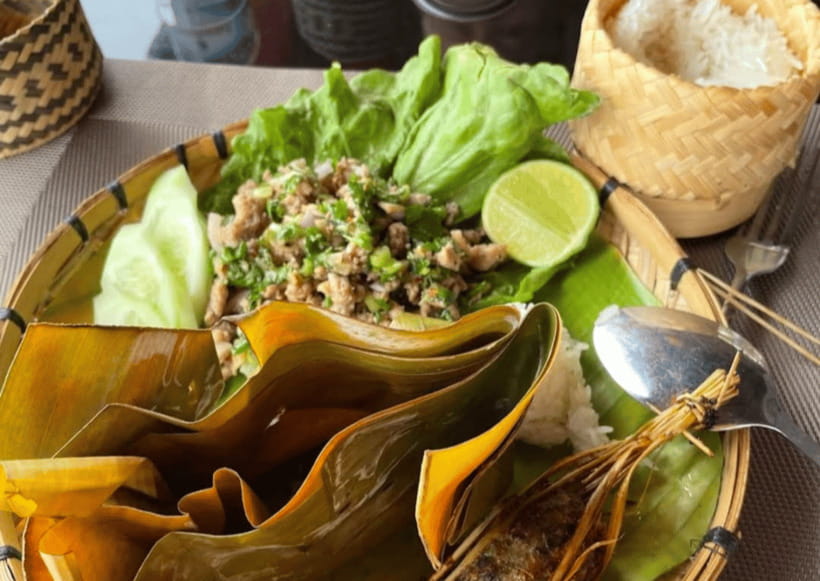
You’ll choose from a set menu with meat and vegetarian options. Even if you pick one track, the underlying theme is consistent Lao cooking: banana-leaf steaming, lemongrass aromatics, savory salads, and a mango sticky rice finale.
Meat menu dishes
- Mok Pah: steamed fish in banana leaf
- Oua Si Khay: minced pork with lemongrass
- Laap Mou: pork salad
- Khao Niew Mak Muang: mango sticky rice
Vegetarian menu dishes
- Mok Het: steamed mushroom in banana leaf
- Oua Si Khay (Vegetarian): minced tofu with eggs in lemongrass
- Laap Tofu: tofu salad
- Khao Niew Mak Muang: mango sticky rice
Why this menu is a good value? Because it teaches technique through contrast. You’re not just making one dish; you’re building a meal with different textures and methods. Banana-leaf steaming teaches gentle, fragrant cooking. The lemongrass dish teaches how aromatics power a savory base. The salads (pork or tofu) show the Lao approach to bright, seasoning-forward flavors. And mango sticky rice gives you a clear sweet finish.
If you’re vegetarian, you’re not stuck with a random swap. The vegetarian menu is its own set, including banana-leaf mushroom steaming and a lemongrass tofu dish—so you learn the vegetarian version of the same cooking logic.
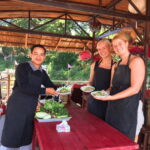
Lunch on the Mekong: Your Food, River Views, and a Slower Finish
Once your dishes are ready, you’ll enjoy lunch with your own cooked meal. The whole point is that calm pause afterward—the Mekong view while you eat what you made.
Lunch is included, and the meal is built around your class choices. That means you don’t end up with a separate buffet that feels unrelated to the cooking. Your dishes are the menu, and you can taste the difference between what you made in the morning and what you might normally order in a restaurant.
The experience notes also say there’s a peaceful lunch on the Mekong River, which is exactly what you want after a market walk and active cooking. It’s not a rushed stop. It’s a sit-down moment.
One small heads-up: the activity includes lunch, but drinks are not included. So if you like a beverage with your meal, budget for it separately.
In one recent booking, the day also included a free sunset cruise after the cooking class. That isn’t listed in the core inclusions here, so treat it as a possible bonus rather than a guaranteed second act.
Price and Value: Is $65 Fair for a 5-Hour River Class?
At $65 per person for about 5 hours, this falls into the “you’re paying for expertise and structure” category—not the cheapest way to eat in Luang Prabang, but a smart one if you want real skills.
Here’s what that price buys in practical terms:
- hotel pickup and drop-off, which saves time and hassle
- a guided morning market tour to choose ingredients
- a professional chef-led cooking class with hands-on time
- lunch made from your own cooking
If you were to do just the market on your own and then hire a private cooking teacher later, you’d likely pay more and lose the smooth flow. The class is also small (up to 6), which is a big quality marker. In bigger classes, you spend more time watching. Here, you get time cooking.
Also, the menu choice reduces risk. If you have dietary needs, vegetarian dishes are offered as a defined menu option, not a vague adjustment.
If your hotel is outside the city, there may be an additional surcharge. And the day can cost more if the group is smaller. So when comparing value, factor that your exact final price might shift a bit based on where you’re staying and how the group fills.
Small Group, Multilingual Chef, and Teaching That Keeps You on Track
This is limited to 6 participants, which is unusually helpful for a cooking class. Smaller groups mean you’re less likely to get lost while the chef moves between stations.
The instructor can work in French, English, Laothian, and Thai, so you should find the explanation clear even if your Thai isn’t strong. And the teaching style seems to care about the full experience, not just the dishes.
That showed up in the way Sing handled the market when the group included a vegan participant—he asked if she’d prefer not to see animal parts. That’s not required for everyone, but it’s a good sign. It tells me the chef pays attention to comfort and not only efficiency.
If you want a lesson you can use later, this matters. You want to cook the same way because you understood the why, not just the what.
What to Bring, What to Expect on the Boat, and Who Should Skip It
This is an outdoor morning plus boat time, so pack smart.
Bring:
- hat
- camera
- sunscreen
- comfortable clothes
- comfortable shoes (for cooking and for the boat trip)
You should also be prepared for sun. Even with a good pace, you’ll spend time outside during the morning market and at the pier.
Know what’s not allowed in the vehicle:
- smoking
- drinks in the vehicle
- alcohol and drugs
- explosive substances
- alcoholic drinks in the vehicle
Not suitable for:
- children under 5
- pregnant women
- wheelchair users
- people prone to seasickness
That boat element is the key factor. If you’re sensitive to motion, you’ll likely feel it more here than on a quick riverside stroll.
Also, if you’re booking with dietary restrictions, inform the team in advance so they can set you up with the right menu selection. The options exist, but you need to communicate your needs early.
Should You Book This Luang Prabang Cooking Class?
If you want a hands-on way to learn Lao flavors, I’d book this. The market-to-boat cooking flow is a practical way to understand what you’re eating, and the menu is specific enough that you’ll walk away with real technique.
Book it if:
- you like cooking and want a structured lesson
- you care about ingredient sourcing, not just the final dish
- you need vegetarian options that match the menu style
- you’d enjoy a calm Mekong lunch after active morning time
Skip it (or pick something else) if:
- you’re prone to seasickness
- you need wheelchair accessibility
- you’re traveling with a child under 5
- you’re pregnant and prefer to avoid boat time
One last tip: choose your menu ahead of time and show up with comfortable clothes and sun protection. Then let the chef guide you. This is one of those days where the value isn’t just what you eat—it’s what you learn before the first bite.
FAQ
How long is the Luang Prabang Mekong River cooking class?
The total duration is about 5 hours.
Do they pick you up from your hotel?
Yes. Hotel pickup and drop-off are included, and you should be at the hotel lobby at least 10 minutes before the scheduled pickup.
What happens during the morning market visit?
You meet your chef at the market and walk around looking for the ingredients needed for your cooking class.
Is the cooking class on the boat?
Yes. After visiting the market, you go to the pier and cook on board the boat, then enjoy lunch with your own cooked meal.
What dishes can you cook?
There’s a meat menu and a vegetarian menu. The meat options include Mok Pah (banana-leaf steamed fish), Oua Si Khay (pork with lemongrass), Laap Mou (pork salad), and Khao Niew Mak Muang (mango sticky rice). The vegetarian menu includes Mok Het (banana-leaf steamed mushrooms), vegetarian Oua Si Khay (tofu with eggs in lemongrass), Laap Tofu (tofu salad), and mango sticky rice.
What’s included in the price?
Included are hotel pick-up and drop-off, the morning market tour, the cooking class on board, and lunch.
Are drinks included?
No. Drinks are not included.
Who is this not suitable for?
It is not suitable for children under 5, pregnant women, wheelchair users, and people prone to seasickness.