REVIEW · LUANG PRABANG
Luang Prabang: Cooking Class at the Former Royal Palace
Book on GetYourGuide →Operated by Victoria Xiengthong Palace Hotel · Bookable on GetYourGuide
Luang Prabang has a way of getting under your skin. This Luang Prabang Lao cooking class starts with a guided morning market and ends with you eating what you made in a calm palace setting by the Mekong. I love the mix of market-to-kitchen learning and the fact it’s led by chef-guides like Noi and Nov, who explain ingredients and steps clearly. I also like the small-group feel (up to 10) that keeps the pace friendly. One possible drawback: there can be some idle time while the kitchen team does preliminary prep, so you’ll be cooking, but not every minute is hands-on.
In This Review
- Key things I’d mark on your map before you go
- Luang Prabang cooking at the Former Royal Palace: the real vibe
- Getting to Victoria Xiengthong Palace and the start by Wat Xiengthong
- The morning market hunt: Lao ingredients you’ll actually recognize later
- From market to kitchen: the quiet gap where the chefs prep
- Cooking class on-site at Alame: what you’ll do and how you’ll learn
- Dishes you can expect to cook
- How the teaching style works
- Lunch at the terrace: eating your Lao meal by the Mekong
- Price and value: is $45 a fair deal for Luang Prabang?
- Who this cooking class suits best (and who should reconsider)
- Practical tips before you go: make the day easier
- Should you book the Victoria Xiengthong Palace Lao cooking class?
- FAQ
- How long is the cooking class?
- What’s included in the price?
- Can I request a vegetarian option?
- What language is the instruction?
- Where do I meet for the tour?
- Is it suitable for wheelchair users?
Key things I’d mark on your map before you go
- Morning market with a chef so herbs, spices, and everyday ingredients actually make sense
- Former royal palace setting at Victoria Xiengthong Palace makes the whole day feel special
- Hands-on Lao cooking with support as you cut, stir, and assemble dishes
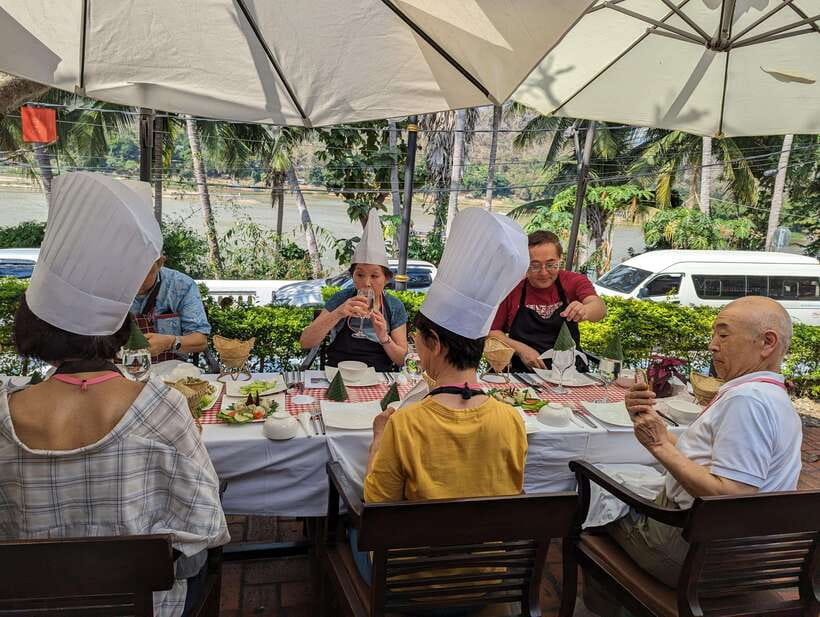
- Mekong-side dining where your lunch is served in a peaceful, riverside terrace setting
- Recipe take-home so you can recreate the flavor at home
Luang Prabang cooking at the Former Royal Palace: the real vibe
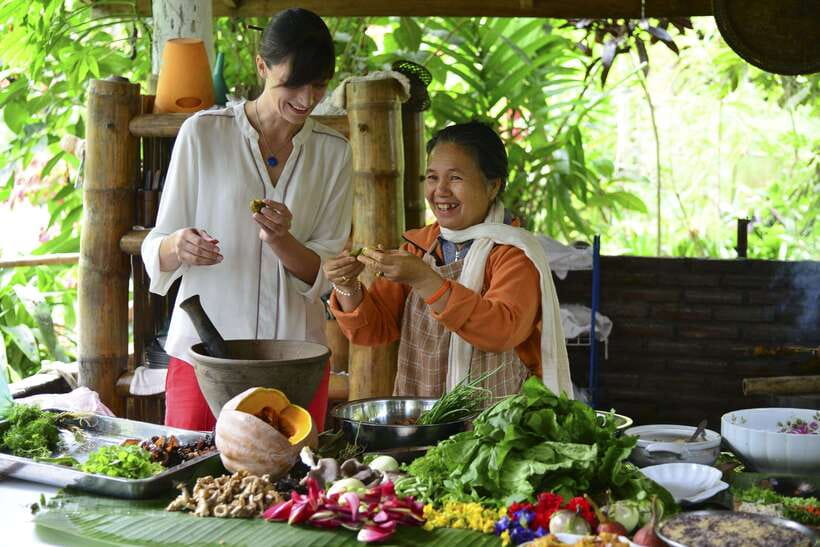
This is a cooking class that treats Lao food like living culture, not a performance. You start outdoors, you learn by doing, and then you sit down and eat the results in a setting that feels ceremonial without being stiff. The combination of the former royal palace grounds and the riverside restaurant atmosphere is a big part of the appeal—your lunch doesn’t feel like a rushed add-on.
The experience centers on three linked parts: (1) a guided ingredient hunt at the morning market, (2) a chef-led cooking session where you actively participate, and (3) a relaxed lunch where your work becomes the meal. That flow matters because Lao cuisine is ingredient-driven. If you don’t know what you’re holding and why it’s used, a dish can taste like a blur of flavors. Here, you get the context first.
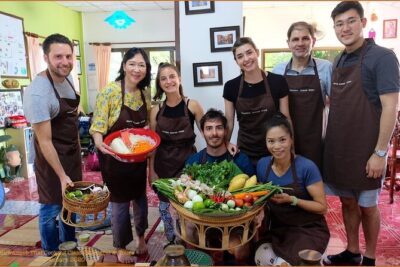
You’ll be working in a small group, with an English-speaking instructor/chef team. Most dishes are taught with practical steps you can reuse later. Think more kitchen skills than trivia.
One note to keep in mind up front: you should expect to be comfortable standing for extended stretches. If that’s an issue, this class may feel tiring.
You can also read our reviews of more tours and experiences in Luang Prabang.
Getting to Victoria Xiengthong Palace and the start by Wat Xiengthong
Your meeting point is on Kounxoau Rd (Ban Phonehueng), near Wat Xiengthong Temple, close to Victoria Xiengthong Palace. The day begins at the palace, which is a plus if you like starting your activities from a scenic, central base instead of trekking across town.
From there, you’ll head to the morning market. The format gives you options: you can go by bicycle or tuk tuk depending on how the group is set up. If you’re traveling with cameras and a little curiosity, the tuk tuk ride is usually part of the fun rather than a chore. Either way, the goal is simple—get you to the market while it’s still lively.
This start also helps you avoid the common cooking-class problem: arriving cold. You’ll warm up with sights and smells first, then you’ll be ready to cook.
The morning market hunt: Lao ingredients you’ll actually recognize later
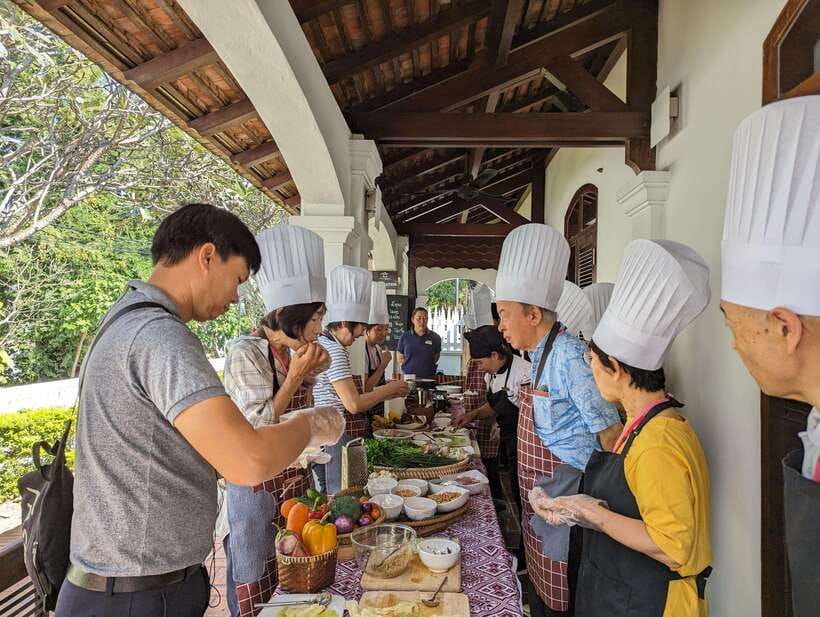
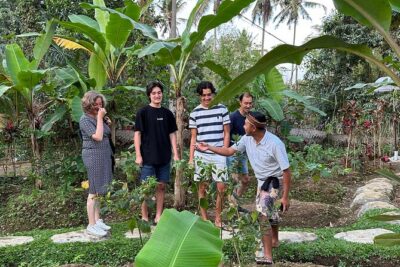
The morning market visit is led by a chef, and it’s one of the strongest parts of the experience. The chef helps you connect names to ingredients, and (just as important) explains how Lao cooks think about balance—fresh herbs, sour notes, spice, and aromatics working together.
In Luang Prabang, the market isn’t just a place to buy things. It’s where you learn what locals consider normal. You’ll handpick ingredients for the dishes you’ll make later, and you’ll also get a sense of what’s essential versus what’s optional.
A couple details I’d pay attention to while you’re there:
- Ask what herbs you’re buying and what they’re used for. Lao dishes often rely on fresh herbs for the final flavor hit.
- Notice sour components and aromatic bases. Even if you’ve had Lao food before, you’ll likely learn the ingredient logic behind it.
In the past, guides like Vannasone have been praised for making the market understandable even for people who already cook. If you’re a food person, this is where you’ll feel the most “aha.”
From market to kitchen: the quiet gap where the chefs prep
After the market, you’re not thrown straight into the chopping board immediately. There’s time for sightseeing and/or a breather while the kitchen team does preliminary setup—ingredients sorted, stations staged, and cooking flow planned.
Some classes include a pause where you can wander nearby or enjoy a coffee while things get ready, often with a view of the Mekong. This is one of those “good to know” moments: you might expect nonstop hands-on cooking, but you’ll likely get a mix of walking around and then real cooking once everything is lined up.
If you’re the type who likes to learn every step from start to finish, this is the main thing to weigh. Based on feedback from past participants, the class still stays fun and organized, but the hands-on portion is strongest once you’re in the cooking session and less constant during prep time.
Cooking class on-site at Alame: what you’ll do and how you’ll learn
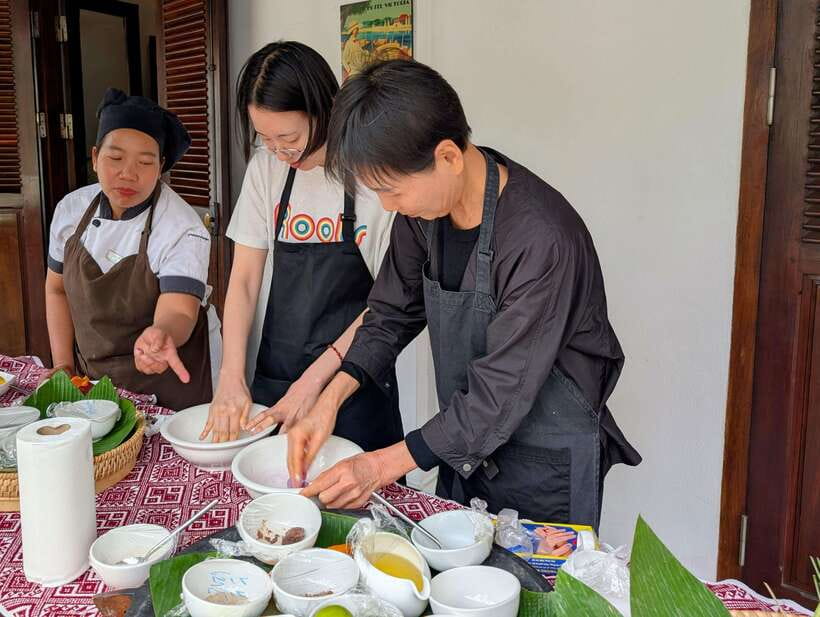
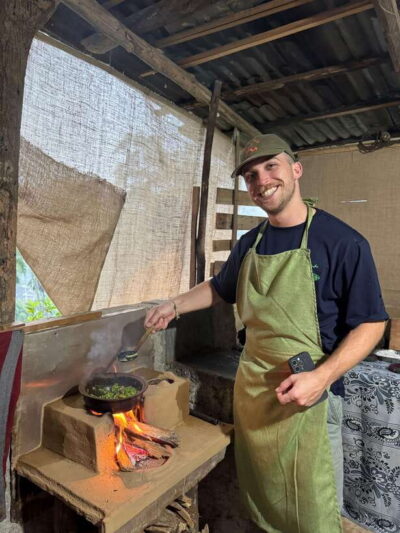
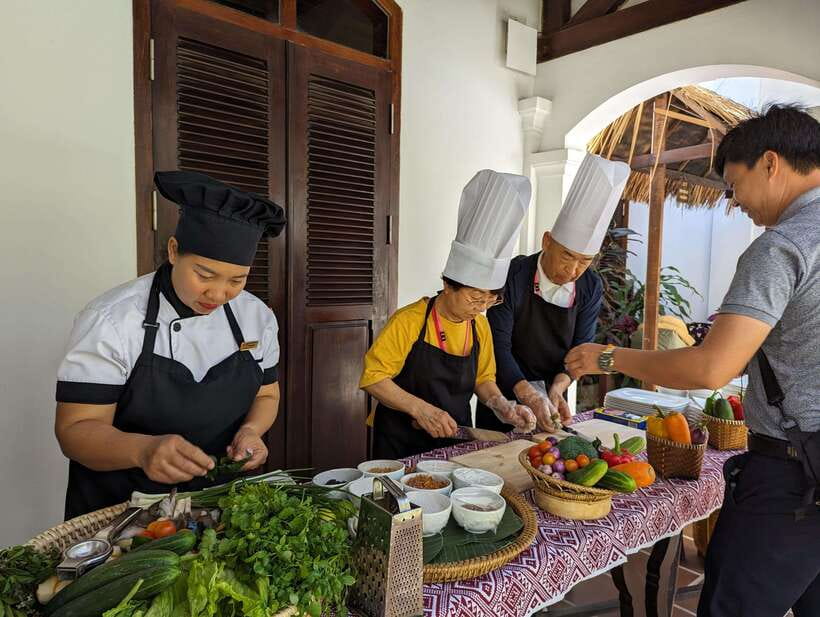
The cooking portion is where the day turns practical. You’ll head to the riverside cooking area at Alame Restaurant connected to the Victoria Xiengthong Palace experience. The setting tends to be calmer than a street kitchen—more controlled, more comfortable, and still scenic.
The class is described as hands-on, and that matches what you’ll likely experience: you’ll be cooking alongside the instructor and team, not just watching. People have especially praised chefs like Noi for clear instructions and a relaxed pace that still keeps things moving.
Dishes you can expect to cook
You’ll likely cook several Lao dishes in a single session. Based on typical class outcomes described, common dishes include:
- Laab (often a chicken laab salad)
- A sour soup (pork and mushroom has come up) with herbs
- A coconut-based dessert (rice balls in coconut milk show up often)
- Plus smaller appetizers or fresh sides that round out the meal
You may also see curries or fresh salads referenced in the class approach, so expect a mix of herbs-forward dishes and cooked elements.
How the teaching style works
A key strength here is that the chef doesn’t treat techniques like secrets. You learn steps you can repeat:
- How to build flavor with aromatics and balance
- How to handle fresh herbs so they don’t just become garnish
- How sour and spicy elements work together (often the trickiest part for home cooks)
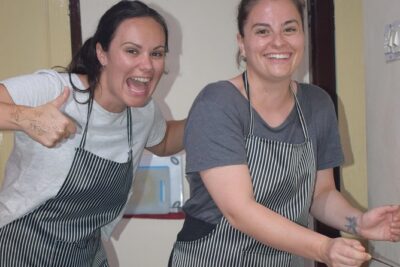
Also, because it’s a small group, the chef can adjust the pacing. Past participants noted that the guide doesn’t rush and gives everyone room to go at their own speed.
Lunch at the terrace: eating your Lao meal by the Mekong
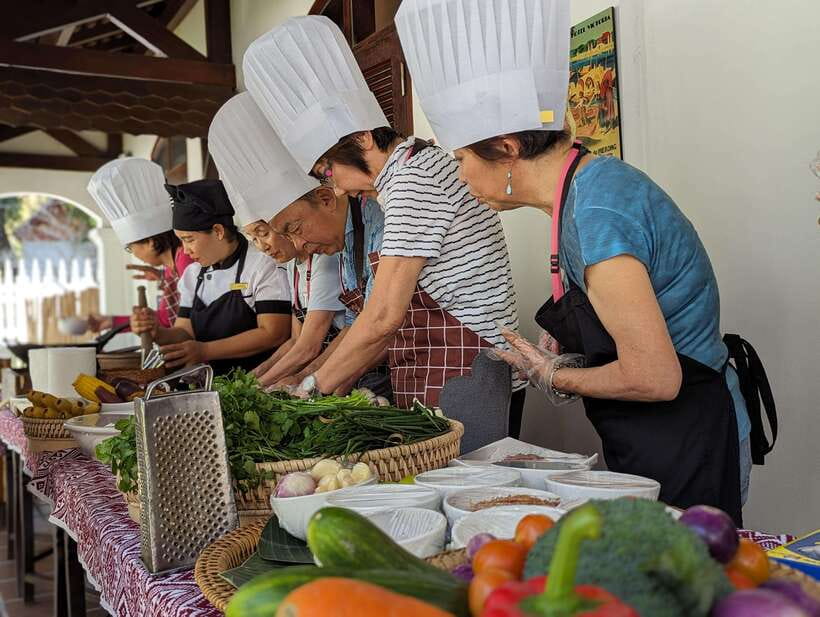
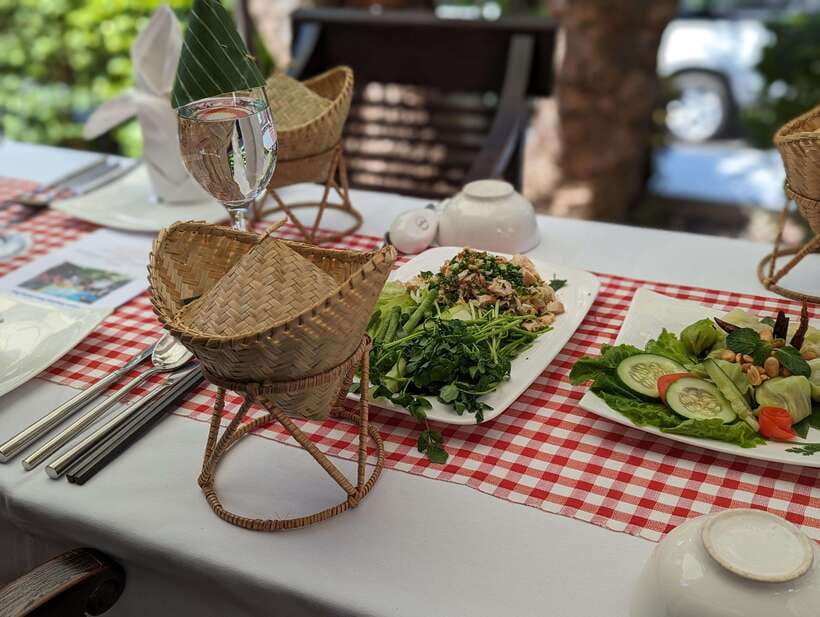
Lunch is served after the cooking session, and it’s not just “here’s food.” It’s part of the learning loop. You finally taste the dishes you built, so the ingredients you handled in the market land in your memory with meaning.
The lunch setting is commonly described as riverside and peaceful, with views toward the Mekong. That matters more than it sounds. When you’re eating outdoors with a calm view, flavors feel clearer and the whole class feels like a break, not an activity tax.
Expect to eat multiple dishes from what your group prepared. The class also includes lunch as part of the price, which is a big value point—this isn’t a “pay to cook, then pay again for lunch” situation.
You’ll also get recipe guidance (including take-home recipes). That’s useful if you want to recreate at home rather than just remember that it tasted good.
Price and value: is $45 a fair deal for Luang Prabang?
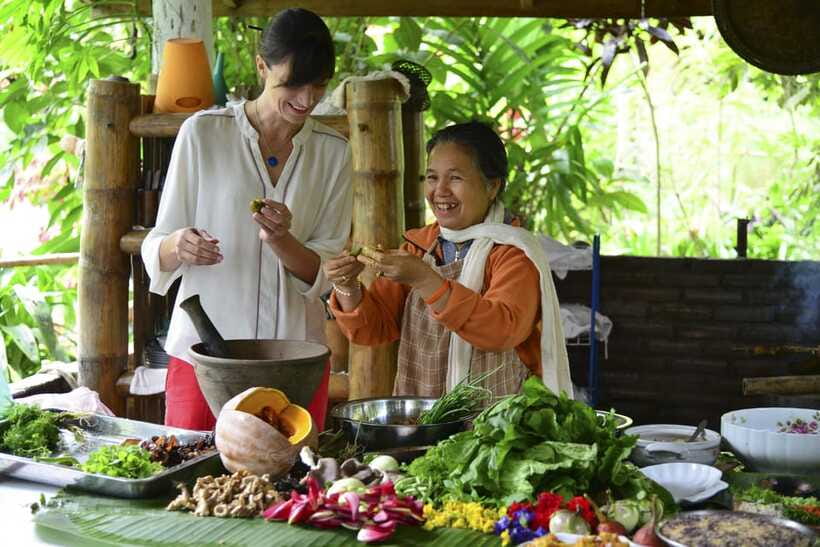
At $45 per person for a ~4-hour experience, the best way to judge value is what you’re getting bundled in:
- Guided morning market tour (including transport by bicycle/tuk tuk)
- Chef-led hands-on cooking class
- Lunch in a riverside/palace-linked setting
- Small group size (up to 10)
- English instruction
- Recipe materials to take home
If you tried to recreate this on your own, you’d still spend time (and possibly money) on market shopping, cooking time, ingredient uncertainty, and then figuring out what substitutions work. Here, you pay for guidance plus the convenience of an organized kitchen setup and a chef who helps you avoid common mistakes.
One thing to budget for: drinks aren’t included, and you may want to tip. Those small extras don’t wreck the value, but they do change the final price a bit.
Overall, I’d call it solid value if you like food that comes with context. If you only want a quick meal and don’t care about learning ingredients, you may find it more than you need.
Who this cooking class suits best (and who should reconsider)
This is a great match for:
- Food lovers who want Lao cooking skills, not just a tasting
- Travelers who enjoy market mornings and want a chef’s explanation
- People who like small-group experiences and clear instruction
- Couples and friends who want a shared activity with a strong payoff at lunch
It’s less ideal for:
- Wheelchair users (not suitable per the activity notes)
- Anyone who isn’t comfortable standing for extended periods
- Very young children (it’s not suitable for babies under 1 year)
- Older travelers who may struggle with the day’s standing and walking demands (there’s an age limit noted)
If you’re sensitive to long waits between market and cooking, go in expecting some downtime for prep. It usually stays relaxed, but it’s not a nonstop hands-on workshop.
Practical tips before you go: make the day easier
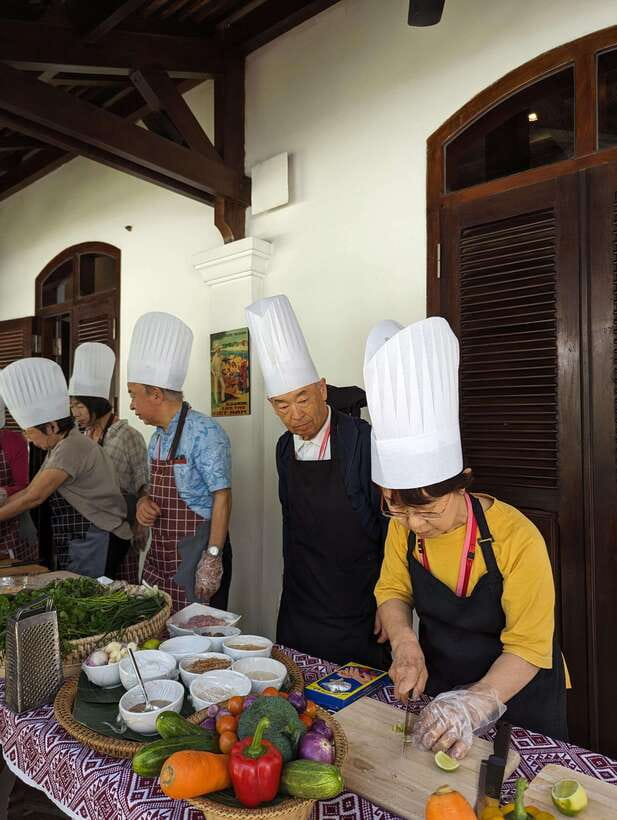
A few small things make a big difference:
- Bring a hat for the market and outdoor parts of the morning
- Wear shoes you can stand in and walk in comfortably
- Plan to skip heavy alcohol or strong drinks before cooking; the class environment is set up around food focus
- If you want vegetarian options, you’ll need to notify in advance
Also, remember the rules: no weapons or sharp objects, and alcohol/drugs aren’t allowed. (That’s mostly standard for cooking environments, but it’s good to know.)
If you’re taking photos, the palace grounds and riverside terrace are usually where your pictures look best. Just be mindful around the cooking station so you’re not crowding the workspace.
Should you book the Victoria Xiengthong Palace Lao cooking class?
I think you should book it if you want more than a meal. Choose it if you like:
- learning from a chef at the market,
- cooking with clear steps,
- and ending with a calm lunch in a heritage setting by the Mekong.
I wouldn’t book it if you’re looking for a strictly nonstop “each minute in the pan” class or if standing for a long stretch is hard for you.
If your schedule allows only one food activity in Luang Prabang, this is a strong pick because it connects ingredients to technique and then rewards you with a proper lunch. That market-to-lunch loop is exactly what you want from a cooking class.
FAQ
How long is the cooking class?
The experience runs about 4 hours.
What’s included in the price?
You get the morning market tour by bicycle or tuk tuk, the cooking class, and lunch. Drinks are not included.
Can I request a vegetarian option?
Yes. Vegetarian options are available, but you need to notify the provider in advance.
What language is the instruction?
The instructor is English.
Where do I meet for the tour?
You meet at Kounxoau Rd, Ban Phonehueng, Luang Prabang, near Wat Xiengthong Temple.
Is it suitable for wheelchair users?
No. The activity notes that it is not suitable for wheelchair users.