REVIEW · INDONESIA
Nusa Dua: Balinese Cooking Class with Market Tour
Book on GetYourGuide →Operated by Summerinbalitour · Bookable on GetYourGuide
Want food lessons with a sea view?
I love how this class turns Balinese cuisine into hands-on work, and I also like the small-group feel with a friendly chef named Teddy. You’ll cook a full lineup of 12 menus, then eat what you make. One drawback to plan around: morning classes include the market tour, while afternoon classes don’t, so you may miss that extra local step if you pick the later time.
If you want a Bali cooking experience that feels intimate (not a cafeteria-style demo), this one fits. Live music in the background helps, and you’ll also leave with a certificate and a recipe book, which is the part that actually helps you repeat the flavors later. It’s taught in English, and the group is limited to 10 people.
In This Review
- Key things that make this class worth your time
- Ocean-View Cooking in Nusa Dua: What the Setting Really Does for the Lesson
- Morning vs Afternoon: How the Schedule Changes Your Experience
- Morning class (10:00–14:00)
- Afternoon class (15:00–18:00)
- The Market Tour Step (Morning Only): Why It’s More Than a Warm-Up
- Cooking 12 Balinese Menus: The Flavor System You’ll Learn
- Spice bases and pastes
- Main dishes and proteins
- Fresh and veggie plates
- What You Actually Eat: Lunch or Dinner Made From Your Work
- Your Chef Guide and Live Music Touch: What the Reviews Signal
- Price and Value: Is $86 Fair for 3–4 Hours and 12 Menus?
- Logistics That Affect Your Comfort (and How to Prep)
- Who This Nusa Dua Cooking Class Is Best For
- Should You Book This Cooking Class in Nusa Dua?
- FAQ
- What’s included in the Balinese cooking class with market tour?
- Are there different class times?
- Does the market tour happen for both classes?
- How many dishes will I cook?
- Is lunch or dinner included?
- How big is the group?
- What language is the instruction?
- What should I bring?
- Are drinks included?
- FAQ
- Is the experience refundable if my plans change?
- Can I reserve and pay later?
- How far in advance should I book?
- Is alcohol allowed during the class?
Key things that make this class worth your time
- Ocean-view cooking while you’re learning, not stuck inside a back room
- Market tour in the morning if you choose the 10:00 class
- 12 Balinese dishes and spice work you’ll actively make, not just watch
- Friendly English-speaking chef Teddy and a genuinely fun tone
- Lunch or dinner included, depending on which time slot you book
Ocean-View Cooking in Nusa Dua: What the Setting Really Does for the Lesson
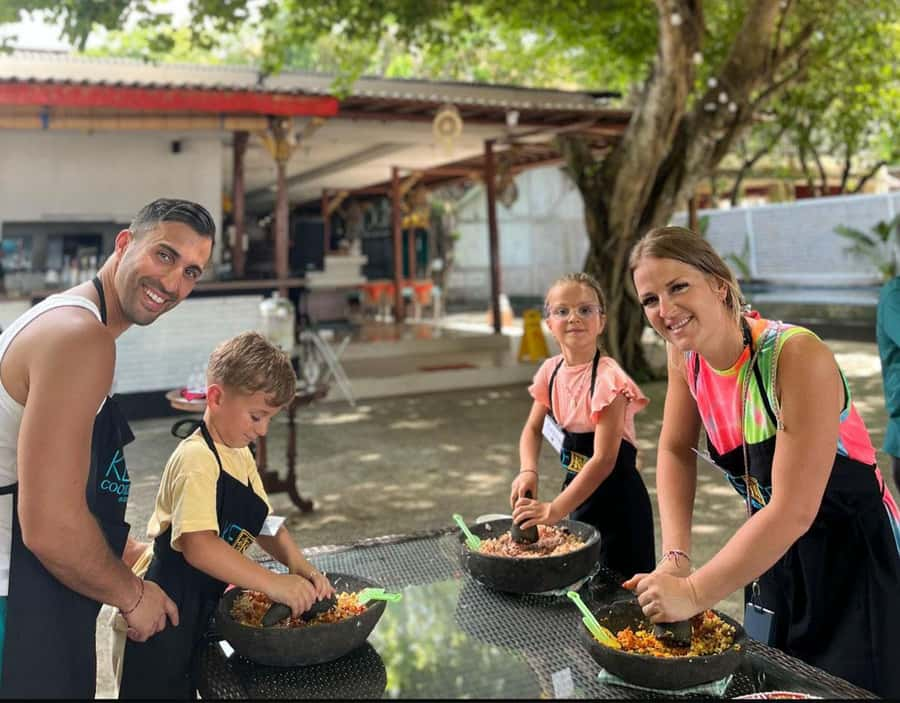
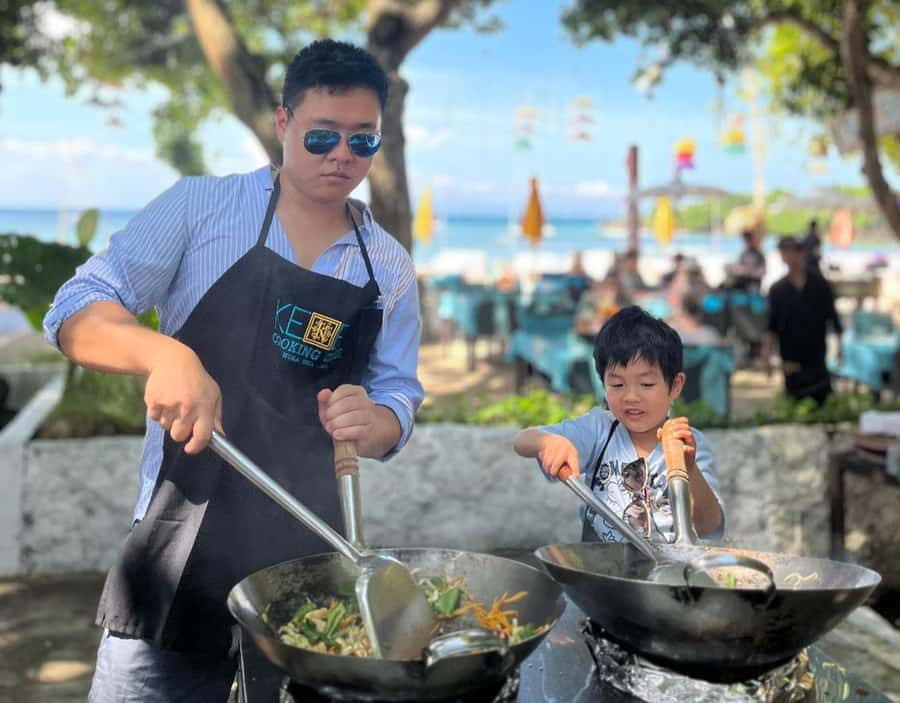
Nusa Dua is known for being polished and tourist-friendly. This cooking class still keeps that comfort, but it doesn’t feel like a show. The big reason I’d pick this location is the ocean-view setup. You’re not only cooking. You’re also relaxing while you learn, and the atmosphere makes it easier to focus on technique.
You’ll get a welcome tea and snack first, so you’re not starting the class hungry or cranky. Then you settle in for guided cooking with a friendly chef, plus live music. That live music detail matters more than it sounds. In cooking classes, the tone can go one of two ways: stiff and quiet, or lively and relaxed. This one leans toward the fun side.
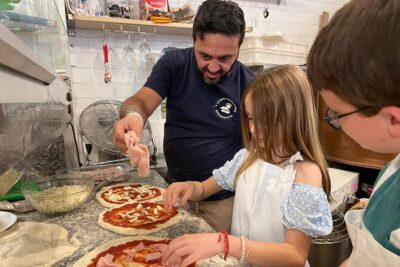
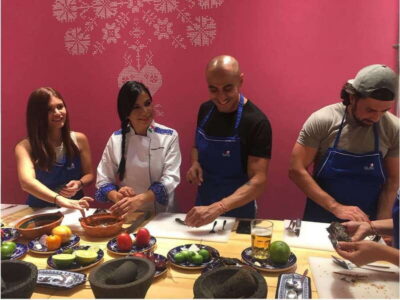
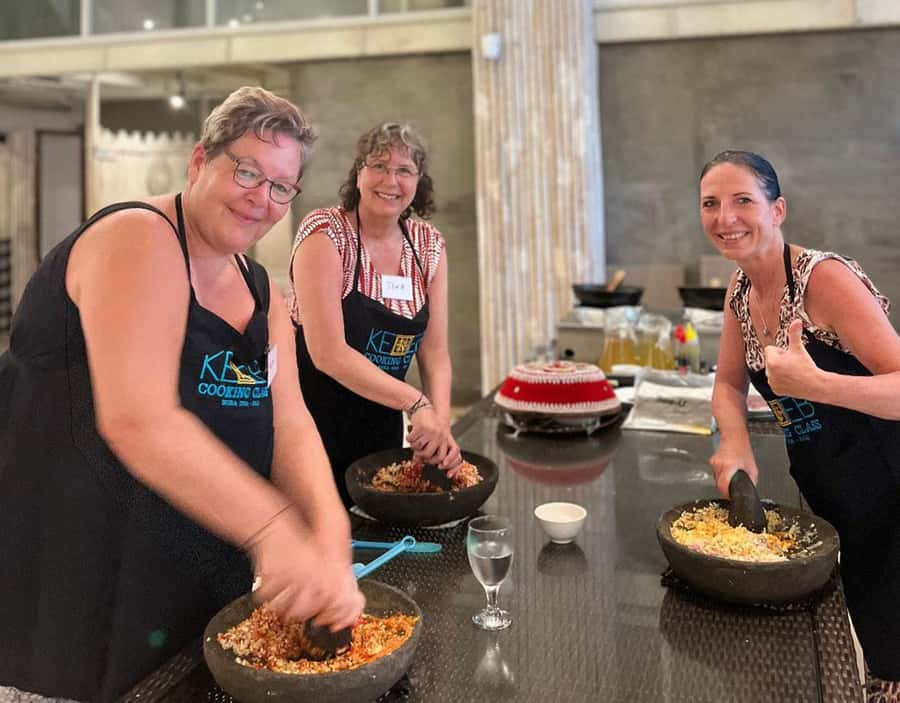
Small group size also changes how the class feels. With a maximum of 10 participants, you have more chances to ask questions and get corrected on spice mixing or plating. If you’ve ever been one of 25 people watching one instructor, you know why this matters.
You can also read our reviews of more tours and experiences in Indonesia.

Morning vs Afternoon: How the Schedule Changes Your Experience
You have two options: a morning class from 10:00–14:00 or an afternoon class from 15:00–18:00. Both include cooking and eating, but the morning version adds the market tour.
Morning class (10:00–14:00)
- Starts with a local market tour
- Then you move into the cooking portion
- Finish with lunch (since your meal is included for morning)
Afternoon class (15:00–18:00)
- Skips the market tour
- Still includes cooking, your meal, and the same main set of Balinese dishes
- Finish with dinner
If you’re the type who likes context—seeing ingredients before you cook—pick the morning. If you just want the cooking and you’d rather save sightseeing time for later, the afternoon works fine.
One practical note: the tour team contacts you via WhatsApp after booking confirmation. So if you like a clear, old-school paper schedule, you’ll want to keep an eye on your phone.
The Market Tour Step (Morning Only): Why It’s More Than a Warm-Up
The market tour is only offered with the morning class. That’s the most important difference between the two options.
Why I like the market step: it gives the food meaning. You’re not only learning which spices go into the dishes—you’re also getting a sense of where those ingredients come from and how people shop locally. Even if you only take a quick glance and don’t turn it into a deep shopping trip, it helps your brain connect the cooking to real daily life.
You can also use the market tour as a chance to get your questions answered before you touch a mortar and pestle. Since the class focuses heavily on spice pastes (more on those next), seeing the ingredients first can make the flavor logic click faster.
If you’re short on time in Bali, the afternoon class may be your better choice. But if you enjoy the “food detective” side of travel, morning is the move.
Cooking 12 Balinese Menus: The Flavor System You’ll Learn
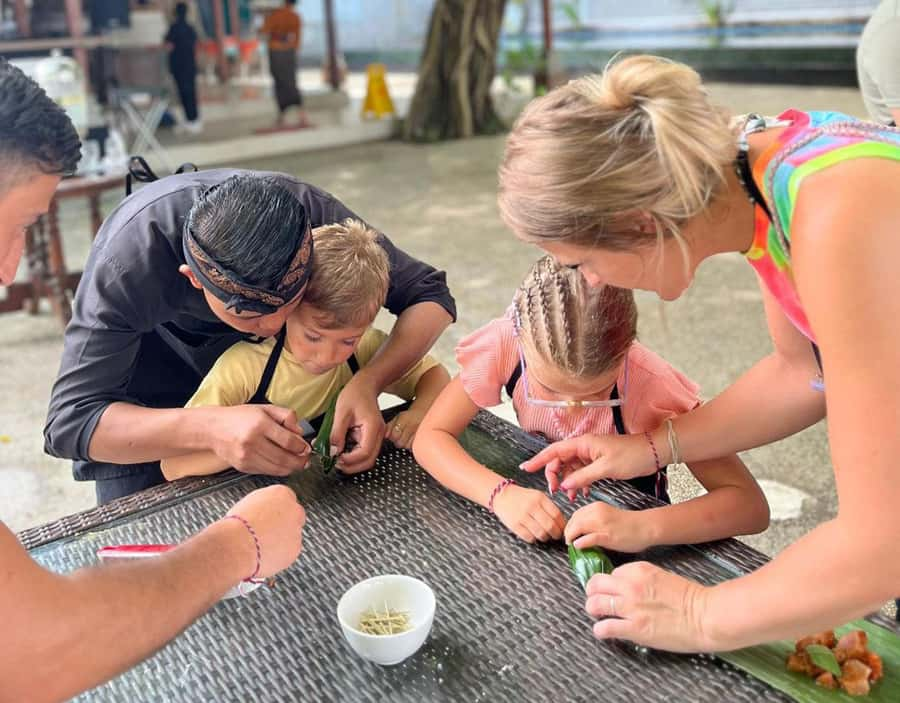
This class is built around 12 menus, and the heart of it is spice preparation. You don’t just end up with one dish. You work through a full spread, including spice paste bases and multiple protein/vegetable dishes. That’s why it’s not a quick snack lesson.
Here’s what you’ll be cooking:
Spice bases and pastes
- The complete spice paste (base genep or gede)
- Seafood spice paste (be pasih), which shows up as an orange base in appearance
These two steps matter because many Balinese flavors start from the spice paste foundation. When you learn how to build the base, other dishes make more sense. It’s not just about tasting good. It’s about understanding the structure.
Main dishes and proteins
- Beef rendang (rendang daging)
- Whole roasted chicken (ayam betutu)
- Assorted seafood curry (kari seafood)
- Grilled fish in banana leaf (pasan be pasih)
- Minced chicken satay (sate lilit ayam)
Even if you don’t cook at home often, these dishes are useful because they represent different Balinese cooking styles: curry, grilling, roast-style chicken, and rendang. You’ll see how spice pastes translate into different textures and cooking methods.
Fresh and veggie plates
- Green bean salad with chicken (lawar kacang)
- Vegetable salad in peanut sauce dressing (pecelan)
- Fried noodles (mie goreng)
- Fried rice (nasi goreng)
- Coconut pancake (dadar unti)
That mix of salads, fried comfort foods, and sweet finishing pancakes means you won’t leave with only spicy heavy dishes. You’ll get a fuller sense of Balinese meals.
If you’re wondering whether this will feel rushed, remember this is a 3–4 hour class with guided cooking and a finite list of items. The pacing is what keeps it from becoming a blur—especially in a group of 10.
What You Actually Eat: Lunch or Dinner Made From Your Work
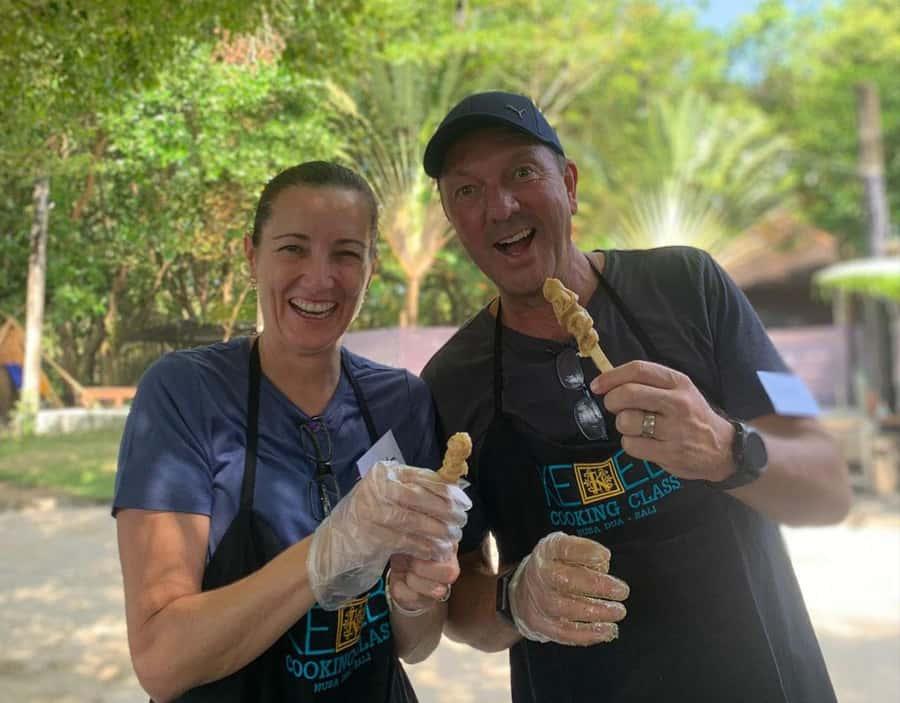
Your meal is included, and it matches your class time:
- Morning: lunch
- Afternoon: dinner
This is the payoff. You’ll sit down and eat what you made, which is the fastest way to learn whether your spice levels and seasoning steps were on track. The guidance doesn’t stop at the stove. You get to see how the dishes come together as a complete meal.
You’ll also get a welcome tea and snack before cooking, so your energy stays steady. That little extra matters because Balinese cooking often involves repetitive chopping, grinding, or mixing steps. If you start with nothing in your stomach, your focus goes sideways fast.
Your Chef Guide and Live Music Touch: What the Reviews Signal
From the experience feedback, one name keeps popping up: Teddy. People highlight that he’s both professional and genuinely fun, and that he guides you in a way that doesn’t make the class feel like school. That matters because spice work can be intimidating if you’re used to restaurant food only.
The class also includes live music, which creates a relaxed pace. It’s the kind of detail that keeps the event from feeling overly formal. You can still concentrate, but the vibe stays light.
English instruction is another real practical plus. You’ll be able to ask questions about ingredients, spice pastes, and how to reproduce the dishes later.
Price and Value: Is $86 Fair for 3–4 Hours and 12 Menus?
At $86 per person for a 3–4 hour experience, this sits in the midrange for Bali cooking classes. The value comes from the workload you get: you’re not only watching one dish. You’re cooking from a full menu set that includes spice paste bases plus multiple mains and sides.
You’re also receiving extras that usually cost extra if you do them separately:
- welcome tea and snack
- lunch or dinner
- recipe book
- certificate
And when something includes both a meal and a take-home reference (the recipe book), you’re more likely to re-create flavors at home. That turns the class into a skill, not just an activity photo.
Drinks are the main additional cost risk. If you want alcohol like beer, you’ll pay extra. The class rules also say alcohol and drugs aren’t allowed as part of the activity itself, so treat any drinks as an add-on purchase rather than a built-in perk.
Logistics That Affect Your Comfort (and How to Prep)
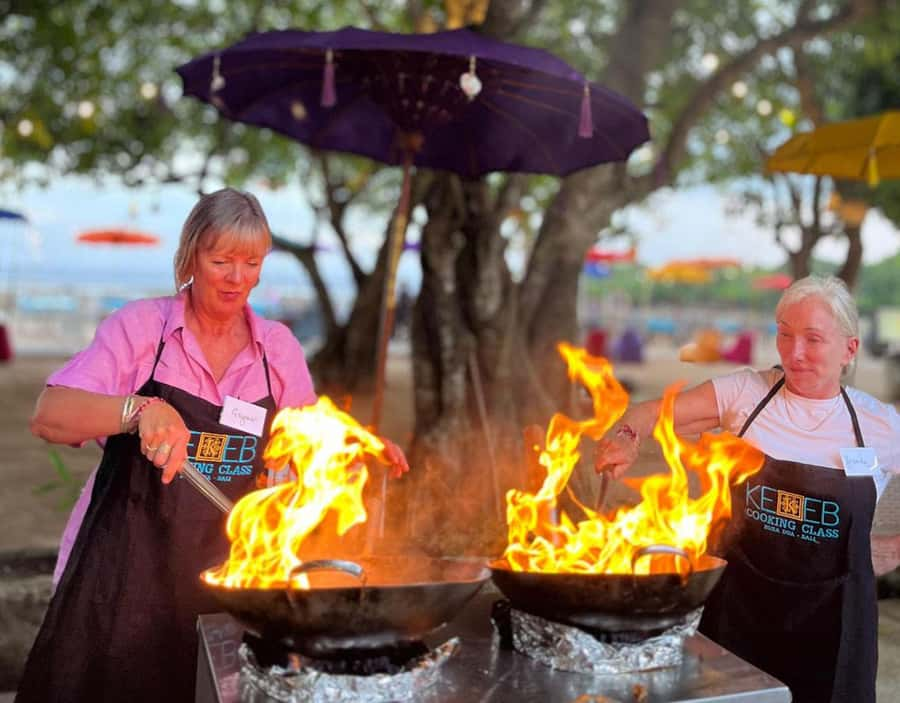
A few details can make the day easier if you plan ahead:
- Bring cash (as required)
- The instructor speaks English
- You’ll be in a small group limited to 10 participants
- Children under 10 years are not suitable
Also, the class is scheduled tightly into those time windows. Morning runs 10:00–14:00; afternoon runs 15:00–18:00. If you pair this with other activities, give yourself breathing room before and after.
Meeting point is handled via WhatsApp after booking confirmation. So if you hate last-minute messaging, you’ll want to keep your phone handy.
Who This Nusa Dua Cooking Class Is Best For
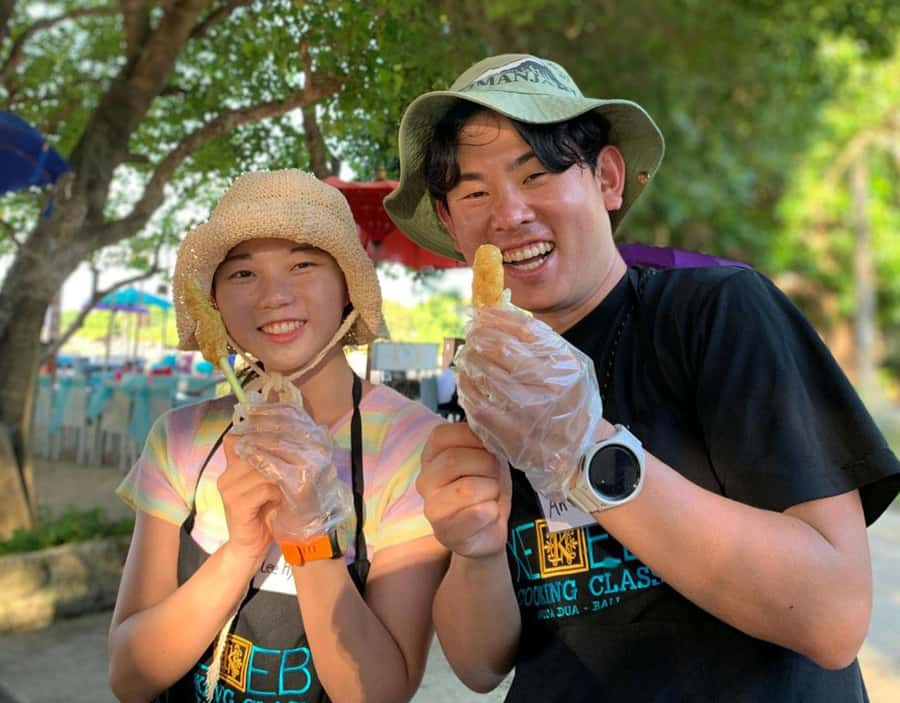
This is a great fit if you:
- want hands-on Bali cooking, not a demo-only meal
- like learning spice fundamentals, especially the spice paste bases
- enjoy eating what you cook right away
- want a small group experience with an English-speaking guide like Teddy
It may not be your best match if you:
- only want one dish or a short intro (this is built for 12 menus)
- are traveling with kids under 10
- prefer to drink alcohol during tours (drinks are not included, and alcohol isn’t part of the activity)
If you’re a solo traveler, this can be surprisingly comfortable because the group is small and the chef guidance keeps the interaction flowing.
Should You Book This Cooking Class in Nusa Dua?
I’d book it if you want a real Balinese cooking day with a sea-view setting, a chef who keeps things fun, and a menu list that feels complete. The biggest selling point isn’t the certificate—it’s that you cook 12 dishes, including spice paste foundations, and you eat the results on the spot.
If market exploring is your thing, choose the morning class for the market tour. If you just want the cooking and meal without the extra step, the afternoon slot still delivers the core experience.
One last practical nudge: bring cash and keep an eye on WhatsApp for your meeting details. After that, you’re free to focus on one important goal—making those spice pastes and realizing you can recreate Balinese flavors at home.
FAQ
What’s included in the Balinese cooking class with market tour?
You’ll get welcome tea and a snack, cooking guidance, a small-group experience, and 12 Balinese menus. Lunch or dinner is included depending on whether you choose the morning or afternoon class. You’ll also receive a certificate and a recipe book.
Are there different class times?
Yes. There’s a morning class from 10:00–14:00 and an afternoon class from 15:00–18:00.
Does the market tour happen for both classes?
No. The market tour is included only with the morning class.
How many dishes will I cook?
You’ll cook 12 menus during the class.
Is lunch or dinner included?
It depends on your selected time slot. The morning class includes lunch, and the afternoon class includes dinner.
How big is the group?
The group is limited to 10 participants.
What language is the instruction?
The instructor teaches in English.
What should I bring?
You should bring cash.
Are drinks included?
Drinks like beer are not included and would be an additional cost.
FAQ
Is the experience refundable if my plans change?
Cancellation is free up to 24 hours in advance for a full refund.
Can I reserve and pay later?
Yes. You can reserve now and pay later.
How far in advance should I book?
You’re asked to book 1 day before your activity start.
Is alcohol allowed during the class?
Alcohol and drugs are not allowed as part of the activity.