REVIEW · ROME
Rome: Neapolitan Pizza Cooking Class in Front of the Vatican
Book on GetYourGuide →Operated by ELISA'S TOUR · Bookable on GetYourGuide
A quick hit of Rome’s pizza passion. This Neapolitan pizza cooking class near the Vatican pairs hands-on dough work with the kind of setting that puts you close to major sights without turning your evening into a long day tour.
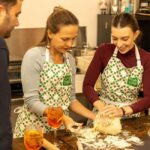
What I like most is the way you actually shape and handle dough, not just watch. Second, the class feels social and personal, with guides like Elisa (and other hosts mentioned such as Andrea) taking lots of photos as you work.
One heads-up: the Vatican connection can be more about location than a guaranteed, dramatic view, and one guest noted the hands-on portion felt shorter than the posted hour.
In This Review
- Key Things I’d Remember Before You Go
- How Neapolitan Pizza Skills Fit Into a Rome Itinerary
- Getting There: Pizzeria Dieci Dodici e 50 by Ottaviano
- What Happens During the Class by the Wood-Fired Oven
- Dough Work: Rolling, Shaping, and Toss Practice
- Toppings and Building the Neapolitan Pie
- The Bake: Getting Pizza Out of the Oven (The Best Part)
- Eating Your Pizza: Wine, Soft Drinks, and Outside Time
- Price and Value: Is $63 Worth It?
- Best Fit: Who Will Love This Class Most?
- My Take: Should You Book the Vatican-Area Neapolitan Class?
- FAQ
- Where is the meeting point?
- How long is the cooking class?
- What languages are offered?
- Do you bake the pizza in a wood-fired oven?
- What’s included with the class?
- Is this class actually visible from the Vatican?
- How much does it cost?
Key Things I’d Remember Before You Go
- Real dough time: you roll/shape and even toss practice, then work the pizza through to the oven
- Wood-fired results: you bake in a pizza oven and get to take part in the action (and the moment)
- Vatican is close: the meeting spot is very convenient to see the Vatican area on foot
- Small and friendly: people describe it as intimate, easy to ask questions, and relaxed for families
- Photos included in the experience: guides take pictures throughout and send some afterward
- Fermentation and ingredient questions welcome: staff will talk dough and produce details if you ask
How Neapolitan Pizza Skills Fit Into a Rome Itinerary
Rome is full of places to eat pizza, but a cooking class teaches you why Neapolitan pizza tastes the way it does. You’re not trying to copy a restaurant style with random home ingredients. You’re learning the handling of the dough and the basics of building a proper pie, then baking it in a way that makes the result worth tasting immediately.
I also like that this is positioned as a fast, focused experience. The class runs about 1 hour, which makes it realistic even if you’re squeezing in the Vatican area on a tight schedule. You can do Vatican first, then head over nearby without a complicated transit plan.
And yes, the theme is the Vatican-adjacent setting. The experience is marketed as being in front of the Vatican, and the meeting point is truly right in that zone. Just keep expectations flexible about the view itself, since one person said the Vatican view wasn’t exactly what they pictured.
You can also read our reviews of more tours and experiences in Rome.

Getting There: Pizzeria Dieci Dodici e 50 by Ottaviano
Your meetup is at Pizzeria Dieci Dodici e 50. That matters more than it sounds, because you’re not hunting down a culinary school across town while hunger kicks in.
This spot is also described as centrally situated and close to the Ottaviano metro station. For planning, think of it as “easy to reach, easy to walk from nearby sights.” One review mentioned the restaurant was a short walk after doing the Vatican first, which is the exact kind of logistical win you want in Rome.
If you’re arriving from St. Peter’s/Vatican area, give yourself a little time to find the exact corner and settle in. The class starts at a set time, and you’ll be doing hands-on work shortly after you arrive.
What Happens During the Class by the Wood-Fired Oven
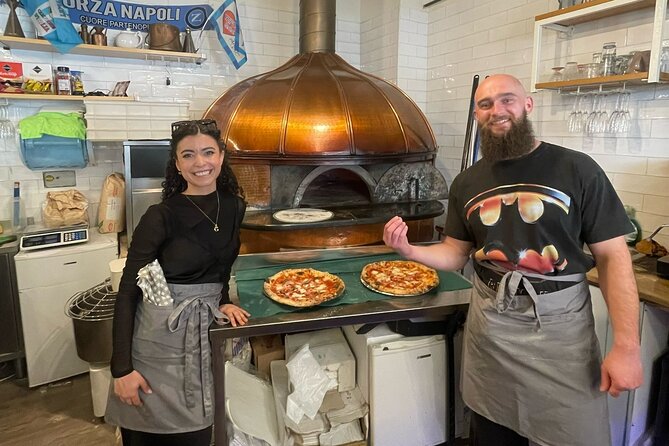
The core of this experience is straightforward: you learn the steps, you make your pizza, and then you bake it. The whole point is that you’re involved, not sidelined.
Expect the session to move quickly through the process:
You’ll get guided instruction from expert pizzaiolos, including step-by-step support. Then you’ll prepare and bake your pizza in a wood-fired oven. After that, you sit down to eat your creation and you’re also told you’ll have a glass of Italian wine with your meal.
Even better, the class is described as beginner-friendly and question-friendly. One guest with prior pizza-making experience asked detailed questions about fermentation, and the staff took time to explain produce and process details. That’s a great sign if you care about the why behind the taste.
Timing note: one person felt the class was about 15 minutes rather than a full hour. That doesn’t mean the experience isn’t fun—it just suggests the listed duration may include setup or breaks, and the amount of active cooking could vary depending on the group.
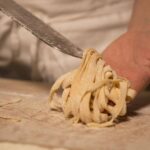
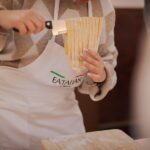
Dough Work: Rolling, Shaping, and Toss Practice
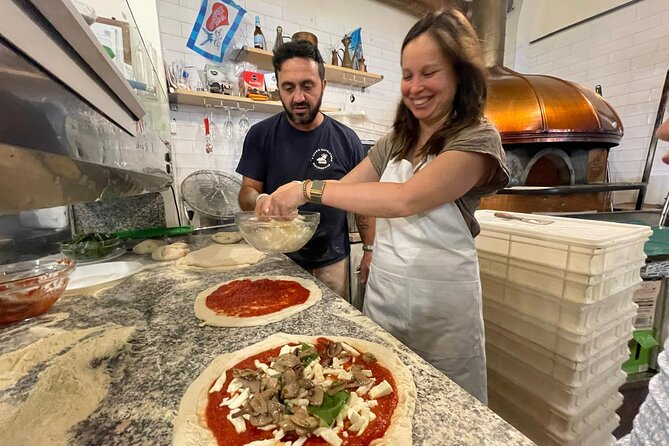
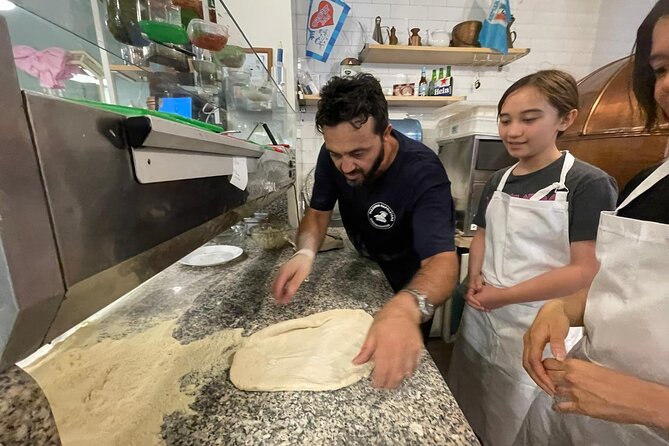
In a good pizza class, dough handling is where the learning happens. That’s exactly what this one emphasizes.
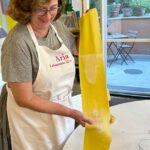
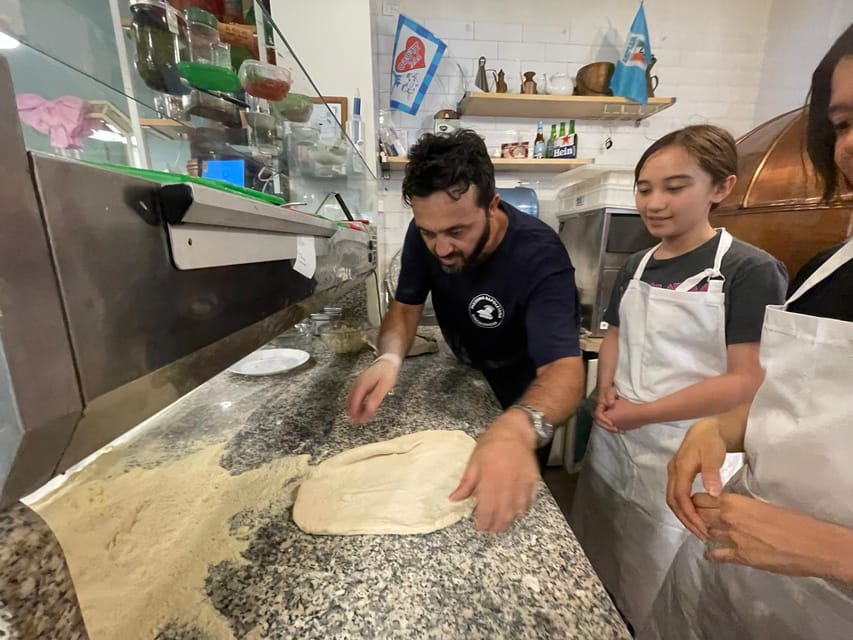
Multiple guests highlighted that you get to roll out dough and practice shaping. One review even described rolling/tossing twice, which is a big deal. If you only do it once, it’s easy to feel rushed. Two rounds let you correct small issues—like thickness or how the dough behaves—so your pizza doesn’t turn into a sad science project.
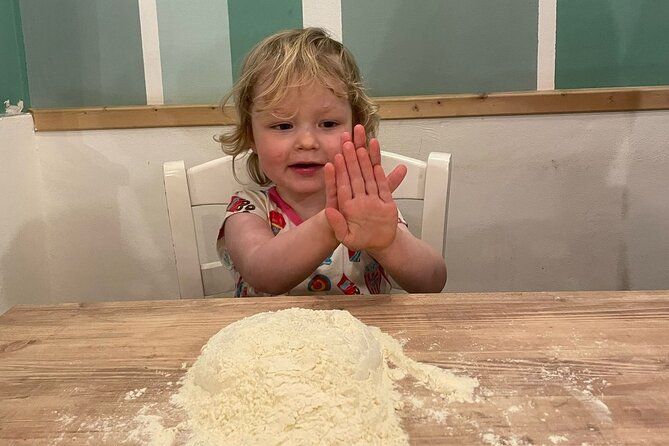
If you’re traveling with kids, this is where the experience often clicks. One family mentioned their child had a blast doing steps at each stage, and another review said the kids were fully involved, even though the group had a very young age range (including a 3-year-old). That kind of hands-on pacing is worth it.
If you’re a true newbie, don’t be intimidated. Staff are described as putting first-timers at ease. You’re not expected to arrive with pizza credentials; the lesson is designed around you learning the motions correctly.
Toppings and Building the Neapolitan Pie
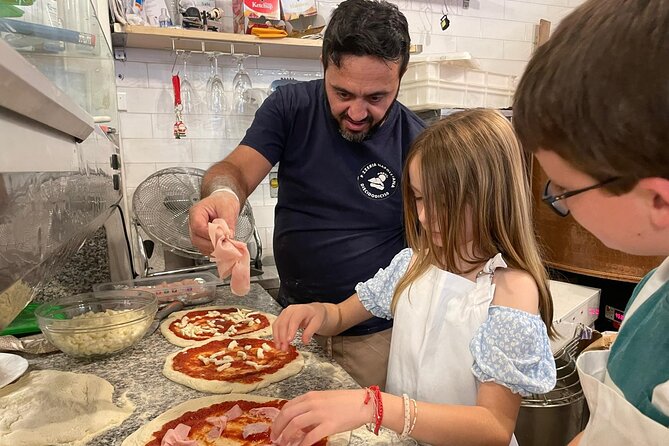
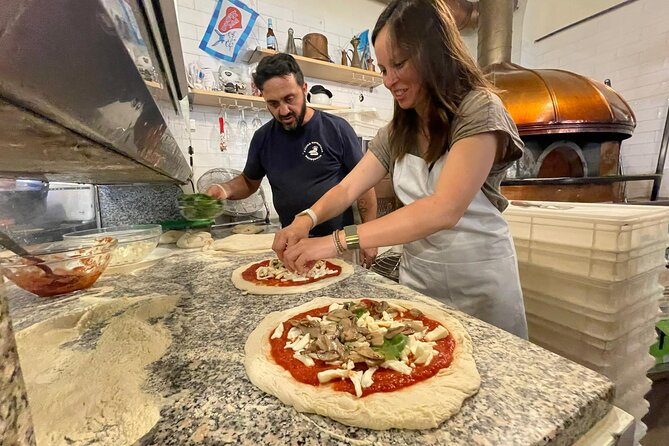
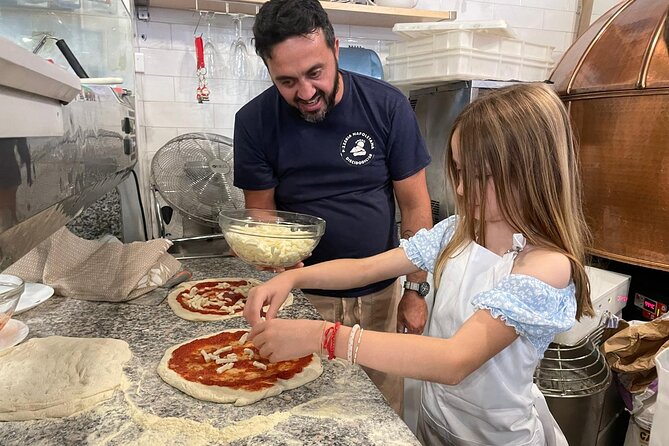
Once the dough work is underway, you move into building the pizza with the traditional ingredients you’ve been told you’ll use: fresh tomatoes and mozzarella.
This part feels simple, but it’s also where you learn restraint. Neapolitan style isn’t about piling toppings. You’re shown how to add what matters and keep the pie balanced enough to bake properly in a wood-fired oven.
Guests specifically mentioned adding tomato and mozzarella before cooking. That’s the type of concrete “do this, then this” instruction that makes a cooking class worth paying for. You leave with a mental checklist you can repeat at home, even if you don’t have the same oven.

The Bake: Getting Pizza Out of the Oven (The Best Part)
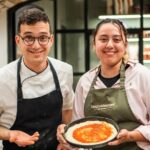
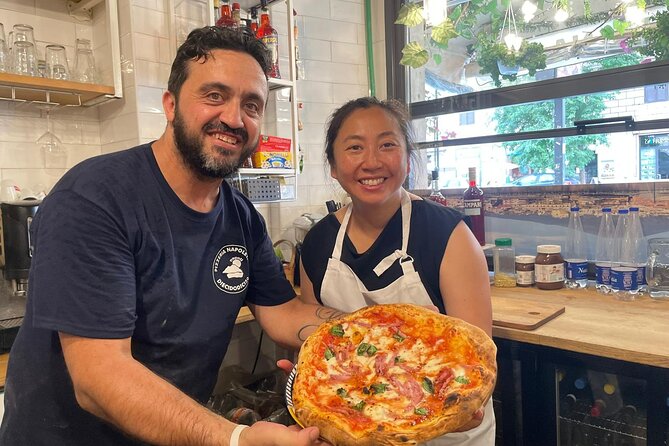
Baking is the moment most people remember. One guest described getting to take the pizza out of the oven, and that kind of hands-on moment is pure travel joy.
This is also where the class is tied to results. A lot of cooking demos end with a finished dish you didn’t really help create. Here, you do the work and then see it through to the end.
And the setting matters too. Even if the Vatican view isn’t a cinematic “wow” for every seat, you’re still cooking in the heart of the city. You get that Rome energy around you, and then you eat what you made moments later.
Eating Your Pizza: Wine, Soft Drinks, and Outside Time
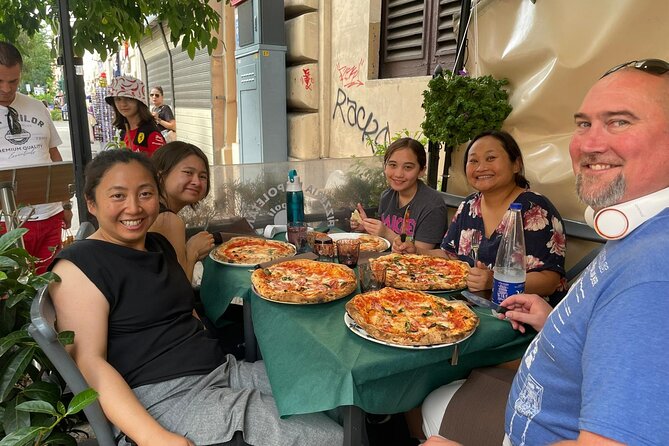
After baking, you sit down to enjoy your pizza. The description includes a glass of Italian wine, and guests also mentioned eating outside afterward with soft drinks.
This “eat right away” setup is smart. Pizza is at its best when it’s fresh from the oven. If you had to wait through long speeches, the class would lose its magic. Instead, the meal lands while you still remember each step—dough feel, topping placement, and bake timing.
It also turns the class into a relaxed break. If you’ve been walking all day through historic Rome, this is a focused activity that doesn’t require another full dinner reservation marathon afterward. One guest even said they went back for dinner the next night, which hints the pizza place itself is worth sticking around for.
Price and Value: Is $63 Worth It?
At $63 per person, this is not a “cheap bite” activity. But it is a fair price when you look at what you’re getting.
You’re paying for:
- hands-on instruction from expert pizzaiolos
- quality fresh ingredients (flour, tomatoes, mozzarella are specifically mentioned)
- baking in a wood-fired oven
- a meal that includes your pizza plus a glass of Italian wine as described
- a guide who stays engaged and takes lots of photos
For Rome, that’s a solid value mix. The class is also short enough that it doesn’t eat a half-day of your trip.
The only value question is how much of your group time is “active cooking” versus observing, especially since one guest noted the hands-on portion felt shorter than the posted hour. If you’re the type who wants a long, slow cooking workshop, this may feel brief. If you want a fun, well-run activity that ends with delicious pizza quickly, it fits.
Best Fit: Who Will Love This Class Most?
This class is a good match if you fall into any of these categories.
You’ll probably be happiest if:
- you want hands-on experience rather than a sit-and-watch food tour
- you’re traveling with family and want a kid-friendly activity with real tasks
- you like cooking but also want someone to manage the hard parts (the oven timing, the dough basics, the ingredient setup)
- you enjoy Q and A, especially about dough fermentation and produce selection
Also, solo travelers often do well in this kind of class. One review mentioned a solo experience where the host involved the participant and took great photos, which is what you want if you don’t want the awkward “only me at the counter” vibe.
If you’re picky about views, keep your expectations grounded. You’re described as being in front of the Vatican area, and it’s close enough to walk after visiting, but a guaranteed view during cooking isn’t something every person confirmed clearly.
My Take: Should You Book the Vatican-Area Neapolitan Class?
If you want a Rome memory that isn’t just photos of monuments, I’d book this. The combination of dough-shaping practice, a wood-fired bake, and an immediate sit-down meal hits the sweet spot for a short trip.
I’d book especially if you’re:
- doing Vatican in the same day and want something easy afterward
- traveling with kids who need interactive activities
- the kind of person who likes learning the process, not just tasting the result
I’d hesitate only if you need a long cooking workshop or if you’re expecting a specific, direct view of the Vatican from your seat. Based on the way the experience is described and how one guest clarified the view, proximity is the certainty; perfect sightlines are less guaranteed.
Still, for the price, the hands-on nature, and the fact you leave with pizza you made yourself, this is a very workable, fun plan in the heart of Rome.
FAQ
Where is the meeting point?
The meeting point is at Pizzeria Dieci Dodici e 50, right in front of the Vatican area.
How long is the cooking class?
The class is listed as 1 hour.
What languages are offered?
The instructor offers Italian, English, and French.
Do you bake the pizza in a wood-fired oven?
Yes. After preparing the pizza, you bake it in a wood-fired oven.
What’s included with the class?
You get a guided cooking lesson with fresh ingredients, you bake and then enjoy your pizza, and you have a glass of Italian wine with your meal.
Is this class actually visible from the Vatican?
It’s marketed as being in front of the Vatican with a view, but at least one guest noted it’s more accurate to think of it as being walking distance rather than a guaranteed direct view.
How much does it cost?
It costs $63 per person.