REVIEW · POMPEII
Pompeii: guided tour of the ruins and cooking class fresh pasta
Book on Viator →Operated by Giardini Balestrieri · Bookable on Viator
Pompeii is better when someone guides your steps. This private day pairs a clear walk through major Pompeii ruins with a hands-on Campania cooking class, ending with lunch and Gragnano DOC wine while you make fresh pasta.
I love how the ruins visit is built around key sights that actually explain how the city worked, from theaters and thermal baths to temples of Apollo and Jupiter. I also love the food setting: you cook with produce from the garden, then eat your lunch with the views of Vesuvius and the Lattari Mountains.
One consideration: the Pompeii entrance ticket (€20 per person) is not included, and the ticket is for a single entry. If you want extra free time after your guided part, plan your timing carefully so you do not feel rushed.
In This Review
- Key highlights you will care about
- The real reason this Pompeii day feels different
- Getting there: private transport and a smoother start
- Pompeii ruins tour: the stops that build a clear picture
- The theaters and public spaces
- Houses with frescoes and decorated interiors
- Via dell’Abbondanza: shops and workshop energy
- Thermal baths
- The brothel area and the forum monuments
- Temples of Apollo and Jupiter, plus the Basilica
- The countryside reset: garden views after the ruins
- Pasta cooking class at Giardini Balestrieri: from garden to your own plate
- What you might cook (it can vary by session)
- The lemon cake and other dessert moments
- Wine and lunch: what is included and what that means for value
- Price and tickets: where the money goes
- How long is it really, and how to plan your day
- Who should book this Pompeii pasta day
- Should you book this tour of Pompeii ruins plus a fresh pasta class?
- FAQ
- How long is the Pompeii guided tour and cooking class?
- Is the entrance fee to the Pompeii ruins included?
- What’s included with lunch and drinks?
- How big is the group?
- Do I cook the pasta myself?
- Where does the tour start and end?
- Is English available, and can I get a refund if plans change?
Key highlights you will care about
- Private, small-group feel (max 10) with private transportation
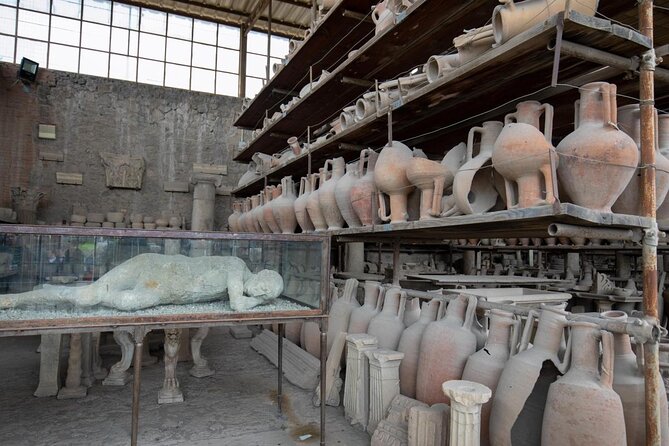
- A structured ruins walk covering theaters, thermal baths, brothel area, forum monuments, and major temples
- Via dell’Abbondanza shop-and-workshop walking so you see more than temples and streets
- Giardini Balestrieri countryside meal with views of Vesuvius and the Lattari Mountains
- Hands-on pasta cooking using garden produce, with classes like ravioli or gnocchi depending on the session
- Included wine with lunch (1 glass Gragnano DOC), plus dessert
The real reason this Pompeii day feels different
Pompeii can be a lot of stone and wind unless someone helps you “read” it. This experience is designed as two connected halves: a focused ruins tour first, then a full cooking class where you slow down and switch gears from history to appetite.
The match-up is smart. While you are walking through theaters, baths, and temples, you are also learning the daily-life story behind what you see. Then, in the garden outside town, you taste that same Campania rhythm in a hands-on meal. If you like travel days that feed both your brain and your stomach, you will get that here.
The biggest value is not that it is private. It’s that the day is paced in a way that keeps Pompeii from turning into a checklist.
You can also read our reviews of more tours and experiences in Pompeii.

Getting there: private transport and a smoother start
This tour starts at Scavi di Pompei, Viale delle Ginestre, and ends back at the same meeting point. You are in a private-ride setup, which matters in a place like Pompeii where timing can get chaotic.
Instead of juggling buses and walking big distances just to reach your next stop, you get dropped at the right place and kept on schedule. In practice, this makes it easier to enjoy the morning ruins visit without spending your energy “just getting there.”
Also, this is offered in English, and the group is capped at 10. That small size helps with questions as you walk, which is where a good guide can turn random ruins into a story you actually remember.
Pompeii ruins tour: the stops that build a clear picture
The ruins part runs about 2 hours, which is exactly long enough to cover a lot without burning your legs out. You do not just wander. You move through Pompeii with a guide who focuses on the city’s major public and private landmarks, plus the street life you can still picture even after the eruption.
In different groups, guides have been named such as Clelia, Carla, Lucy, and Lello. If you get one of these guides, you can expect explanations that help you connect what you see to why it mattered.
Here are the big areas you will hit, and what they give you:
The theaters and public spaces
You start with key public zones, including the theaters. Pompeii’s theaters are not just “big buildings.” They are proof that the city had leisure, performance culture, and civic life. A good guide points out how the space shapes the crowd experience, so you are not looking at ruined walls only.
Houses with frescoes and decorated interiors
You will also visit the more important houses with frescoes and decorations. This is where Pompeii stops being only about streets and turns into a look at how people lived and displayed status. Even when fragments remain, the guide helps you see the design intent rather than just the damage.
Via dell’Abbondanza: shops and workshop energy
You walk along via dell’abbondanza, including shops and workshops. This part is valuable because it shows Pompeii’s economy and everyday activity. You start noticing patterns—what would have been visible, what was walk-up, and how the street functioned as the city’s “main artery.”
Thermal baths
The thermal baths are one of the strongest stops because they show social routine. You can picture conversations, bathing steps, and the building’s layout. If you have only ever seen baths from the outside, this helps you connect the rooms to the flow of a day.
The brothel area and the forum monuments
You visit the brothel (described as the house of pleasure) and the forum with major monuments. It is not the most comfortable subject matter, but it is part of what makes Pompeii feel like a real city, not a museum diorama. The forum stop gives you the civic context that ties the rest together.
Temples of Apollo and Jupiter, plus the Basilica
The temples and the Basilica anchor the religious and administrative story. You are basically getting the “big message” spaces: where people gathered, prayed, and organized public life. In two hours, that kind of sequence is what keeps the visit coherent.
A quick practical note: Pompeii is outdoors and involves walking on uneven surfaces. If you have a foot injury, it can get slower, and your pace may adjust. One group shared that their tour moved at a gentler speed due to a foot injury, so the experience can accommodate pacing needs.
The countryside reset: garden views after the ruins
After Pompeii, you are taken to a garden in the Pompeian countryside with views of Vesuvius and the Lattari Mountains. This is where the day turns from Roman stone to Campania air.
The garden setting is not just scenery. It sets you up for the cooking class because produce comes from the garden itself—olive and citrus trees are part of what you will see and use. The views help too. When you look out at Vesuvius after touring the city that suffered from it, the contrast makes the day stick in your mind.
This second half runs about 3 hours, which gives you enough time to eat without rushing through the lesson. It also reduces the common problem with Pompeii days: you do not just sprint from ruins to dinner.
Pasta cooking class at Giardini Balestrieri: from garden to your own plate
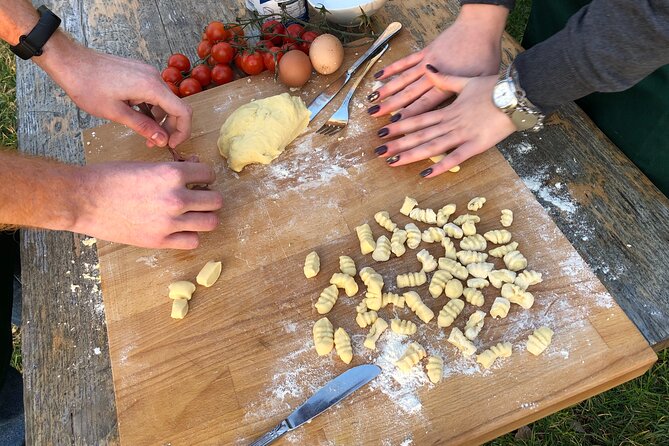
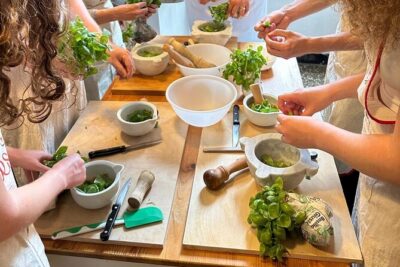
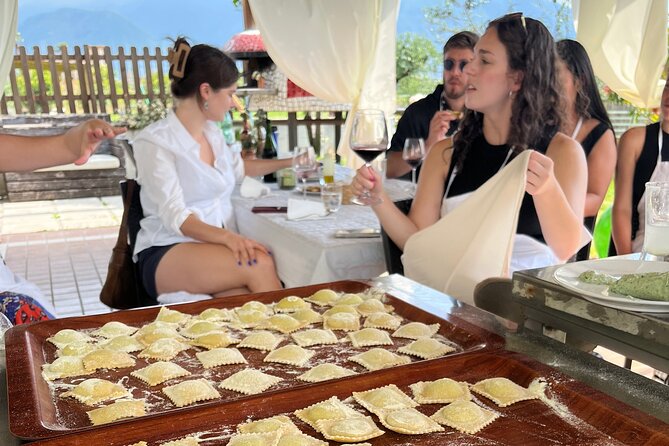
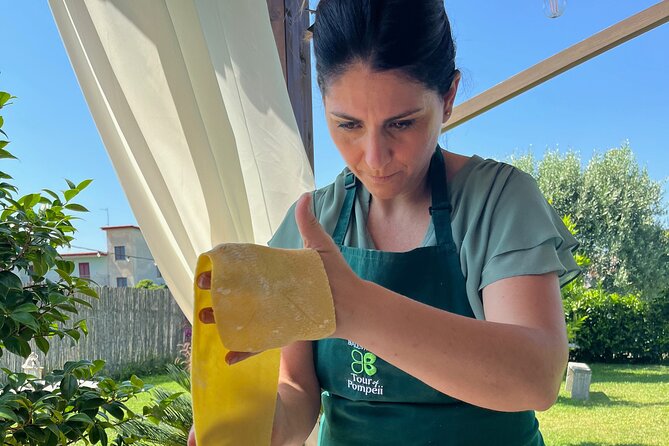
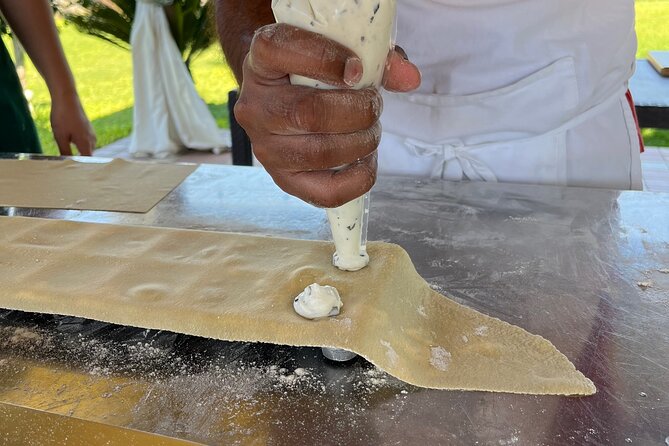
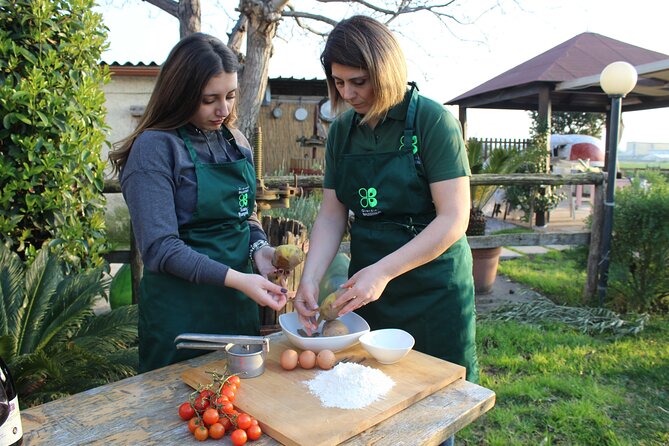
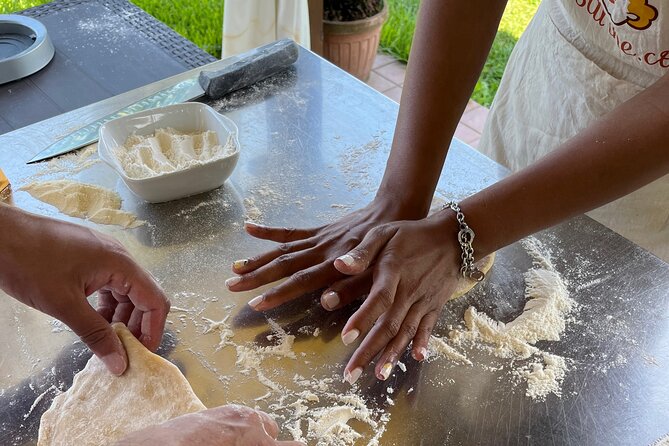
This is the hands-on part, and it is where the experience earns its price tag. You do not watch someone else cook and then leave. You work through the process with a host and tools provided.
A garden tour comes first, where you learn about the trees and vegetation you will cook with. In one style of class, you start with light bites like bruschetta made with fresh veggies gathered from outside. That sets the tone and keeps you from arriving hungry to the pasta stage.
What you might cook (it can vary by session)
Based on real class variations, you might make:
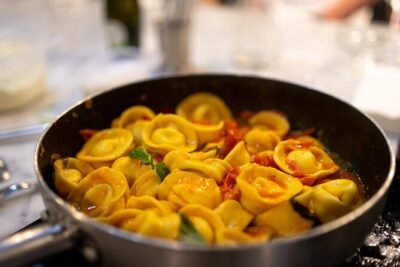
- ravioli, with a filling such as ricotta and spinach
- potato gnocchi, paired with a sauce using fresh tomatoes
The method follows the same idea: you prepare your own pasta, then the host finishes the cooking and you eat the results together.
One memorable detail from the classes described is that the ravioli were boiled and then served with a simple topping like butter and sage. The gnocchi sessions have also been described with fresh tomato sauce, which is exactly the kind of straightforward Campania flavor that lets good ingredients do the talking.
The lemon cake and other dessert moments
You also make dessert together. In one described session, that meant a lemon cake. In another, it was tiramisu. Either way, it is a satisfying closer because you end with something you participated in, not something dropped on the table.
And yes, there is wine with lunch. One glass of Gragnano DOC wine is included. Some hosts have also offered additional homemade extras like limoncello, but that is not something I would count on as a guaranteed add-on—use it as a bonus if it happens.
Wine and lunch: what is included and what that means for value
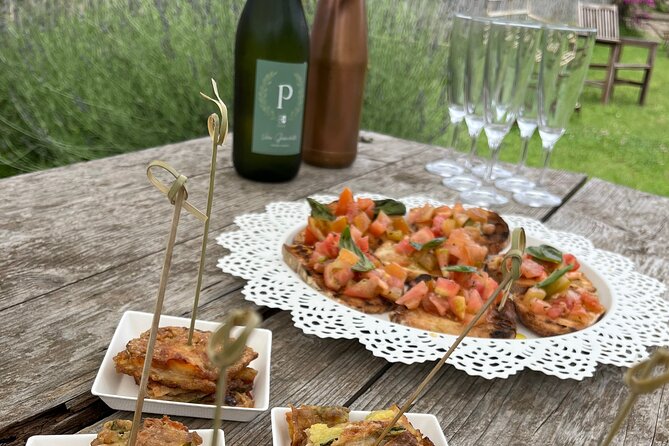
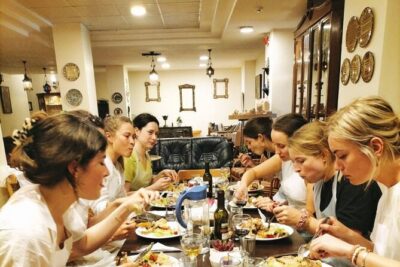
You get still and sparkling water, plus lunch or dinner with dessert. One glass of Gragnano DOC wine is included, and the meal is served in the countryside garden setting.
This matters more than you might think. A lot of Pompeii “food tours” are mostly walking plus a small tasting. Here, the cooking class is the meal. You are taking ingredients from the garden and turning them into lunch that you made with your own hands.
Also, since you are eating at the end of the lesson with a small group, the conversation is part of the experience. You are not eating next to a thousand strangers in a loud, rushed room.
If you are a “watch me cook” person, you might not get as much out of it. But if you like learning techniques—how to shape ravioli, how gnocchi come together—this class is built for that.
Price and tickets: where the money goes
The price is $300.40 per person, for a day that includes private transportation, your guide time for the ruins, and the cooking class meal experience (including dessert, water, and 1 glass of Gragnano DOC wine).
The key separate cost is the Pompeii entrance ticket: €20 per person, not included.
So what are you paying for, realistically? You are paying for:
- private transportation (so you are not stuck figuring out logistics)
- a guided ruins route that covers the important sites in a tight window
- a hands-on cooking class at a garden/farm setting
- an included meal with wine and dessert
Yes, it is expensive compared with big group Pompeii tours. But this is not just “ruins + lunch.” It’s ruins with guidance plus a real cooking session where you prepare the food. In other words: you are buying time and attention, not just admission.
One more practical pricing thought: since the Pompeii ticket is a single-entry ticket, do not assume you can come back later without paying again. If you want extra wandering time on your own, plan for it upfront.
How long is it really, and how to plan your day
Expect 5 to 6 hours total. The ruins part is about 2 hours, and the cooking/garden portion is about 3 hours, with the timing between them handled by the private transport.
This length is a sweet spot for most people: long enough to see the big Pompeii hits and enjoy the meal experience, but not so long that you arrive exhausted and miss the cooking portion.
If you are traveling with multiple interests—history plus food—you will find this format works well. You get both, and you do not have to choose.
The one downside is that the ruins time is not huge. If you are the type who wants to spend hours drifting through every courtyard, this might feel like a “great highlights” visit rather than a slow museum day.
Who should book this Pompeii pasta day
Book this if:
- you want a guided Pompeii visit that hits the major sights in a logical route
- you care about eating well and learning a technique, not just tasting
- you like small groups and a more personal pace
- you want the contrast of ruins first, countryside cooking second
Consider a different option if:
- you want unstructured time to roam Pompeii on your own for most of the day
- you prefer only one activity and would rather skip the cooking class
Also, most travelers can participate, and service animals are allowed. Still, remember the ruins walking is part of the deal, so wear shoes that work well on uneven ground.
Should you book this tour of Pompeii ruins plus a fresh pasta class?
I think it is a strong choice if you are the kind of traveler who wants Pompeii to make sense and not just impress you from a distance. The pairing works because the ruins visit gives you context, and the cooking class gives you a memorable way to slow down and enjoy Campania life right after.
If the separate entrance ticket fee and the single-entry nature of Pompeii tickets will stress you, then decide early whether you want extra time on your own. But if you are happy with a guided highlights route and you want to leave with more than photos, this is the type of day that pays off.
FAQ
How long is the Pompeii guided tour and cooking class?
The experience runs about 5 to 6 hours total, with roughly 2 hours for the Pompeii ruins visit and about 3 hours for the cooking class and lunch.
Is the entrance fee to the Pompeii ruins included?
No. The Pompeii entrance ticket is not included and costs €20 per person.
What’s included with lunch and drinks?
You get soda/still and sparkling water, dessert, lunch (or dinner), and 1 glass of Gragnano DOC wine.
How big is the group?
The group size is capped at a maximum of 10 travelers.
Do I cook the pasta myself?
Yes. You prepare your own lunch during the cooking class and learn to make a typical dish from the Campania region using produce picked from the garden.
Where does the tour start and end?
It starts at Scavi di Pompei, Viale delle Ginestre, 80045 Pompei NA, Italy, and ends back at the same meeting point.
Is English available, and can I get a refund if plans change?
The tour is offered in English. Free cancellation is available up to 24 hours in advance for a full refund.