REVIEW · CHENGDU
Half day Chengdu Dumpling Class: Make from Scratch
Book on Viator →Operated by Chilli Cool China · Bookable on Viator
Dumplings start with a spice hunt. This half-day Chengdu cooking class pairs a guided visit to a local Sichuan spice market with hands-on dumpling making in a traditional courtyard setting, plus tea and a drink afterward. You’ll also get short challenges that help you recognize key Sichuan ingredients before you use them in your own fillings.
I love the way the class links the flavors you learn in the market to the dumplings you eat at the end. I also like that you might get a small-group feel, and at least in some sessions the guide can tailor the menu to vegetarian preferences (Jerry did this for one group). One possible drawback: there’s no hotel pickup unless you’re within the second ring road, so you’ll want to plan how you’ll reach 梁家巷 on time.
In This Review
- Key things I’d highlight before you book
- Why This Chengdu Dumpling Class Starts in a Spice Market
- Meet at 梁家巷 and Get Your Timing Right
- Chilli Cool’s Kitchen Courtyard: Where the Dumplings Become Real
- The Dumpling Workflow: Market Knowledge to Folding Skills
- Food You Actually Eat: Lunch, Dinner, Snacks, and Your Drink
- Price and Value: How $70 Adds Up
- Small-Group Energy and the Role of Your Guide
- Planning Your Half-Day: Weather, Confirmation, and Comfort
- Should You Book the Half-Day Chengdu Dumpling Class?
- FAQ
- How long is the Chengdu dumpling class?
- What does the class cost?
- What’s included in the price?
- Where do I meet, and where does it end?
- Do I get hotel pickup and drop-off?
- Is there a limit on group size?
- What if I have vegetarian preferences?
Key things I’d highlight before you book
- Sichuan spice market walk first, so dumpling making has real flavor context
- Small group size (max 20), which usually means less waiting around
- Traditional courtyard + cozy kitchen setup, not a big commercial cafeteria vibe
- You make the fillings and fold your own dumplings for your lunch or dinner
- Tea and snack stops along the way, plus a free beer, Coke, or Sprite
Why This Chengdu Dumpling Class Starts in a Spice Market
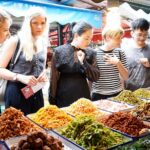
Most cooking classes in Chengdu jump straight to dough. This one starts with your nose. You go to an authentic local spice market and you don’t just look—you work through simple challenges that push you to identify Sichuan spices and ingredients that later show up in the cooking.
That matters because Sichuan food can taste like a puzzle if you only see the finished dish. When you learn what you’re shopping for—spices, flavoring ingredients, and what they’re for—you can actually taste the differences later. It also makes the class feel more like a local food lesson than a demo where you watch and then copy a couple folds.
If you get a guide like Jerry (shown in past feedback), you may also get a quick introduction to Chengdu before you head into the market. That orientation helps, especially if this is your first time in the city and you don’t want your day to be only “buy things, cook things, leave.”
You can also read our reviews of more tours and experiences in Chengdu.
Meet at 梁家巷 and Get Your Timing Right
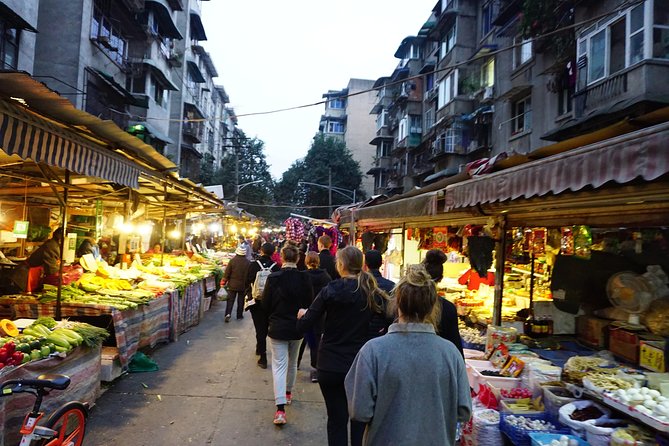
This experience starts at 梁家巷 (Jinniu District), Chengdu 610051, and it returns you back to the same meeting point at the end. One earlier participant noted that meeting near the metro stop is easy to find, which is a big deal when you don’t want your first hour to be spent wandering.
Here’s the practical part: pickup/drop-off only happens if your hotel is in the second ring road. If your lodging is outside that area, plan on getting there under your own steam. Since this runs about 4 hours (sometimes 4–5), you’ll feel any lost time fast.
It also helps that the group is capped at 20 people. With a smaller class size, you’re more likely to get hands-on attention when you’re learning folding technique and mixing fillings.
Chilli Cool’s Kitchen Courtyard: Where the Dumplings Become Real
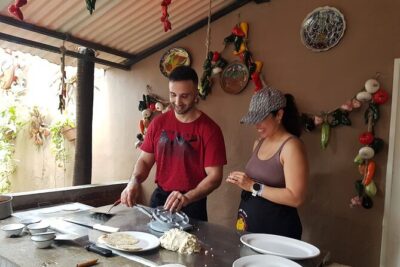
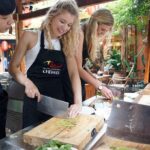
After the market, you move into Chilli Cool’s Kitchen, described as a traditional Sichuan-style courtyard with a cozy kitchen for the workshop. This is the part where the day shifts from learning ingredients to getting your hands involved.
In past sessions, participants have highlighted the setup as spotless and professional, which matters because dumpling classes can get messy. When a kitchen is well organized, you spend less energy fighting your workspace and more on doing the cooking steps.
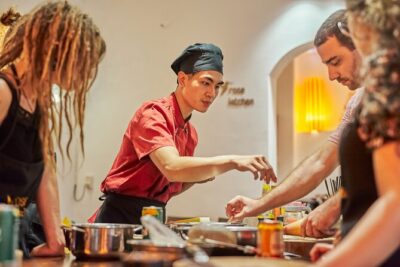
You’ll be guided by a professional chef—including Chef Lee in at least one session—who shows you how to build the fillings and start shaping dumplings. You’re not just assembling a pre-made kit. The class is designed so you can make fillings yourself and eat what you create.
And yes, there’s tea. Locals treat visitors with Sichuan local tea, and it’s served as part of the day’s rhythm, right before cooking starts. It’s a small detail, but it helps the class feel like an actual Sichuan food experience instead of a timed production line.
The Dumpling Workflow: Market Knowledge to Folding Skills
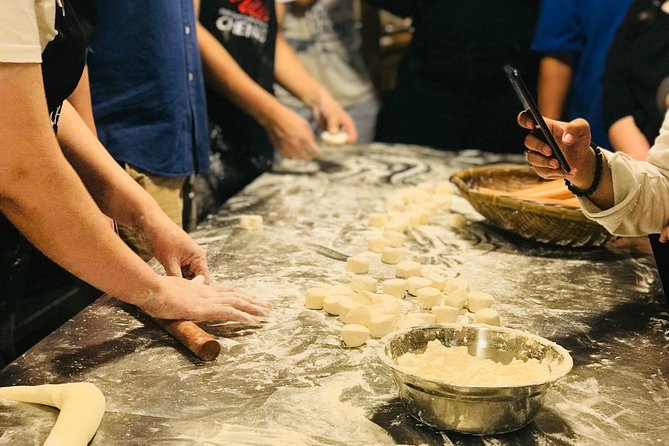
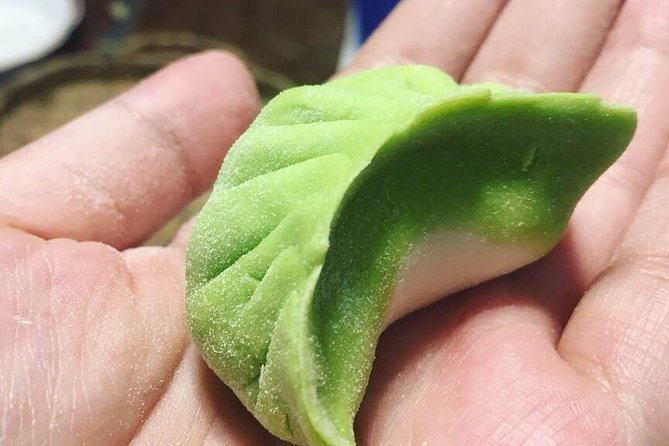
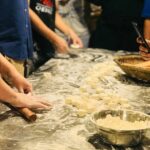
The core of this class is the full dumpling workflow. You’ll learn what goes into Sichuan-style dumplings, then you’ll practice the process of mixing and shaping until you have finished dumplings ready to cook and eat.
What I like about this approach is that it builds from flavor to technique:
- First you figure out key Sichuan ingredients in the market.
- Then you use those ingredients to create dumpling fillings.
- Finally you fold dumplings, which forces you to slow down and really learn the structure.
The folding part is often where people feel the difference between a quick cooking demo and a true workshop. The class is meant to teach proper folding skills, and with a small group, you’ll have a better chance of adjusting if your first dumplings look more like dumpling-siblings than identical twins.
One more practical detail: the class can adapt. In at least one session, Jerry tailored the menu to vegetarian preferences, so if you eat vegetarian, this might be a good match. Still, I’d treat that as a “confirm during booking” situation so you know exactly how your fillings will be handled.
Food You Actually Eat: Lunch, Dinner, Snacks, and Your Drink
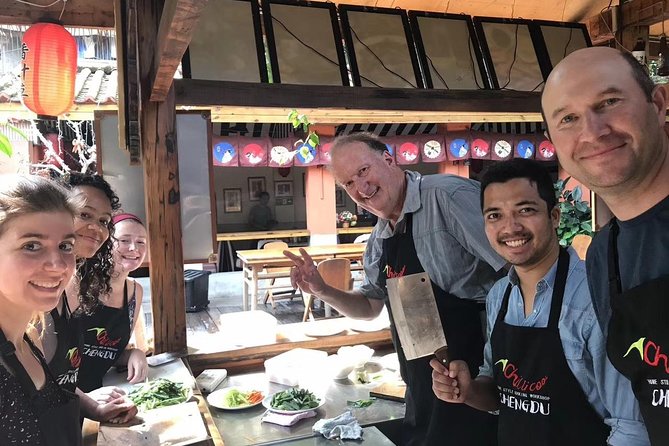
This class doesn’t just end with tasting one dumpling. You get to eat a meal you help make, depending on whether you join the morning or afternoon session.
- If you join the morning class, you make lunch.
- If you join the afternoon class, you make dinner.
Along the way, you’ll have snacks such as sunflower seeds and spring rolls. These are the kinds of small foods that keep the energy up while you’re walking around and cooking, and they also make the market-to-kitchen transition more realistic. You’re not starving between steps.
You’ll also have coffee and/or tea, with special mention of green tea with jasmine. Tea shows up again as a “local custom” touch, not just a beverage for the menu.
Then there’s the part people appreciate: a free beer, Coke, or Sprite. For a four-hour class, it’s a nice finish. If you’re not a beer person, you can still take a soft drink, so you don’t feel stuck.
Price and Value: How $70 Adds Up
The price is $70 per person, for about 4 hours in a group of up to 20. That sounds simple, but value comes from what you’re actually getting.
You’re paying for more than dumplings:
- a guided trip to an authentic Sichuan spice market
- ingredient-learning challenges (not just browsing)
- dumpling-making instruction with a professional chef
- lunch or dinner based on the session time
- snacks (like sunflower seeds and spring rolls)
- tea and at least one included beverage (beer/Coke/Sprite)
Many short cooking classes focus on one narrow skill—like dumpling folding only. Here, the market part helps explain the flavor choices, so you’re leaving with a better sense of what makes Sichuan ingredients work. That’s a practical souvenir: your brain learns, not just your camera roll.
If you’re visiting Chengdu and you want one food activity that feels local and hands-on, this is priced in a way that makes sense for the time and the meal included. It’s not “cheap,” but it’s also not just a quick tasting event.
Small-Group Energy and the Role of Your Guide
A big part of whether a dumpling class feels fun or stressful is the guide’s energy and communication. Past participants have specifically praised guides like Lance and Jerry, and you can often tell what kind of class you’ll get by how the guide handles the market walk.
In one example, a participant described meeting Lance at the metro stop, then taking a walk through a real local market before heading to the kitchen. That kind of pacing helps you keep up, especially if you’re not fluent in Mandarin. It also makes it easier to ask questions while you’re shopping and then apply what you learned right away.
If you want a class that feels friendly and flexible, this is a good bet. With a small group, your guide can often handle different preferences more easily.
Planning Your Half-Day: Weather, Confirmation, and Comfort
This experience requires good weather. If it gets canceled due to poor weather, you should be offered another date or a full refund. Since part of the day involves walking around a market, this makes sense and helps you avoid wasting a half-day.
You’ll receive confirmation at booking, which reduces uncertainty. It also helps that it’s a mobile ticket experience. That’s useful for trips where your phone is your “wallet and tickets all in one” device.
What should you wear? Comfort beats style: you’ll likely be walking and standing, and you’ll definitely be handling ingredients in the kitchen. If you have dumpling-making goals—like getting consistent folds—wearing something you don’t mind getting flour-adjacent will keep the stress low.
Also: the tour is described as cozy rather than huge. That’s good. You won’t feel like you’re waiting for a crowd to move.
Should You Book the Half-Day Chengdu Dumpling Class?
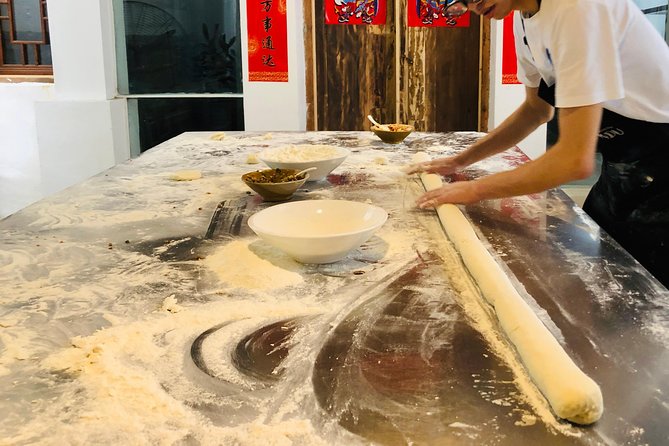
Book it if you want a hands-on Sichuan food experience that includes more than cooking—specifically, if you want a spice market lesson that feeds directly into what you eat. This is also a strong choice if you prefer smaller groups and you like the idea of learning actual folding technique, not just forming a couple dumplings and calling it done.
I’d skip it if you absolutely need hotel pickup, because you only get pickup/drop-off when you’re in the second ring road. I’d also think twice if you’re not comfortable with the idea of learning Sichuan spices, since the class is built around those ingredients and one past participant referenced a spicy Sichuan adventure.
If you do book, take a moment to tell your guide any dietary needs ahead of time—because menu tailoring has happened for vegetarian preferences in past sessions. And when you finish, share your results: the team encourages photo tagging with @ChilliCoolChina and #ChilliCoolDumplings, which is a fun way to compare how your dumplings turned out versus everyone else’s.
FAQ
How long is the Chengdu dumpling class?
It runs about 4 hours (approximately), and the workshop is described as a 4–5 hour experience.
What does the class cost?
The price is $70.00 per person.
What’s included in the price?
You get snacks, coffee and/or tea, an included beverage (beer, Coke, or Sprite), and you also make lunch or dinner depending on whether you join the morning or afternoon session. If you join the morning class, you make lunch; if you join the afternoon class, you make dinner.
Where do I meet, and where does it end?
The meeting point is 梁家巷 (Jinniu District), Chengdu, China 610051. The experience ends back at the same meeting point.
Do I get hotel pickup and drop-off?
Pickup/drop-off is not offered if your hotel is not in the second ring road. If you are in the second ring road, pickup/drop-off is available.
Is there a limit on group size?
Yes. The class has a maximum of 20 travelers.
What if I have vegetarian preferences?
One prior session included vegetarian menu tailoring by the guide, so vegetarian preferences can be accommodated. You’ll want to confirm details when booking.