REVIEW · RIOMAGGIORE
Riomaggiore: Cooking Class at a Local’s Home
Book on GetYourGuide →Operated by Cesarine · Bookable on GetYourGuide
Cooking in a home kitchen changes the whole day, and I love the hands-on from-scratch menu and the warm table talk with your host. You’ll learn a starter, fresh pasta, and dessert, then local wines come out while you eat what you made.
This is set up as a true small-group experience (limited to 10 people) with an instructor who teaches in Italian and English. You’ll work at a workstation with utensils and all ingredients ready, so the focus stays on learning the recipes instead of logistics.
One thing to consider: it’s in a local home, and you’ll walk up and down terraced steps—so stairs can be an issue, and you won’t get the full address until after booking.
In This Review
- Key highlights to look for before you book
- Riomaggiore cooking class: what you’re really paying for
- Getting there: the 200m uphill walk and terraced steps
- What happens during the 3 hours: starter, fresh pasta, dessert
- Course 1: Starter with seasonal ingredients
- Course 2: Fresh pasta from the region
- Course 3: Typical dessert
- The tasting: local wine with what you made
- Hosts, family cookbooks, and the real story behind recipes
- Who this is best for (and who might skip it)
- Cesarine in Riomaggiore: why the home-cook model works
- Timing and logistics: plan your Riomaggiore day around 3 hours
- Quick value check: is it worth it for your travel style?
- Should you book this Riomaggiore cooking class?
- FAQ
- How long is the Riomaggiore cooking class?
- How many people are in the class?
- What will I cook during the class?
- Are drinks included?
- What languages are used during the class?
- Where does the class start and where does it end?
- How do I get to the host’s home?
- When will I receive the full address of the home?
- Is the experience wheelchair accessible?
- Can I cancel if my plans change?
Key highlights to look for before you book
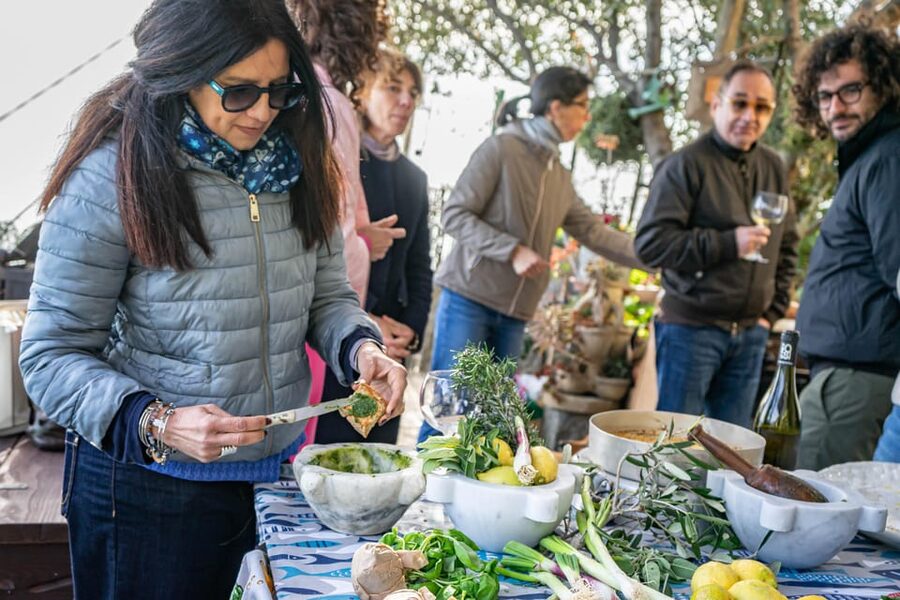
- 3-recipe lesson at a local home with a starter, fresh pasta, and dessert you make yourself
- Wine is part of the meal with a selection of local red and white wines
- Small group of up to 10 means you get real time with the host and instructor
- A real working kitchen setup: tools and ingredients are provided at your workstation
- Meet at a point, walk uphill, then follow the I Foresti Farm sign to the Cesarina’s home
- Hosts share the story behind the recipes, including family cookbooks
Riomaggiore cooking class: what you’re really paying for
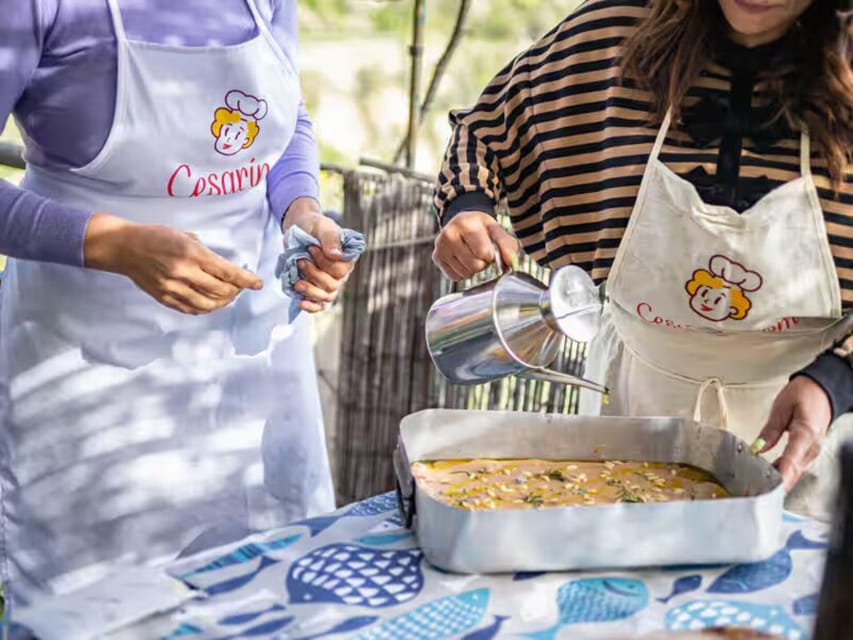
At $202.78 per person, this isn’t a budget activity. The value comes from a few things that add up fast: you’re cooking three full courses (starter, pasta, dessert), eating everything you made, and pairing it with local wines. On top of that, you’re doing it in a private home kitchen rather than a classroom.
Here’s the practical way to judge the price: you’re not paying just for recipes. You’re paying for the host’s time, the ingredients and utensils laid out for your group, the tasting meal, and the small-group feel that lets questions actually happen. If you like food that’s hands-on—kneading, shaping, tasting as you go—this kind of format usually feels worth it. If you’re looking for a quick snack tour, you’ll feel time-pressured.
Getting there: the 200m uphill walk and terraced steps
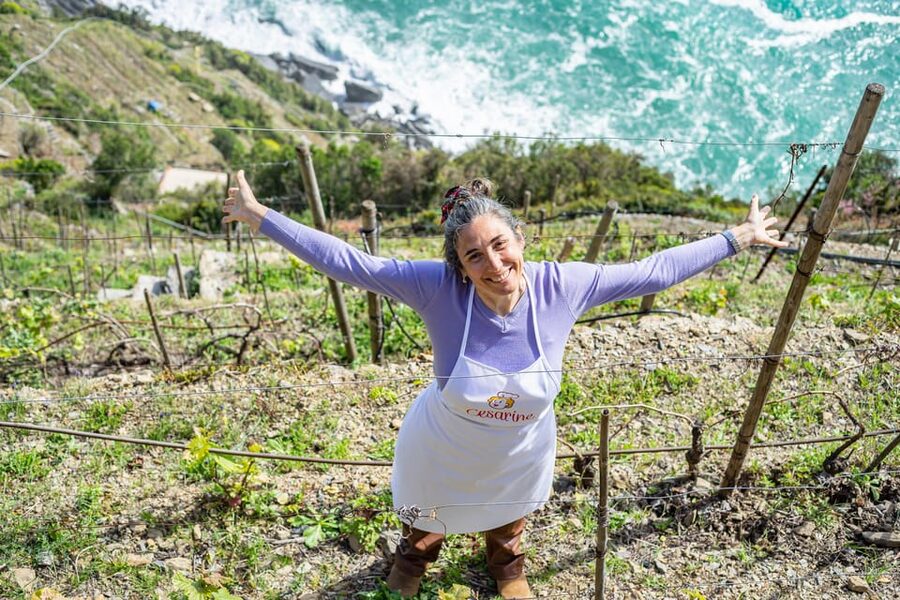
The activity starts at a set meeting point, and then you’ll need to walk about 200 meters uphill to the Cesarina’s house. From there you’ll descend terraced steps, turn right at the sign for I Foresti Farm, and follow the path to the home.
This matters because Riomaggiore is hilly and walkways are often stair-heavy. Plan sensible shoes. If you don’t love steep climbs, give yourself a little buffer before the class so you arrive calm instead of sweaty and stressed. Also note the practical detail: the full address is not shared upfront for privacy. You’ll receive it only after you book, so don’t try to map the exact route in advance.
What happens during the 3 hours: starter, fresh pasta, dessert
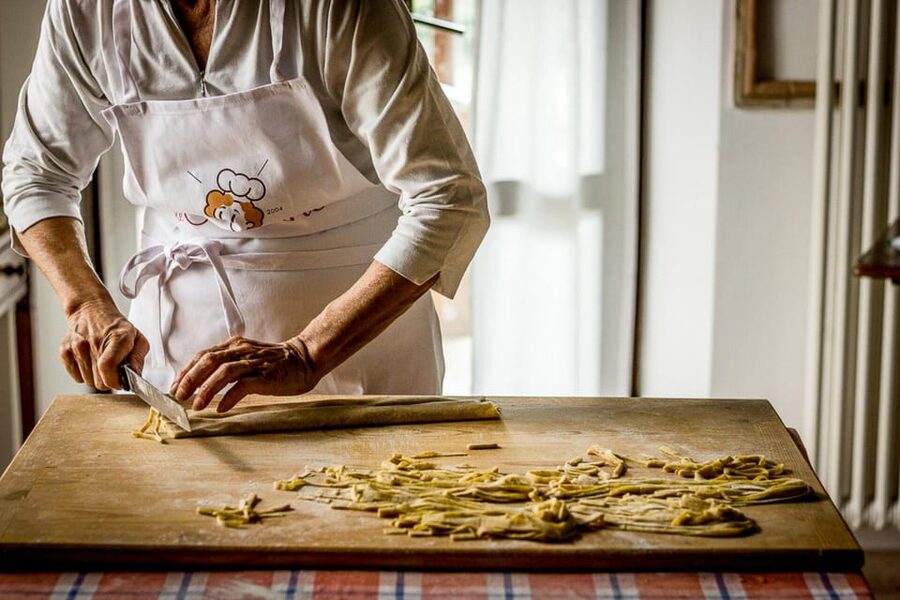
The class runs for about 3 hours, and it’s built around a simple, satisfying flow: cook together, taste together, then chat while you eat. You’ll be in a small group, with a workstation set up for you along with the utensils and ingredients.
Course 1: Starter with seasonal ingredients
You’ll begin with a starter built around seasonal ingredients. The host’s job here is not just to tell you what to do, but to explain the small technique choices that make Italian home cooking work. Expect the lesson to include the basic steps you need, plus the kind of practical “watch for this” advice that’s hard to learn from a recipe card.
This is also where you’ll feel the real benefit of cooking at a home table: you can taste early, learn what you’re aiming for, and adjust as you go.
Course 2: Fresh pasta from the region
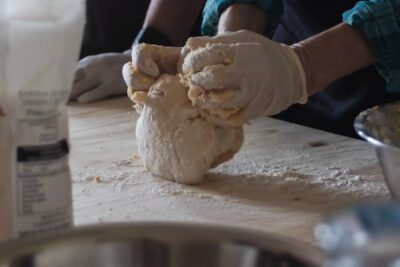
Next comes the main event: fresh pasta. The experience description is clear that the pasta is regional, and the class focuses on getting the dough and shaping right. Even if pasta sounds intimidating, the setup is designed for a learning experience: ingredients and tools are prepared, and you’re guided through the process.
One of the most praised parts of the experience is the fun of making homemade pasta, especially when hosts like Barbara and Stefano are guiding the group. You’re not just watching; you’re actively doing the work.
Course 3: Typical dessert
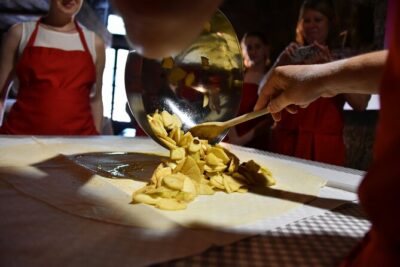
To finish, you’ll make a typical regional dessert. Since it’s taught as one of the three recipes, it’s part cooking and part confidence-building. Dessert in a cooking class is often where people learn timing and texture cues—what should feel right, not just what should look right.
By the time dessert is ready, you’ll be ready for the tasting part in a way that feels natural rather than rushed.
The tasting: local wine with what you made
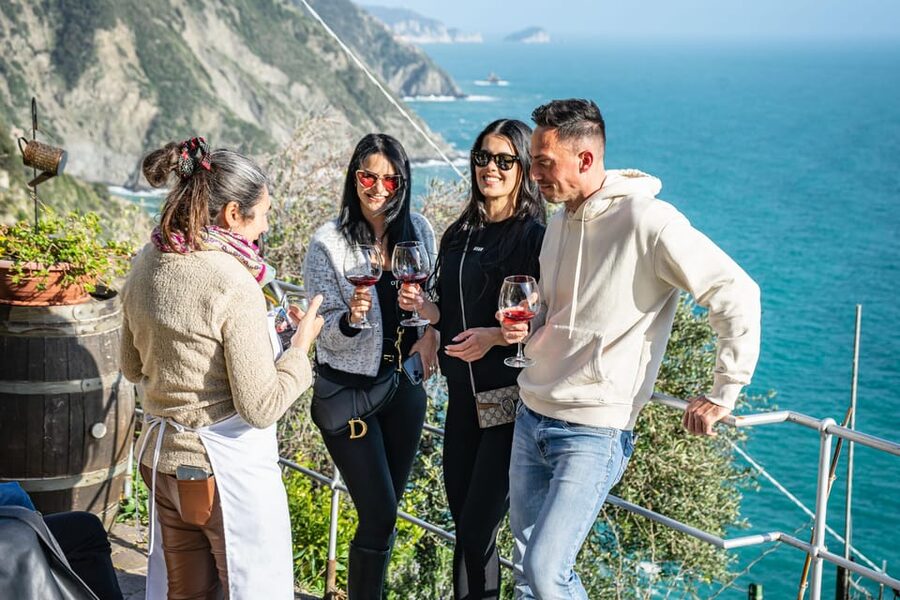
After each cooking stage, or at least by the end of the lesson, you’ll taste everything you prepared. The meal is paired with a selection of local wines: red and white.
This is one of the reasons the experience feels complete. It’s easy to cook and then feel disconnected from the final result, but here the tasting is built in. You’ll get to taste the recipes as a real meal—paired, paced, and served like a home gathering.
If you’re a wine person, pay attention to how the pairings shift across the courses. Pasta often changes the way you perceive acidity and richness, and dessert can make the wine taste differently. Even if you don’t know wine jargon, you can still learn what tastes harmonious by noticing your own reactions.
Hosts, family cookbooks, and the real story behind recipes
One of the best parts of an experience like this is that you’re not just learning methods. Your host shares the tricks of the trade and the story behind the food, including how their traditional regional cuisine is passed down through family cookbooks.
That may sound sentimental, but it’s actually useful. When you understand why a recipe looks the way it does—why ingredients matter, why timing matters—you cook with better instincts later. You’re also chatting with a welcoming Italian family over the meal, which turns the class into something more human than a scripted activity.
Also, the instructor is listed as speaking Italian and English, which helps if you want to ask questions and follow along comfortably without guessing what’s happening.
Who this is best for (and who might skip it)
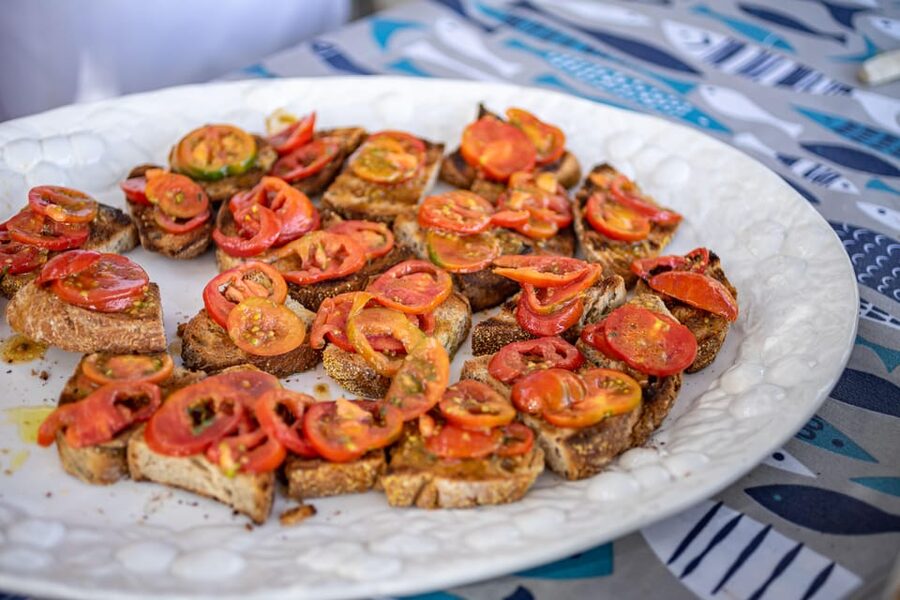
This is a great fit if you:
- Want an authentic Italian home-cooking experience in Liguria
- Enjoy eating what you make instead of just sampling
- Prefer small-group activities where you can ask questions
- Like learning techniques that you can repeat later
You might consider skipping if you:
- Struggle with stair-heavy walking routes (the route includes terraced steps and an uphill approach)
- Want a purely sightseeing-oriented day with minimal time indoors
- Prefer very structured, studio-style cooking classes where everything feels standardized
Cesarine in Riomaggiore: why the home-cook model works
Cesarine is an established network of home cooks across Italy. It’s described as the country’s oldest network, with more than 1000 home cooks in 500+ cities. The promise is straightforward: you cook in someone’s home kitchen, learn recipes directly from the people who cook them, and leave with stories as well as techniques.
The matchmaking part is also a practical detail. You’re asked for info at booking time—like food intolerance/allergies, your neighborhood in which you’re staying, and how you plan to travel to the host’s home—so the provider can assign you to the best-fit home cook. That matters because a home kitchen setup works only if the host can accommodate your needs and access is reasonable.
Timing and logistics: plan your Riomaggiore day around 3 hours
The class duration is 3 hours, and you can check availability for starting times. The day doesn’t end with a long trek back either: the activity ends back at the original meeting point.
In planning terms, treat this like a meal you can’t reschedule. You’ll likely want to place it where you can walk from your lodging without rushing and where you won’t feel like you need to immediately jump to another timed activity. If you’re staying in or near the village center, the uphill approach is manageable with good shoes, but give yourself extra margin.
Quick value check: is it worth it for your travel style?
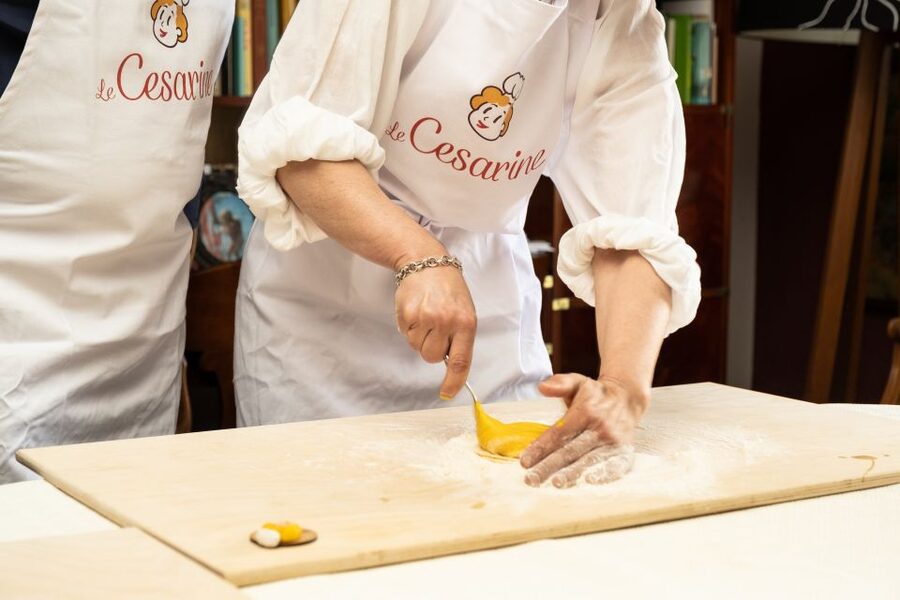
Here’s the honest gut-check I’d use before booking:
- If you’re the type who buys cooking gadgets, watches sauce videos, and gets excited about technique, yes—this can feel like money well spent.
- If you just want to taste a few bites and move on, you may feel the price is high compared to shorter food tours.
- If you love the idea of eating a full meal of what you made, paired with wines, in a small group, it hits the sweet spot.
At a high level, you’re buying three things: time with a host, a full meal outcome, and a learnable skill (not just a plate of food).
Should you book this Riomaggiore cooking class?
If your goal is hands-on Ligurian-area cooking in an Italian home setting, I’d book it. The class format supports real learning: you cook three courses, you taste what you make, and you do it with a small group of up to 10 people. The pairing with local red and white wines turns it from a lesson into a meal.
I’d only hesitate if stairs and hillside walking are a problem for you, since the route includes an uphill walk plus terraced steps, and the activity isn’t listed as suitable for wheelchair users.
FAQ
How long is the Riomaggiore cooking class?
It lasts about 3 hours.
How many people are in the class?
The group is limited to 10 participants.
What will I cook during the class?
You’ll cook a starter, fresh pasta, and a typical dessert, each from scratch as part of three recipes.
Are drinks included?
Yes. Water, wines, and coffee are included.
What languages are used during the class?
The instructor teaches in Italian and English.
Where does the class start and where does it end?
It starts at the meeting point and ends back at the same meeting point.
How do I get to the host’s home?
From the meeting point, you walk about 200 meters uphill, descend terraced steps, turn right at the I Foresti Farm sign, and follow the path to the host’s home.
When will I receive the full address of the home?
For privacy reasons, you only receive the full address after you book.
Is the experience wheelchair accessible?
No, it is not suitable for wheelchair users.
Can I cancel if my plans change?
You can cancel up to 24 hours in advance for a full refund.