REVIEW · CIVITELLA DI ROMAGNA
Romagna: Piadina Cooking Class
Book on GetYourGuide →Operated by Agriturismo Campo Rosso · Bookable on GetYourGuide
Piadina cooking sounds ordinary until you roll dough thin and flip it on a hot pan—then it turns into a satisfying, hands-on food lesson. I love that you learn the full process, from flour and water to a stuffed snack, and I especially like the chance to taste freshly cooked piadina with local cheese while enjoying views over the Romagna hills. The only real watch-out: it is not suitable for gluten intolerance, so plan accordingly.
If you want an authentic break from museum mode, this is a short, focused class in a working farmhouse setting at Agriturismo Campo Rosso. You’ll knead with your hands, use the rolling pin, and learn how piadina is traditionally eaten around Forlì-Cesena, Ravenna, and Rimini.
One more practical note: you cannot wear sleeveless shirts, and the class runs about 1.5 hours, so it is best when you can give yourself a clear meal slot after.
In This Review
- Key reasons this piadina class is worth your time
- Romagna piadina: what you’re actually learning in 90 minutes
- Where the class happens at Agriturismo Campo Rosso
- Step-by-step: what happens during the cooking laboratory
- 1) Getting started: traditional piadina basics
- 2) Kneading and rolling out the dough thin
- 3) Cooking on the hot pan
- 4) Filling with pecorino or herb/vegetable options
- 5) Outdoor snack time with a drink
- The instructor and languages: how you’ll fit in
- Price and value: what $51.24 gets you
- Who this class is best for (and who should skip it)
- What makes the experience feel authentic
- Practical tips so your piadina comes out right
- Should you book Romagna: Piadina Cooking Class?
- FAQ
- How long is the Romagna piadina cooking class?
- Where does the class take place?
- What does the class cost?
- What’s included in the ticket price?
- What languages are available for the instructor?
- Is it wheelchair accessible?
- Is it suitable for people with gluten intolerance?
- Are there any clothing or age restrictions?
Key reasons this piadina class is worth your time
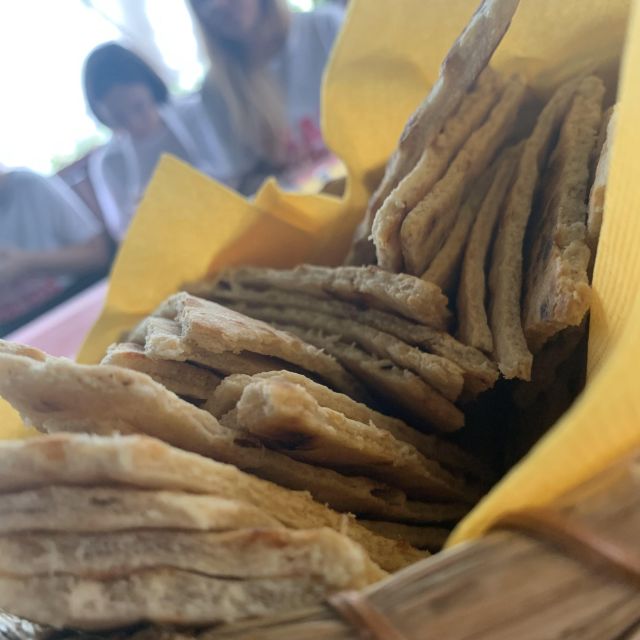
- Hands-on piadina romagnola making: knead, roll, cook, and fill your own snack
- Country farmhouse setting at Agriturismo Campo Rosso, with an intentionally traditional feel
- Learn by doing using a cooking laboratory setup that starts from basic ingredients
- Outdoor eating with Romagna hill views and a drink included
- Local flavor pairing like pecorino cheese and herbal or vegetable fillings
- You get the prep gear: apron, headgear, plus kitchen equipment
Romagna piadina: what you’re actually learning in 90 minutes
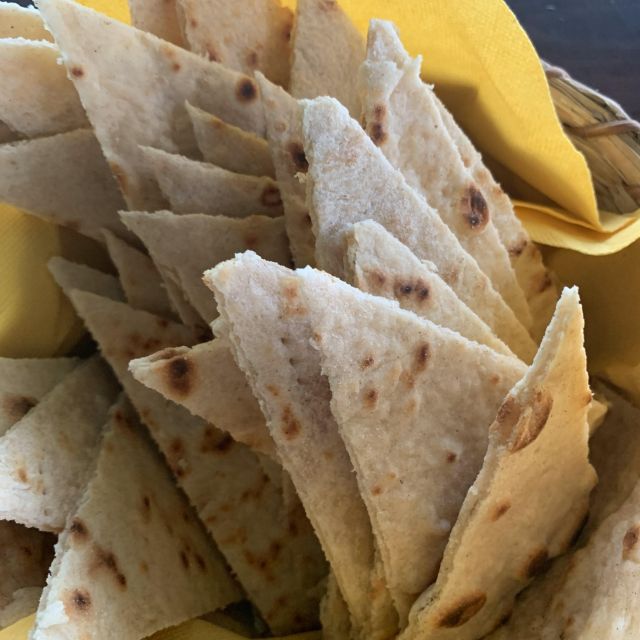
Piadina is an unleavened bread, meaning no yeast and no long rise—just flour, water, and good technique. It is typical of the provinces of Forlì-Cesena, Ravenna, and Rimini, and in Romagna it is usually eaten with local cheeses and cured meats. Here, the class is built around that simple premise: master the dough and cooking, then learn how to finish it with a tasty filling.
That structure matters because it turns into a skill you can reuse. You are not just watching someone make flatbread. You are practicing the rhythm: knead until it behaves, roll until it is thin and even, cook until it gets the right texture, then stuff and enjoy.
Also, the short time window is a plus. You get a complete result in about 1.5 hours, not a half-day commitment that leaves you too tired to eat dinner afterward.
Where the class happens at Agriturismo Campo Rosso
This experience takes place at Agriturismo Campo Rosso in Emilia-Romagna, in a country farmhouse environment. Even if you are coming from a nearby city, you feel the shift the moment you step into the cooking space—more rustic, more hands-on, less stage-managed.
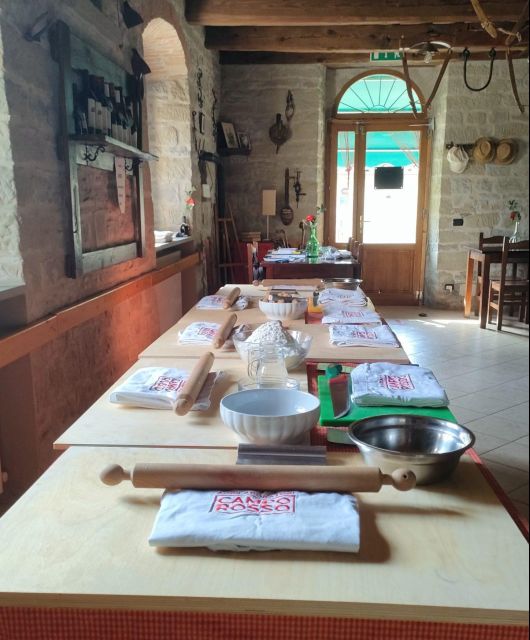
It is a wheelchair accessible activity, and the setup includes kitchen equipment, an apron, and headgear. Those details are small, but they make a difference: you are not hunting for supplies, and the class feels organized enough that you can focus on technique rather than logistics.
The outdoor moment is also part of the payoff. One of the highlights is eating your piadina with a drink while you look out over the Romagna hills. That kind of scenery turns a snack into a memory you can talk about later.
Step-by-step: what happens during the cooking laboratory
The class is basically one smooth cooking arc. You start with basic ingredients, then build your piadina through a sequence of tasks that cover the essentials.
1) Getting started: traditional piadina basics
You begin by learning to cook traditional Romagna bread—plain and straightforward, but with a technique focus. Piadina is unleavened, so the goal is not fermentation. It is handling the dough and rolling it correctly.
Expect the instructor to guide you through what the dough should look and feel like as you work it. This is where beginners often worry, but the teaching style here is designed for making it doable within the short class time.
One practical tip: since you will knead and roll, plan for a snack-friendly pace. This is not a sit-and-learn lecture. You’ll get flour on your hands, and you’ll want to enjoy that.
2) Kneading and rolling out the dough thin
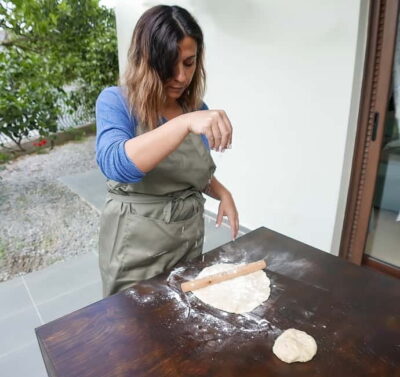
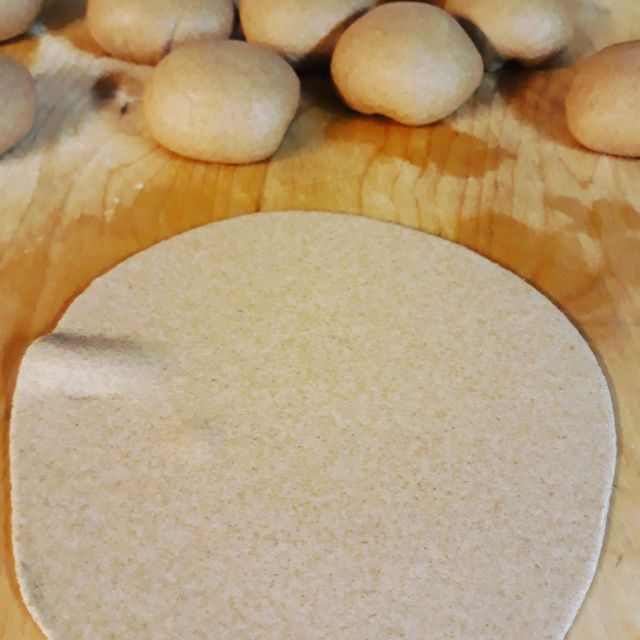
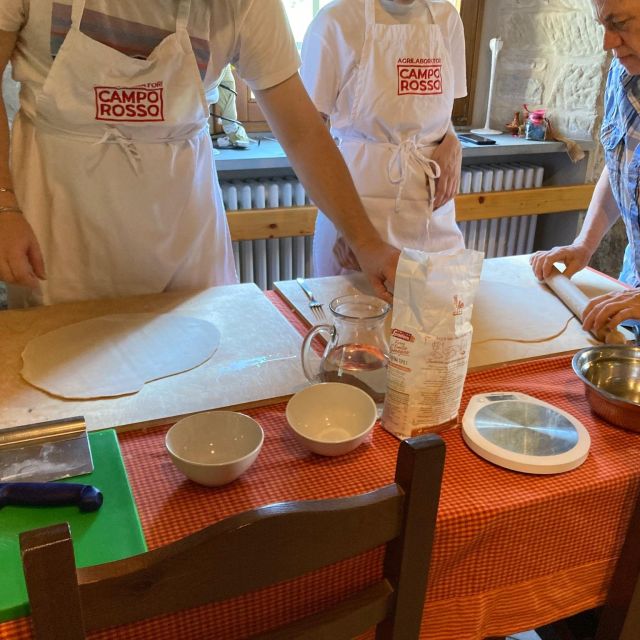
Then comes the part that makes piadina satisfying: kneading with your hands and using the rolling pin to roll out the dough into a disc a few millimeters thick.
That thickness detail matters. Too thick and it turns chewy in the wrong way. Too thin and it can cook unevenly. The class format lets you practice the balance until your disc is ready for the hot pan.
You’ll use the tools provided, plus you’ll wear the apron and headgear, which keeps things comfortable and helps the class stay orderly.
3) Cooking on the hot pan
Next, your rolled disc goes onto the hot pan. This is where heat control and timing start to matter. Piadina is simple, but the pan is unforgiving—if the cooking is off, texture suffers.
The lesson is designed so you do not just flip and hope. You learn what to look for as it cooks, and you end up with piadina that tastes like it came straight off the burner.
4) Filling with pecorino or herb/vegetable options
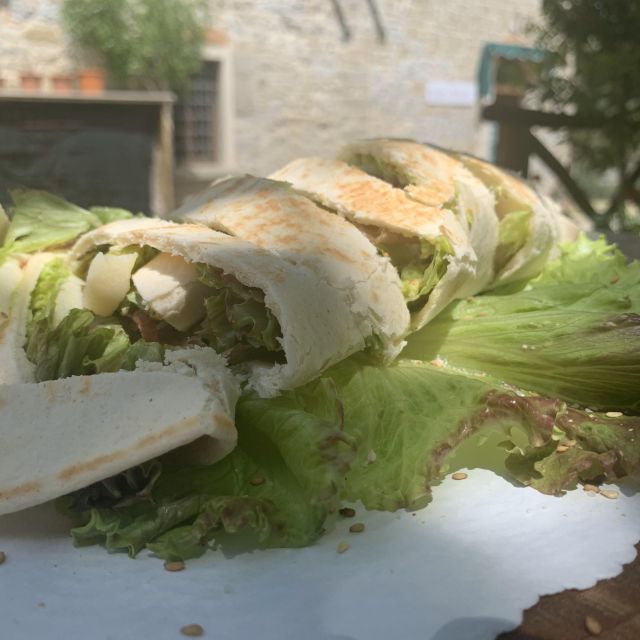
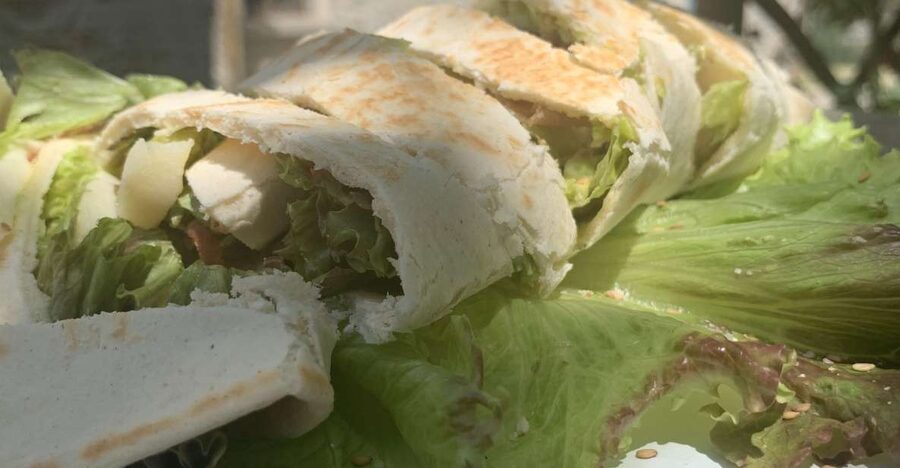
Once you’ve cooked the base, it is time to fill it. The class includes the option to fill your hot piadina with pecorino cheese or with herbs and vegetables.
This is one of my favorite parts of the whole experience because it shows you how Romagna people actually eat it. Piadina is not fancy plating. It is practical, portable comfort food—bread that works as a carrier for local flavors.
If you love cheese, pecorino is the obvious choice. If you prefer something lighter, herbs and vegetables can feel more refreshing.
5) Outdoor snack time with a drink
After the cooking, you eat your freshly cooked piadina as an outdoor snack with a glass of wine or a natural drink included.
That drink inclusion is a smart touch. It keeps the class from feeling like a demo followed by an empty stomach. Instead, you get the full arc: make it, cook it, taste it, and enjoy it where the day feels easy.
And yes, the panoramic view of the Romagna hills is part of the reason it feels special. A simple meal tastes better with a wide horizon.
The instructor and languages: how you’ll fit in
The instructor speaks Italian, French, and English. That is a big deal in a hands-on class. You do not want to struggle with instructions while you’re holding dough and trying to roll it evenly.
The class is designed like a cooking laboratory, which usually means lots of guidance and feedback rather than long speeches. You can follow along faster when you get directions in a language you actually think in.
Price and value: what $51.24 gets you
At $51.24 per person, this is the kind of activity that can either feel overpriced or feel fair, depending on what’s included. Here, the value case is solid because you get:
- A structured cooking class focused on traditional piadina romagnola
- Tasting as part of the experience
- A glass of wine or juice
- Apron, headgear, and kitchen equipment
- The chance to eat outdoors with hill views
What you are paying for is not just food, and not just a seat in a room. You’re paying for technique time: hands-on practice with the dough, plus instruction that helps you walk away knowing how to recreate the process.
Also, it is time-efficient at 1.5 hours. That reduces the risk of turning the class into a drag on your schedule. If you’re sightseeing in Emilia-Romagna, you want something that feels like a highlight, not another chore.
Who this class is best for (and who should skip it)
This is a great fit if you fall into any of these groups:
- You like cooking classes that end with a meal you made yourself
- You want a short, traditional food experience in the countryside
- You enjoy regional Italian specialties and simple techniques done well
- You want an authentic setting and friendly, welcoming hospitality
It is less suitable if:
- You have gluten intolerance (not suitable)
- You are traveling with very young children (not suitable for children under 4 years)
- You dislike hands-on activities and want only passive sightseeing
Also keep the clothing rule in mind: sleeveless shirts are not allowed. That’s easy to solve—bring a shirt with sleeves or a light layer.
What makes the experience feel authentic
A lot of cooking classes claim authenticity. This one feels more grounded because the focus stays on the basics of Romagna piadina: unleavened dough, thin rolling, hot-pan cooking, then practical fillings.
The setting helps too. Agriturismo Campo Rosso is a country farmhouse, and the experience is described as a kind of throwback in how it is run—friendly, welcoming, and clearly proud of the way things are done there.
When staff approach the class like hospitality instead of performance, you relax and learn faster. The goal is that you leave with food skills and a positive, human memory, not just a photo.
Practical tips so your piadina comes out right
You can make your own experience smoother with a few simple choices:
- Wear a shirt that is not sleeveless (you’ll be asked)
- Bring comfortable clothes you don’t mind getting a little flour on
- If you have preferences, think about fillings ahead of time: pecorino versus herbs and vegetables
- Plan to eat right after you finish. You’ll be excited for the taste, and it makes the whole 1.5 hours feel complete
If you’re nervous about cooking, good news: the class format is designed for learning by doing. You’re not expected to be a flatbread expert on day one.
Should you book Romagna: Piadina Cooking Class?
I’d book it if you want a short, hands-on food activity that teaches a real regional skill, not just a quick snack with a story. The combination of making your own piadina, eating it outdoors with hill views, and getting included drink and tasting makes the value feel fair for the time.
I would skip it if gluten intolerance is a factor, or if you need a fully passive experience. And if you’re arriving with a tightly packed schedule, double-check the start time options so the 1.5-hour class fits cleanly into your day.
If you like practical, traditional experiences with warm hospitality, this is the kind of class that can become a trip highlight rather than just another ticketed activity.
FAQ
How long is the Romagna piadina cooking class?
The class lasts about 1.5 hours. Start times vary, so you’ll want to check availability for the specific slot you want.
Where does the class take place?
It takes place at Agriturismo Campo Rosso in Emilia-Romagna, Italy.
What does the class cost?
The price is $51.24 per person.
What’s included in the ticket price?
You get the cooking class, tasting, a glass of wine or juice, an apron, headgear, and kitchen equipment.
What languages are available for the instructor?
The instructor speaks Italian, French, and English.
Is it wheelchair accessible?
Yes, the experience is wheelchair accessible.
Is it suitable for people with gluten intolerance?
No. It is not suitable for people with gluten intolerance.
Are there any clothing or age restrictions?
Sleeveless shirts are not allowed. The activity is not suitable for children under 4 years.