REVIEW · BOLOGNA
Bologna Local Pasta Cooking Class, Ragu, Spritz, Wine & Gelato
Book on Viator →Operated by Tours and the City · Bookable on Viator
Fresh pasta starts with your hands. In Bologna, you get a real kitchen experience focused on tagliatelle and a true Bolognese-style ragù. I love that it’s hands-on (no machine work, just you at the rolling pin), and I also love the social pacing with a small crew of about 10. One possible consideration: the ragù itself is homemade, but the actual prep isn’t part of the class since time is tight.
You’ll start with an aperitivo meant for locals, not tourist hunger. Mortadella and crescenta (you may also hear piadina mentioned) pair with Pignoletto, then you jump into an Emilia-Romagna spritz called Casoni using local herbs and a more traditional approach. The class ends with coffee, amaro, and a mystery gelato, plus recipe PDFs you can request afterward.
In This Review
- Key things to know before you go
- Bologna’s kitchen vibe: why this pasta class feels real
- Price and value: does $59.26 make sense for 3 hours?
- Getting in: meeting point, timing, and how to arrive
- Your instructors and the small-group advantage
- Aperitivo kickoff: Mortadella, crescenta/piadina, and Pignoletto
- Casoni spritz lesson: local herbs, proper technique, not just a drink
- Hand-making tagliatelle: rolling pin work, flour control, and real pasta texture
- Homemade ragù plus 24-month Parmigiano: building the plate correctly
- The grand finale: coffee, amaro, and mystery gelato
- Recipes you can actually use at home (PDFs on request)
- Who should book this class (and who might rethink it)
- Final verdict: should you book this Bologna pasta class?
- FAQ
- FAQ
- How long is the Bologna pasta cooking class?
- Where do I meet for the class?
- Is the class offered in English?
- How large is the group?
- Does the class include making the ragù sauce from scratch?
- What dietary options are available?
- What if I have dietary restrictions or allergies?
- Do I get recipes to make the dishes at home?
Key things to know before you go
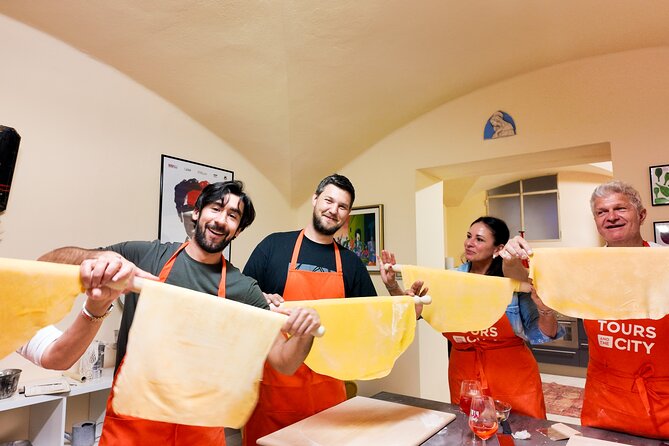
- Small group, max 13 travelers: limited to around 10 for more hands-on teaching and less waiting around.
- Hand-rolled tagliatelle: you make and cut pasta dough without machines.
- Casoni spritz: you learn an Emilia-Romagna style spritz, not the generic version you see everywhere.
- Ragù is 100% homemade: but you don’t do the ragù cooking from scratch in-class due to limited time.
- Lots of tastings: Pignoletto, Spritz, red wine (Sangiovese), coffee, amaro, and gelato.
- Recipes by PDF on request: helpful if you want to recreate the meal at home.
Bologna’s kitchen vibe: why this pasta class feels real
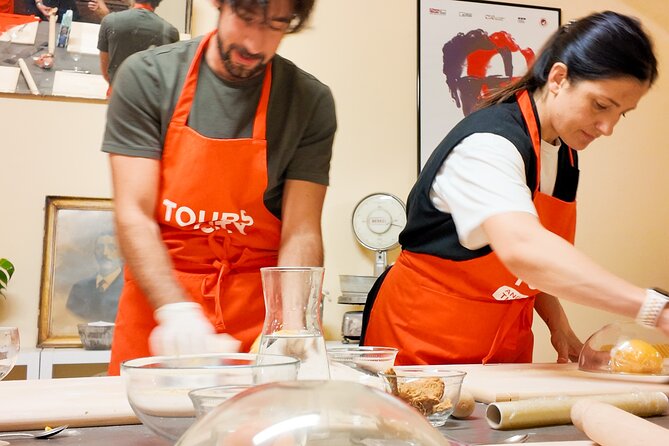
Bologna is serious about food. Not loud-serious. Quiet-serious. When you take a class here, the goal shouldn’t be to collect a souvenir recipe. It should be to learn how local cooks think: taste first, season well, and keep the steps simple enough that you can actually repeat them later.
This class is built around that mindset. You’re not just watching someone assemble a plate. You’re making fresh pasta dough, rolling it out, cutting tagliatelle, and then eating it with a house-made ragù and aged Parmigiano. That sequence matters because it teaches the real logic of the meal: pasta texture and thickness affect how sauce clings, and sauce flavor changes how you perceive the pasta.
It also helps that the evening starts with an aperitivo. You’re in the rhythm of an Italian meal from the first minutes, with local wine and small bites that set the tone for what comes next.
You can also read our reviews of more tours and experiences in Bologna.
Price and value: does $59.26 make sense for 3 hours?
At $59.26 per person for about 3 hours, the math works best if you think of this as a mini dinner plus a skills workshop. You’re not paying just for cooking instructions. You’re also getting multiple drinks (Pignoletto, spritz, and red wine Sangiovese), plus coffee, amaro, and gelato.
A fair way to judge value is to ask: how much of the time are you actually participating? This class keeps you busy—mixing dough, rolling and cutting, cooking pasta, and building the final plate. On top of that, the group size stays small, which usually means you get faster help when your dough is sticking or your cuts are uneven.
One more practical note: ragù preparation isn’t included in the class due to limited time. That’s a legitimate tradeoff, but the payoff is still there because the ragù you eat is 100% homemade and paired with your fresh pasta on the same night. If you’re expecting to cook the entire ragù from scratch in 3 hours, you’ll need to know that ahead of time.
Getting in: meeting point, timing, and how to arrive
You meet at Piazza Galileo Galilei (40123 Bologna), and the activity ends back at the meeting point. It’s near public transportation, which matters because Bologna traffic and walking routes can be a little chaotic when you’re on a tight schedule.
Plan to arrive a few minutes early. In a class like this, that buffer helps you settle in before the aperitivo begins and before the pasta steps start moving fast.
The class uses a mobile ticket, and you should receive confirmation at booking, so you can focus on showing up rather than hunting for paperwork.
Your instructors and the small-group advantage
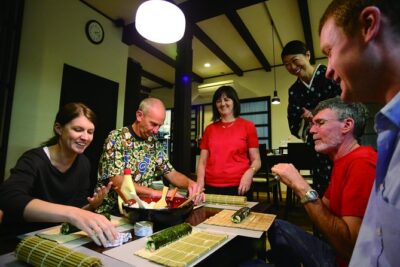
The format is designed for a maximum of about 10 people in the working kitchen, with a max of 13 travelers overall. That difference sounds small on paper, but in real cooking classes it’s huge. You’re rolling, cutting, and working dough. You need space and you need quick corrections.
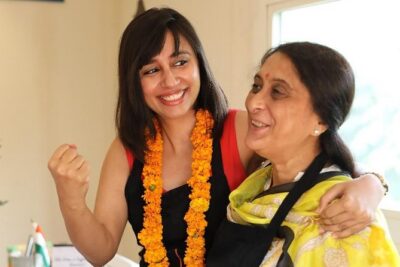
Instructors vary by day, but you’ll likely work closely with hosts known for hands-on teaching and keeping the mood relaxed. Past sessions have had teachers with names like Sonia and Stella, Stefania and Claudia, Valentina and Stefania, and others. The common thread across these groups is step-by-step coaching and encouragement when pasta dough is behaving less-than-perfectly.
This is one reason couples and solo travelers often love it: you get the social part (you share food and conversation), without losing the attention that makes it a real cooking class instead of a sit-and-watch meal.
Aperitivo kickoff: Mortadella, crescenta/piadina, and Pignoletto
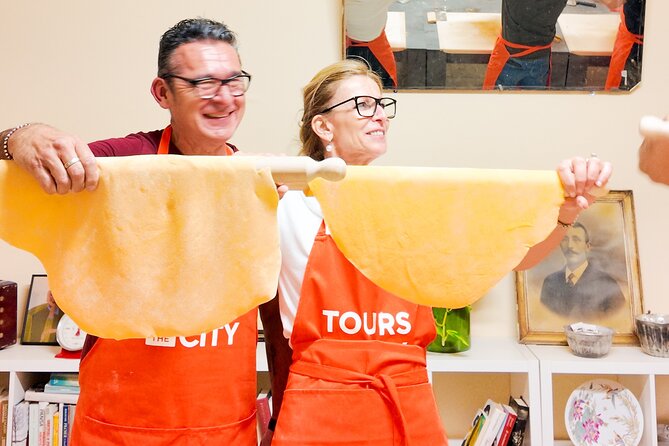
Before you touch dough, you start with a Bolognese-style aperitivo. The menu centers on Mortadella alongside crescenta, and you may also see piadina mentioned as part of the starter set. The drink is Pignoletto, a local wine that keeps the mood light and sets up the spritz lesson that follows.
Why this matters: starting with local flavors helps your brain calibrate. If you jump straight into pasta without tasting what makes the region tick, you miss the point of a “Bologna meal.” With the aperitivo, you learn the vibe first—salty, savory, and herb-and-bready in a very Emilia-Romagna way.
It’s also the easiest moment to meet your group. Many people end up chatting right away because everyone is there for the same reason: learning, eating, and trying something that feels local rather than theme-park Italian.
Casoni spritz lesson: local herbs, proper technique, not just a drink
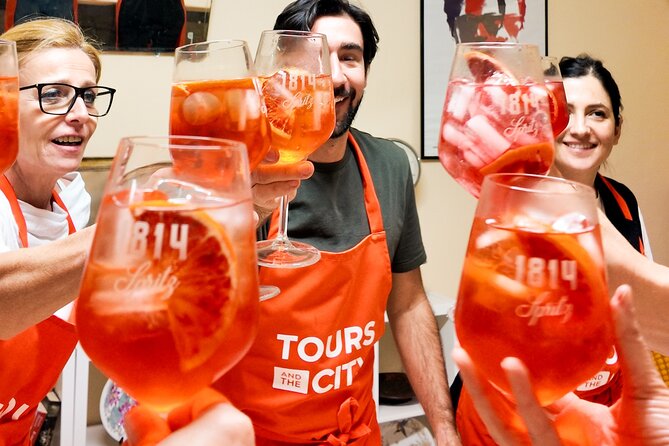
Next comes the spritz portion. You’ll make a Casoni spritz, a regional take that uses local herbs and recipes. That detail matters because a lot of spritz instructions online are basically global brand templates. Here, you learn the regional approach tied to Emilia-Romagna.
You also get time to taste and compare as you go. Some sessions include guidance around the difference between Aperol-style and Campari-style spritz profiles while you’re cooking and building the drink. Even if you don’t obsess over bitters at home, you’ll walk away with a better sense of balance: sweetness vs. bitterness vs. acidity and how herbs change the finish.
And yes, you drink what you learn. This isn’t a class where the spritz is just decoration.
Hand-making tagliatelle: rolling pin work, flour control, and real pasta texture
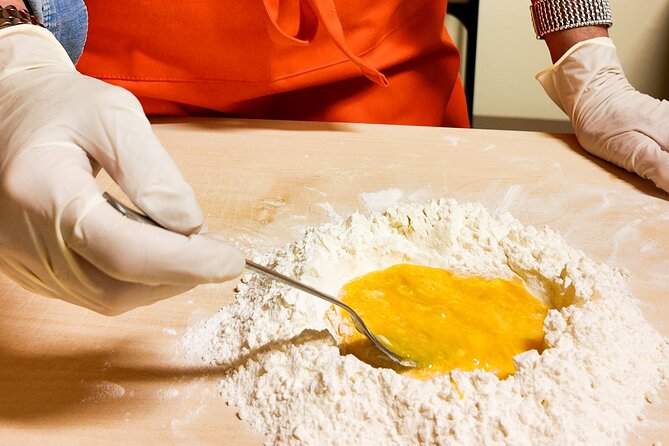
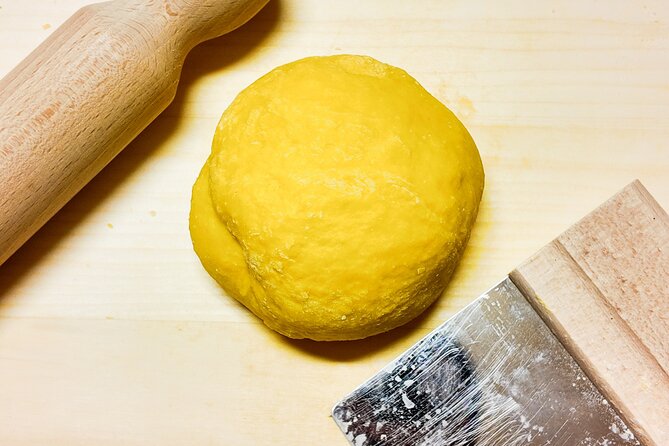
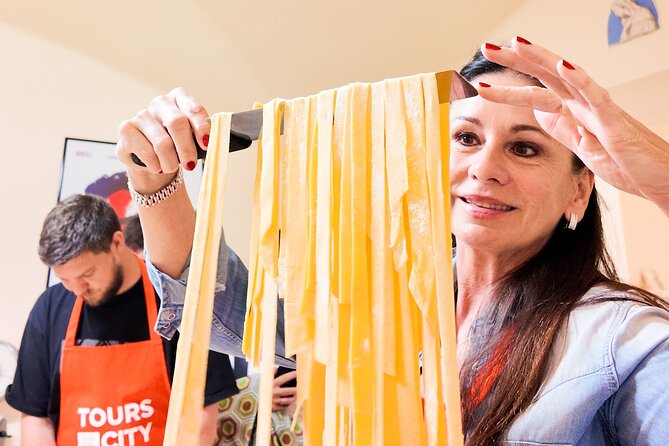
Now the hands-on part. You’ll make pasta dough by hand—no machines. You mix, roll, and cut tagliatelle using techniques taught step-by-step.
If you’ve never made fresh pasta, this class is structured to get you over the first hurdle: getting dough to the right feel. Once you understand how to respond when it’s sticky or stiff, the rest becomes much easier. The instructors keep things practical, and the small group means you’re not waiting in line for corrections.
Why cutting tagliatelle matters: the width affects how sauce clings. Tagliatelle isn’t just a shape. It’s a pasta-to-sauce handshake. In a Bologna ragù meal, you want a tagliatelle texture that can hold rich meat sauce without turning heavy or mushy.
Also, you’ll learn the rhythm of the process: rolling, cutting, letting pasta dry slightly, then cooking together. That “dry first, cook second” step is often what home cooks skip, so it’s a valuable skill.
Homemade ragù plus 24-month Parmigiano: building the plate correctly
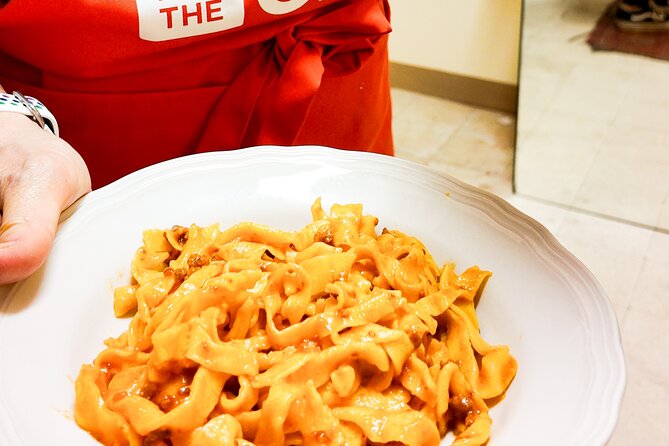
Here’s where the class gets very Bologna. The ragù preparation isn’t part of the class due to limited time, but the ragù you eat is 100% homemade. You’ll pair your cooked tagliatelle with that ragù, plus Parmigiano Reggiano aged 24 months.
That aging detail matters more than most people expect. Older Parmigiano brings a deeper, sharper flavor and a drier texture that helps it cling to pasta and melt into sauce in a cleaner way.
You’ll also have red wine with the meal: Sangiovese, the classic grape for this part of Italy. The point isn’t fancy pairing theory. It’s that Sangiovese’s acidity and structure keep the ragù from feeling too heavy.
One practical takeaway: you’ll see how the meal is built. Many cooking classes end with pasta on your plate and no discussion about assembling it. Here, you’re effectively taught how to combine components into something that tastes like a proper lunch in Bologna, not an experiment.
The grand finale: coffee, amaro, and mystery gelato
Italian meals end with something bitter-sweet. After the pasta, you finish with coffee and amaro, which is a herbal liqueur made for digestion and late-night vibes.
Then comes gelato, described as mystery gelato. That wording hints that you’ll get a fun surprise at the end rather than a fixed flavor list.
One extra detail that shows up in some sessions: the gelato can come with a drizzle of very aged balsamic vinegar from Modena. If that happens during your class, it’s a memorable touch because it adds a dark, complex sweetness that plays well with dairy.
Even if you’re not an amaro person, tasting it in context helps. You’re not doing it at a bar with a guessing game. You’re doing it as part of a meal where it actually makes sense.
Recipes you can actually use at home (PDFs on request)
This is one of those “future you will thank you” parts. All recipes are delivered to you via email as PDFs, but you request them.
In practical terms, that means you won’t just rely on memory when you’re back home with different flour, different kitchen humidity, and a different rolling pin feel. You’ll have a guide for ingredients and steps, which is what turns a fun night into a repeatable skill.
If you like to cook, this is also a good confidence builder. When you know you can recreate the meal, the class becomes more than entertainment.
Who should book this class (and who might rethink it)
This class is a great match if you want:
- a hands-on pasta skill you can repeat
- a regional Bologna meal that includes more than just pasta
- a small-group setting where you can ask questions
- a fun mix of cooking plus aperitivo culture
It may not be the best fit if you have severe allergies or very strict dietary restrictions. The class can accommodate gluten-free pasta and vegetarian sauces, but it notes it may not be suitable for people with severe allergies or strict dietary requirements. If that’s you, message in advance so they can advise on whether you’ll be able to participate safely.
Also, children are welcome, but the menu and experience are designed for adult participation. If you’re traveling with kids, consider how they handle long food-focused sessions.
Final verdict: should you book this Bologna pasta class?
If you’re in Bologna and you want one night that feels genuinely local, this is an easy yes. You get real teaching for tagliatelle, a spritz lesson that’s connected to Emilia-Romagna rather than generic cocktail culture, and a full meal with homemade ragù, aged Parmigiano, wine, coffee, amaro, and gelato.
I especially like the pacing: aperitivo first, then spritz, then pasta, then the ragù dinner finish. It feels like one continuous evening, not disconnected stations.
Just go in with the one clear expectation: the ragù is homemade, but you don’t prepare it from scratch during the 3 hours. If that limitation is fine for you, the class is strong value for the time, the food, and the hands-on outcome.
FAQ
FAQ
How long is the Bologna pasta cooking class?
It runs for about 3 hours.
Where do I meet for the class?
You start at Piazza Galileo Galilei, 40123 Bologna, and the activity ends back at the same meeting point.
Is the class offered in English?
Yes. The experience is offered in English.
How large is the group?
The experience is limited to a small group of around 10 people, with a maximum of 13 travelers.
Does the class include making the ragù sauce from scratch?
No. The ragù preparation is not included due to limited time, but the ragù is 100% homemade.
What dietary options are available?
It can accommodate gluten-free pasta and vegetarian sauces, but it may not be suitable for people with severe allergies or strict dietary restrictions.
What if I have dietary restrictions or allergies?
Inform the provider in advance so they can advise whether the experience is suitable for you.
Do I get recipes to make the dishes at home?
Yes. All recipes can be delivered to you by email as PDF files upon request.