REVIEW · BOLOGNA
Bolognese Cooking Class in a Unique Central Location
Book on Viator →Operated by eatwith · Bookable on Viator
Want ragù lessons in central Bologna? I love that you get hands-on training for Tortellini and Tagliatelle all Bolognese with Daniele, including how the broths and sauces are built.
In a city famous for food, that matters: you leave understanding the steps, not just the final plate.
I also like the way the class turns into lunch right away. You start with a local wine from Emilia-Romagna, then eat what you made: Tortellini in capon broth, followed by handmade Tagliatelle with Ragù Bolognese meat sauce. It’s practical, and it tastes like Bologna.
One thing to consider: the setting is small (the tour caps at 4 travelers), and a couple of past participants noted recipe handouts were not always provided as expected. If you care about written recipes, ask directly at the end of class and double-check what you’ll receive.
In This Review
- Key Highlights You’ll Actually Care About
- Why Bologna Ragù Skills Beat Another Food Tour
- Meet Daniele at Via Orfeo: Central, Compact, and Easy to Reach
- The 10:00 Plan: A Clear Cooking Flow With a Sit-Down Lunch
- Step 1: Get settled and start the morning
- Step 2: Prep the sauces and broths before pasta time
- Step 3: Make Tortellini with capon broth
- Step 4: Make Tagliatelle and Ragù Bolognese
- Step 5: Lunch together with wine
- Step 6: After-class: a sweet ending, if you want one
- The Dishes: What You’ll Learn From Tortellini to Ragù
- Tortellini in capon broth
- Tagliatelle with Ragù Bolognese
- What Small-Group Coaching Feels Like in Real Life
- Price and Value: What $142.01 Buys You
- Potential Downsides (and How to Avoid Them)
- Recipe expectations may vary
- Small space can affect comfort and timing
- Rare operational hiccups can happen
- Who Should Book This Class
- Should You Book This Bolognese Cooking Class?
- FAQ
- Where is the meeting point for the class?
- How long is the Bolognese cooking class?
- Is the class offered in English?
- How many people are in the group?
- What is included in the menu?
- Can I cancel and get a full refund?
Key Highlights You’ll Actually Care About
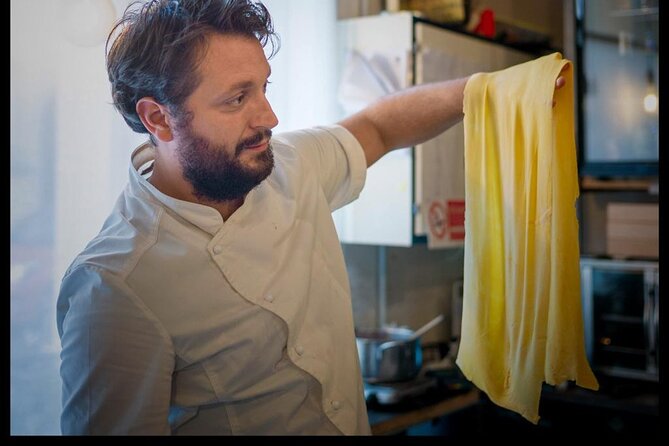
- Small group (max 4), so Daniele can correct your technique instead of just lecturing.
- From-scratch pasta focus, especially Tortellini and fresh Tagliatelle.
- Ragù Bolognese and broth prep, so you learn flavor building, not only shaping.
- Lunch is the result, with a local wine starter from Emilia-Romagna.
- English instruction, helpful if you want to follow every step.
- Strong overall satisfaction, with a 4.6 rating and lots of praise for fun, patience, and results.
Why Bologna Ragù Skills Beat Another Food Tour
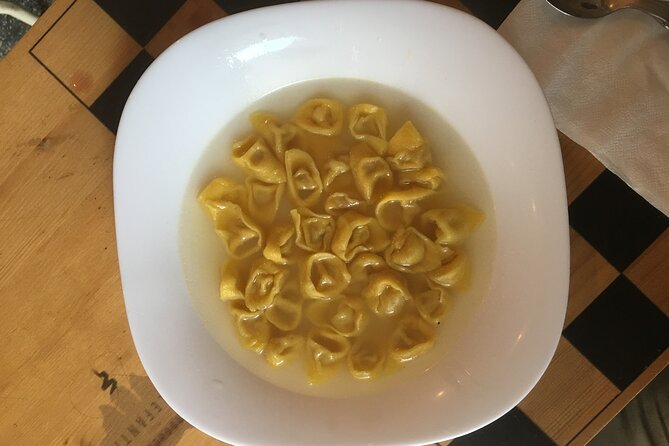
If you like eating in Bologna, a cooking class is the natural next step. You’re not just sampling local favorites. You’re learning the logic behind them: dough texture, stuffing balance, and how long-cooked ragù gets its body and depth.
What makes this one feel especially worthwhile is the workflow. You learn how the sauces and broths are prepared before you sit down to eat. That turns the meal into a lesson you can taste. When your fork hits the pasta, you understand why it works.
And because it’s in the center of Bologna, you’re not spending half your day commuting. You’re in a working pasta setup with Daniele, where the goal is simple: make the real dishes, make them well, and enjoy the meal together.
You can also read our reviews of more tours and experiences in Bologna.

Meet Daniele at Via Orfeo: Central, Compact, and Easy to Reach
The meeting point is Via Orfeo, 6, 40124 Bologna BO, Italy, and the activity ends back at the same spot. Start time is 10:00 am, and the class runs about 4 hours 30 minutes.
A few practical bits make this easier to fit into your Bologna days:
- It’s near public transportation, so you can get there without relying on taxis.
- You’ll receive a mobile ticket, and confirmation is sent at booking time.
- The full address should appear on your confirmation voucher under the Before you go section, which is handy if you’re using maps.
One note from real past experiences: the classroom is described as more of a small bar-style space than a supermarket-style “grocery store.” Don’t let the wording confuse you. The important part is that you’re there to cook and eat, not to browse shelves.
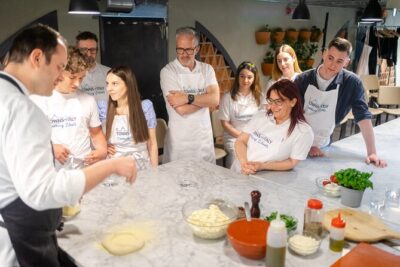
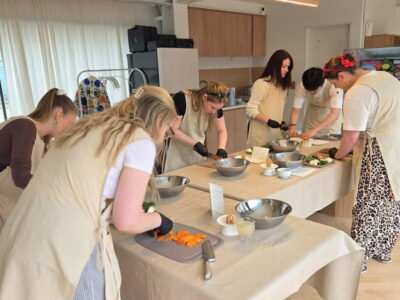
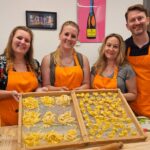
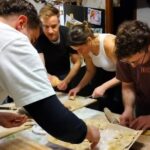
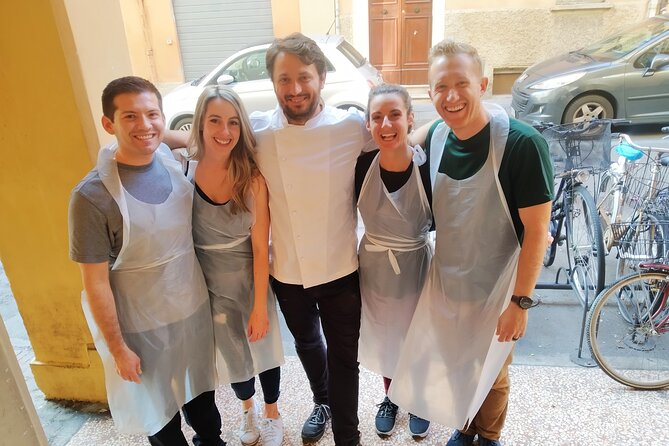
Since the group is capped at 4 travelers, you’re likely to feel more like you’re joining a small table than joining a factory line of tourists. That size is a big deal for technique: you can ask questions, and Daniele can watch what you’re doing while you’re doing it.
The 10:00 Plan: A Clear Cooking Flow With a Sit-Down Lunch
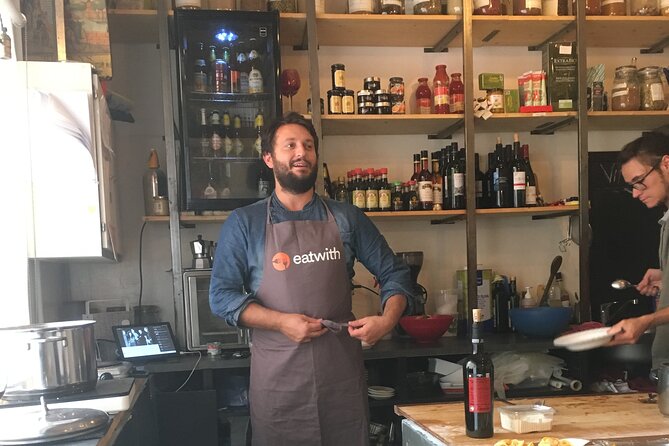
This class is built around making a full lunch the Bologna way. You’ll go step by step, and then you’ll sit down and eat your results.
Step 1: Get settled and start the morning
You begin at 10:00 am in Daniele’s pasta lab. The mood tends to be relaxed and friendly, with a morning-food vibe rather than a rigid, lecture-only format. One past participant described the start as coffee-forward, with a quick drink moment before cooking.
Even if your group doesn’t replicate that exact rhythm, expect the first part of the experience to be about getting comfortable: meeting Daniele, getting your bearings, and getting ready to work at the counter.
Step 2: Prep the sauces and broths before pasta time
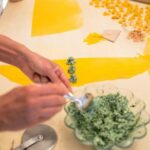
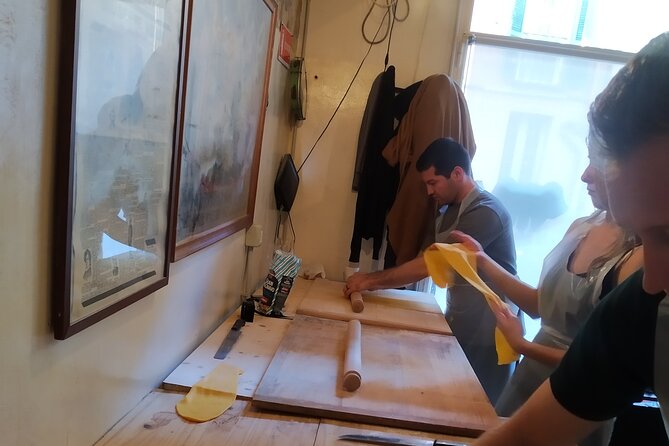
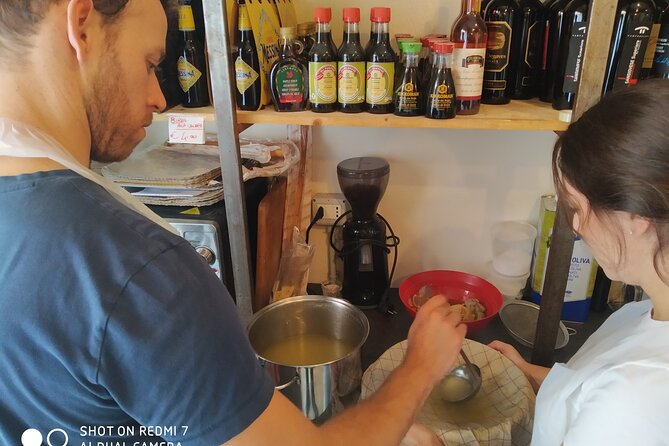
Before you shape anything, you learn how the broths and sauces are prepared. This is where you get the “Bolognese secret sauce” that people talk about, except you’ll actually see the structure: how flavors build, how richness comes together, and how you manage timing.
This is the part I value most, because it changes how you cook at home. If you only learn pasta shaping, you can end up with decent dough and a bland meal. If you learn the sauce and broth logic, your plate gets that unmistakable Emilia-Romagna flavor.
Step 3: Make Tortellini with capon broth
Next comes Tortellini. The sample menu is clear about what you’ll make and eat: Tortellini stuffed pasta with capon broth.
You’re not just assembling. You’re learning how to work the dough and how to treat stuffing as part of the dish’s flavor, not just a filling you hide inside. Tortellini rewards patience, and that matches the tone people praise: Daniele is described as patient, fun, and willing to coach.
Step 4: Make Tagliatelle and Ragù Bolognese
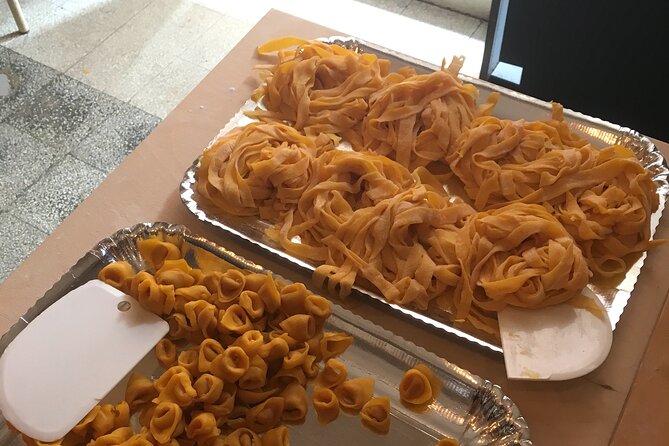
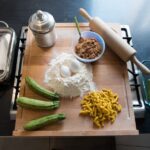
After Tortellini, you move into the second main: Tagliatelle fresh handmade pasta with Ragù Bolognese meat sauce. Again, the key is from scratch. You’ll work the dough and learn how to form it as Tagliatelle rather than using dry pasta and calling it authenticity.
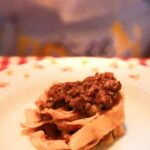
Ragù Bolognese is where the class earns its name. Past participants highlight a thick, flavorful sauce, and that’s exactly what you want to learn: what makes ragù cling, taste deep, and feel “slow cooked” even if your class timeline is shorter.
Step 5: Lunch together with wine
Once your pasta is ready, you sit down and eat. You’ll have:
- Starter: Wines from the Emilia-Romagna region
- Main: Tortellini with capon broth
- Main: Tagliatelle with Ragù Bolognese meat sauce
This lunch format is more than a reward. It’s the feedback loop. You see what your hands did, and then you taste how the broth and sauce connect to the pasta.
Step 6: After-class: a sweet ending, if you want one
One participant was sent toward a gelato shop after class. That’s not guaranteed, but it’s the kind of friendly local guidance you can expect in a small-group experience. If you like finishing Bologna the classic way, plan for a gelato stop soon after.
The Dishes: What You’ll Learn From Tortellini to Ragù
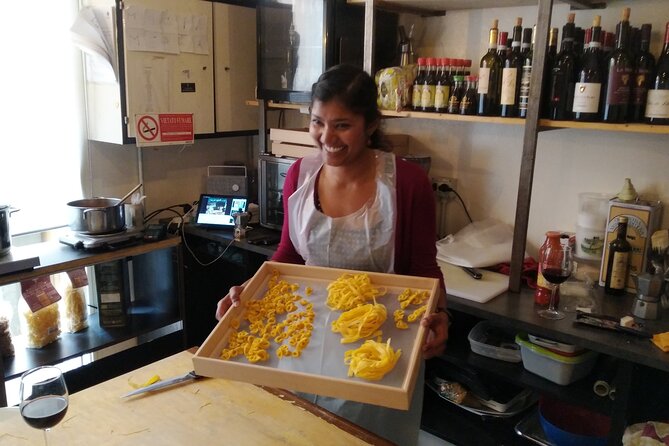
This class is built around two of Bologna’s most identity-heavy dishes. That’s good, because it forces you to learn the fundamentals that matter in Bolognese cooking.
Tortellini in capon broth
Tortellini are often treated like a “special occasion” food, but here you learn the whole point: the stuffing and the broth are part of the flavor equation.
Capon broth matters because it brings richness and a smooth depth that doesn’t taste harsh. Once you understand that broth isn’t just a liquid base, you’ll cook differently at home. You’ll treat liquids and reductions like real ingredients, not background noise.
Tagliatelle with Ragù Bolognese
Ragù Bolognese is thick for a reason: it’s designed to coat pasta and stick around after the first bite. Past participants specifically mention the ragù being thick and flavorful, and that’s a sign the sauce work is taken seriously.
You also learn what makes Tagliatelle a good match. Fresh pasta has a different bite than dried versions, and the sauce clings better when the texture is right. You’re learning the combination, not just one component.
What Small-Group Coaching Feels Like in Real Life
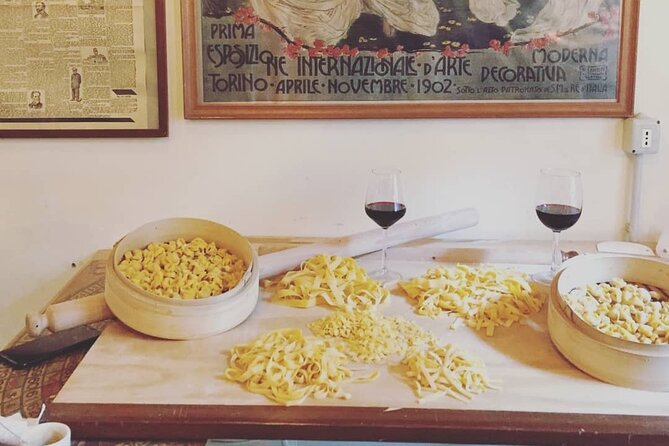
A group of up to 4 travelers changes the entire experience. You’re more likely to:
- get corrections while you’re working
- understand why a step matters (instead of just getting told what to do)
- learn at your speed without feeling rushed
Daniele is described as both knowledgeable and entertaining, with patience that keeps you from feeling flustered when your dough isn’t perfect at first. Several people point out a fun, relaxed atmosphere, which fits the best Italian teaching style: focused, but not stiff.
This is especially helpful if you’re comfortable in the kitchen. One participant said they were already well-versed in cooking, yet still picked up tips. That’s a good sign: the class doesn’t only teach basics to beginners. It teaches methods.
If you’re a complete novice, it also works because the pace is human-sized. You’re not “performing cooking” in front of a group. You’re learning, then eating.
Price and Value: What $142.01 Buys You
At $142.01 per person for roughly 4 hours 30 minutes, the price makes more sense when you break down what’s included and why it matters in Bologna.
You’re paying for:
- hands-on instruction with a real chef/host, Daniele
- ingredients for multiple dishes and the broths/sauces
- a full lunch (two mains plus a wine starter)
- the advantage of a small group where coaching actually happens
This isn’t a quick tasting event. It’s a skill-based experience where you eat what you make. In a place like Bologna, that kind of value is often the difference between “I had a nice meal” and “I learned something I can recreate.”
Also, this class is typically booked about 36 days in advance on average, which suggests it has steady demand. That usually means the experience works for most people.
Potential Downsides (and How to Avoid Them)
No cooking class is perfect, and this one has a couple of real considerations worth knowing.
Recipe expectations may vary
Some past participants expected full recipes after the class but didn’t receive them. If you want written recipes, don’t assume they’re automatically included.
Do this: ask Daniele what you’ll get at the end: recipes, notes, or anything you can take home. If you have dietary restrictions, communicate them when booking so the menu and process can be adjusted if possible.
Small space can affect comfort and timing
A participant described the venue as more like a small bar than a “grocery store,” and another mentioned a slow start tied to extra people and waiting at the beginning. Because the group is capped and the room is compact, small disruptions can matter more than they would in a large restaurant kitchen.
Do this: arrive a few minutes early, and keep expectations flexible if the class starts with a short organizing moment.
Rare operational hiccups can happen
One participant reported a cancellation after they arrived, even though the activity was still taking place at that moment. That’s not something you should plan around, but it’s a reminder that last-minute logistics can occasionally fail.
Do this: if you’re traveling on a tight schedule, keep a buffer in your morning. And because there’s free cancellation up to 24 hours in advance for a full refund, you can often adjust if your plans change.
Who Should Book This Class
You’ll get the most out of it if you:
- want to learn fresh pasta techniques (Tortellini and Tagliatelle)
- care about Bolognese sauce and broth as much as the shape of the pasta
- prefer a small-group experience with coaching and a relaxed pace
- want to eat a proper lunch in the middle of your day instead of squeezing food between sights
It’s also a good option if you like food history told through cooking rather than through museum-style narration. Daniele’s local stories and the way the dishes connect to Bologna’s tastes are part of what people come back for.
Should You Book This Bolognese Cooking Class?
If you’re in Bologna and you want more than a one-time meal, I think this is a strong choice. The combination of from-scratch Tortellini, handmade Tagliatelle, and Ragù Bolognese plus broth prep is exactly what makes the class feel genuinely useful.
Book it if you:
- want a hands-on morning and a sit-down lunch
- value small-group teaching
- like the idea of learning the steps that make Bologna food taste like Bologna
Consider your alternatives if:
- you need guaranteed take-home recipes
- you have an extremely rigid schedule with zero wiggle room (rare operational issues can occur in any small business)
If you decide to go, send your dietary needs early, arrive on time, and treat the whole lunch as your homework review. You’ll leave with skills you can actually use the next time you cook at home.
FAQ
Where is the meeting point for the class?
The meeting point is Via Orfeo, 6, 40124 Bologna BO, Italy. The activity ends back at the meeting point.
How long is the Bolognese cooking class?
It lasts about 4 hours 30 minutes.
Is the class offered in English?
Yes, it is offered in English.
How many people are in the group?
The experience has a maximum of 4 travelers.
What is included in the menu?
You’ll start with wines from the Emilia Romagna region. Lunch includes Tortellini stuffed pasta with capon broth and Tagliatelle fresh handmade pasta with Ragù Bolognese meat sauce.
Can I cancel and get a full refund?
Yes. You can cancel for a full refund up to 24 hours in advance of the experience start time. Free cancellation is available with the same 24-hour cutoff rule based on local time.