REVIEW · CANCUN
Cancun small group Cooking Class with Local Chef
Book on Viator →Operated by Juan More Taco Tours · Bookable on Viator
You don’t come to Cancun for another restaurant meal. This class takes you straight into Chef Alberto’s kitchen, where you cook from scratch, eat what you make, and pick up practical technique you can repeat at home.
What I like most is the small-group setup (max 6), which keeps things hands-on instead of watch-and-hope. The other big win is that lunch is included: you’ll actually eat your own dishes, not just nibble a sample.
The only real thing to consider is that the menu changes by day, so the dishes you end up making depend on what weekday your tour falls on.
In This Review
- Key things that make this class worth it
- Why Chef Alberto’s home kitchen feels different
- The full 3-hour flow: what happens and what to watch for
- What you’ll cook every day: the staples you should expect
- Day-by-day menus: pick your weekday for the right dish
- Monday
- Tuesday
- Wednesday
- Thursday
- Friday
- The mole and salsa skills: the part you’ll actually use again
- The Yucatán flavors: why cochinita pibil and pork pibil hit hard
- Dietary needs and language: what you can plan on
- Meeting point and getting there without stress
- Price and value: does $119.43 make sense?
- Who should book this class (and who might not)
- Should you book Cancun small group Cooking Class with Local Chef?
- FAQ
- How long is the cooking class?
- What’s the group size?
- Where do we meet for the tour?
- What dishes will I cook?
- Can the class accommodate dietary restrictions?
- Is lunch included, and can I eat what I cook?
- What’s the cancellation policy?
Key things that make this class worth it
- Maximum 6 people means real participation, not lining up and waiting your turn
- Chef-led, home-based cooking gives you an insider view of Mexican flavors and daily cooking rhythm
- Molcajete salsa + fresh tortillas teach classic tools and methods you can replicate later
- Rotating day menus let you catch a specific dish lineup like tamales or cochinita pibil
- Dietary accommodations include vegetarian, vegan, and gluten-free options
- Lunch is included because you eat what you cook, right there in the home
Why Chef Alberto’s home kitchen feels different
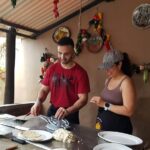
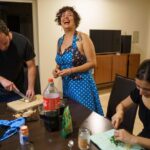
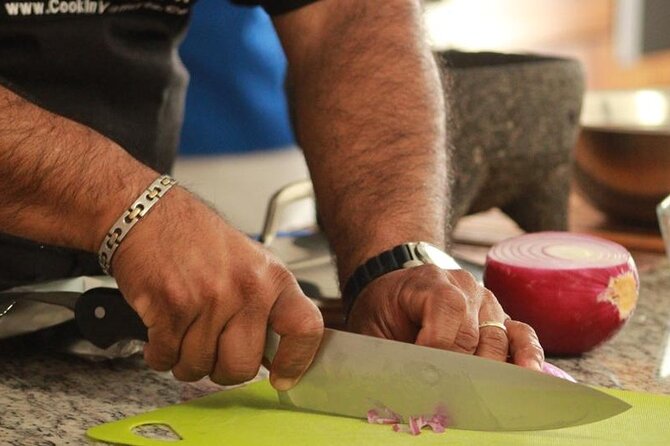
I’ve taken cooking classes that felt like a demo followed by a meal. This one is the opposite. You’re in someone’s real home kitchen, working at a real cook’s pace, with utensils and equipment already laid out for you to use. That matters, because when you’re actively chopping, stirring, and tasting as you go, the learning sticks.
Chef Alberto’s class is also designed for conversation, not silence. You’re asking questions about spices, sauces, and technique, and you’re getting direct answers in English. His mother, Lili, also plays a key role in welcoming you and helping the process run smoothly, which adds warmth and a family feel that you just don’t get in a big venue.
One more practical plus: the format makes it easy to relax. You’re not dealing with a noisy dining room. You’re cooking, tasting, and learning with a small group, so the time moves quickly and pleasantly.
You can also read our reviews of more tours and experiences in Cancun.
The full 3-hour flow: what happens and what to watch for
This experience runs about 3 hours and returns back to the meeting point. Expect a structured session that still feels flexible enough to ask questions while you cook.
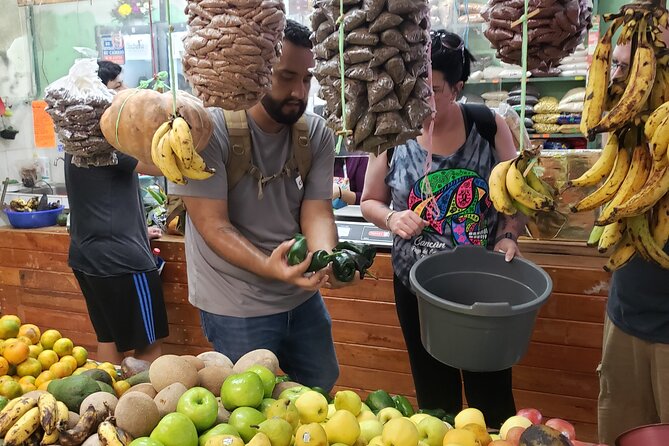
Many classes start with a short look at local ingredients at a Cancun market, especially for things like spices and tortilla basics. Even if that market stop feels brief, it helps you understand what you’re buying and why Mexican recipes taste the way they do. After that, you’ll head to Chef Alberto’s home kitchen and get to work.
From there, the class is built around “learn → cook → taste → adjust,” which is the part you’ll thank yourself for later when you’re making the same dishes at home. You won’t just memorize recipes; you’ll learn the logic behind them: how salsas change when you grind in a molcajete, how mole develops flavor, and how tortillas come together on a comal.
If you’re picky about timing, this is one of the better options because the session is long enough to matter, but not so long that you feel stuck all day. Three hours is a sweet spot for cooking plus eating.
What you’ll cook every day: the staples you should expect
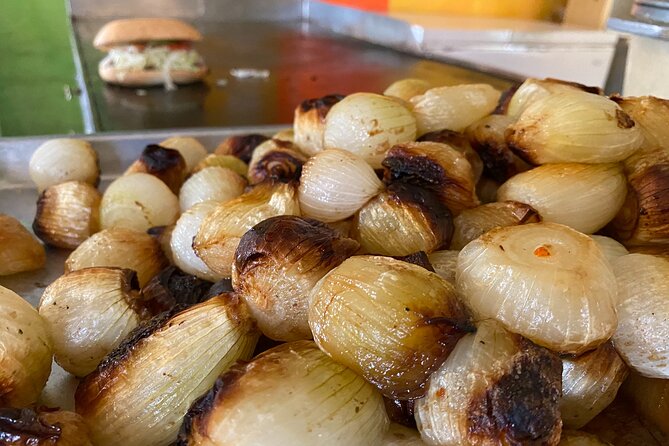
Even though the main dishes rotate, you’ll almost always make the same core lineup of Mexican favorites. This is where you build real competence, not just a one-off meal.
Here’s what you can count on, as part of the class experience:
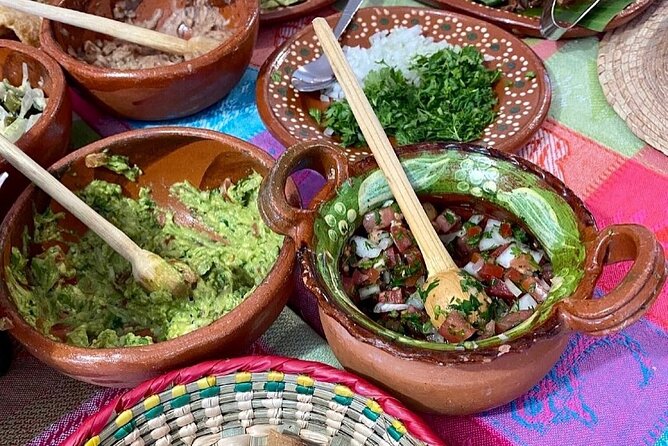
- Mexican salsa
- Red salsa in a molcajete (this is a big deal; grinding changes texture and flavor)
- Guacamole
- Totopos (the classic crunch side)
- Comal tortillas (you learn to make them, not just eat them)
- Rajas poblanas with cream (a creamy pepper dish that balances heat and richness)
That set is clever because it covers different skill types. Salsa and guacamole train flavor balancing. Molcajete salsa introduces a traditional tool and method. Tortillas teach timing and dough handling. Rajas poblanas brings in sautéing and finishing with cream.
If you’ve ever tried to cook Mexican food at home and wondered why it doesn’t taste like what you had in Mexico, start here. These are the building blocks.
Day-by-day menus: pick your weekday for the right dish
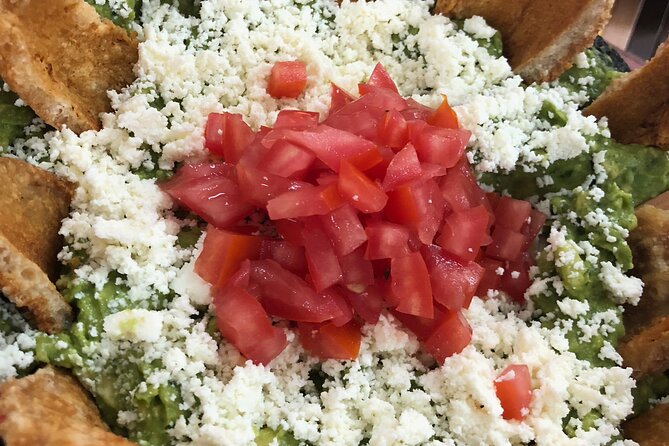
A key detail: your menu depends on the day of the week, so check your calendar before booking. The weekly rotation also means you could take this more than once and not repeat everything.
Monday
- Steak, pastor and chorizo tacos
Tuesday
- Barbecue and quesabirrias
Wednesday
- Chicken with mole and rice
Thursday
- Red and green tamales
Friday
- Cochinita pibil
You’ll also see example dishes that include mole sauce and pork pibil, plus Mexican vegetarian and vegan recipes. Combined with the dietary info (they accommodate vegetarians, vegans, and gluten free), it’s set up so you’re not left out of the fun if you have restrictions.
My practical advice: if there’s one dish you came to Cancun for, choose the day that matches it. If you don’t have a must-eat item, you’ll still be in good shape because the menu rotation includes both crowd-pleasers and genuinely classic regional staples.
The mole and salsa skills: the part you’ll actually use again
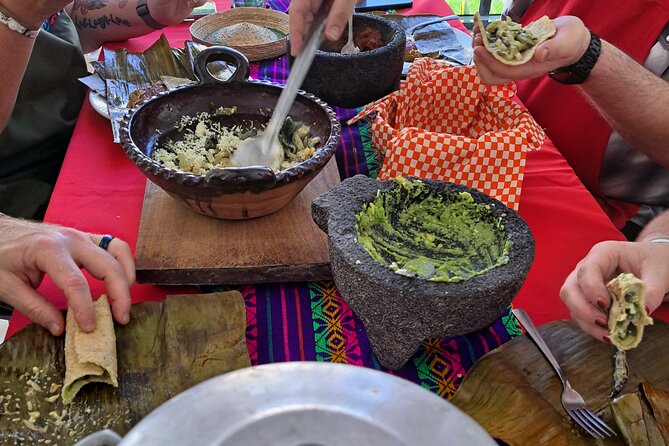
This is the reason I’d prioritize this class over another “Mexican food tour.” The flavors are not just tasty; they’re teachable.
Take mole, for example. It’s often treated like a mystery sauce when people buy it pre-made. In this class, you learn to cook mole sauce as part of the experience, which means you can understand how spices and ingredients build depth. Even if you don’t replicate the exact brand of spices at home, you’ll have the technique mindset: toast, blend, simmer, taste, adjust.
The salsas are equally useful. Making red salsa in a molcajete trains your palate in a way that store-bought jars can’t. The texture you get from grinding is different, and that difference affects how the salsa clings to tortillas and balances rich foods.
And because you’re also making guacamole and totopos, you’re learning the “spread + crunch + bite” formula that makes Mexican meals feel complete.
The Yucatán flavors: why cochinita pibil and pork pibil hit hard
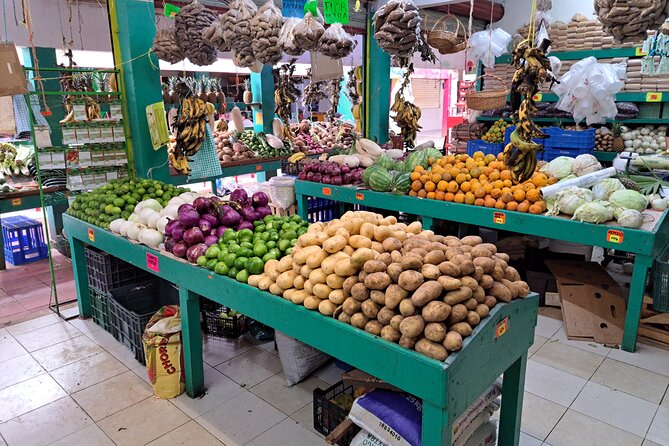
If your menu includes cochinita pibil or pork pibil, you’re getting Yucatán territory. These are heavy-hitter flavors—tender pork with deep seasoning and a satisfying richness.
Even if you’re not the type who memorizes recipes, you’ll remember the taste and the method. That’s because the class structure pushes you to participate, not just observe. When you stir, season, and taste along the way, you learn the dish’s personality rather than just its ingredient list.
This is also where the home-kitchen setting helps. You’re not performing for a camera. You’re cooking with people who have done this process their whole lives, guided in English, but still rooted in tradition.
Dietary needs and language: what you can plan on
You can go into this class knowing your needs will be handled. The experience accommodates:
- vegetarians
- vegans
- gluten free
That matters because some cooking classes say they can accommodate, then quietly reduce your options. Here, the class explicitly builds accommodation into the offering, and the daily menus include Mexican vegetarian and vegan recipes as part of the sample menu.
Language is also straightforward. The class is offered in English, and the support seems strong enough to handle questions about ingredients and spices. If you’re traveling solo or with friends and want a more social, interactive experience without a language barrier, this checks that box.
Meeting point and getting there without stress
You’ll start at C. Río Lerma 22, 77535 Cancún, Q.R., Mexico and the activity ends back at the meeting point. It’s near public transportation, which makes it easier if you’re not hiring a taxi for every single thing.
You’ll get a mobile ticket, so you don’t need to print anything. I also like that the tour isn’t positioned as an all-day commitment. You can slot this into your trip without it swallowing your schedule.
One more small practical tip: wear clothes you don’t mind getting a little kitchen-splattered. Cooking classes usually involve some mess, and this one is hands-on with fresh ingredients.
Price and value: does $119.43 make sense?
At $119.43 per person for about 3 hours, it’s not the cheapest thing you can do in Cancun. But it’s also not priced like a casual restaurant stop.
Here’s what you’re paying for:
- a chef-led class focused on cooking from scratch
- a small group capped at 6
- all utensils and equipment provided
- lunch included: you eat what you cook
- rotating weekly menus with multiple hands-on components
When you compare it to paying for a restaurant meal plus paying separately for a guided activity, the value stacks up. You’re not just getting food; you’re bringing home technique. That’s why this kind of class keeps making sense for repeat trips: it can turn into a new at-home skill, not only a memory.
Who should book this class (and who might not)
This is a great fit if you:
- love Mexican food and want to cook it, not just eat it
- want a small-group experience with real interaction
- like learning techniques (salsa, mole, tortillas), not only trying recipes
- have dietary needs and want a class that explicitly accommodates them
It may be less ideal if you:
- want a big “tour” with lots of sightseeing stops
- dislike cooking or prefer fully passive experiences
- need a specific dish that only appears on one weekday, because the menu rotates
Should you book Cancun small group Cooking Class with Local Chef?
In my view, yes, especially if you want something more personal than another dinner reservation. You’re getting a real home-kitchen experience with Chef Alberto and Lili, small-group participation, and lunch built around what you cook. The staples (molcajete salsa, guacamole, totopos, comal tortillas, rajas poblanas) are exactly the kind of skills that turn into real meals back home.
If you can, book around the weekday menu that matches your must-eat cravings. Check the day list, choose the dish you want, then go in ready to get your hands a little floury or sauce-splattered. That’s the point, and it’s also why you leave with more than a full stomach.
FAQ
How long is the cooking class?
It runs for about 3 hours.
What’s the group size?
The class is capped at a maximum of 6 travelers.
Where do we meet for the tour?
You start at C. Río Lerma 22, 77535 Cancún, Q.R., Mexico, and the activity ends back at the same meeting point.
What dishes will I cook?
You’ll cook Mexican salsa, red salsa in a molcajete, guacamole, totopos, comal tortillas, and rajas poblanas with cream. The main dish changes by day (for example, steak and tacos on Monday, tamales on Thursday, cochinita pibil on Friday).
Can the class accommodate dietary restrictions?
Yes. They accommodate vegetarians, vegans, and gluten free.
Is lunch included, and can I eat what I cook?
Yes. Lunch is included, and the guest will eat what they cook during the class.
What’s the cancellation policy?
You can cancel for a full refund if you do so at least 24 hours before the experience start time. Weather issues can lead to a rescheduled date or a full refund, and cancellations can also happen if the minimum number of travelers isn’t met.