REVIEW · SIEM REAP
Cambodian Village Cooking Class
Book on Viator →Operated by beyond. unique escapes · Bookable on Viator
Market smells, then real Khmer cooking. I love the Psar Chaa Old Market ingredient hunt with Sophia, and I love that you leave with a recipe book you can actually use later. One thing to watch: timing is tight, so being late for pickup or the meeting point can disrupt the flow.
This is a small-group, half-day cooking lesson in Siem Reap that mixes street-level food shopping with an open-air kitchen set-up outside town. You start with a guided tuk-tuk ride, stop at a local market, then cook and eat a 3-course meal with cold towels and bottled water to keep you comfortable. The big payoff is that you don’t just watch cooking happen; you do the work yourself—then enjoy it at the end, with a local beer or soft drink included.
In This Review
- Key Highlights Worth Your Time
- Psar Chaa Old Market: Learning Cambodian Cooking Starts Here
- The Tuk-Tuk Ride Out of Town (And Why It Matters)
- The Open-Air Kitchen by a Lake: Comfort, Clean Setup, and Real Work
- Your Three-Dish Menu: What You’ll Cook and Eat
- Fresh Rice Paper Spring Rolls
- Cambodian Curry
- Bananas in Palm Sugar
- What Small-Group Size Changes in Real Life
- Price and Value: What $32 Buys You in Siem Reap
- Who This Class Is Best For
- Tips to Make Your Experience Go Smoothly
- Should You Book This Cambodian Village Cooking Class?
- FAQ
- How long is the Cambodian Village Cooking Class?
- What is the price per person?
- What’s included in the tour?
- Do you visit a market during the tour?
- What dishes will you cook?
- Can you accommodate dietary restrictions or allergies?
- How many people are in the group?
- Is free cancellation available, and how far in advance?
Key Highlights Worth Your Time
- Psar Chaa Old Market shopping with Sophia to pick ingredients you’ll use in class
- Max 8 travelers so you get hands-on attention instead of standing at the back
- Three dishes you cook: rice paper spring rolls, Cambodian curry, and bananas in palm sugar
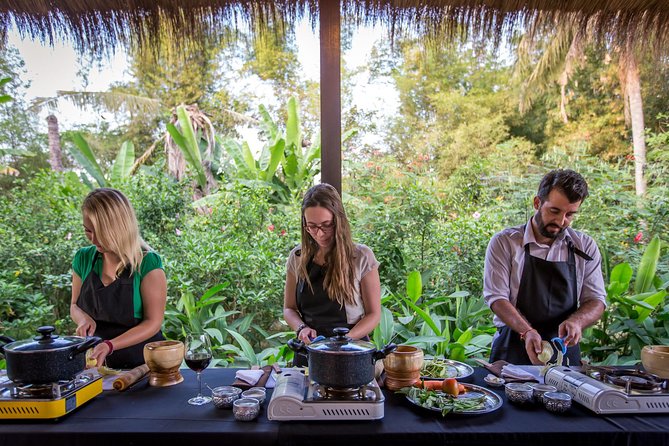
- Garden pavilion / open-air kitchen by a lake for a calm, scenic place to learn
- Recipe book to take home so you can rebuild the flavors without guessing
- Tuk-tuk hotel pickup and drop-off plus bottled water and a cold towel
Psar Chaa Old Market: Learning Cambodian Cooking Starts Here
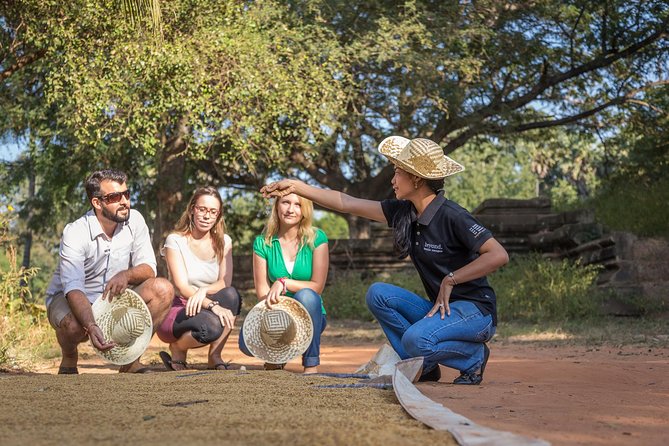
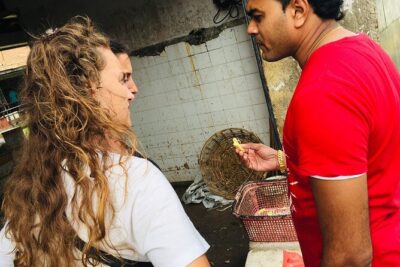
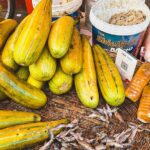
The morning (or afternoon) kicks off in the Psar Chaa Old Market, where you’re not just browsing. You’re learning how locals think about ingredients—what goes into Khmer dishes, what’s fresh, and why certain flavors show up again and again.
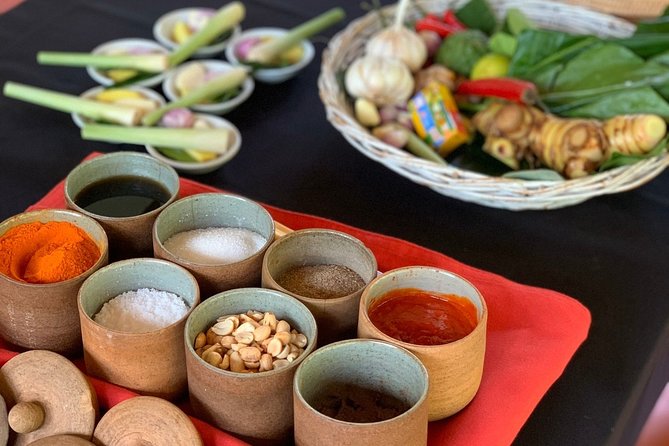
I like this part because it sets you up for the cooking session. If you only arrive at the kitchen, you might still enjoy the class. But if you see the produce and herbs first, you start tasting with context. Sophia’s guided explanations make the market feel readable instead of random. You’ll also get small sampling moments along the way, which helps your brain connect names to flavors.
A practical tip: if you’re sensitive to strong smells or crowds, remember this is a real market environment. You’ll be walking and standing in close proximity to stalls. It’s worth it—just don’t expect a quiet, staged photo stop.
You can also read our reviews of more tours and experiences in Siem Reap.
The Tuk-Tuk Ride Out of Town (And Why It Matters)
After the market, you head by tuk-tuk to a purpose-built garden pavilion for the class. This isn’t just transport. It’s part of the experience.
For one, it gives you that outside-the-temple-side-of-Siem Reap feel. You’re trading city traffic noise for something more relaxed. Second, the timing tends to flow better when you get a guided transition. You’re not scrambling for directions or trying to coordinate with a driver at the last minute.
Also, the tuk-tuk pickup and drop-off from your hotel is a real convenience. In Siem Reap, saves you time and hassle, especially if you’re juggling temples earlier in the day.
The Open-Air Kitchen by a Lake: Comfort, Clean Setup, and Real Work
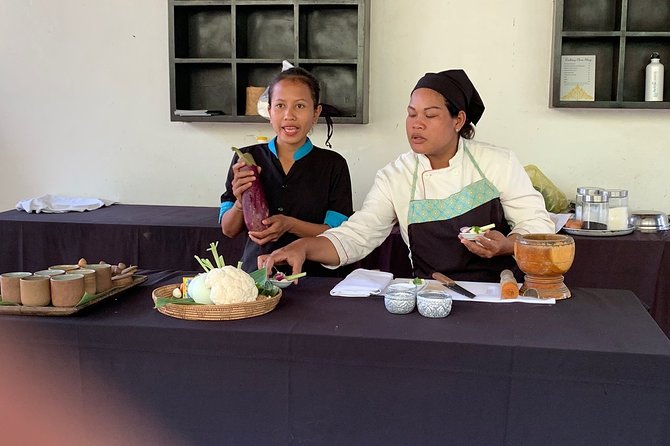
The cooking lesson takes place in a beautiful setting—open air, with views over a small lake. Reviews highlight the space as peaceful, clean, and modern enough to make the “hands-on” part feel comfortable rather than chaotic.
This matters because cooking classes can fall into two traps:
- they’re more about watching than learning
- or they’re too cramped to focus on what the chef is teaching
Here, the set-up supports learning. You’re in a space designed for instruction, with room to work. And because it’s outdoors, you can actually feel like you’re doing something practical rather than stuck indoors.
One more note: a few people initially worry about cooking in heat. The good news is the class format and pacing help. Still, bring basic sun protection (hat, sunscreen, and water awareness). It’s outdoors. You’ll feel better.
Your Three-Dish Menu: What You’ll Cook and Eat
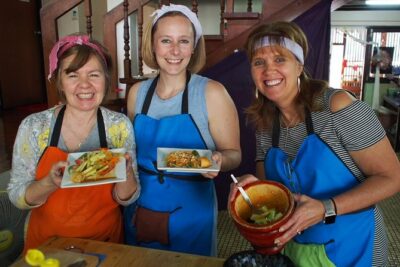
You’ll cook a set menu of three Cambodian favorites. The dishes aren’t random. They cover different techniques and flavor profiles, so you learn more than just one “repeatable” recipe.
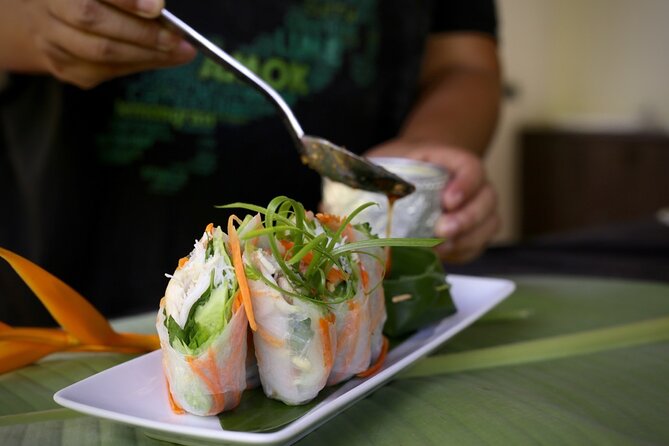
Fresh Rice Paper Spring Rolls
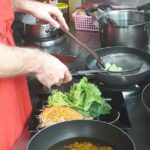
These start with fresh rice paper spring rolls, which is great for home cooks because they’re approachable. You practice the building step-by-step rather than hoping you get the right roll on your first try.
Expect guidance on assembling and cooking so the texture works. This is the dish where your market shopping pays off: once you’ve seen the ingredients earlier, your prep feels less like a mystery.
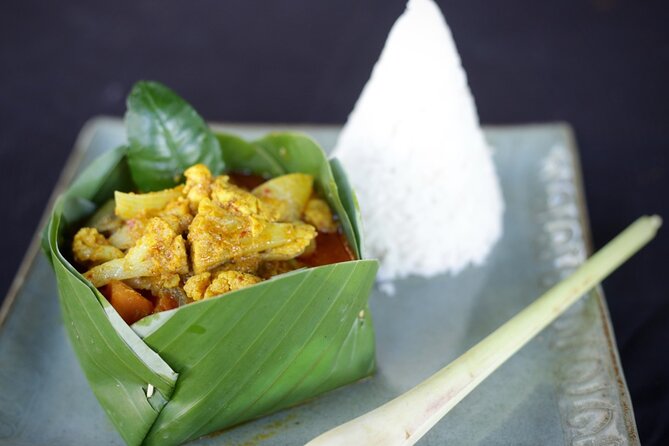
Cambodian Curry
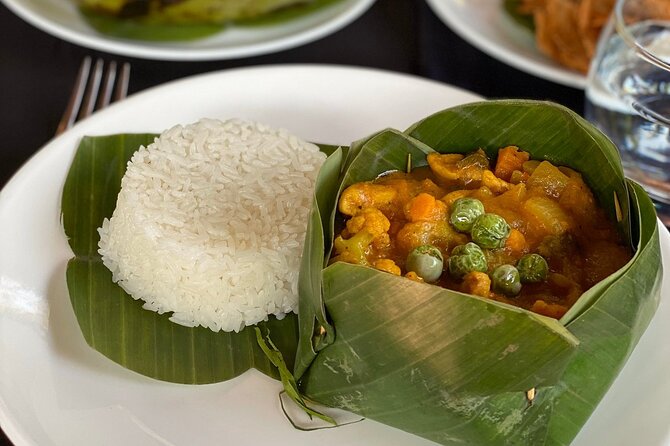
Next is Cambodian curry, the dish that many people remember from Cambodia for its bold, comforting taste. You’ll learn how to build the curry properly, and you’ll likely notice how balance matters—savory, fragrant, and layered rather than one-note.
Curry teaching is valuable because you’re learning method. Even if you tweak ingredients at home later, you’ll understand how the flavors come together in the pan.
Bananas in Palm Sugar
Dessert is bananas in palm sugar. It’s sweet, aromatic, and simple in concept, but it’s also a smart lesson in how Khmer-style sweetness can be more about aroma and caramel-like depth than just sugar.
This is a nice close to the meal. You finish full from savory courses, then reset your palate with something warm and gentle.
At the end, you eat the 3-course meal you prepared. That’s not a small detail. Cooking classes where you don’t get to enjoy your own food can feel like a workout. Here, you get to relax and taste your results.
What Small-Group Size Changes in Real Life
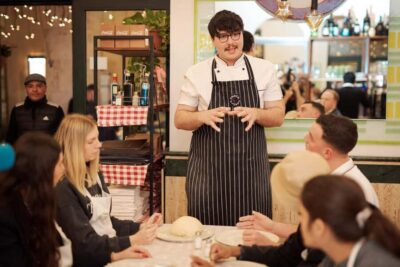
The group limit is 8 travelers. That number is small enough to matter.
In practical terms, it means:
- instructors can correct technique without shouting over everyone
- you don’t spend the whole time waiting your turn
- questions don’t get lost in the noise
This is where the class becomes personal. People also mention the host/manager Sophia and chefs like Sunat and Prey (names show up across different experiences) providing patient, step-by-step support. Whether you’re confident in the kitchen or a beginner, this kind of attention makes a big difference.
On some departures, the group can be tiny, which can feel like a private lesson. Don’t count on it, but know it can happen.
Price and Value: What $32 Buys You in Siem Reap
At $32 per person, you’re paying for more than a cooking show. For that price, you get:
- hotel tuk-tuk pickup and drop-off
- a guided market visit at Psar Chaa Old Market
- an experienced local host/guide and chef instruction
- a 3-course meal you prepared
- a recipe book to take home
- bottled water and cold towel
- a local beer or soft drink with your meal
When you break it down, the recipe book + market guide + transport alone can push a class closer to a “half-day cultural activity” price in many places. Here, the structure stays consistent: you’re learning, cooking, eating, and leaving with tools.
Is it still a bargain if you only want the food and not the market? It can be. But if you care about understanding ingredients and flavors, you’ll likely feel the value more strongly.
Who This Class Is Best For
I think this tour is ideal if you:
- want a true taste of Khmer food without needing to plan ingredients on your own
- like practical learning where you cook alongside the instructions
- appreciate having a meal that’s part of the activity, not an afterthought
- prefer small groups and personal attention
It’s also a great “non-temple day” choice in Siem Reap. Temples take energy. This gives you a different kind of travel satisfaction: hands busy, mind engaged, then a calm meal by water.
If you’re the kind of person who hates active tasks, you might find the hands-on part tiring. But if you can handle chopping, mixing, rolling, and standing for a few hours, you’ll probably love it.
Tips to Make Your Experience Go Smoothly
Here are a few ways to help this class land as a highlight instead of just a booked activity:
- Be ready for pickup on time. A review noted schedule friction when someone was late, so punctuality matters here.
- Tell them about dietary needs in advance. They say most dietary requirements and allergies can be catered for if you share them when booking.
- Wear breathable clothes and comfy shoes. You’ll walk in the market and then stand at the cooking station.
- Use the recipe book immediately. Don’t wait a month. Save a photo of your dishes and skim the book while the techniques are fresh in your head.
- Ask during the curry and roll steps. Those are the moments where small technique corrections pay off at home.
Should You Book This Cambodian Village Cooking Class?
If you want a cooking class that’s structured like real food learning—market first, kitchen next, then a meal you made—you should book it. The combination of Psar Chaa Old Market guidance, small-group attention, and an open-air kitchen by the lake makes it feel like more than just a ticket to the kitchen.
My only caution is practical: arrive ready and on time, because the schedule is part of what makes the day work. If you’re punctual and you’re curious about Khmer ingredients, this is a strong value pick for Siem Reap.
FAQ
How long is the Cambodian Village Cooking Class?
The class runs for about 3 hours.
What is the price per person?
The price is $32.00 per person.
What’s included in the tour?
Hotel pickup and drop-off by tuk-tuk, an experienced local host/guide, bottled water and a cold towel, a 3-course meal you prepare, a detailed recipe book to take home, and a local beer or soft drink with your meal.
Do you visit a market during the tour?
Yes. You visit Psar Chaa – Old Market with your guide before the cooking class.
What dishes will you cook?
The menu includes fresh rice paper spring rolls, Cambodian curry, and bananas in palm sugar.
Can you accommodate dietary restrictions or allergies?
Most dietary needs and allergies can be catered for if you advise the operator at booking.
How many people are in the group?
The tour has a maximum of 8 travelers.
Is free cancellation available, and how far in advance?
Yes. You can cancel for a full refund up to 24 hours before the experience starts.