REVIEW · XIAN
Half-Day Xi’an Biang Biang Noodles Cooking with a Market Visit
Book on Viator →Operated by Chilli Cool China · Bookable on Viator
Xi’an’s biang biang noodles start with the market. This half-day class takes you into a spice market in the Muslim Quarter area, then back to a chef’s home where you make biang biang noodles by hand, with tea along the way.
What I like most is the combination of market-to-table shopping and hands-on cooking. You also get instruction from experienced English-speaking guides (like Fiona and Lily) who can explain the why, not just the what.
One consideration: the class is small (max 15), but it may still feel partly teacher-led rather than every moment at a fully separate workstation—so if you want constant freestyle independence, set expectations going in.
In This Review
- Key highlights worth marking on your map
- Meeting at Sajin Bridge, then heading into the Muslim Quarter
- The spice market part: why it matters more than you expect
- Cooking at a chef’s home: how the biang biang lesson typically flows
- The tea-and-beer finish: eating what you made (not just tasting)
- What’s included in the class (and what that means for your budget)
- Price and logistics: the practical side you should plan for
- Vegetarian option: how to handle dietary needs
- Who should book this biang biang market-and-cooking class
- A note on expectations: hands-on vs. demo-style learning
- Should you book this Xi’an biang biang class?
- FAQ
- How long is the Xi’an biang biang noodles cooking experience?
- Where does the tour start?
- How much does it cost?
- Is it only offered at one time of day?
- What’s included with the class?
- Is there a vegetarian option?
- How big are the groups?
- Does the experience run in bad weather?
- What should I wear?
- What if I need to cancel?
Key highlights worth marking on your map
- Muslim Quarter spice market visit with guided ingredient hunting and simple challenges
- Small group size (max 15) for a calmer, more personal class
- Chef’s home cooking format in a traditional courtyard setting
- Everything included: ingredients, recipes, tea, beer/beverages, and water
- Morning or afternoon sessions so you can match it to your Xi’an rhythm
Meeting at Sajin Bridge, then heading into the Muslim Quarter
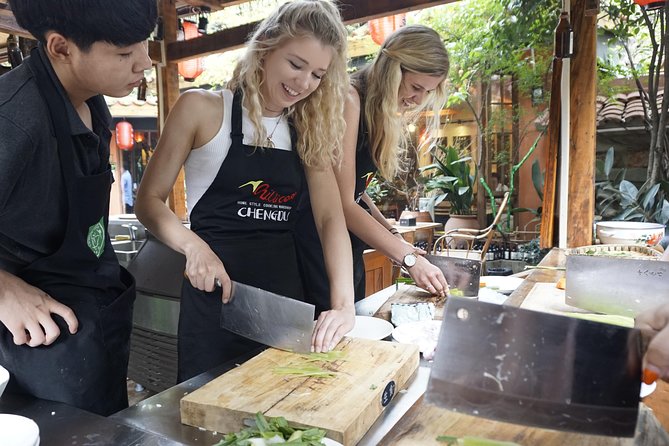
The experience starts at Sajin Bridge (Sa Jin Qiao, Lian Hu Qu, Xi’an). It’s a good anchor point, and the activity is near public transportation, which matters in a city where getting from one district to another can eat time.
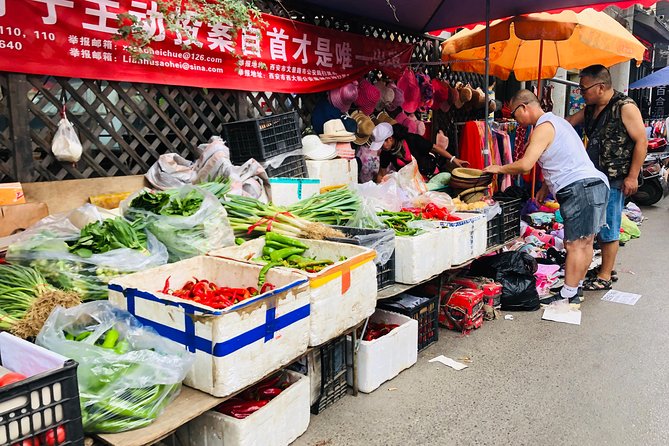
From there, you’re guided into the food and spice world that locals use every day. Even before you cook, you’ll learn how Chinese spices are treated like real ingredients—not decorations. The market portion isn’t just sightseeing. You’ll have tasks that keep you looking closely at what’s being sold, how it’s packaged, and how it connects to what you’ll cook later.
What this does for you: by the time you step into the kitchen, you already have context. You’re not memorizing a recipe from scratch; you’re translating market choices into cooking steps.
The spice market part: why it matters more than you expect
This class builds around a spice market visit where you explore and gather ingredients you’ll use right after. The pacing is designed so you’re not overwhelmed by stall after stall, and the “fun challenges” keep it active. It’s also a great way to learn what different spice ingredients look like and how they’re used together.
In the market, the guide approach tends to be practical. In one class format, instructors like Lily are noted for strong knowledge of Chinese spices and cuisine, while Fiona is praised for being easy to understand. Even if you don’t know Chinese cooking terms, you’ll likely come away with a clearer sense of how flavor is built.
A small tip that helps: bring your phone for photos, but also take a second to look without the camera. You’ll remember textures and packaging better than just words and numbers.
Cooking at a chef’s home: how the biang biang lesson typically flows
After the market, you go to a traditional Chinese chef’s home for cooking. The setting is part of the charm: it’s not a glossy studio kitchen with everything pre-portioned and sanitized for Instagram. You’ll work in a real courtyard-style environment where the class feels grounded.
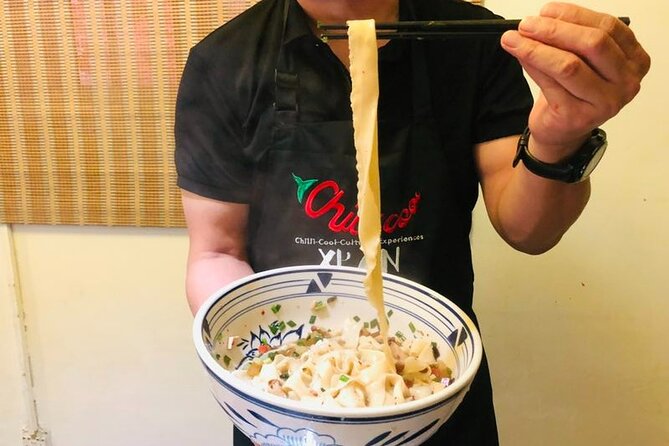
You’re treated with local tea first, following the idea that locals offer hospitality to friends and visitors. Then a professional chef guides you through the noodle process. The star here is biang biang noodles—famous for their thick, chewy shape and the hand technique behind them. The point isn’t just to get food in your bowl; it’s to understand the process well enough that you can attempt it later at home.
From what’s been shared in instructor-led classes, expect a focus on technique and explanation. Names like Michael and Bruce show up as instructors in other sessions, and the common thread is that you’ll learn the method rather than only watching it happen. That’s also where the small group size helps: you’re more likely to get corrections and encouragement.
The tea-and-beer finish: eating what you made (not just tasting)
Once your noodles are done, you eat your own creations. The experience includes food tasting as part of the flow, and the meal is paired with beer or other beverages, plus tea and water.
This matters because biang biang noodles are textural. If you’ve only ever had noodles restaurant-style, you might not understand how thickness, chew, and sauce coating work together. Eating right after making them helps you connect the technique to the result while everything is still fresh and hot.
My advice: don’t rush through the first bite. Take a moment to notice how the noodles feel, how sauce clings, and how chewing changes from one mouthful to the next. This is the kind of skill you’ll want to replicate later.
What’s included in the class (and what that means for your budget)
The price is $75 per person for a roughly 3 hours 30 minutes experience, and the inclusions are a big part of the value.
You get:
- All food ingredients
- Recipes to take home
- Tea, beer/other beverages, and water
- Lunch or dinner depending on your session time
That combination is rare at this price point, especially when the format includes both a market visit and a chef-guided cooking session. You’re not paying extra just to be shown around and then handed a finished dish.
Also, you can choose morning or afternoon sessions. That flexibility can save you from juggling meals the rest of the day.
How I’d think about value: if you priced this out on your own—market shopping plus cooking instruction plus ingredients—you’d likely spend more. Here, you’re paying for the guidance, the ingredients, and the meal as a package.
Price and logistics: the practical side you should plan for
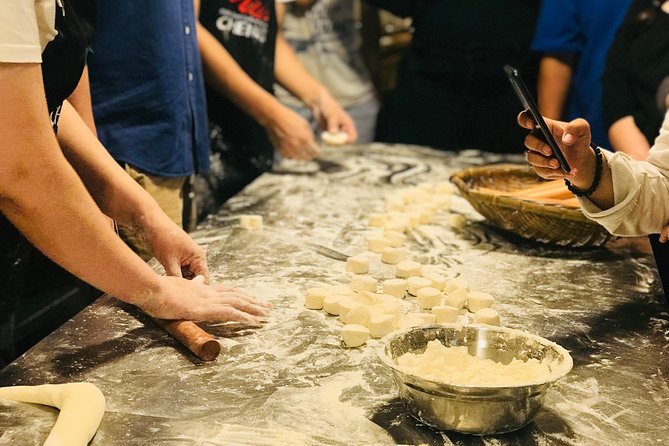
At $75, this is a “do it once, do it right” activity. It’s not cheap enough to treat like casual entertainment, but the included meal + recipes + market ingredient gathering makes it feel like a complete experience, not a short snack lesson.
The schedule is about 3–4 hours, which is ideal when you want something hands-on but don’t want to lose half your day. It’s also offered in all weather conditions, so bring the mindset of “dress for outdoors,” even if the cooking portion moves inside.
Wear comfortable walking shoes. You’ll be walking in a market environment, and you’ll likely be standing during the cooking lesson too. Comfortable footwear makes the class more enjoyable and less draining.
Vegetarian option: how to handle dietary needs
A vegetarian option is available, but you need to advise at booking. That’s important. Don’t wait until the day of the class to mention it, because spice and ingredient mixes can be specific.
If you have any other dietary requirements, you should also mention them at booking. The more detail you give upfront, the more smoothly the kitchen side can plan.
Who should book this biang biang market-and-cooking class
This class fits best if you want more than a food walk. It’s perfect for:
- People who like cooking and want a real technique lesson for hand-pulled noodles
- First-timers in Xi’an who want a local experience tied to what locals buy in markets
- Anyone who enjoys markets but wants a purpose beyond photos
It may be less ideal if you only care about eating and don’t want to learn technique. You’ll still eat plenty, but the class is structured around learning the noodle process.
A note on expectations: hands-on vs. demo-style learning
One review pointed out a potential mismatch: the experience may sometimes feel more like a cooking demonstration than a fully independent, step-by-step workstation class. The overall structure you should expect is: market visit → tea and chef-led instruction → you eat what you made.
So here’s the practical move: if your dream is to personally do every action the entire time, message or ask the operator in advance about class format and how much time each person gets actively working. The small group size (up to 15) helps, but cooking spaces vary.
Should you book this Xi’an biang biang class?
I’d say yes, if you want a focused half-day with real technique, included ingredients, and a meal you’ll understand because you made it. The value at $75 works best when you value the whole package: market + chef instruction + recipes + tea and beer.
Book it especially if you’re the type who likes learning from people who explain clearly—names like Fiona and Lily come up for a reason. And book it if you want a change from standard sightseeing: you’ll leave with noodle skill you can try again later, not just photos of spicy stalls.
Skip it or ask extra questions if you strongly prefer fully independent cooking stations for every step. Otherwise, this is a very solid way to spend a half-day in Xi’an that feels local from start to finish.
FAQ
How long is the Xi’an biang biang noodles cooking experience?
It lasts about 3 hours 30 minutes (roughly 3–4 hours).
Where does the tour start?
The meeting point is at Sajin Bridge (Sa Jin Qiao, Lian Hu Qu, Xi’an).
How much does it cost?
It costs $75.00 per person.
Is it only offered at one time of day?
No. You can choose either a morning session or an afternoon session.
What’s included with the class?
Food ingredients, recipes, tea, beer/other beverages, water, and food tasting are included. You also get lunch or dinner based on your schedule.
Is there a vegetarian option?
Yes. Vegetarian options are available if you advise at the time of booking.
How big are the groups?
The group size is limited to a maximum of 15 travelers.
Does the experience run in bad weather?
It operates in all weather conditions, so dress appropriately.
What should I wear?
Wear comfortable walking shoes since you’ll be walking around the market and moving during the class.
What if I need to cancel?
You can cancel up to 24 hours in advance for a full refund; cancellation within 24 hours isn’t refunded.