REVIEW · CHIANG MAI
Morning Thai cooking class
Book on Viator →Operated by Aromdii Cooking School · Bookable on Viator
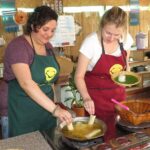
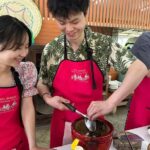
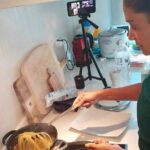
The stove is the fun part, but the market sets it up. This morning Thai cooking class in Chiang Mai pairs a short local market tour with a small-group hands-on lesson at Aromdii Cooking School, where you learn five traditional dishes from scratch.
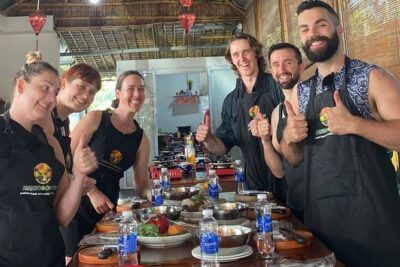
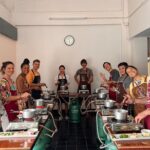
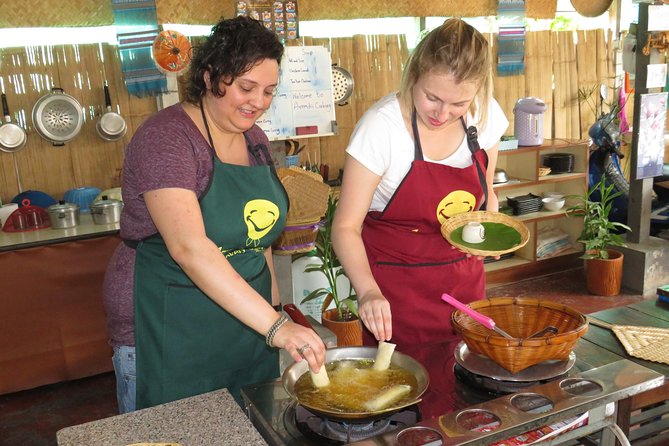
I like the tight group size (max eight), because it keeps the pace friendly and makes it easier to get real help while you’re cooking. I also like that you start by choosing your own menu—then you shop for the ingredients that match, so the class feels less like a script and more like learning how Thai cooking works.
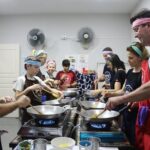
One thing to plan around: the kitchen and eating area don’t have air-conditioning—only fans. In March to June and in the rainy months (July to October), it can feel hot and humid, so you’ll want to dress accordingly and pace yourself.
In This Review
- Key things worth knowing before you go
- Chiang Mai cooking class value: why the market stop matters
- Picking your menu: the class builds around your choices
- Stir-fried options (choose one)
- Appetizers (choose one)
- Soups (choose one)
- Curry + curry paste (choose one)
- Dessert (choose one)
- Vegan and vegetarian options
- The morning flow at Aromdii Cooking School (about 4.5 hours)
- Step 1: Start with stir-fry
- Step 2: Soup and appetizer
- Step 3: Curry paste from scratch, then curry
- Kitchen conditions: fans only, and why it affects your experience
- Price and what you actually get for $27.70
- Who should book this Chiang Mai class?
- Logistics that affect your day (meeting point, timing, and transport)
- Should you book this morning Thai cooking class in Chiang Mai?
- FAQ
- What time does the class start and how long does it take?
- Where is the meeting point in Chiang Mai?
- Is pickup included?
- How many people are in the group?
- Do I get to choose what I cook?
- What dishes are included in the menu categories?
- Does the class accommodate vegan or vegetarian diets?
- Is there air-conditioning in the kitchen?
- What happens if the weather is poor?
Key things worth knowing before you go
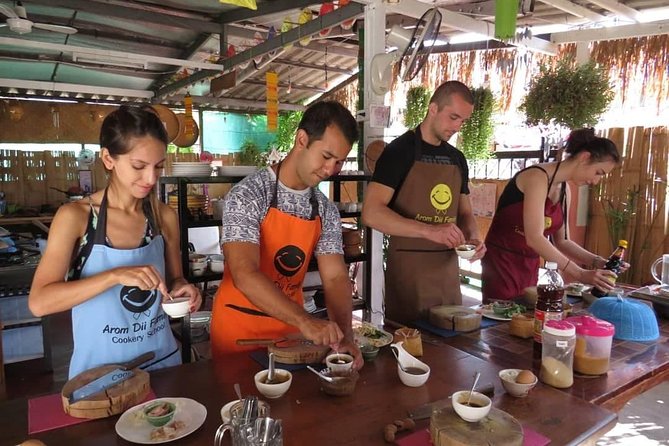
- Max 8 people means more attention when you’re chopping, stirring, and tasting.
- Pick your own 5-dish menu before you start, then shop for those exact ingredients.
- Market tour first (about 15–20 minutes) to learn what Thai veggies, spices, and herbs are actually used.
- Curry paste from scratch is part of the program, not just store-bought shortcuts.
- Transportation included for nearby spots within 3 kilometers, plus a return to the meeting point.
- No A/C in the cooking area—fans only—so bring light clothes and good hydration habits.
Chiang Mai cooking class value: why the market stop matters
If you’ve ever watched Thai cooking online, you know the secret isn’t just technique. It’s ingredients. That’s why I really like how this morning format starts with a quick market tour before you ever touch a pan.
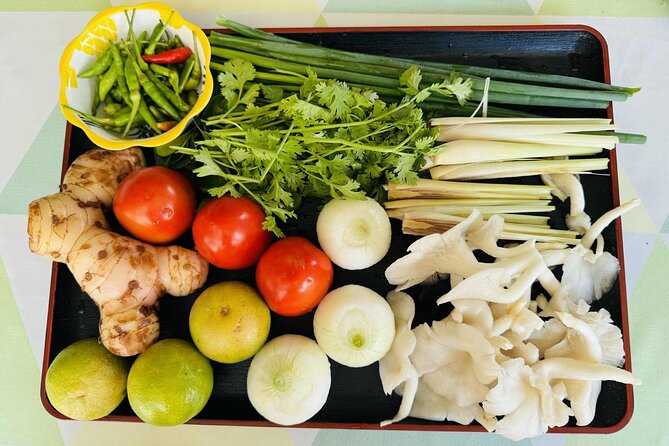
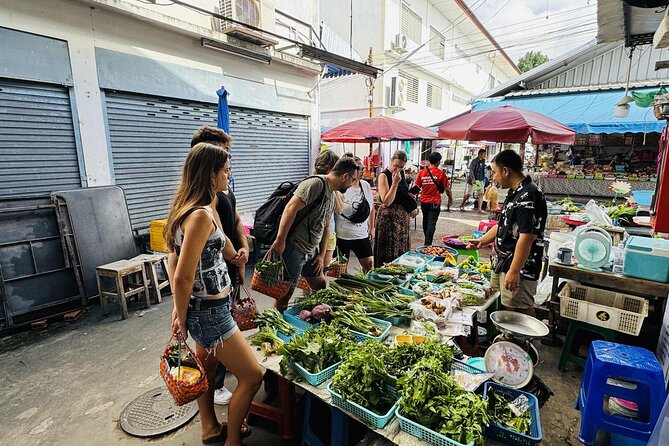
You’ll spend roughly 15–20 minutes walking through the market, and the guide shows you the Thai basics: common vegetables, plus how spices and herbs show up in real dishes. You can take photos as you go, and you’ll also have time to buy some spices to take home if you want to recreate flavors later.
The practical payoff for you: when you get to the kitchen, you’re not guessing what something is supposed to taste like. You’ve already seen it, smelled it, and matched it to the dish you selected.
You can also read our reviews of more tours and experiences in Chiang Mai.
Picking your menu: the class builds around your choices
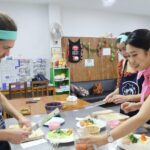
This isn’t a one-size-fits-all cooking show. Before the class starts, you choose what you want to cook, and everyone selects from a menu that covers multiple categories: stir-fry, appetizer, soup, curry, and dessert.
You’ll end up cooking five dishes total (one from each category), and the class is structured so you learn a range of Thai techniques rather than repeating the same motion five times.
Stir-fried options (choose one)
- Pad Thai
- Fried Drunken Noodles
- Pad See Ew
- Fried cashew nut
If you want something approachable and crowd-pleasing, Pad Thai is the obvious pick. If you prefer stronger flavors, drunken noodles can be more intense. The cashew dish is a good option when you like crunch and quick stir-fry rhythms.
Appetizers (choose one)
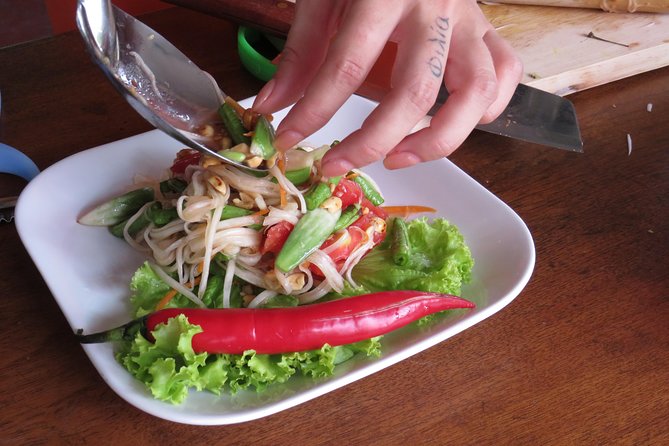
- Papaya Salad
- Fresh spring rolls
- Fried spring rolls
- Mixed Fruits Salad
Papaya salad is the one that teaches balance fast—sweet, sour, salty, and heat. Spring rolls are great if you enjoy wrapping and texture. Mixed fruits salad is a lighter side that still feels very Thai.
Soups (choose one)
- Hot & Sour Prawns thick soup
- Coconut chicken
- Tom Yum Chicken
- Hot & Sour Prawns clear soup
Soups here are more than “warm-up dishes.” Thai soup technique is about layering flavor—especially with sour and spicy elements. If you’re a fan of Tom Yum, you’ll get that classic sour-heat profile; the coconut chicken option tends to be creamier.


Curry + curry paste (choose one)
- Khao Soi (Chiangmai noodles)
- Green curry
- Massaman curry
- Red curry
This is the category that most rewards your attention. The program includes making curry paste from scratch, so you’ll learn how aromatics get crushed, mixed, and transformed. Khao Soi is especially tied to the region around Chiang Mai, while massaman offers a different vibe—more mellow and earthy than the sharper green/red curries.
Dessert (choose one)
- Mango sticky rice
- Pumpkin in coconut milk
Dessert is part of the lesson too, not an afterthought. Mango sticky rice is chewy, sweet, and famously simple once you know the essentials. Pumpkin in coconut milk keeps things comforting, with that creamy Thai dessert feel.
Vegan and vegetarian options
The menu is described as being able to accommodate vegan and vegetarian options, so this can work well if you plan your picks with dietary needs in mind. What you should do: make sure your selections truly match what you need before the market shopping begins.
The morning flow at Aromdii Cooking School (about 4.5 hours)
The schedule runs with a clear progression: start with stir-fried food, then move to soup and appetizer, then finish with dessert and curry. That order is smart because it gets you comfortable with heat control early and saves the curry paste work for later.
The class itself is about 4 hours 30 minutes (plus the short market tour).
Step 1: Start with stir-fry
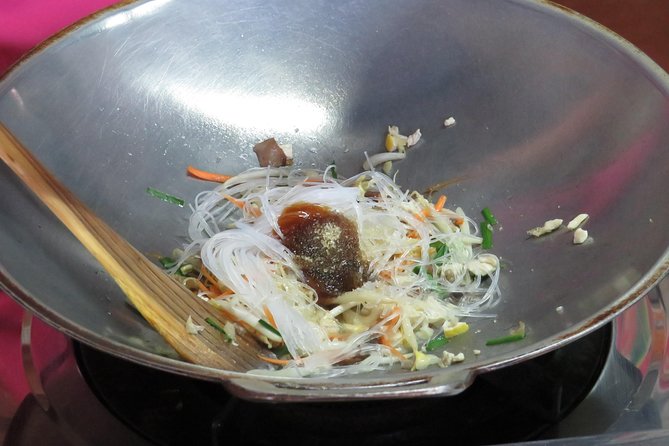
You’ll kick things off with your selected stir-fried dish. This is where you learn timing—how long to cook aromatics, when to add protein or noodles, and how Thai stir-fry moves fast without burning.
A small, realistic tip for you: plan to stay focused. Stir-fry rewards attention, and the class rhythm is designed to help you get it right without dragging.
Step 2: Soup and appetizer
Next you’ll shift to your chosen soup and appetizer. This part matters because Thai cooking often relies on contrast. The soup teaches you how seasoning behaves in liquid, while the appetizer teaches texture and freshness (think papaya salad crunch or spring roll wrap and bite).
Expect more tasting and adjusting here. Thai flavors change quickly once heat hits spices, so learning that adjustment is a big part of the value.
Step 3: Curry paste from scratch, then curry
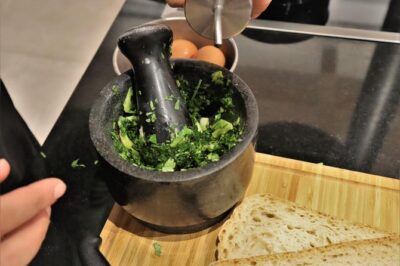
The final stretch is dessert plus curry, with curry paste made from scratch. This is the part I’d highlight if you’re cooking at home later, because curry paste is the foundation for so many Thai flavors.
You’ll also make curry itself after the paste step, so you’ll see the full chain: aromatics → paste → sauce → finished curry.
For you at home later, this is where you can actually replicate flavors without needing a magic ingredient—because you’ve seen how the paste comes together in the kitchen.
Kitchen conditions: fans only, and why it affects your experience
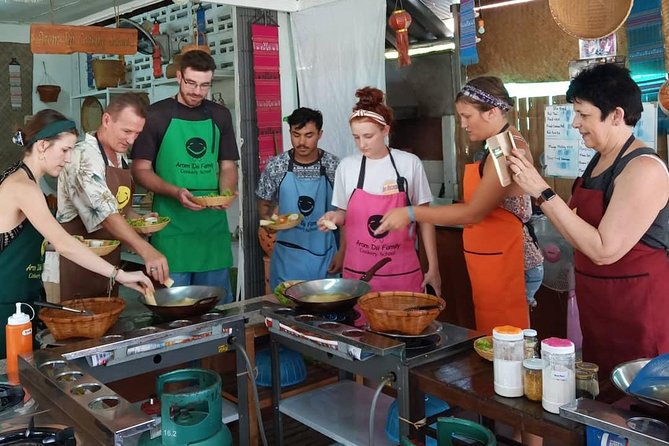
Here’s the real talk part: there’s no A/C in the kitchen and eating room—just fans.
The season you visit matters. The class information calls out:
- March to June (summer)
- July to October (rainy season)
- November to February (winter)
In practice, the rainy and summer stretches are the times when you’ll likely feel the heat and humidity more. So come prepared:
- wear breathable clothes you don’t mind getting a little cooking-smelling
- keep water handy (bottled water is included)
- don’t wear anything you can’t move in
This isn’t a deal-breaker, but it’s a meaningful comfort factor. If you overheat easily, you’ll enjoy the class more if you choose lighter clothing and have a patient mindset.
Price and what you actually get for $27.70
At $27.70 per person, this class sits in a budget-friendly range for a full morning activity—especially one that includes a market stop plus hands-on cooking across five dishes.
Here’s what’s included that pushes the value up:
- bottle water and seasonal fruit
- a handmade recipe download from the school website
- transportation for nearby locations within 3 kilometers
- pickup offered (for the right distance) and return to the meeting point
- a small group capped at eight
Also, you get choice-driven learning. Your dish lineup is based on your preferences, not random assignment. That tends to make the time feel more personal, and you’re more likely to want to recreate what you cooked.
One more practical note: this experience is, on average, booked about 21 days in advance. If you want a specific menu balance (say, Tom Yum plus mango sticky rice), booking earlier gives you more control over scheduling.
Who should book this Chiang Mai class?
This works best if you want a hands-on morning that feels connected to ingredients—not just a cooking demonstration.
You’ll likely love it if:
- you want to cook multiple Thai dish styles (stir-fry, soup, curry, dessert)
- you like the idea of learning curry paste basics
- you’d rather stay in a small group where questions don’t get lost
- you want a practical way to bring Chiang Mai flavors home via recipes
It may be less ideal if:
- you need fully air-conditioned comfort in the kitchen area
- you hate markets or short walking segments (the market tour is brief, but it’s still part of the experience)
Logistics that affect your day (meeting point, timing, and transport)
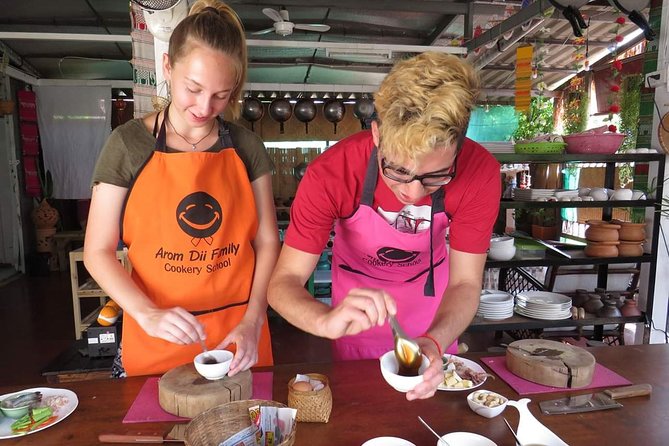
You start at Kad Kom Market (บ้านเลขที่ 19 3มบ เวียงทอง 1, Tambon Chang Khlan) in Mueang Chiang Mai. The start time is 9:00 am, and you return to the meeting point at the end.
Transportation is included for nearby locations within 3 kilometers. If you’re close, this is a big plus because it reduces the stress of getting everyone in and out efficiently.
They also mention mobile ticket use and that space is reserved for participants only—no visitors—which helps keep the class focused.
Should you book this morning Thai cooking class in Chiang Mai?
Yes, I’d book it if you want real structure, real ingredient context, and a small-group setup at a price that doesn’t feel like a splurge.
The biggest reasons to choose it:
- You cook five dishes you actually pick, not a fixed menu you might not love
- The market start helps you understand spices and herbs before cooking
- Curry paste from scratch gives you the kind of knowledge that carries home
- The small group size (max eight) supports better feedback during cooking
Before you confirm, check your comfort level with the fan-only kitchen. If you’re sensitive to heat, plan your clothing and hydrate smartly.
If that’s workable for you, this is the kind of Chiang Mai experience that leaves you with both memories and usable cooking confidence.
FAQ
What time does the class start and how long does it take?
It starts at 9:00 am and runs for about 4 hours 30 minutes (including the market tour portion).
Where is the meeting point in Chiang Mai?
The meeting point is Kad Kom Market, บ้านเลขที่19 3มบ เวียงทอง 1, Tambon Chang Khlan, อ.เมือง Chang Wat Chiang Mai 50100, Thailand.
Is pickup included?
Transportation is included for nearby locations within 3 kilometers, and pickup is offered for those nearby areas.
How many people are in the group?
The class is limited to a maximum of 8 travelers.
Do I get to choose what I cook?
Yes. Everyone chooses a menu before the class starts, and you’ll cook five dishes from scratch based on your selections.
What dishes are included in the menu categories?
You’ll choose from stir-fried dishes, appetizers, soups, curry (including curry paste made from scratch), and dessert. The listed options include items like Pad Thai, Papaya Salad, Tom Yum Chicken, Khao Soi, and Mango sticky rice.
Does the class accommodate vegan or vegetarian diets?
The menu is described as accommodating vegan and vegetarian options.
Is there air-conditioning in the kitchen?
No. The kitchen and eating room have fans only, not air-conditioning.
What happens if the weather is poor?
This experience requires good weather. If it’s canceled due to poor weather, you’ll be offered a different date or a full refund. There is also free cancellation up to 24 hours before the start time for a full refund.