REVIEW · HO CHI MINH CITY
Ho Chi Minh: Local Cooking Class At Auntie’s Home
Book on GetYourGuide →Operated by LV Tours · Bookable on GetYourGuide
This is Saigon food, the local way, in District 6. I love shopping for ingredients with a guide at Bình Tây Market and learning Auntie Tu’s home-kitchen methods for dishes you’ll actually eat. The one thing to plan for: expect real walking and sun, and the route is not for wheelchair users.
You’ll start in quieter back alleys, then head to a busy wet market where locals buy everyday food. You’ll learn basic Vietnamese food words along the way, so the shopping makes more sense than just pointing at items. After that, you’ll cook in an authentic local house with Ms. Tu, guided step-by-step by the host and your English-speaking support.
In This Review
- Quick snapshot of what you do
- Key points worth knowing
- District 6 and back alleys: the real setup for appetite
- Picking up, getting around, and the scooter factor
- Bình Tây Market: shopping like you belong for an afternoon
- Auntie Tu’s home kitchen: the real lesson is method
- What the small kitchen does to the experience
- Lunch, tea, and what you eat after shopping
- Photos, conical hat, and the neighborhood pace
- Price and value: is $56 really “just” a class?
- Your guide experience matters (and it can be funny in a good way)
- Practical tips so your day goes smoothly
- Should you book this cooking class in Ho Chi Minh?
- FAQ
- How long is the Ho Chi Minh local cooking class?
- How much does it cost?
- Where are the pickup locations?
- Where does the class go for ingredients?
- What dishes are included in the standard menu?
- Is there a vegetarian menu?
- What food and drinks are included?
- Is alcohol allowed during the experience?
- What should I bring?
- Is the class suitable for wheelchair users?
Quick snapshot of what you do
This 4-hour cooking class (price: $56 per person) mixes three parts: back-alleys wandering, wet-market ingredient shopping, and a hands-on cooking session in Auntie Tu’s home kitchen. You get a private or small-group experience with local English-speaking guidance, plus a conical hat for market walking and photos from the day. It’s built for people who want food and everyday life, not just a “watch-and-leave” meal.
Key points worth knowing
- Back alleys first: you walk through local daily scenes before you reach the market.
- Bình Tây Market shopping: you see how people really choose produce and seafood.
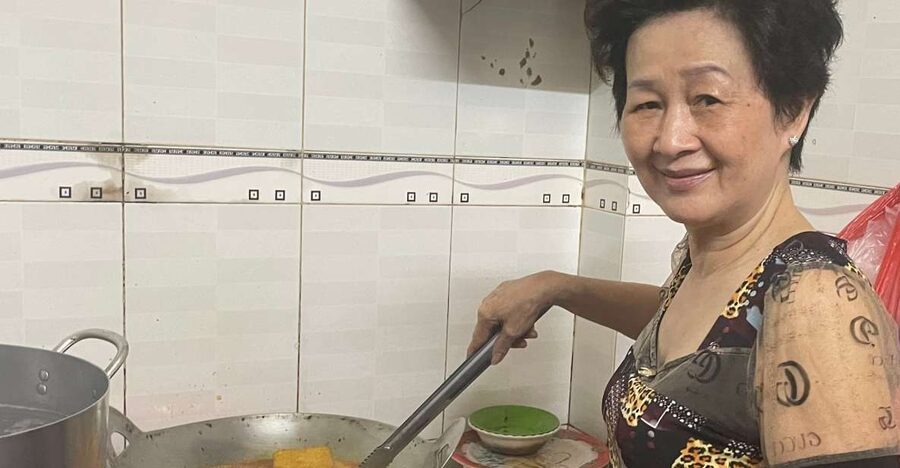
- Auntie Tu teaches you at her home: it’s not a staged studio.
- You cook 5 dishes: standard and vegetarian menus both include a sour soup.
- You get photos and the recipe set after: handy for recreating the dishes at home.
- Wear practical shoes: you’ll be moving, and you’ll appreciate covered footwear.
You can also read our reviews of more tours and experiences in Ho Chi Minh City.

District 6 and back alleys: the real setup for appetite
The experience starts by getting you out of central, tourist-heavy rhythms. You’ll ride from your pickup location in Districts 5, 4, 1, or 3, then spend time walking through tiny back alleys in District 6. This is where the day sets its tone: everyday motion, neighbors doing regular errands, and the kind of street scene you don’t get from a main boulevard.
Two details make this part work well. First, you’re not dropped into the market cold. Walking first helps you understand the pace of the neighborhood. Second, the guide’s small bits of Vietnamese language training make food shopping feel less like theater and more like how Vietnamese families handle groceries—asking for items, recognizing names, and choosing by look and freshness.
A practical note: these alleys are narrow and uneven in places. Even if the route stays comfortable, you’ll want to think like a walker, not a spectator. Bring the sunglasses and sunscreen you’re told to pack, because the market stop includes walking under the sun.
Picking up, getting around, and the scooter factor
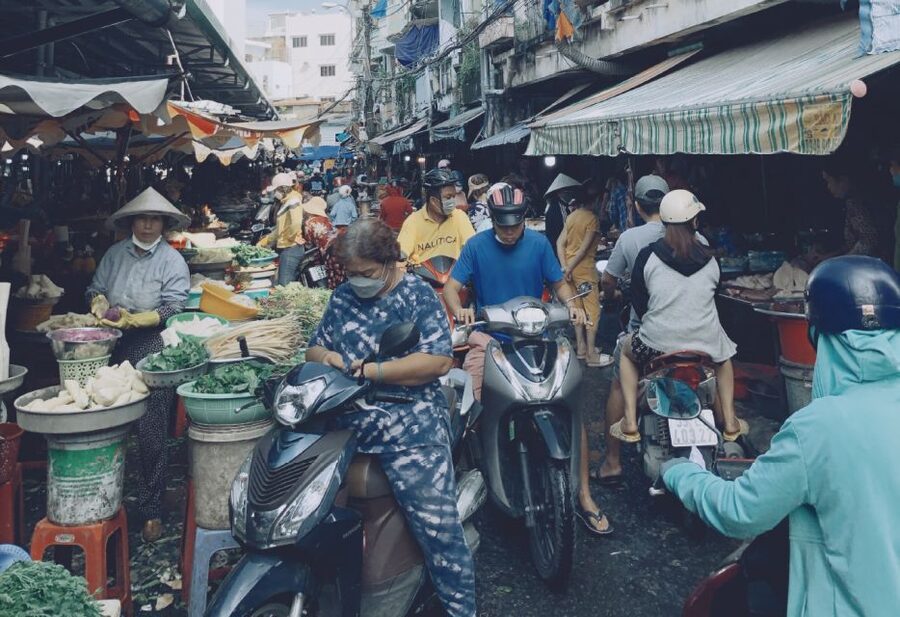
You have four pickup options (District 5, District 4, District 1, District 3), and the day is organized around a short 4-hour window. What matters for you is how you’ll travel from place to place. For small groups—especially if it’s just one or two people—you may ride on the back of a motorcycle driven by the guide. Some participants even describe it as thrilling traffic exposure, and one review notes a rainy ride back that added an extra layer to the day.
If that style of transport makes you nervous, treat it as a heads-up. You’re not stuck on a scooter the whole time, but it’s a real possibility depending on group size and logistics. Either way, the guides you’ll meet are local and English-speaking, and they do the heavy lifting: keeping you oriented and handling the flow of people, streets, and timing.
Bình Tây Market: shopping like you belong for an afternoon
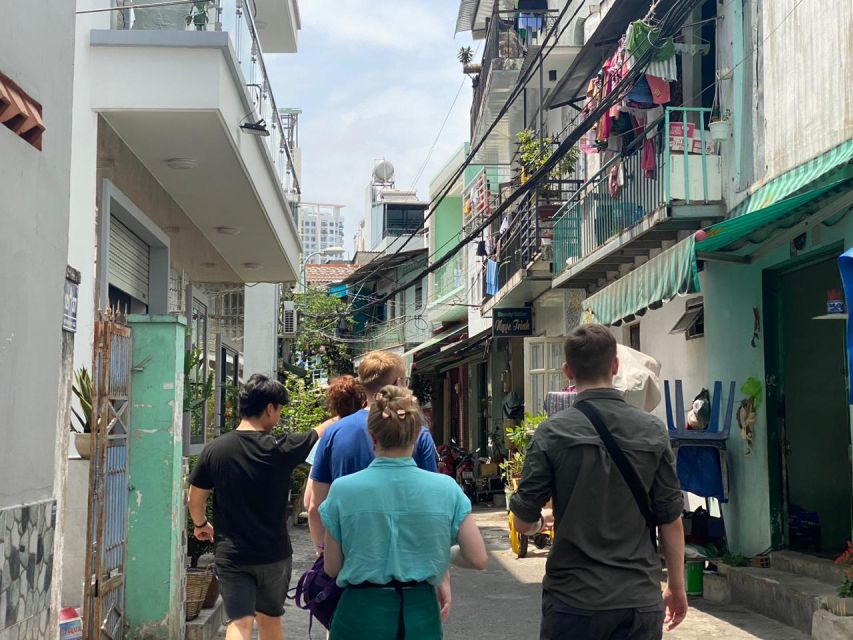
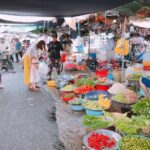
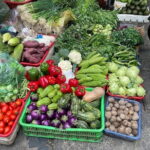
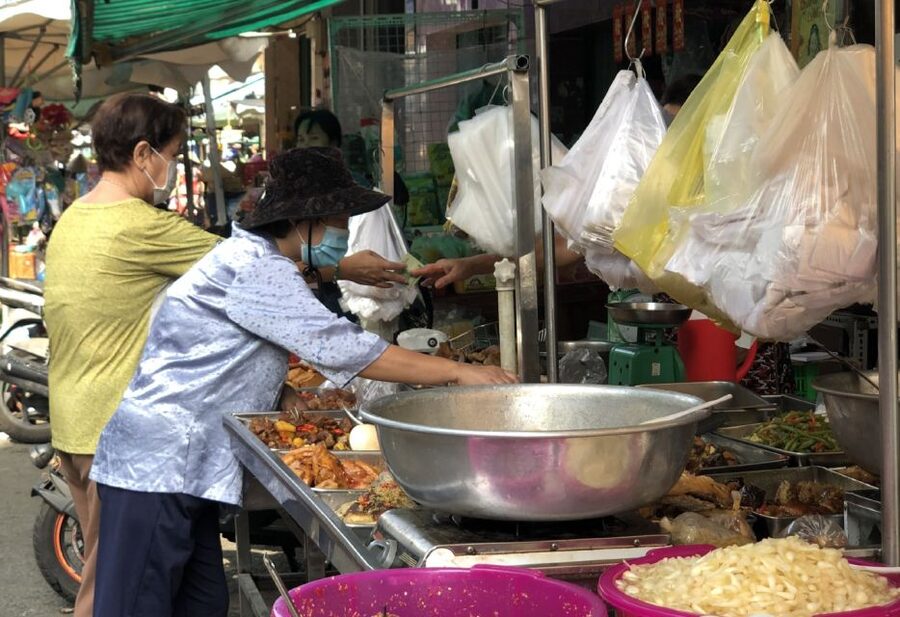
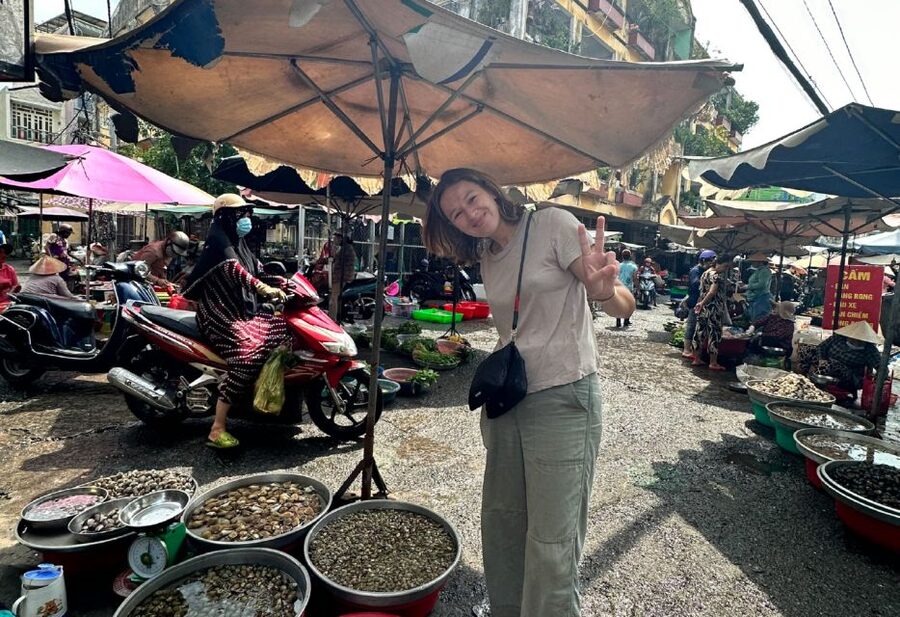
Bình Tây Market is the big ingredient stop. You’ll arrive for tea and local snacks as part of the market time, then move through stalls to find what you need for the cooking class menu. This isn’t a souvenir market. It’s where you see how people pick ingredients for daily meals.
What you’ll notice quickly is how normal the shopping looks. Vendors talk, people compare sizes and freshness, and the choices are practical. The guide also helps you learn enough Vietnamese food vocabulary to make the experience feel real. Even if you only remember a handful of words, it changes how you experience the market because you start associating names with items instead of just random colors and sounds.
A couple of smart things to do during the market phase:
- Look at the produce and seafood like a cook, not like a tourist. Freshness and cut matter.
- Ask how different ingredients are used, especially for the sour soup and the garlic spinach. Those are the dishes where a small detail changes everything.
Also, bring expectations about the energy level. The market is crowded. That’s part of the point. You don’t go there to find quiet and polish. You go because food starts here.
Auntie Tu’s home kitchen: the real lesson is method
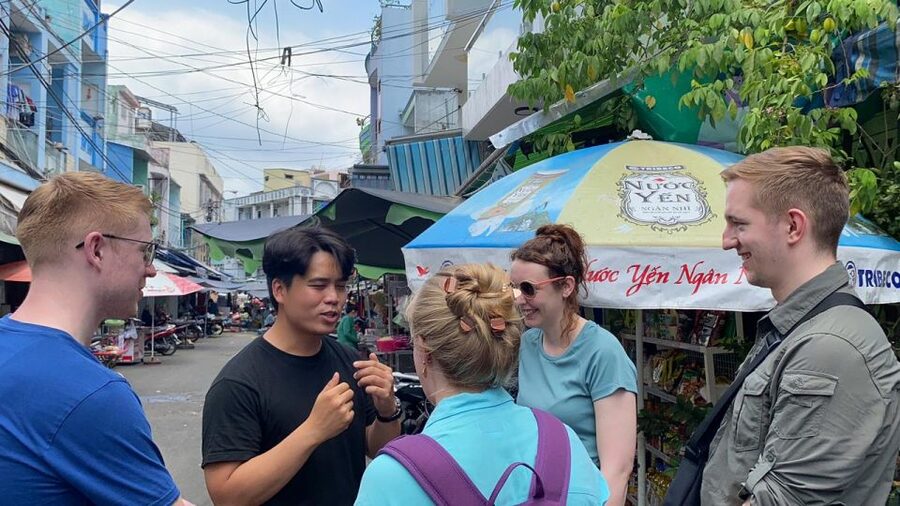
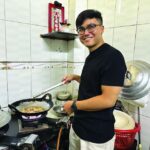
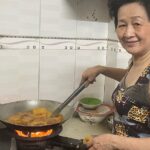
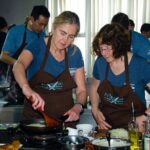
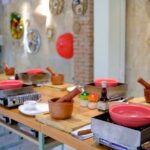
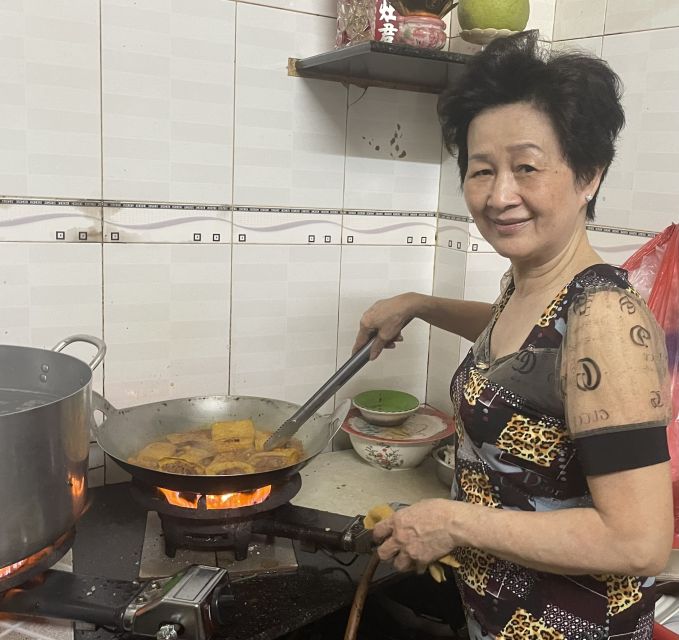
The most valued part of this class is cooking in an authentic local house, taught by Auntie Tu—also referred to as Ms. Tu. This is not a commercial cooking school setup. Your kitchen experience is tight, lived-in, and focused on getting you through real Vietnamese technique.
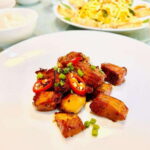
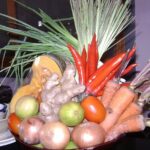
Your menu includes five dishes. For the standard menu, you’ll cook:
- Poached meat with pepper
- Fried egg with minced meat
- Fried red tilapia
- Sautéed garlic spinach
- Sour soup
There’s also a vegetarian menu:
- Stewed vegetables
- Fried salted tofu with lemongrass
- Fried egg with onion
- Sautéed garlic spinach
- Vegetarian sour soup
Even if you’ve cooked Vietnamese food at home before, this structure teaches you something valuable: timing and technique. Poaching teaches gentle heat control. Fried egg dishes teach how to build flavor with minced meat and how to manage texture. The tilapia is all about handling fish without losing that tender bite. Garlic spinach trains quick sautéing so it stays aromatic, not overcooked. And the sour soups give you the flavor framework—how sourness, seasoning, and broth come together.
In the language department, you might find that Ms. Tu isn’t an English speaker. In at least one experience, a tour guide translated while Ms. Tu led the cooking. That works fine. The important thing for you is that the step-by-step instruction stays clear, and you’re actually participating in much of the process.


What the small kitchen does to the experience
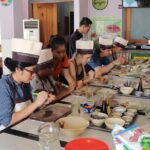
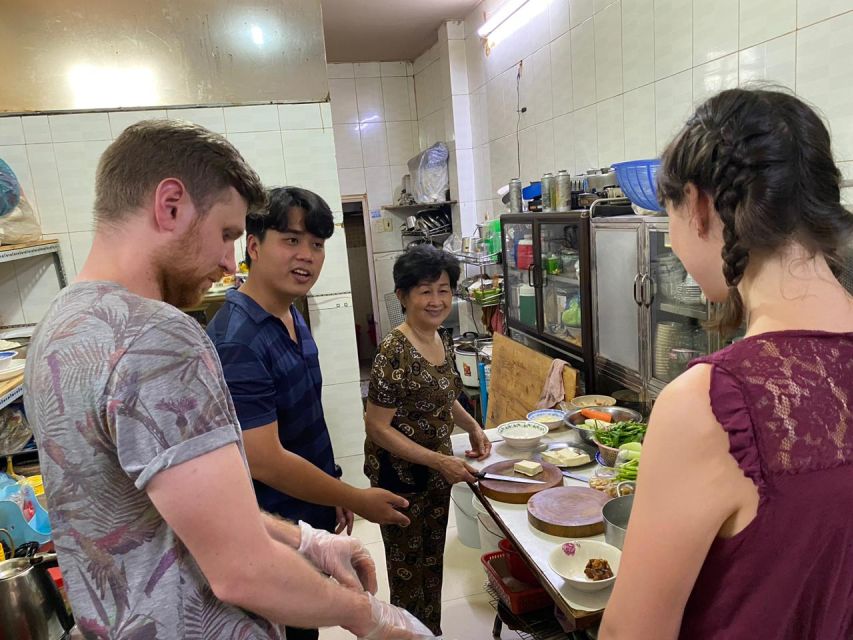
In a small home kitchen, you can’t hide behind a camera. You’re standing close to the action, watching tools and ingredients in real time. That closeness is exactly why this class feels like a lived-in lesson rather than a performance. It’s also why photos matter here. You’ll have pictures from the day, and in reviews, people mention that recipes and photos are shared afterward so you can remember what you made and how it should look.
Lunch, tea, and what you eat after shopping
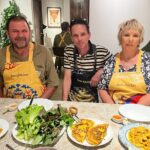
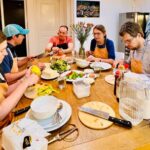
The day includes food and drinks—tea and local snacks during the market portion, and then the meal you make. You’ll eat the dishes at the end of the cooking session, so the class doesn’t end at the stove. You can taste what you cooked while the techniques are still fresh in your mind.
If you’re trying to decide whether this is worth it, that meal matters. You’re not paying just for the walk and the shopping. You’re paying for the full arc: ingredient selection, cooking practice, and a practical eating payoff.
Photos, conical hat, and the neighborhood pace
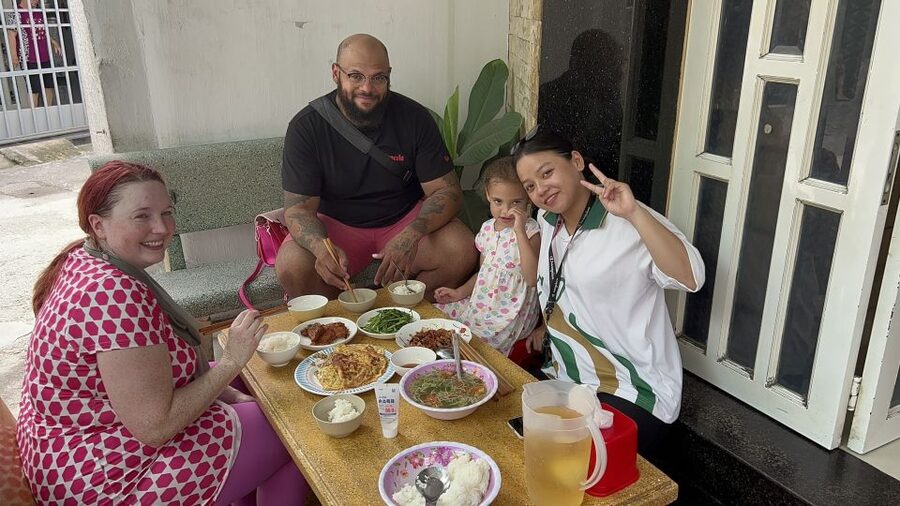
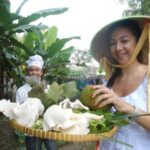
A fun, practical detail: you get a conical hat while walking under the sun to the local wet market. It’s included, and it also signals you’re being treated as part of the day, not just dropped into a route.
The neighborhood pace is another subtle highlight. After the market, you’re not rushed back immediately. You spend enough time moving through everyday areas to feel the contrast: hectic food selection at the market, then calmer home-kitchen focus during cooking. One review even sums up the mood as feels like home, which fits the overall vibe.
That said, you should dress like you’re going to walk. You’ll want sunscreen and sunglasses, and you’ll be on your feet. Wear covered shoes if you have them. The surface can be uneven, and a good grip helps.
Price and value: is $56 really “just” a class?
At $56 per person for a 4-hour experience, you’re paying for several things at once:
- Private transportation (not just public transit directions)
- Local English-speaking tour guidance
- Market time with tea and snacks
- Cooking instruction from a home-host chef
- A set menu of multiple dishes (not one small demo dish)
- Photos, plus a recipe follow-up (mentioned in reviews)
- Basic supplies for comfort like the conical hat
If you compare this to the usual cooking classes in tourist zones, the big value is location and access. You’re getting inside an actual home kitchen and seeing how ingredients are bought in a real wet market. You’re also getting guided context—language basics, food choices, and the daily-life flow that surrounds cooking.
In short: this isn’t expensive because it’s fancy. It’s priced like an experience that includes time, transport, instruction, food, and the market shopping that makes it all feel grounded.
Your guide experience matters (and it can be funny in a good way)
A few guide names show up in participant feedback. Bao and Kevin are mentioned as friendly, clear English-speaking guides who explain local food culture and answer questions. That matters because Ms. Tu’s kitchen work might not come with English narration from her side, so your guide becomes the bridge.
Also, in reviews, there’s mention of a translator guide pairing when needed. If you like asking questions, this setup is great. You’ll often learn why certain ingredients and steps are chosen, not just what to do next.
And yes, scooter rides can be part of the story. If you’re the type who enjoys motion and street energy, it adds to the day. If you’re not, you might spend the ride bracing a bit. Either way, the guide handles the logistics and helps you focus on what comes next: the market and the cooking.
Practical tips so your day goes smoothly
Here’s what I’d do if I were prepping for this class.
Plan for walking and sun. You’re given sunscreen and sunglasses as recommended items, and the market walk includes sun time. Bring what you can reapply with.
Wear covered, grippy shoes. One participant specifically recommends this, and it’s smart advice for any wet-market walking.
Avoid alcohol and drugs. Those are explicitly not allowed.
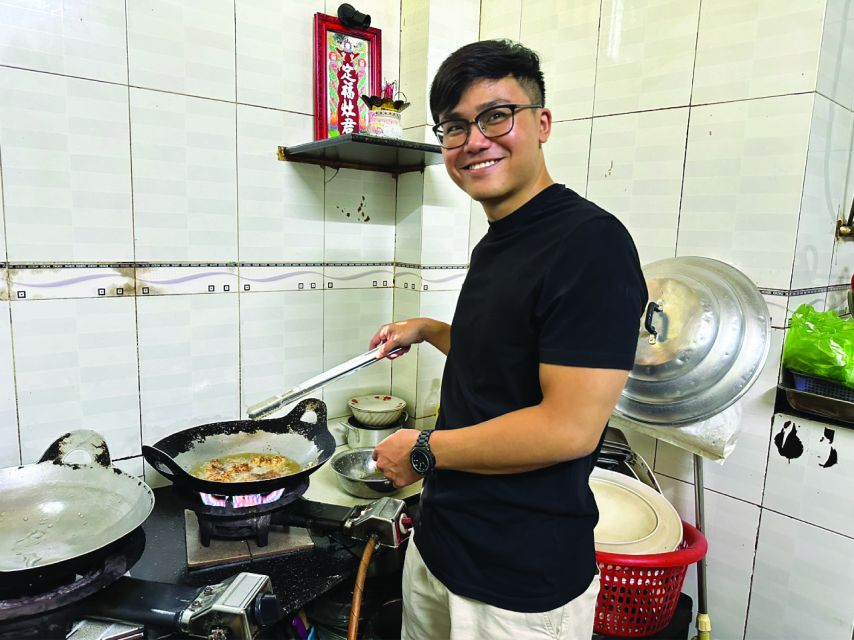
Be open to hands-on cooking in a real kitchen. The kitchen space is small. You’ll likely stand close, cook with the tools they use, and follow step-by-step instruction.
Don’t overpack valuables. Markets and walking routes can be chaotic. Keep your day bag simple.
If you’re short on Vietnamese, that’s normal. You’ll get some language help so shopping and cooking make more sense.
Should you book this cooking class in Ho Chi Minh?
Book it if you want Vietnamese food with context, not just a recipe lesson. This experience is best for you if you like markets, don’t mind a crowded environment for a purpose, and enjoy cooking alongside a real home cook in a real neighborhood.
Skip it (or think twice) if you can’t handle walking, uneven surfaces, or the possibility of motorbike transport. It also isn’t suitable for wheelchair users.
If you’re staying in Ho Chi Minh City for several days and want one activity that changes how you understand the city’s food, this is a strong choice. You’ll leave with dishes you can actually recreate—especially once you get the recipe set and photos afterward.
FAQ
How long is the Ho Chi Minh local cooking class?
The class lasts 4 hours.
How much does it cost?
It costs $56 per person.
Where are the pickup locations?
Pickup options include District 5, District 4, District 1, and District 3.
Where does the class go for ingredients?
You’ll visit Bình Tây Market to buy ingredients with the guidance of the tour team.
What dishes are included in the standard menu?
The standard menu includes poached meat with pepper, fried egg with minced meat, fried red tilapia, sautéed garlic spinach, and sour soup.
Is there a vegetarian menu?
Yes. The vegetarian menu includes stewed vegetables, fried salted tofu with lemongrass, fried egg with onion, sautéed garlic spinach, and vegetarian sour soup.
What food and drinks are included?
Tea and local snacks are included during the market portion, and you’ll also eat the dishes from your cooking class.
Is alcohol allowed during the experience?
No. Alcohol and drugs are not allowed.
What should I bring?
Bring sunglasses and sunscreen.
Is the class suitable for wheelchair users?
No, it is not suitable for wheelchair users.