REVIEW · HO CHI MINH CITY
M.O.M COOKING CLASS
Book on GetYourGuide →Operated by MOM COMPANY LIMITED · Bookable on GetYourGuide
Saigon’s best kitchen lesson starts at a market. M.O.M Cooking Class pairs a local-market ingredient hunt with a hands-on cook session, and the small group (up to 8) keeps things personal. I like that you’re guided by an English/Vietnamese instructor who explains what to look for and why.
The biggest pull for me is that you don’t just watch. You cook five famous Vietnamese dishes from scratch with step-by-step chef help, then eat what you make. One thing to consider: if you have allergies, you should be extra clear on ingredients before cooking starts, because miscommunication can affect how swaps are handled.
In This Review
- Key things that make M.O.M Cooking Class worth your time
- Market Walk in Saigon: learning Vietnamese cooking starts with choosing ingredients
- The hands-on cooking session: five famous dishes, made from scratch
- A quick reality check on what you’ll be doing
- What the instructors focus on (and why it helps after you leave)
- Timing, pacing, and how the day actually feels (3–4 hours)
- Dietary needs: how to make sure your class matches your body
- Price and value: is $40 a fair deal?
- What you take home: recipes in your preferred language
- Who should book (and who might not)
- Should you book the M.O.M Cooking Class?
- FAQ
- How long is the M.O.M Cooking Class in Vietnam?
- What is included in the price?
- Do they offer a market visit as part of the experience?
- Can the class accommodate dietary requirements?
- In what languages do you receive the recipes?
- Is this cooking class suitable for children?
Key things that make M.O.M Cooking Class worth your time
- Market shopping for the right ingredients in Saigon before you cook
- Cook five Vietnamese dishes from scratch, not a quick demo
- Small group limit (8 people) so questions actually get answered
- Air-conditioned classroom + step-by-step chef guidance
- You leave with recipes and a certificate, plus the meal you make
- Dietary options are possible, but you must flag allergies clearly
Market Walk in Saigon: learning Vietnamese cooking starts with choosing ingredients
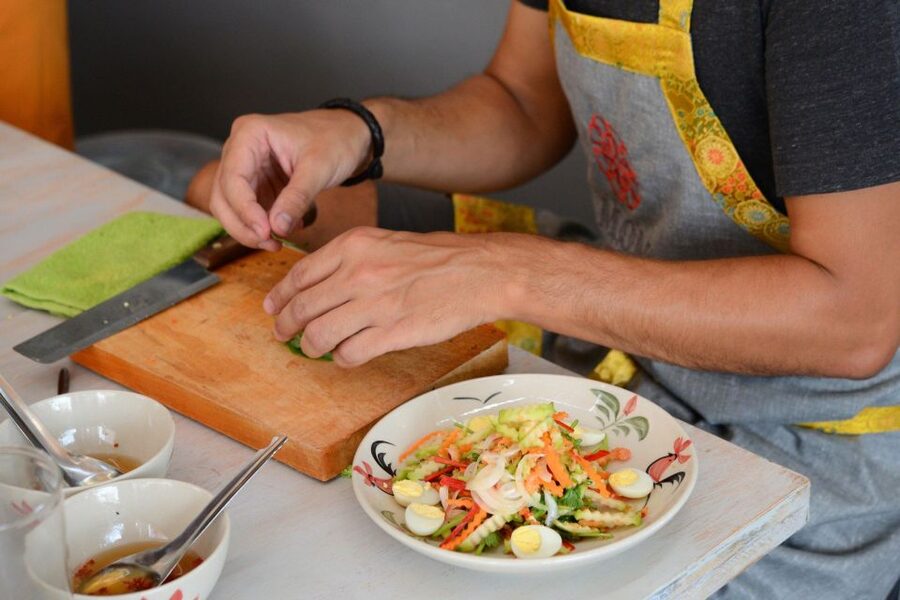
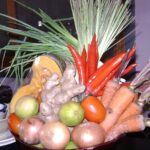
The class starts with a market visit—because Vietnamese cooking is ingredient-led. You’ll shop for fresh produce and key pantry items that shape flavor fast. This is one of the most practical parts of the experience: you learn what to pick, what to avoid, and how to tell quality by looking (and, when appropriate, smelling).
You’ll go with an English/Vietnamese-speaking guide, and that language support matters more than it sounds. When you can ask questions in real time—like what makes one type of herb better for a dish—you stop relying on guesswork. The result is that when you cook later, you’re not just following a recipe. You’re making choices.
Also, this market time helps you get your bearings in Saigon. You’re walking through a real food ecosystem, not a staged stop. And because the class is hands-on right after, you don’t lose the “why” behind your purchases.
You can also read our reviews of more tours and experiences in Ho Chi Minh City.


The hands-on cooking session: five famous dishes, made from scratch
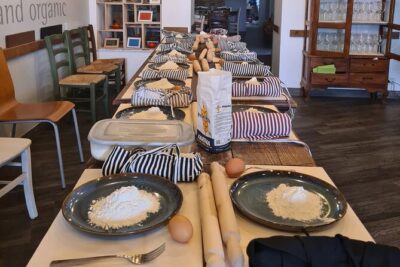
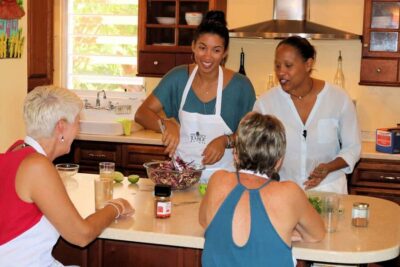
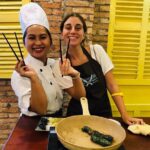
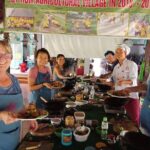
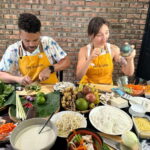
After the market, you move into the cooking phase. The format is group cooking with step-by-step guidance from the chef/instructors, and the classroom is air-conditioned, which is a welcome relief in Vietnam.
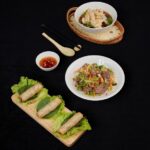
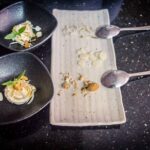
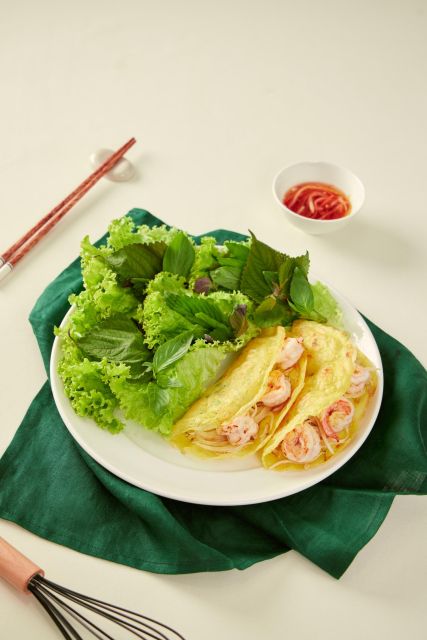
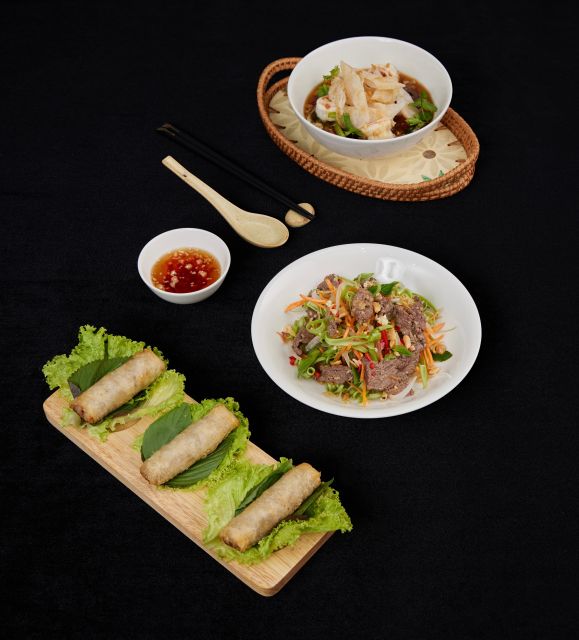
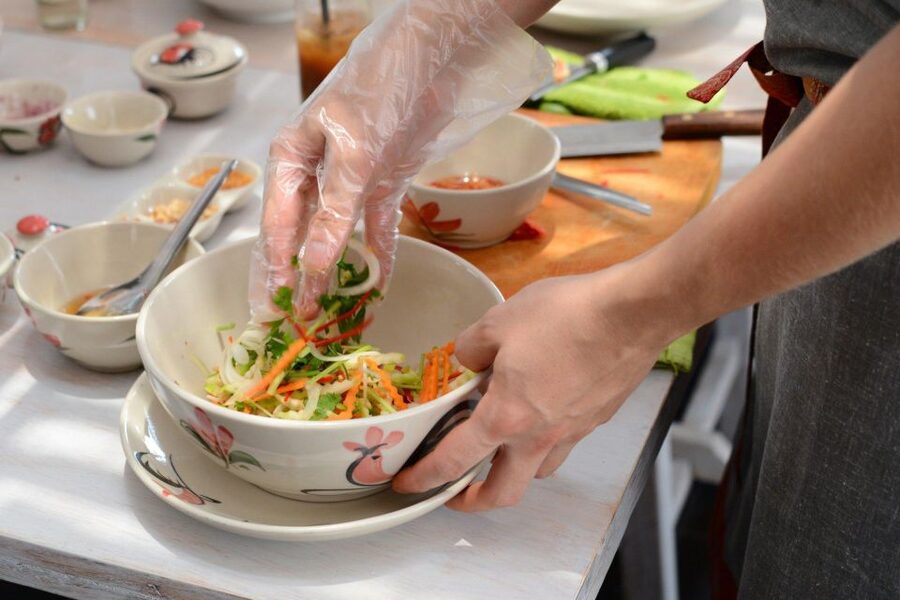
You’ll cook five famous Vietnamese dishes, each one from scratch. The point isn’t just to get a plate of food—it’s to understand how Vietnamese flavors build dish by dish. That’s why you’ll be doing the prep and cooking steps yourself, not just assembling finished components.
From the dishes mentioned in past sessions, you can expect classics like banh mi and pho, plus things like spring rolls as well. Your exact menu can vary, but the style is consistent: approachable techniques for core Vietnamese favorites, with enough depth that you can recreate them back home.
One extra detail I appreciate: there’s no fixed dessert every time. The dessert changes daily. That means you’re not locked into a boring “same every tour” ending.
A quick reality check on what you’ll be doing
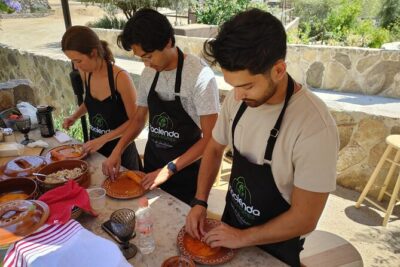
Plan to be fully involved. Even with chef guidance, you’ll chop, mix, roll, and assemble at least some part of each dish. It’s active, not a sit-and-snack experience. If you like learning by doing, this is the right kind of class.
What the instructors focus on (and why it helps after you leave)
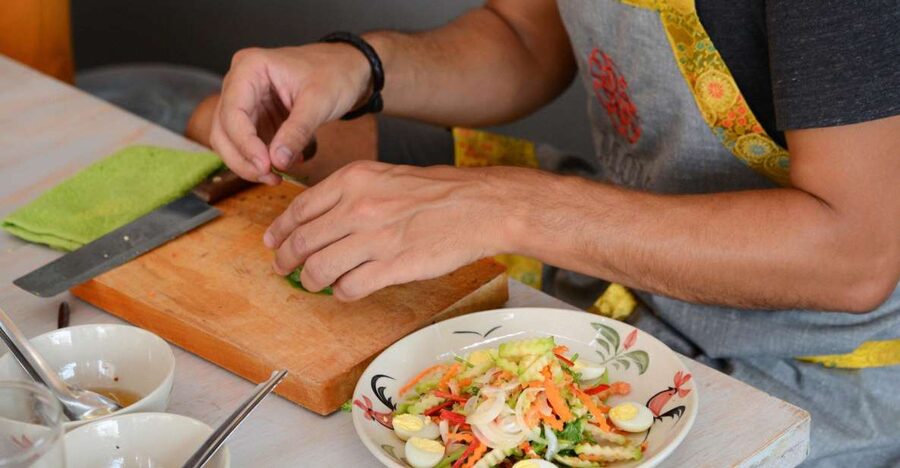
M.O.M keeps the teaching practical. The guidance is described as step by step, which translates to: you’re guided through the process in the order that makes sense for cooking Vietnamese dishes. Instead of being dumped into a recipe, you’re coached through decisions as you go.
One thing that stands out is language flexibility. The class is led by instructors who speak English and Vietnamese. In at least some sessions, an instructor named Helen is highlighted for clear English, and that matters because Vietnamese cooking often involves terms that aren’t obvious if you’ve only seen written recipes.
Here’s the best part for your future cooking: you get the logic. For example, pho and banh mi aren’t just “flavor combinations.” They’re built from choices—ingredients, textures, and timing. Once you understand that, you can adapt at home when ingredients aren’t exactly the same.
Timing, pacing, and how the day actually feels (3–4 hours)
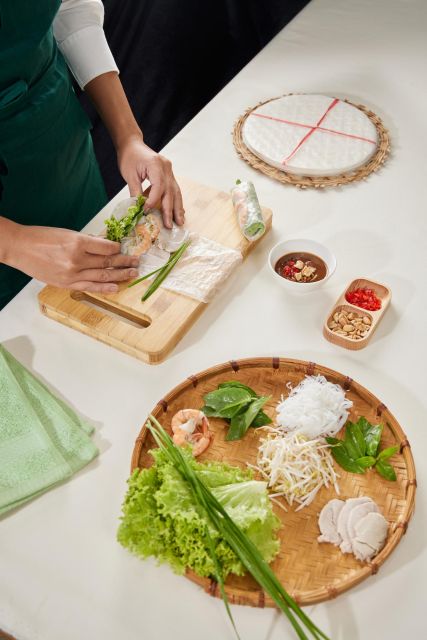
This experience runs about 3–4 hours, with multiple start options (morning, afternoon, and evening). That matters if you’re juggling other Saigon plans like museums, neighborhoods, or a food crawl.
The pacing is designed so you’re not stuck cooking for hours without a break. You’ll shop, cook, then enjoy your self-cooked meal. Because meals and beverages are included, you’re not racing to find food afterward—you eat what you made.
A small but important comfort detail: you’ll be cooking in an air-conditioned classroom, not a hot, crowded setup. For many people, that makes the difference between a fun lesson and a “tough slog.”


Dietary needs: how to make sure your class matches your body
M.O.M notes that the cooking class can be adapted to various dietary needs, including vegetarian options. That’s a big plus if you eat differently than the standard menu.
But here’s the caution I’d give you: communicate dietary requirements clearly and early, including allergies. The experience data includes an example where translation confusion affected how allergies were handled—so the class ended up avoiding an allergen for everyone, rather than tailoring by person.
So do this:
- Declare allergies/special needs when booking (it’s specifically requested at checkout).
- During the first part of class, confirm key ingredients with the chef/instructors in plain language.
- If you have a shared table with other diners, don’t assume your allergy will be interpreted correctly—ask again.
This may sound extra, but it’s the fastest way to avoid a sad workaround and get the menu you actually need.
Price and value: is $40 a fair deal?
At $40 per person, this isn’t a “cheap and cheerful” tasting. It’s priced like a real class, and you can judge the value by what’s included:
- English/Vietnamese guide
- Meals and beverages
- Cooking ingredients
- Step-by-step chef guidance
- Air-conditioned classroom
- You enjoy your self-cooked meal
- Recipes and a certificate
- Complimentary ice-tea and water
- Small group (limited to 8)
When a class includes both market time and multiple dishes from scratch, costs add up fast. Ingredients alone aren’t free, and having guides and chef instruction for a small group is labor-intensive. The recipes and certificate are also a practical souvenir: you get something you can actually use at home, not just a photo.
If you’re deciding between this and a casual food tour, think about what you want. This is for people who want skills. If you want tasting only, a tour might be more your speed.
What you take home: recipes in your preferred language
After class, you’ll receive recipes. You can choose a preferred language—English, Korean, or Chinese are listed as options. It’s smart to tell the chef your preferred language during class so the handoff matches what you want.
A certificate is included too. It’s not life-changing, but it’s a nice “proof you earned this” detail, especially if you’re cooking for family and friends later.
Also, because the dessert changes daily, the recipes are what help you recreate the experience even after the menu shifts.
Who should book (and who might not)
This is a strong fit if:
- You love Vietnamese food and want to cook, not just eat
- You like learning through market-to-kitchen shopping
- You want a small group setting (up to 8) with time for questions
- You’re happy doing hands-on work for a few hours
It may be less ideal if:
- You’re short on time and want something ultra-fast
- You have strict allergy needs and you don’t feel comfortable communicating clearly
- You’re traveling with kids—this experience is not suitable for children under 6 years
If you’re going to Saigon mostly for food and culture, this class plugs into your trip nicely. It gives you context for what you’re eating on the street afterward.
Should you book the M.O.M Cooking Class?

If you want more than a meal—if you want a real Vietnamese cooking skill—you should book it. The combination of market shopping, five dishes cooked from scratch, and a small group with guided instruction is exactly how you make a cooking experience pay off later.
My main “don’t skip this” advice is about allergies and dietary needs: be explicit, confirm ingredients, and don’t rely on assumptions. If you’re careful about communication, you’ll get the fun part: learning by doing, eating what you made, and leaving with recipes you can actually use.
FAQ
How long is the M.O.M Cooking Class in Vietnam?
The class lasts about 3–4 hours. Starting times vary, so you’ll want to check availability for the time you prefer.
What is included in the price?
The experience includes an English/Vietnamese-speaking guide, meals and beverages, cooking ingredients, step-by-step chef guidance, and the meal you cook and eat. You also get ice-tea and water, plus recipes and a certificate.
Do they offer a market visit as part of the experience?
Yes. One option includes a half-day style experience that starts at a local market, where you shop for ingredients before cooking.
Can the class accommodate dietary requirements?
Special dietary requirements can be indicated during checkout, and the cooking class can be adapted for various dietary needs, including vegetarian options.
In what languages do you receive the recipes?
After the class, recipes are provided in English, Korean, or Chinese. You should tell the chef which language you prefer.
Is this cooking class suitable for children?
No. It is not suitable for children under 6 years old.